Categories
Breaking News

First Mass Extinction Event Caused by Arrival of Animals

Palaeogeography, Palaeoclimatology, Palaeoecology, a recently released study suggests that newly evolved biological organisms, deemed ‘ecosystem engineers’, changed the environment so drastically the older species were driven to extinction. For more than 3 billion years the only life on earth had consisted of microbes – various types of single celled organisms. That all changed with the arrival of the first multi-cellular life, including Ediacaran biota. Around 600 million years ago the Ediacarans spread across the planet, largely in the form of immobile marine life, shaped as discs and tubes, fronds and quilted mattresses. The first evidence of the Ediacaran biota was found in the form of fossil impressions in the Ediacaran mountains of South Australia in 1946. It proved a major turning point in the study of evolution, highlighting the complex array of life that existed on the planet prior to the Cambrian Explosion. 60 million years into the Ediacaran period, another drastic evolutionary innovation occured with the arrival of metazoans, the first animals. Unique for being the first creatures with the ability to move independently, the metazoans heralded the beginning of the Cambrian Explosion, a 25 million year period that saw most of the world’s major animal families: vertebrates, athropods, jellyfish, mollusks, sponges and annelids, come into existence. By the end of the explosion however, the Ediacarans had all been wiped out. A number of theories have been put forward to explain the Ediacaran’s fate. Two main schools of thought exist: the first that drastic environmental changes, such as changes in sea level, pushed the Ediacaran biota to extinction, the second that it was due to ecosystem changes brought about by the arrival of animals. The second view is very much the one taken by the authors of the latest study. “These new species were ‘ecological engineers’ who changed the environment in ways that made it more and more difficult for the Ediacarans to survive,” said Simon Darroch, assistant professor of earth and environmental sciences at Vanderbilt University and lead author of the new study – titled: ‘A mixed Ediacaran-metazoan assemblage from the Zaris Sub-basin, Namibia.’ Key to Darroch and colleagues’ study is one of the best preserved examples of a mixed community of Ediacarans and animals, which provides the best evidence yet seen of a close ecological association between metazoans and Ediacarans. “Until this, the evidence for an overlapping ecological association between metazoans and soft-bodied Ediacaran organisms was limited,” explained Darroch. “Here, we describe new fossil localities from southern Namibia that preserve soft-bodied Ediacara biota, enigmatic tubular organisms thought to represent metazoans and vertically oriented metazoan trace fossils. Although the precise identity of the tracemakers remains elusive, the structures bear several striking similarities with a cone-shaped organism called Conichnus that has been found in the Cambrian period.” Although not providing definitive answers to the Ediacaran’s fate, the fossil localities used in the study help paint a clearer picture of the crossover between Ediacarans and animals, which in turn could boost our knowledge of the mass extinction. “With this paper we’re narrowing in on causation; we’ve discovered some new fossil sites that preserve both Ediacara biota and animal fossils (both animal burrows – ‘trace fossils’ – and the remains of animals themselves) sharing the same communities, which lets us speculate about how these two very different groups of organisms interacted”, said Darroch. Even though it took place millions of years ago, the extinction of the Ediacarans due to mass ecosystem change has ominous repercussions for today. “There is a powerful analogy between the Earth’s first mass extinction and what is happening today,” said Darroch. “The end-Ediacaran extinction shows that the evolution of new behaviors can fundamentally change the entire planet, and today we humans are the most powerful ‘ecosystems engineers’ ever known.” Image courtesy of Simon Darroch, Vanderbilt University]]>

Categories
Breaking News

Origin of the Turtle Shell Solved With a Child's Help

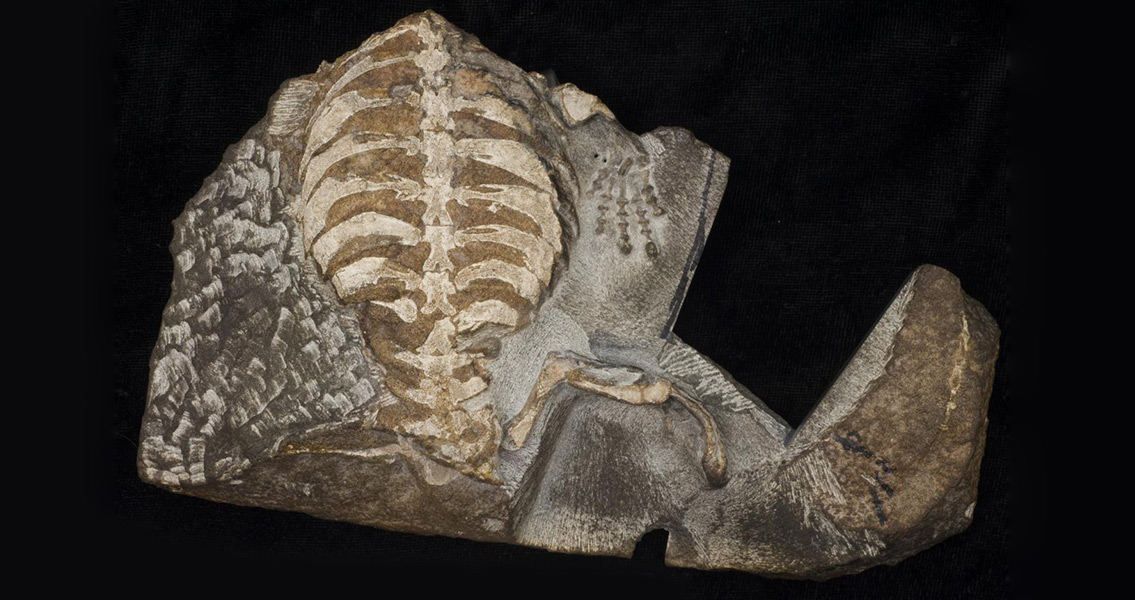
Current Biology claims that this was not always the case. Rather, the authors suggest that broad ribbed proto-shells were actually an adaption to help with burrowing underground. Eight year old Kobus Snyman was walking on his father’s farm in the Western Cape of South Africa when he found the remains of a proto-turtle. The specimen proved to be the missing piece in the puzzle for the group of scientists striving to determine the origin of turtle shells. Measuring about 15 cm in length, the specimen Snyman discovered is in remarkably good condition, comprising a well preserved skeleton with fully articulated feet and hands. It is an example of Eunotosaurus africanus, a partially shelled turtle that lived around 260 million years ago. “Why the turtle shell evolved is a very Dr. Seuss like question and the answer seems pretty obvious – it was for protection.” said lead author of the study, Dr. Tyler Lyson of the Denver Museum of Nature and Science. “But just like the bird feather did not initially evolve for flight – we now have early relatives of birds such as tyrannosaur dinosaurs with feathers that definitely were not flying – the earliest beginnings of the turtle shell was not for protection but rather for digging underground to escape the harsh South African environment where these early proto turtles lived”. Understanding the importance of ribs in turtles was crucial to the team’s results. “We knew from both the fossil record and observing how the turtle shell develops in modern turtles that one of the first major changes towards a shell was the broadening of the ribs.” said Lyson, in a press release. Because ribs are crucial to both respiration and movement, changes in them have a major impact on all four legged animals. When ribs broaden they stiffen the torso, in turn shortening stride length, slowing down the animal and impeding its breathing. “Ribs are generally pretty boring bones. The ribs of whales, snakes, dinosaurs, humans, and pretty much all other animals look the same. Turtles are the one exception, where they are highly modified to form the majority of the shell.” explained Lyson. The breakthrough for the team came with the discovery of several specimens of Eunotosaurus africanus in the Karoo Basin of South Africa. Analysis of the fossils revealed that the broadening of the ribs in this creature had nothing to do with protection, but was rather a means to provide a more stable base when the animal used its front limbs to dig underground. Professor Rubidge from the University of Witwatersrand in South Africa, who was one of the scientists gathering fossils for the study, made it clear how important Snyman’s contribution had been. “I want to thank Kobus Snyman and shake his hand because without Kobus both finding the specimen and taking it to his local museum, the Fransie Pienaar Museum in Prince Albert, this study would not have been possible.” For more information: www.cell.com Image courtesy of Tyler R. Lyson]]>

Categories
Breaking News

Evidence that Evolution Follows Path of Least Resistance

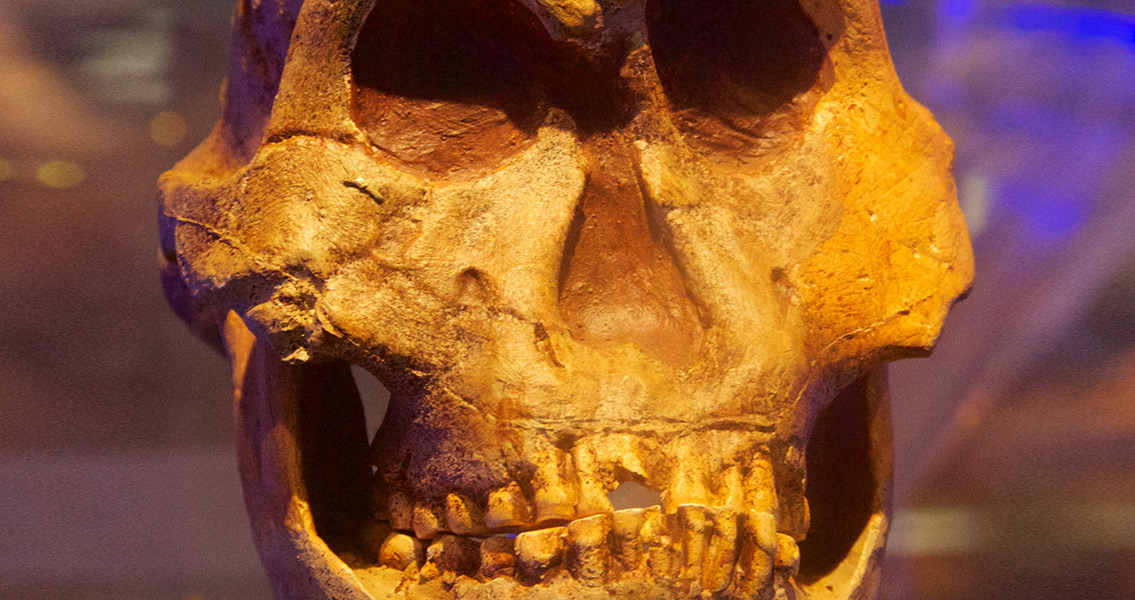
Paranthropus boisei (from eastern Africa) and Paranthropus robustus (southern Africa), who lived between 4.2 and 1.3 million year ago, researchers discovered that the dental anatomy traditionally associated with the early hominins who ate a hard food diet was also being used by others to eat a primarily plant-based diet. Even with different diets, they had similar teeth and anatomies, characterized by big, flat teeth covered in thick enamel, and faces and jaws which indicate the presence of strong muscles for chewing. These characteristics are commonly thought to have been adapted for smashing hard foods. However, by analyzing the microwear and isotope values of the teeth, Ungar’s team was able to conclude the two creatures actually had markedly different diets. P. robustus subsisted on a diet of plant foods and only occasionally consumed foods like roots or nuts, while P. boisei consumed softer, tougher and even more abrasive foods such as grasses. Tellingly, neither diet consisted of the hard, crunchy food indicated by the facial structure and large muscles both of the early humans possessed. More crested molars (like gorillas have) would prove more efficient in ripping fibrous plant material, but flattened molars (like we have) with a thicker layer of enamel, are what advanced genetically. This simpler tooth architecture proved more adaptable for a number of challenging diets throughout time, so although it isn’t the optimal solution, it’s the one that continued on as our species developed. These findings have been published in Science. Image courtesy of Wikimedia Commons user: Mike Peel]]>

Categories
Breaking News

With the Dinosaurs Gone the Speed of Human Evolution Tripled

Phys Org as saying, “Our findings refute those of other studies which overlooked the fossils of placental mammals present around the last mass extinction. Using rigorous methods, we’ve successfully tracked the evolution of early placental mammals and reconstructed how it changed over time. While the rate differed between species, we see a clear and massive spike in the rates of evolution straight after the dinosaurs become extinct, suggesting our ancestors greatly benefitted from the demise of the dinosaurs. The huge impact of the dinosaur extinction on the evolution of our ancestors really shows how important this event was in shaping the modern world.” The study was funded by the Natural Environment Research Council and published in Proceedings of the Royal Society. ]]>

Categories
Breaking News

Answered: How Early Mammals Developed Night Vision

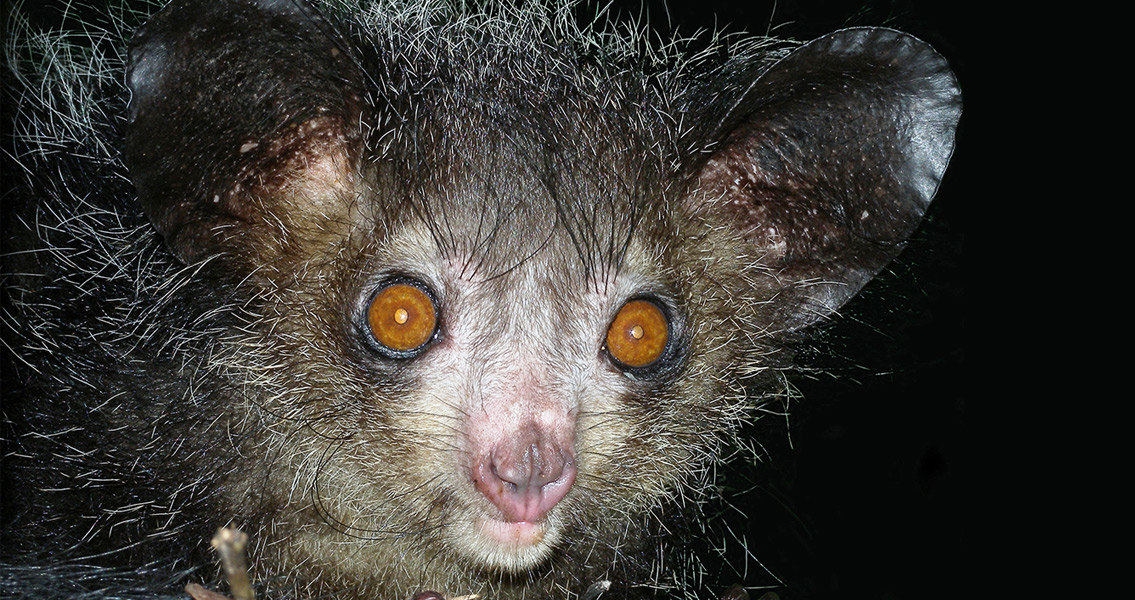
Cell Press, adding, “We’ve been working for a long time to understand the fundamental mechanisms behind rod and cone development.” Previous work completed by Swaroop and his team has shown that NRL, a transcription factor, drives retinal cells towards maturing into rods. NRL accomplishes this by suppressing certain genes involved in the development of cone cells, leading researchers to wonder if the shorter wave-length cone cells were changed into rods during the evolution process. To determine the origin of these rods, Swaroop’s team examined the cone cells and rods in mice, taken at various stages of development. The details involved in the embryonic development of an organism frequently reveals traits its evolutionary ancestors carried, like how, for instance, human embryos will initially develop a tail and gill-like slits. What they found was that two days after they were born, the still-developing rod cells had genes typically expressed in cell cones, however, once the mice were ten days old these aspects had become repressed by DNA methylations and histone. When examining zebrafish, which are cone-dominated and diurnal (active during the daytime), the experiments indicated the rod cells didn’t look like cell cones at all. To determine when the elements, which turn cone cells to rod cells, may have originated, the researchers examined the genomic sequences from a number of vertebrate animals. What the team discovered was that as the modern retina developed, the genes which are responsible for NRL regulation became more refined in placental mammals but were lost in a number of non-mammalian groups. The origin of this system seemed to coincide with the evolution of nocturnal adaptations in early mammals. The team then concluded that for mammals, NRL became restricted to the photoreceptors found in the eye, forcing these cells to convert to rods from cones, thereby giving early mammals the needed edge to adapt to an active nocturnal lifestyle. In contrast, humans depend primarily on cone cells for our vision, because our ancestors evolved to take advantage of daylight hours once again The study has been published in the online journal Cell Press. ]]>

Categories
Breaking News

Study Shows a Quick Evolutionary Recovery by Marine Reptiles

Phys Org as saying, “We show that when marine reptiles first entered the oceans in the Triassic period, they rapidly became very diverse and had many morphological adaptations related to feeding on varied prey. Within a relatively short space of time, marine reptiles began feeding on hard-shelled invertebrates, fast-moving fish and other large marine reptiles. The range of feeding-related morphological adaptations seen in Triassic marine reptiles was never exceeded later in the Mesozoic.” This new research utilized the fossil record of Mesozoic marine invertebrates to measure variations in the function and shape of their teeth and jaws. Up until now, studies have been based primarily on estimations of the creatures’ biodiversity through time. The new study looks at the range of sizes and shapes, and then ties characteristics of the shape to modes of life, including their specialized feeding modes. Michael Benton, professor and co-author of the study, told Phys Org, “We always knew that the marine reptiles expanded relatively fast into a world in turmoil, after a devastating mass extinction event that killed as many as 95 per cent of species. But what was unusual was that they were inventing entirely new modes of life that had not existed before the End-Permian mass extinction. Our work shows they expanded into nearly every mode of life, indicated by their feeding habits and range of body sizes, really much faster than might have been imagined.” Interestingly, only 30 million years after the evolutionary burst of marine reptiles, they were victims of a number of extinction events which occurred in the Late Triassic that wiped most of the groups out. The research shows these events removed numerous specialized niches and adaptations, and had a long-term effect on the evolution of marine reptile. This research has been published in the journal Paleobiology ]]>

Categories
Breaking News

New Study Reveals the Reason Humans Evolved from Africa

Science. Image courtesy of Ni Xijun]]>

Categories
Breaking News

Dinosaurs Were an Important Resource for Dung Beetles

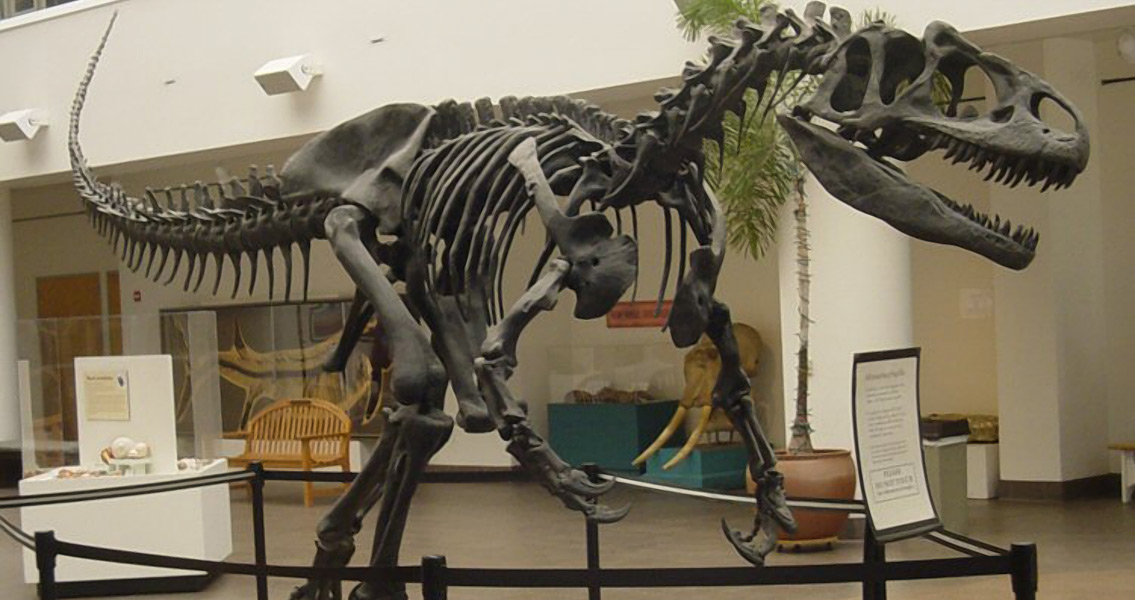
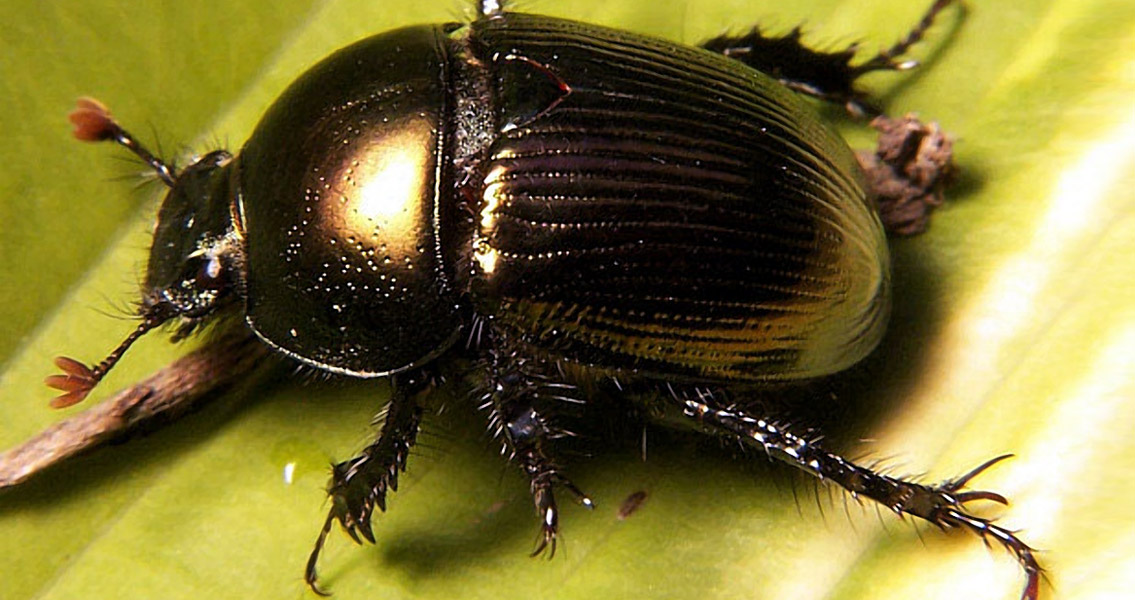
PLOS ONE, co-author Dr. Stephen Cameron with the Queensland University of Technology in Australia explained that fossilized dinosaur feces (70 and 80 million years old) supports the hypothesis the study outlines because it shows signs of tunneling that has been attributed to dung beetle feeding. The study is the first to show how the specialization of one group was related to using dinosaurs, the dominant species for 135 million years, as a resource. Of course, the flip side of this connection is that the mass extinction of dinosaurs during the Cretaceous-Paleogene period would have also impacted the dung beetle. Fortunately for the beetle, the impact of the dinosaur extinction occurred during the beetle diversification and they survived the event. The study concludes that the modern dung beetle is descended from a species which either fed on the dung of dinosaurs and other early mammals, or from a species which had already adapted to eating the dung of the Cretaceous mammals. Although the findings may challenge prior research associating mammals and the origin of dung feeding, the study also shows that the greatest rate of diversification the beetle experienced was during the Paleogene period, which is in line with the timing of major diversification of most mammals. Additional research will be needed to untangle the cause of the latest diversification and provide more detail on the dung beetle’s survival through the Cretaceous-Paleogene mass extinction. This story of flowering plants, beetles, and dinosaurs, demonstrates the relationships and complex interactions between evolving ecosystems, and the possibility of discovering what drives diversification – even for insects like the dung beetle for which very limited fossil records exist. The study was published this week, in the open-access journal PLOS ONE.]]>

Categories
Breaking News

New Insights into Origins of Multicellular Life

Gonium pectorale, a simple green algae comprising only sixteen cells. Following an international collaboration between Kansas State University, the Universities of Arizona and Tokyo, and Wits University, the genome of the algae has been sequenced, allowing an in depth study of its DNA. Volvocine green algae, the group to which G.pectorale belongs, is an invaluable model system for studying multicellularity. As Durand explained, “The evolutionary transition to multicellularity has occurred numerous times in all domains of life, yet the evolutionary history of this transition is not well understood. However, the volvocine green algae include a diverse variety of unicellular, colonial, and multicellular species.” The volvocine group is a diverse one, meaning it is possible to study members of varying degrees of complexity. They also evolved relatively recently, during the Triassic period, meaning there is enough evidence to study their origns. According to the study, group formation in the algae evolved by co-option of the retinoblastoma cell cycle regulatory pathway. “Significantly, expression of the Gonium retinoblastoma cell cycle regulator in unicellular Chlamydomonas causes it to become colonial. The presence of these changes in undifferentiated Gonium indicates extensive group-level adaptation during the initial step in the evolution of multicellularity.” the authors write, in the abstract to the study. Although only scraping the surface of the complicated transition from single to multicellular organisms, the team have succeeded in uncovering some of the genes that regulate cellular growth and division within the G.pectorale. It helps explain how single cells lived in groups, and could prove a vital starting point in shedding light on other aspects of multicellular transition. For more information: www.nature.com Image credit: The Volvocales Information Project by Aurora Nedelcu]]>

Categories
Breaking News

Brain-Size Evolved with Body-Size Along for the Ride

Homo genus. “Over the last four million years, brain size and body size increased substantially in our human ancestors,” Mark Grabowski with the American Museum of Natural History and author of the paper is quoted as saying in a press release from the museum, “This observation has led to numerous hypotheses attempting to explain why observed changes occurred, but these typically make the assumption that brain and body size evolution are the products of separate natural selection forces.” That’s the very assumption now being questioned. There is significant evidence showing that the genetic variations (evolution’s kick starter) in some traits are a result of genes which are also causing simultaneous variations in other traits – leading to the conclusion that the natural selection experienced by either trait causes a correlated response in the unselected trait. For example, consider an elephant’s leg bone; as the bone grows longer, it also grows wider. If you used artificial selection to produce an elephant that was tall, it’s likely the elephant’s legs would also get wider as they get longer. This effect, in part, is because of shared genetic variations (co variations) among the traits of the leg bone. Likewise, researchers set out to investigate this type of genetic relationship between a human’s brain size and their body size and its impact, if any, on our evolution. Using the patterns of brain-size and body-size covariations from an assortment of modern humans and primates, researchers created several different models to examine exactly how these underlying genetic interactions and their associated selection pressures affected the evolution of our lineage. For the first time the findings demonstrate that the strong selection pressure to increase only brain size had a significant role in increasing body size at the same time, throughout our evolution. The phenomenon alone may also have been responsible for a major increase that occurred in both traits when our human ancestors (like Australopithecus) transitioned to Homo erectus. Selection undoubtedly played a role in fine tuning the physical changes inherent to bigger body size, this research suggests however, it was not the driving force and evolutionary models pertaining to Homo origins should be reconsidered. To put it another way, all of the scientific ideas and research done to explain why, over time, humans evolved bigger bodies may be moot; body size simply got pulled along with brain size. The work was published in the journal Current Anthropology.]]>