Categories
Breaking News

5th Century Synagogue Discovered Under 12th Century Building

Live Science. Since 2012, three amazingly intricate and well-preserved mosaics which once decorated the floor of the older synagogue have been found at the Huqoq site during excavations led by Jodi Magness from the University of North Carolina at Chapel Hill along with Shua Kisilevitz from the Israel Antiquities Authority. The mosaics have since been removed for conservation. ]]>

Categories
Breaking News

A Menorah and Cross Etched Side-by-Side Hundreds of Years Apart

here ]]>

Categories
Breaking News

More Dead Sea Scroll Fragments Found in the Cave of Skulls

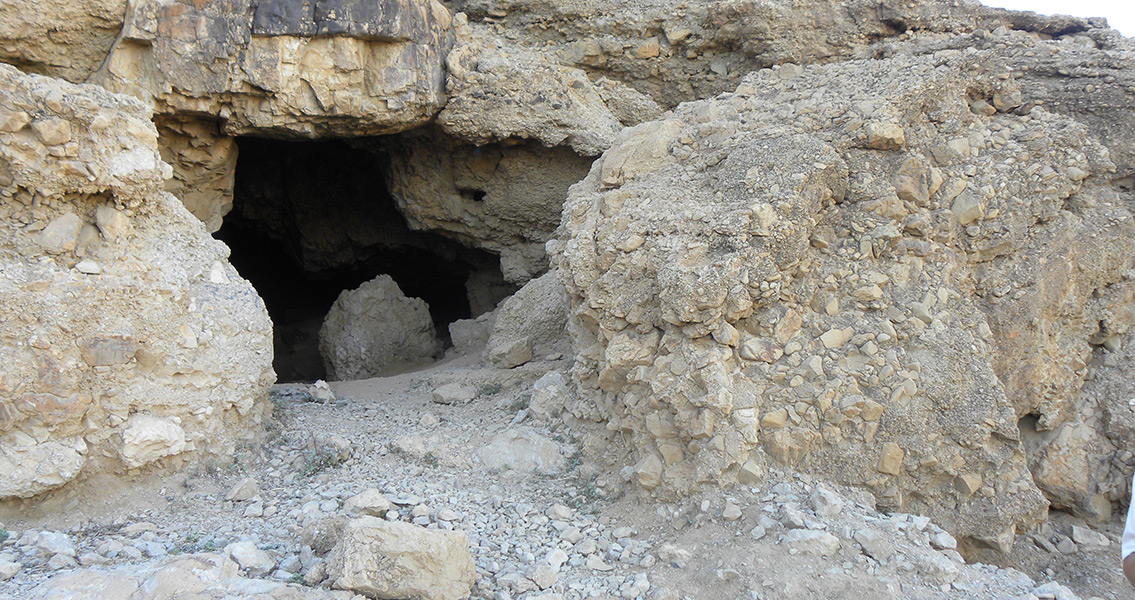
Haaretz. In 1947, a shepherd tossed a stone into a cave in Israel’s West Bank and heard the sound of earthenware cracking, leading to the the twentieth century’s biggest archaeological discovery: the Dead Sea Scrolls. Named for the seven human skulls along with other skeletal remains found there, The Cave of the Skulls was discovered in 1960 by Professor Yohanan Aharoni. Part of a series of naturally formed spaces on top of a steep cliff known as the Large Cave Complex, the Cave of Skulls is located in one of the starkest regions of the Judean Desert. The complex is also home to the Cave of the Arrows, where the extremely arid conditions helped preserve a dozen reed arrow shafts (30 inches long) for around 1,800 years. The latest discovery, two papyrus fragments each measuring approximately two centimeters squared, along with several pieces with no discernible writing, was made during a joint salvage excavation conducted by the Hebrew University of Jerusalem and the Israel Antiquities Authority. Along with the papyri artifacts, dozens of stone vessels, pottery fragments and flint items were discovered within the cave. Several different metal objects were also found, including needles, cosmetic tools, and hobnails with hollow heads which were used to make sandals. Another interesting find was a bundle, a textile wrapping around a collection of beads, which was found inside a natural crevice in the west wing of the cave. This bundle has not yet been opened, but its contents have been identified through X-rays. It joins two other bundles previously discovered by Aharoni, making up the largest bead collection ever found from the time period known as the Chalcolithic, an ancient period that predates the Copper Age. What these caves were used for in early Chalcolithic times is unknown. Suggestions vary from seasonal habitats for traders or herders, to hiding places during times of social tensions within the settlements located on that side of the Judean Desert. “These caves are very difficult to access, and they were used in their natural forms without changes or modifications that would make them more convenient for prolonged occupation,” Davidovich said in the Haaretz article. “This does not make sense when you think of ephemeral stays by shepherds or the like, but is much more plausible when you consider that they served as temporary refuge places.” ]]>

Categories
Breaking News

1,900-Year-Old Inscription Identifies Unknown Judean Ruler

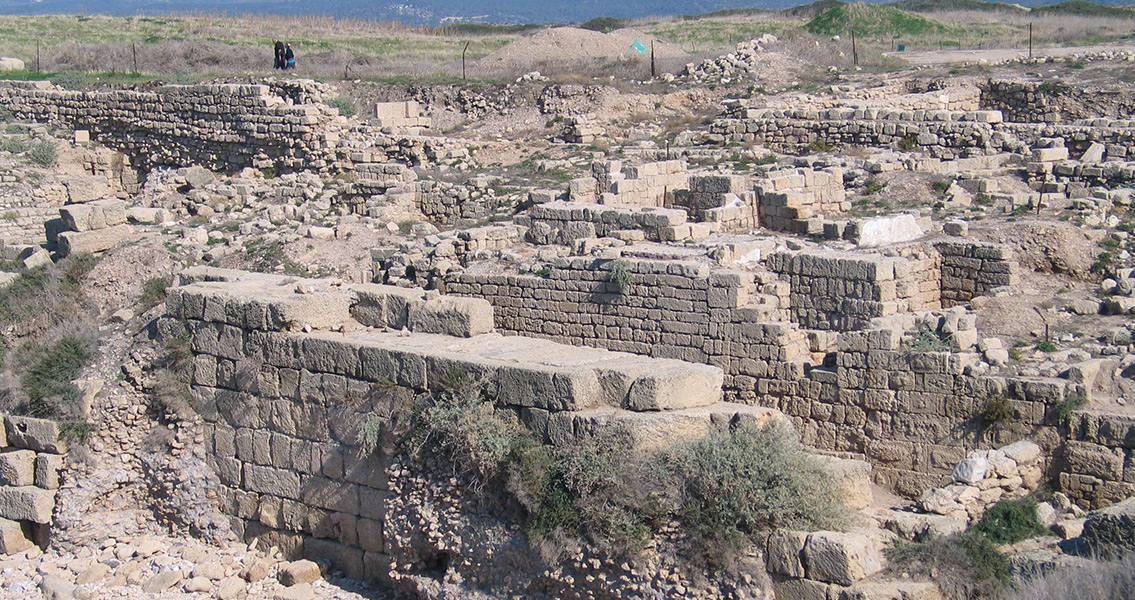
Times of Israel: “Not only were we able for the first time to identify with certainty the name of the ruler who oversaw Judea in the critical years of the Bar Kochba revolt; this is also just the second time that the mention of Judea has been discovered in inscriptions traced back to the Roman era.” With seven lines, the inscription is the longest ever discovered as part of a maritime excavation in Israel. Although a portion is missing, it’s believed to read: “The City of Dor honors Marcus Paccius, son of Publius, Silvanus Quintus Coredius Gallus Gargilius Antiquus, governor of the province of Judea, as well as […] of the province of Syria, and patron of the city of Dor.” The third and last of the major Jewish–Roman Wars, the Bar Kokhba revolt was a revolt of the Jews in the Roman province of Judea against the Roman Empire. The failure of the First Revolt had led to rising religious and political tensions around changes in the city’s administration, an economic downturn and an increased Roman presence in Judea. These conditions, along with the banning of circumcision, construction of a new city on top the ruins of Jerusalem and the building of a temple honoring Jupiter on the Temple Mount, all led to the uprising. The port city of Dor was established around 2,000 BCE, during the Middle Bronze Age, while its documented history starts in the Late Bronze Age and ends with the Crusader period. The port was the dominating factor in the success of the town all through its 3000-year history, serving all the diverse cultures that occupied it as a commercial port. With between 100 and 200 students and volunteers on site each excavation season, Dor is among the largest ongoing archeological sites in Israel. ]]>

Categories
Breaking News

New Papyrus Discovery May Not Be Genuine, Experts Warn

New Historian covered in detail recently – sent shockwaves through the archaeological community, especially in light of a new UNESCO resolution that has been interpreted by some as an attempt to devalue the historical ties of Israel to the city. Many in the Israeli government, up to and including Prime Minister Benjamin Netanyahu, have cited the papyrus discovery as proof that UNESCO’s decision was incorrect, according to Haaretz. However, there are more than a few Israeli researchers who doubt not just the veracity of the papyrus and its text but also the decision to publicize the find, especially as the papyrus was not discovered at a supervised dig site. Initial analysis of the papyrus itself through carbon-14 dating revealed its age to be anywhere from 2,500 to 2,800 years old. The Hebrew text with which the scroll is inscribed is a match for the type of epigraphy used during the seventh century BCE, but Prof. Aren Maeir of Bar-Ilan University, leveling criticism at the IAA , said that while the papyrus may indeed be from that date, there are no indications that the script on the scroll isn’t a clever forgery. There are several well-known cases of antiquities thieves and forgers engaging in similar activity in the past, Prof. Maeir remarked. These forgers would purposely “sacrifice” a legitimate artifact in such a way to whet the appetite of collectors, thus setting up unsuspecting, credulous buyers for any more scrolls they “find” in the future. Additional tests are needed to verify the document, the professor stressed. George Washington University’s Prof. Christopher Rollston agreed with Prof. Maeir, claiming on his blog that there are no indications that the inscriptions on the piece of papyrus are as old as the medium they’ve been placed upon, even when the papyrus, as in this case, has been dated to a specific time. With the abundance of ancient papyrus available to the public – Prof. Rollston claims that nearly anyone can find and order some over the internet – he remains unconvinced of the legitimacy of the inscription. Despite this, the IAA continues to refer to the papyrus as a legitimate find, as it claims to have subjected the new scroll to the same rigorous study that the Dead Sea Scrolls were upon their discovery. However, skepticism still abounds, perhaps most likely due to the seemingly coincidental publication of the find so soon after the UNESCO resolution that sought to downplay and perhaps even sever Judaism’s connection to the Temple Mount, a location of high religious significance to all the Abrahamic faiths. ]]>

Categories
Breaking News

Biblical Gate Once Considered a False Idol Excavated in Israel

Live Science. The gate-shrine was found in the ancient city of Tel Lachish. The gate’s northern section was uncovered decades ago by archaeologists from Tel Aviv University and the United Kingdom. This recent dig was focused on unearthing the entire structure, no small task considering the gate-shrine is the biggest one constructed in Israel, going back to the First Temple era when the kingdom worshiped at the temple King Solomon built. Sa’ar Ganor, a director with the IAA, said in a statement released by the Authority: “The size of the gate is consistent with the historical and archaeological knowledge we possess.” According to the Hebrew Bible, “everything took place” where the gate/shrine of Tel Lachish was originally built. High-ranking officials, including city elders, governors, and judges, would sit on benches by the city gate. Those benches have been found as part of the excavation project. Thirteen feet (4 meters) of the Tel Lachish gate-shrine have been exposed and preserved. The excavation has revealed benches which included armrests, oil lamps, arrowheads, and jars and scoops used for loading grain. Some of the jar handles had the name “lmlk” on them, which was the king’s seal. These jars may have been related to the administrative and military preparations made by the Kingdom of Judah for the war against the king of Assyria, Sennacherib, late in the eighth century BCE. “Steps to the gate-shrine in the form of a staircase ascended to a large room, where there was a bench upon which offerings were placed,” Ganor said in the statement from the IAA, “An opening was exposed in the corner of the room that led to the holy of holies [the gate-shrine]; to our great excitement, we found two four-horned altars and scores of ceramic finds consisting of lamps, bowls, and stands in this room.” The horns on the altar, however, had been intentionally cut off. “That is probably evidence of the religious reform attributed to King Hezekiah, whereby religious worship was centralized in Jerusalem and the cultic high places that were built outside the capital were destroyed,” Ganor added. Ze’ev Elkin, the minister of Jerusalem affairs, heritage and environmental protection, as well as a member of the Israeli parliament, told Live Science the discovery shows “how biblical tales that are known to us become historical and archaeological stories” The site, which is in the Tel Lachish National Park, has not been opened to the public. ]]>

Categories
Breaking News

"Solomon's Palace" Discovered in Gezer, Israel

Haaretz that the edifice of the structure was significantly larger than the size of normal houses of the time, suggesting it was home to someone of great importance. The building also featured ashlar masonry: large monolithic hewn stones, in the corners of its rooms. An assortment of Philistine bichrome pottery had been unearthed at the site in the years leading up to the discovery of the palace. Part of a long-necked, bird-faced female goddess known as an Ashdod figurine, the ivory lid to a game box, amulets, a Canaanite female fertility goddess and a baby’s rattle were among the objects discovered, said Prof. Ortiz. Archaeologists still believe that the city was predominantly Canaanite, however, the Philistine artefacts suggest that they either lived in the city alongside the Canaanites, or at the very least had significant trading relations with them. Gezer is situated on an important crossroads in a pass leading from the coast to Jerusalem. The city dates from well beyond the time of Kings Solomon and David, with evidence suggesting it was occupied as far back as the Chalcolithic period, in the fourth millennium BCE. 3,400 years ago its Canaanite population was closely linked with Ancient Egypt, despite the geographic distance between them. In a previous digging season, a large cartouche (a carved tablet or drawing) of Pharaoh Amenhotep III was found at the site. Fascinatingly, Ortiz and colleagues’ discovery adds credence to other elements of the Biblical story of Gezer. The Old Testament claims the city was given by the Pharaoh as a dowry to Solomon’s wife, and that Solomon then rebuilt the city during the late tenth century BCE. The archaeologists suggest that the palace complex they’ve unearthed could only have been built by a king with substantial resources, one like Solomon… Additionally, the team suggest that the evidence of destruction found within the rooms in the complex could be associated with the Shishak invasion in 925 BCE, when the Pharaoh launched an invasion of Israel and Judah. This is another event depicted in the Old Testament. Ultimately, the objects have yet to be Carbon Dated, meaning the possible Biblical links are highly speculative. As Dr Sam Wolff, an archaeologist with the Israeli Antiquities Authority, told Haaretz: “Our 10th century date is tentative, pending further study of the ceramic assemblage and the results of carbon 14 analyses. Others may claim that the pottery we are calling 10th century is in fact 9th century.” “In this regard, I would point out that we have found a significant stratum between what we are calling the 10th century and the 8th century strata, and we date this stratum to the 9th century”, Wolff continued. “For the earliest stratum to be 9th century as well is certainly possible, but it would then squeeze two significant strata into one century. For the time being we prefer to date this earlier stratum, along with the six-chamber gate and the fortification wall connecting the two, to the 10th century; that is, to the time of Solomon.” Images of the palatial remains and other artefacts can be seen here]]>

Categories
Breaking News

Roman Era Pottery Workshop Discovered in Galilee

Live Science details the find, which included a ceramics factory where vessels and jars to hold oil and wine would have been made around 1,600 years in the past. Researchers conducting the dig reported that the shop site is noteworthy due to its kiln, which was cut from the living rock of the region. Exhibiting careful construction, the kiln was cut out of the bedrock, according to excavation director Joppe Gosker. This is unique in that the majority of kilns dating to the period would have been constructed not just of stone but of mud and earth as well, Gosker added. The kiln itself was constructed in two parts, the first being a chamber where the unfired clay jars and vessels would have been placed in order to cure them for hours in the blistering heat. The other, the firebox, would have been where combustible materials such as tinder and wooden branches were burned to provide that heat. Based on the types of broken ceramic shards found in piles close to the sides of the kiln, archaeologists are led to believe that there were two types of pottery created at the site. One type, likely exported from the site via the Mediterranean, were large-handled jugs known as amphorae that were typically used to transport oil or wine, while the others were jars that would have been ideal for transporting over land routes. According to Israel Antiquities Authority geologist Anastasia Shapiro, the geological conditions in the town of Shlomi were ideal for creating such a unique type of kiln. Shapiro stated that the chalky bedrock of the region has a high level of durability, making it strong enough to withstand the high temperatures of curing pottery in a kiln, yet at the same time it was not so hard that it would have been difficult to quarry. Researchers have been conducting excavations in the area for the past six months, prior to plans to construct new residences in the region. A portion of the site will be set aside for a public-access archaeological park. Additional discoveries include a handful of mosaic floor tiles and an ancient system for storing water, while geophysical surveys have revealed the ruins of several Byzantine-era walls that date to between the fourth century and the seventh century CE. The Roman-era pottery workshop is not the only one of its kind to be discovered within the borders of Israel recently. Earlier in 2016, researchers announced the discovery of a glass kiln near Haifa that had been traced to the fourth century CE, making it the oldest such kiln ever to be found in Israel. ]]>

Categories
Breaking News

12,000-Year-Old Grave of Female Shaman Found in Israel

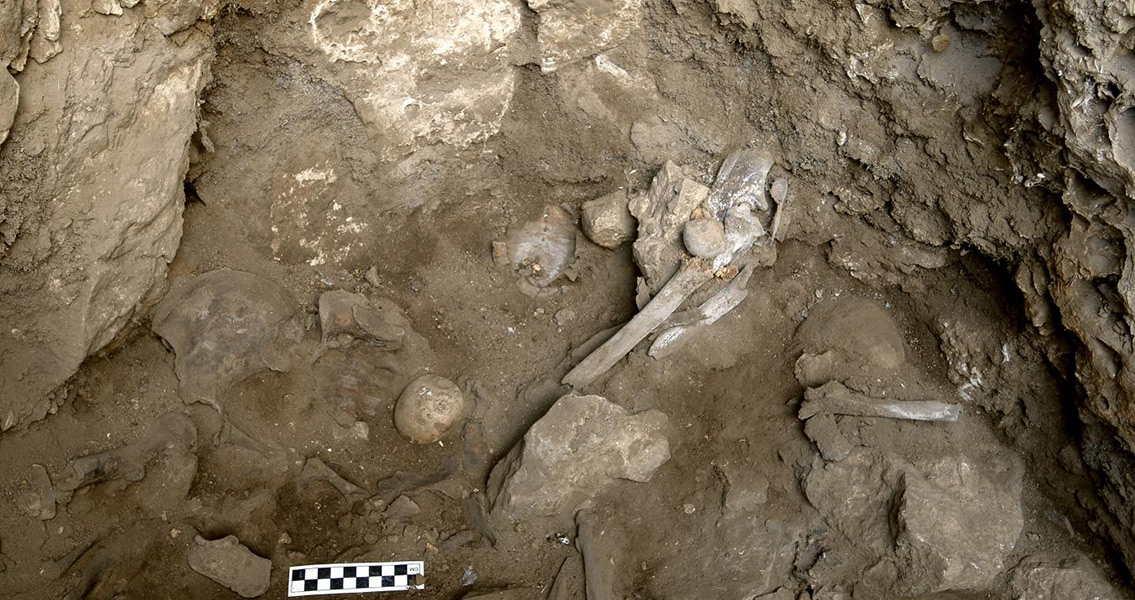
Current Anthropology, can be found here Image courtesy of Naftali Hilger ]]>

Categories
Breaking News

New Clue in the Study of Fauna Dispersal Routes

Sayimys negevensis – was discovered in Israel’s Negev desert (the species was named for the Negev area where it was discovered) and researchers hope it will shed new light on the dispersal routes of several species, including mammals, between Africa and Eurasia during the Early Miocene which occurred between 23 million and 16 million years ago. The discovery has already highlighted Israel’s unique paleogeographic status as an important piece of the Levantine corridor which connected North Africa with Eurasia. Israel is the one place in the Eastern Mediterranean – from Sinai to Anatolia – where Early Miocene fossil sites have been discovered. The research, published in the open access journal PLOS ONE, describes a distant ancestor of today’s gundi: a small rodent who sports bristles (which resemble a comb) on its hind feet’s two middle toes – not surprisingly the gundi is also referred to as a comb-rat. “It is a pivotal species that bridges the gap between an array of primitive Ctenodactylines and the most derived, Early Miocene and later, gundis,” the authors wrote in the PLOS ONE article. Gundis are the only remaining descendants of the Ctenodactylidae family whose ancestors appeared in Asia around 40 million years ago. The species’ widest distribution and greatest diversification occurred from the Far East to Africa, during the Miocene. Today, they live in groups in the deserts and semi-deserts of North and East Africa. “The fossil sites of Israel are in a unique position to offer data on the early times of the large waves of faunal exchanges that took place around 19 million years ago between Eurasia and Africa,” Dr. Raquel Lopez-Antoñanzas, with the University of Bristol, said in a press release. At the time of the Early Miocene, what’s known as Israel today was still attached to Africa. Almost all of the mammals found in modern Israel originated in Africa. Sayimys negevensis is one of only a few species found in Israel with connections to Eurasia. “The new Israeli species is closer in morphology to nearly coeval species found in Pakistan, therefore demonstrating that mammals were already using the Levantine corridor to travel between Eurasia and Africa in the Early Miocene,” Dr. Rivka Rabinovich, a research co-author with the Institute of Earth Sciences and the National Natural History Collections at the Hebrew University of Jerusalem, said in the press release. The new rodent discovery is part of international research being undertaken by scientists from the Israel Geological Survey, Midwestern University in Glendale, Arizona, the University of Manchester and the University of Connecticut; focusing on the paleogeographic implications involving the fauna of Israel during the Early Miocene. For more information www.journals.plos.org Image courtesy of Rivka Rabinovich]]>