Proceedings of the National Academy of Sciences of North America (PNAS) last week, the study by Miikka Tallavaara, Miska Luoto, Natalia Korhonen, Heikki Järvinen and Heikki Seppä deployed ethnographic and climate data to model population sizes during the LGM. An understanding of past human population sizes and densities is hugely important in studying prehistoric cultural and genetic development, the impacts of climate change, and the effects humans have had on ecosystems, and other species. As the study authors explain, large groups of interacting humans experience different cultural and genetic evolution compared to smaller, seperated groups. “Large pools of interacting individuals can create and maintain adaptive skills, as well as phonological variation, more effectively than small populations, and they are also capable of faster cumulative cultural evolution. A decrease in population size may even result in a loss of complex cultural traits.” Despite the significance of prehistoric population history however, it has hitherto remained difficult to reconstruct. Previous attempts to model population size have used archaeological and genetic data, methods the study authors argue make it “extremely difficult to meaningfully compare DNA-based population reconstructions with the records of cultural or environmental changes.” The authors of the study used recent developments in climate envelope modelling, which allow estimates to be made about the suitability of the climate to maintain a species population, to simulate the development of hunter-gatherer populations during the climate change of the LGM. According to their simulation, the population size shrunk from 330,000 people 30,000 years ago to a minimum of 130,000 people 23,000 years ago, as the LGM reached its coldest, most uninhabitable point. The human population in Europe then began to increase, and by 13,000 years ago had reached 410,000 people. Although the general trends in population size from the simulation match those offered by archaeological evidence, the authors point out that their work suggests the population of Europe was substantially higher during the LGM than is typically thought. One explanation offered by the team for this anomally is that the archaeological evidence provides an incomplete representation of population dynamics. The size of the archaeological record varies between different places and time, and can be affected by different rates of erosion and decay. The study concludes that even during the harshest period of the LGM, 36% of the continent remained inhabitable for humans. The conclusions the study makes about population dynamics could be hugely beneficial for future studies of human’s genetic and cultural evolution. For more information: www.pnas.org Image courtesy of Wikimedia Commons user: Christine Zenino]]>
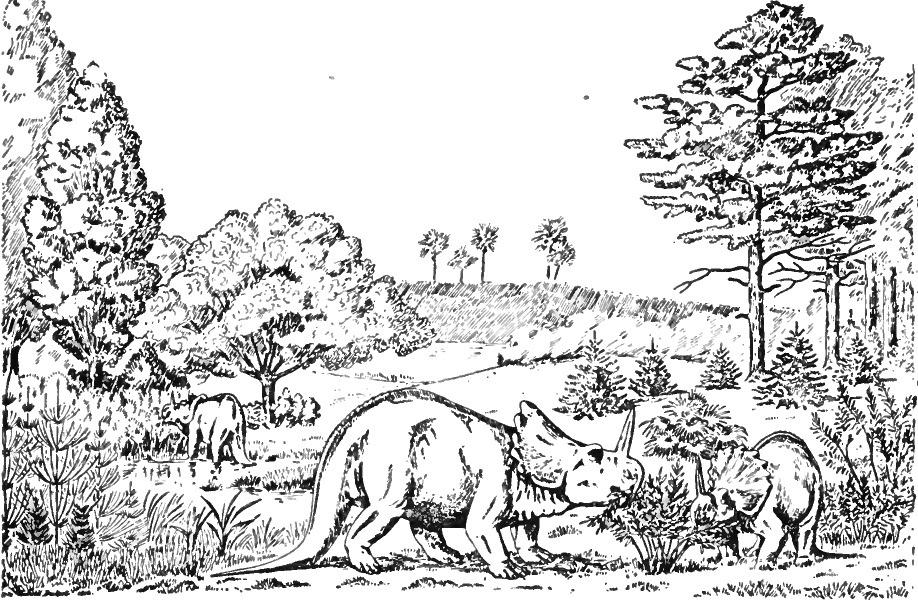
Science, the dinosaurs may have been neither cold-blooded nor warm-blooded – they were somewhere in-between. Some paleontologists call this scientific phenomenon and the fact that dinosaurs are related to birds as “the last big one”. The lead scientist in this study, John Grady, an ecologist at the University of New Mexico, states that dinosaurs may have been able to generate body heat, but they could not keep their body temperature constant. The term that describes this condition is called mesothermy. This allowed them to move fast and grow larger than any other animal in existence in those times. This adaptation enabled them to live longer than the slow-moving reptiles in existence in those times. In this study, 381 different species of animals were compared, with 21 being dinosaurs. The dinosaurs looked at included the Tyrannosaurus, Allosaurus, Apatosaurus, Tenontosaurus and the Troodon. The other species looked at included a range of mammals, birds, sharks, fish, snakes, lizards and crocodiles. All these animals are either warm-blooded or cold-blooded. The researchers looked at the metabolism of the dinosaurs by looking on the size of their bones, and deduced their body mass. By measuring the growth rings in their bones, the scientists could estimate the growth rate of the animals, which is a similar method arborists use to determine the age of a tree. After all the comparisons were completed, they found that dinosaurs did not grow in the same way warm-blooded animals did, neither did they grow in the same way cold-blooded animals did. They did not grow like any of the mammals, birds, reptiles and fish that were a part of the experiment. These dinosaurs had the best characteristics of both worlds that enabled them to grow and move the way they did. These characteristics include the fast firing or muscles and nerves in warm-blooded animals, and the ability to burn fuel more slowly and grow larger than mammals in cold-blooded animals. This makes sense as large dinosaurs such as the Tyrannosaurus and the Apatosaurus would need to eat 24/7 in order to fuel their large bodies if they were warm-blooded like a mammal. These dinosaurs may have had to hunt for days for their food, so they could not survive if they were warm-blooded. Grady says that the notion that animals today must be put into two groups, warm-blooded or cold-blooded, is too vague and simplistic. There are a few animals today that share the same in-between characteristic that the dinosaurs had. These animals include the echidna (a mammal that looks like an anteater but lays eggs), the leatherback turtle, the great white shark and the tuna.]]>
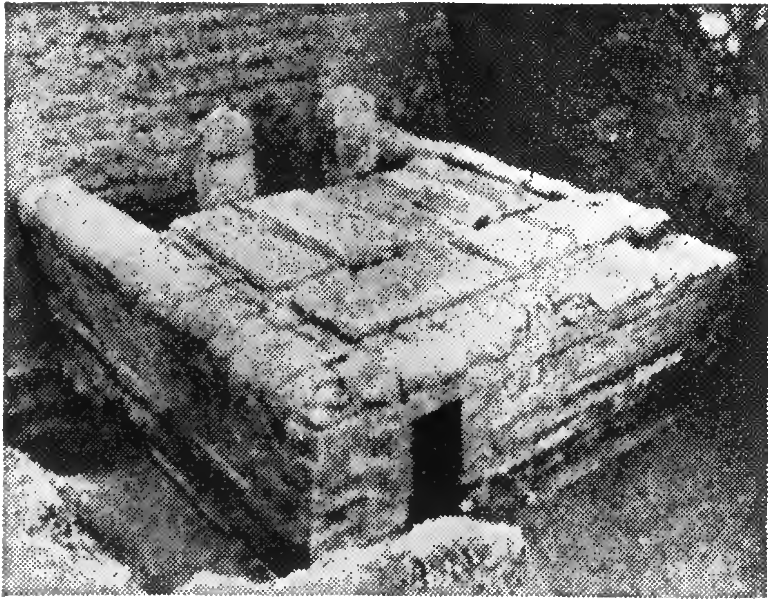
Recent findings uncovered new evidence for prehistoric Scotland. Recently, an unlikely turn of event has lead to a discovery of an ancient Scottish settlement believed to be an Iron Age village. Along with it, a host of ancient artefacts including tools and jewellery were also found. The unexpected discovery was excavated at the construction site of the £17 million A75 Dunragit bypass in Wigtownshire, in south-west Scotland. It has been reported that the discoveries include a rare and complete 130-piece jet bead necklace dating about 2000BC, the first of its kind ever discovered in south-west Scotland. Two of the jet beads necklaces found are considered to be the rarest of the discoveries, according to Dr Alison Sheridan of National Museums Scotland. She was also reported to have said that the necklaces were made in about 2000BC, between the Neolithic period and the Bronze Age, in Whitby, Yorkshire, located about 160 miles from where they were found. A Romano-British brooch, a Bronze Age cemetery complex, cremation urns and pottery fragments were among the other finds. Other than that, some flint tools, including a flint arrowhead from the early Neolithic period and more than 13,500 Mesolithic flints were also found. Flint is a hard, tough chemical or biochemical sedimentary rock that breaks with a conchoidal fracture. It is a form of microcrystalline quartz that is typically called “chert” by geologists. It is a preferred material for making tools and it has been used extensively by human to make stone tools during the prehistoric era. Prehistoric period is divided into three-age system, namely the Stone Age, Bronze Age and the Iron Age. Stone Age then further divided into three periods which are the Paleolithic, Mesolithic and Neolithic. Paleolithic means “Old Stone Age”, and this period begins when human were starting to use stone tools. Meanwhile, Mesolithic means “Middle Stone Age”, and this period dates from the end of the last Ice Age. It is in this period that agriculture was introduced. The Neolithic or the “New Stone Age” period in Scotland spanned approximately 4500BC to 2000BC and is the period in which settled farming became common. The Bronze Age dates from about 2500BC when metal-using and a “package” of other Continental novelties appeared in Scotland – and elsewhere in Britain – to around the 800BC, when iron objects and iron-using probably appeared. The Iron Age then lasted to about 500 AD. Rod McCullagh, an archaeologist of Historic Scotland said, “An unforeseen wealth of archaeological information has been recovered. The team of archaeologists from Amey and Guard Archaeology Ltd have uncovered the remains of dwellings and burials spanning over 7,000 years of prehistory,” He added, “In addition, numerous smaller sites have been discovered which seem to relate to the use and exploitation of the land both through hunting and farming. These are exciting discoveries which offer a much richer understanding of the settlement of south-west Scotland over the past 9,000 years.” Transport Minister of Scotland, Keith Brown have the following to say regarding the findings, “With the A75 Dunragit bypass already improving journey times and providing opportunities for business, leisure and tourism industries on this crucial route between Scotland, the rest of the UK and Europe – it is also helping shine a light on Scotland’s ancient past. “The finds at Dunragit, which would have remained uncovered had the new bypass not been built, are truly stunning, and underline the importance of the value we place on meeting our environmental obligations as we plan and construct essential new infrastructure,” he added. In the meantime the findings are being conserved for further analysis. Research is still ongoing and report by Historic Scotland will be produced to describe and explain what has been discovered along the road. Based on the report, a decision will be made on where the various collections will be stored or put on display. Whatever the result of the findings may yield to us, it would surely becomes another piece of evidence that would serves as an eye opener and might even unravel a new perspective in our knowledge and understanding of the prehistoric age. ]]>