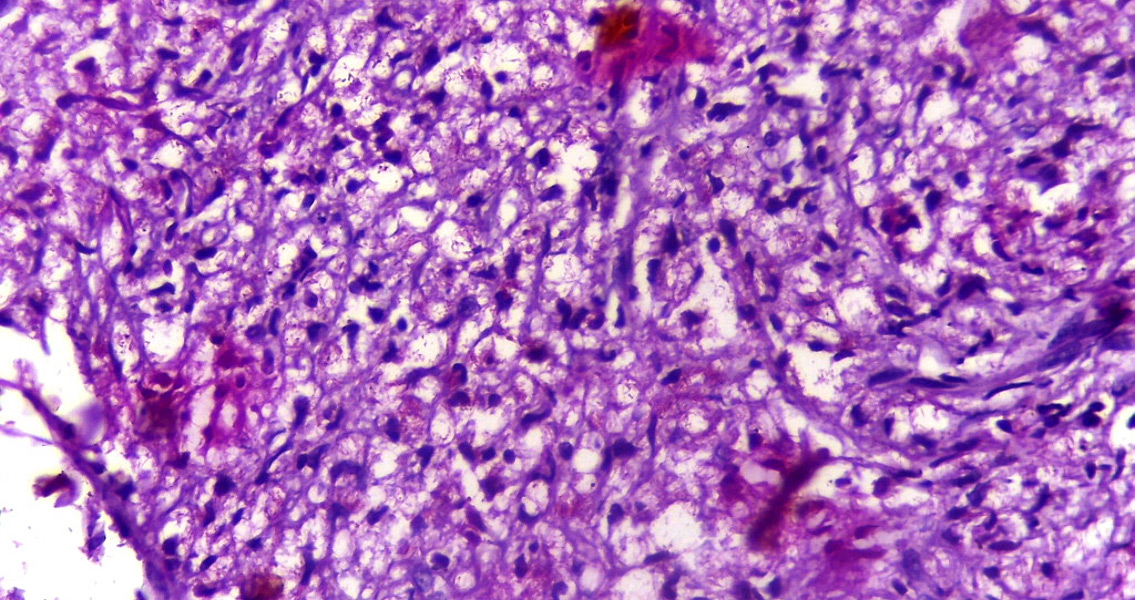
PLOS ONE. The man’s skeleton shows the signs of having been afflicted by leprosy: the toe bones have narrowed and there is damage to the joints. By conducting modern DNA testing the team confirmed that the man, probably aged in his twenties, suffered from leprosy and may well have come to Britain from southern Scandinavia. The team tested the skeleton for bacterial DNA and lipid biomarkers which are characteristic of leprosy. What they found was quite remarkable. “Not every excavation yields good quality DNA,” Professor Mike Taylor, a Bioarchaeologist from the University of Surrey, said, “but in this case, leprosy DNA isolated from the skeleton was so good it enabled us to identify its strain.” Results of the tests showed the specific lineage which the leprosy strain belonged to. The lineage, called 3I, has previously been found in burial sites from Medieval Scandinavia and southern Britain. In the case of the team’s research, the leprosy strain comes from a much earlier period, dating from the fifth or sixth Century CE. By comparing the identified fatty molecules known as lipids from the different leprosy bacteria, the team confirmed that the 3I leprosy found in the Great Chesterford skeleton was different to later strains. Isotopic analysis of the man’s teeth also provided some interesting results. It seems that the Great Chesterford man did not come from Britain; he most likely grew up elsewhere in northern Europe, perhaps southern Scandinavia. It is possible, therefore, that he brought a Scandinavian strain of the leprosy bacterium with him when he traveled to Britain. Project leader Dr Sarah Inskip of Leiden University stated: “The radiocarbon date confirms this is one of the earliest cases in the UK to have been successfully studied with modern biomolecular methods. This is exciting both for archaeologists and for microbiologists. It helps us understand the spread of disease in the past, and also the evolution of different strains of disease, which might help us fight them in the future. We plan to carry out similar studies on skeletons from different locations to build up a more complete picture of the origins and early spread of this disease.” Leprosy today is mainly confined to tropical areas, but in the past it occurred in Europe. Human migration helped to spread the disease, with skeletons from the seventh century onward in particular exhibiting signs of it. The origins of leprosy and how it spread are, however, shrouded in mystery. The recent study of the Great Chesterford skeleton has given us a fantastic opportunity to understand leprosy and, in particular, how it spread. For more information: www.journals.plosone.org Image courtesy of Wikimedia Commons user: Netha Hussain]]>

Journal of Urban History. “The fragmentation of disciplines produces points of view that are difficult to reconcile but it also generates a plural vision, almost kaleidoscopic, on Spanish urban history. We believe this is a good time to make an overall assessment.” After Spain’s stagnation in the seventeenth century, the country began to experience demographic growth in the early eighteenth century. “Cities were trade nodes and grew on the basis of the development of colonial empires,” Diaz and Araujo explain. Interestingly, these early modern cities had a significantly lower level of life expectancy than rural areas. Most large cities suffered from negative natural population growth; this trend could only be offset by sustained mass immigration to urban areas. The Spanish monarchy started to focus on the urban population’s material needs, particularly food markets. Urbanisation, therefore, is clearly not a modern phenomenon. Past municipal governments also sought to solve problems caused by a growing urban population. These urban projects, however, were very fickle. “Escalating conflict between the French and British empires, from the Seven Years War, absorbed the budget of the Spanish monarchy and slowed down or did not permit authorities to carry out large urban projects or simply limited them to wealthier neighborhoods,” Diaz and Araujo noted. Another key period which Diaz and Araujo draw attention to is the Spanish Civil War. The destruction wrought by the Spanish Civil War in the 1930s left a devastated country and more than 800,000 dead. Following the war, famine and shortages – in particular of building materials – ravaged cities and delayed reconstruction work for decades. Between 1950 and 1980, Spain had the highest rates of urban growth in Europe, peaking at 3.23 percent per year in the 1960s. This remarkable urbanisation created a serious housing problem. In the absence of public housing, the rental market dominated – the percentage of private ownership of houses in Madrid and Barcelona fell to 6%. In response to this crisis, the Spanish government adopted policies to encourage private dwelling ownership, considered to be important for social stability. By 1970, the percentage of people owning their home had risen to 64%, by 1980 this figure was 73%. Urban growth, however, sowed the seeds of Spain’s housing bubble which burst in spectacular fashion following the 2008 economic crash. During the economic boom Spain experienced between 1995 and 2008, GDP grew at 4 percent annually and national income increased 60 percent over the same period. The driving force behind this growth was the construction of four million households: eight hundred thousand units were built from 2005 to 2007, which, Diaz and Araujo note, was the same amount as France, Germany, and the United Kingdom – which had five times the Spanish population – built as a whole. Diaz and Araujo trace nearly 300 years of Spain’s urban development and decline. Their work provides a spectacular overview of the major trends and events in Spain’s history and links it with developments in urban history. For more information: www.juh.sagepub.com Image courtesy of Wikimedia Commons user: Fallschirmjäger]]>

www.nature.com Image courtesy of Wikimedia Commons user: Ikiwaner]]>

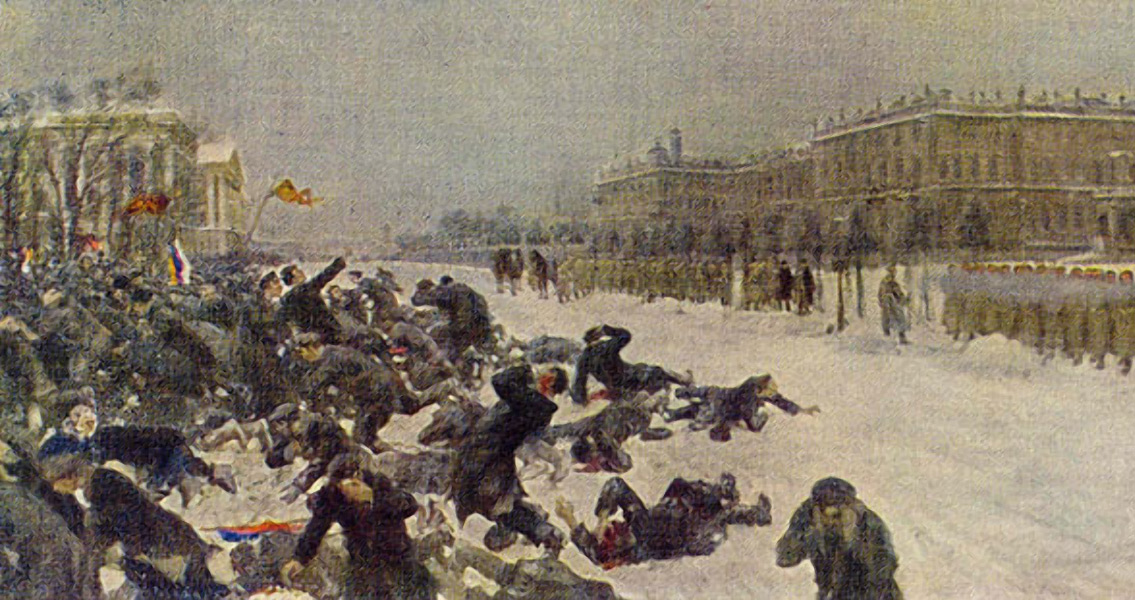
Jewish History. In the aftermath of the Revolution, new secular Jewish spaces began to emerge after the liberalisation policies of Tsar Nicholas II had slackened restrictions on the press and public gatherings. This new Jewish public sphere – comprised of the Yiddish press, coffeehouses and theatres – created an ‘ethno-linguistic’ community amongst Warsaw’s Jews, providing new collective bonds for the community. This new Jewish community provided a sense of order for new migrants to Warsaw, a place which could be very worrying. “The disorder, confusion, and possible dangers of urban life—from unfamiliar streetscapes to charlatans who preyed on those who were vulnerable—disoriented newcomers and other city residents, particularly women and children,” Auerbach notes. It is clear that scholarship has taken a clear shift in how Warsaw’s Jewish community is examined. The modern Jewish politics which arose in early-twentieth-century Warsaw was a reaction to a crisis of modernity and urbanisation. Jewish politics did not grow out of internal Jewish developments; they were a response to outside factors. “By shifting the focus away from ideologues, elite decision makers, and cultural figures and toward the broader public,” Auerbach notes, “[new research] complements and challenges the foundational historiography of modern Jewish politics in eastern Europe.” New cultural institutions expanded the Jewish public sphere and were instrumental in bringing Jews into political modernity. Coffeeshops, the press and theatres provided secular arenas where ideas could be shared and debated and Jews could form new bonds. “These spaces curbed the sense of isolation experienced by newcomers,” Auerbach concludes. For more information: www.link.springer.com Image courtesy of Wikimedia Commons user: Alex Bakharev ]]>