Categories
Breaking News

New Section of Ancient Roman Wall Found in Bulgaria

Archaeology in Bulgaria website. Sexaginta Prista, which translates to “port of the sixty ships” in Latin, was a major city within Moesia Inferior, the Late Antiquity province that bordered on so-called “barbarian” regions along the Lower Danube. The fortress city itself was one of several frontier fortifications known as the Limes Moesiae, designed to keep these barbarian forces at bay; the 20-meter long fragment of wall most recently discovered, which would have been part of the southern wall of the ancient Roman city, has been dated back to the fourth century CE. The importance of the find was reinforced in a press release from the museum. The museum stated that the remarkably high levels of preservation had made it possible to compare the Sexaginta Prista fortification system to other cities in the surrounding regions over the past several years. These other finds include the ancient Roman cities of Trimamium and Iatrus, the museum added. In addition to the wall – an invaluable find in and of itself – museum archaeologists also found coins and ceramic vessels that span the centuries between Late Antiquity and the eleventh century CE, otherwise known as the Early Middle Ages. Discoveries include coins from the Early Byzantine and Late Roman periods as well as later pottery fragments that have been dated to well after the transformation of Sexanginta Prista to the settlement that would one day become known as Ruse. Additionally, evidence of coins dating to the fifteenth through the nineteenth centuries, the time of the Ottoman Empire, have also been discovered. All told, some 300 coins, all from varying historical periods, have been excavated during the effort to study the ancient Roman wall fragment. Meanwhile, the dig itself was a historic event. The rescue excavations were noteworthy in that they marked the first time in the history of Ruse that an archaeological dig had occurred on private property. At the same time, the Roman roots of the Bulgarian city aren’t even the true beginning of the story of Ruse. Sexaginta Prista itself, which existed in the northwestern region of modern Ruse alongside the Danube, was erected on the ruins of an ancient Thracian settlement thought to date back to as early as the third century BCE. ]]>

Categories
Breaking News

Brain-Size Evolved with Body-Size Along for the Ride

Homo genus. “Over the last four million years, brain size and body size increased substantially in our human ancestors,” Mark Grabowski with the American Museum of Natural History and author of the paper is quoted as saying in a press release from the museum, “This observation has led to numerous hypotheses attempting to explain why observed changes occurred, but these typically make the assumption that brain and body size evolution are the products of separate natural selection forces.” That’s the very assumption now being questioned. There is significant evidence showing that the genetic variations (evolution’s kick starter) in some traits are a result of genes which are also causing simultaneous variations in other traits – leading to the conclusion that the natural selection experienced by either trait causes a correlated response in the unselected trait. For example, consider an elephant’s leg bone; as the bone grows longer, it also grows wider. If you used artificial selection to produce an elephant that was tall, it’s likely the elephant’s legs would also get wider as they get longer. This effect, in part, is because of shared genetic variations (co variations) among the traits of the leg bone. Likewise, researchers set out to investigate this type of genetic relationship between a human’s brain size and their body size and its impact, if any, on our evolution. Using the patterns of brain-size and body-size covariations from an assortment of modern humans and primates, researchers created several different models to examine exactly how these underlying genetic interactions and their associated selection pressures affected the evolution of our lineage. For the first time the findings demonstrate that the strong selection pressure to increase only brain size had a significant role in increasing body size at the same time, throughout our evolution. The phenomenon alone may also have been responsible for a major increase that occurred in both traits when our human ancestors (like Australopithecus) transitioned to Homo erectus. Selection undoubtedly played a role in fine tuning the physical changes inherent to bigger body size, this research suggests however, it was not the driving force and evolutionary models pertaining to Homo origins should be reconsidered. To put it another way, all of the scientific ideas and research done to explain why, over time, humans evolved bigger bodies may be moot; body size simply got pulled along with brain size. The work was published in the journal Current Anthropology.]]>

Categories
Breaking News

Homo Sapiens Inhabited Russian Dig Site

Categories
Editorial

€185 billion – the Cost of the USSR's Occupation Of Latvia

Categories
Breaking News

Did Neanderthals Brush Their Teeth?

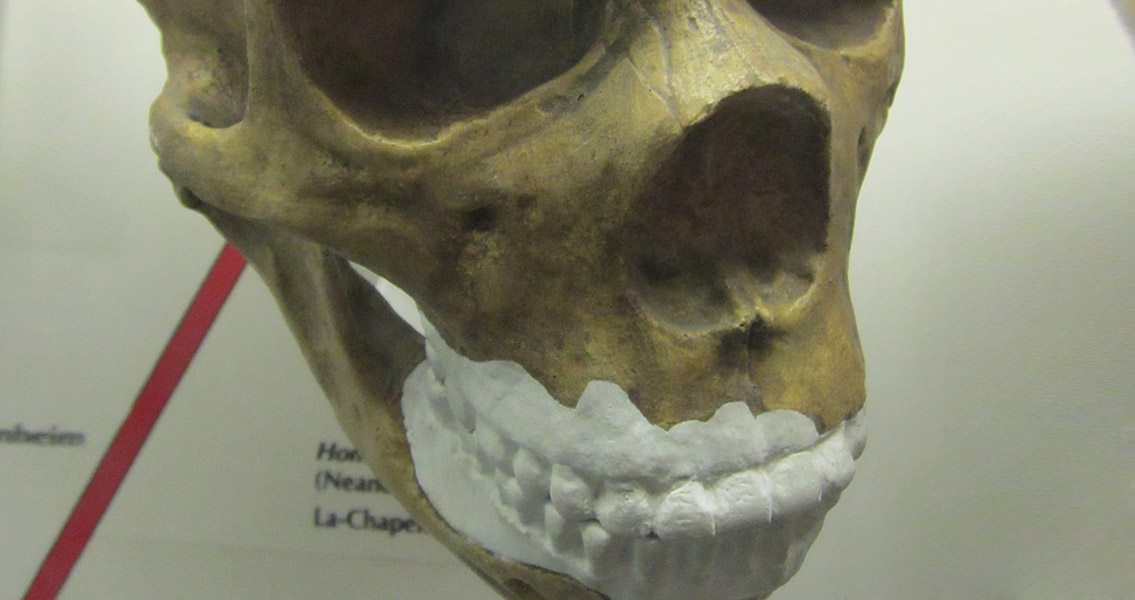
Antiquity, has discovered evidence of non-edible material in Neanderthal teeth. It is a remarkable find, one which opens up a host of possibilities concerning what Neanderthals did with their teeth: did they use their mouths as a third hand, or are the non-edible materials evidence that Neanderthals were concerned with dental hygiene? Most estimates suggest that Neanderthals first came on the scene between 300,000 and 250,000 years ago. By around 32,000 years ago they had been rendered completely extinct. They are often portrayed as being less intelligent, and uncivilised when compared to humans, however, new studies, including this latest one by Anita Radinia, Stephen Buckleya, Antonio Rosasa, Almudena Estalrricha, Marco de la Rasillaa and Karen Hardy; are increasingly bringing this assumption into question. For their research, the team led by Hardy from the Catalan Institution for Research and Advanced Studies extracted chemical compounds and micro fossils embedded in the teeth of Neanderthals from the 49,000 year old El Sidrón site in Spain. It was a unique approach to the still relatively new use of dental calculus (tartar) in archaeological study. Dental calculus is a hard substance that builds up on a creature’s teeth when they are not cleaned properly. For a long time archaeologists considered it nothing more than a waste product, and scrubbed it off of fossils. Over the last decade however, it’s been realised calculus actually contains a wealth of information, particularly when it comes to diet reconstruction of ancient populations. Hardy’s team discovered traces of conifer wood from a non-edible part of the trees in the molar of one adult Neanderthal. According to the study, the substance with no nutritional value could not have been confused with an edible part of a conifer – meaning it’s presence was certainly not connected to the Neanderthal’s diet. The study, published in the April edition of Antiquity, points out that associated dental wear suggests the teeth were being used for non-dietary functions, supporting the idea the piece of conifer had become embedded in the molar because the animal was using its mouth as a third hand. However, there are several other possible explanations. A study from 2013 revealed evidence from a 1.8 million year old Homo Erectus fossil discovered in Georgia that the creature had used something resembling a tooth pick to clean its teeth. Another study published earlier this year in the Journal of Human Evolution suggested that Neanderthals had healthier teeth than modern human hunter gatherers, a result of them cleaning their teeth. Taking these two studies into consideration, the piece of conifer wood in the El Sidrón Neanderthal’s teeth could have been linked to dental hygiene. Hardy et al’s study shows that a wealth of new insights into the lives of Neanderthals and ancient humans can be gained by studying dental calculus. The ambiguity surrounding their discovery serves as a reminder of just how much there is to learn about how our extinct cousins lived. For more information: journals.cambridge.org Image courtesy of Wikimedia Commons user: Rept0n1x]]>

Categories
Breaking News

More Details Revealed About Iceland’s “Woman in Blue”

American Association of Physical Anthropologists, researchers presented the results of their ongoing examination and testing of the girl’s remains and the objects found buried with her. The incomplete and poorly preserved skeletal remains belong to a young woman determined to have been between 17 and 25 years old (radiocarbon testing of the fabric and tooth show she was born around the year 900 CE and the time of her death was sometime around the year 920 CE). Based on the chemical analysis of one of her teeth, the Woman in Blue moved from the British Isles or Scandinavia to Iceland when she was between five and ten years old, a fact indicated by her change in diet from mostly land animals and plants to one that included a large amount of seafood and fish. It’s unclear if the young woman was a Viking or Northern European, although she was dressed in traditional Viking garb which had been made with Icelandic wool and dyed blue using herbs that were probably brought to Iceland from abroad. The indigo blue plant-based dye is typical of female Viking garments. Buried along with her were an extravagant pearl necklace and two oval Scandinavian brooches made with a copper alloy. Amazingly, a piece of her skin had been preserved underneath one of the Scandinavian brooches which had been pressed against the young woman’s body at the time of her burial. The skin has allowed researchers to determine, among other things, her age and origin. Iceland’s history starts with Viking explorers (and their slaves) settling there in the ninth century – Iceland remained uninhabited even after western Europe had long-been settled. These first permanent settlers and the vast majority of the settlers (but not all) who arrived in Iceland over the following decades were Norwegian. The traditional story for this Norwegian exodus is that it was instigated by people escaping the overly strict rule of then Norwegian king Haraldr Hárfagri (Harold the Fair-haired). Alternatively, people may have simply been leaving Norway because of overcrowding in the western fjords. Seagoing Vikings from Norway, Denmark, and Sweden arrived and settled in several different countries, Iceland being one of them between the year 700 CE and the year 1100 CE, supporting the possibility the “Woman in Blue” came with the Vikings to Iceland. Skin and bone remains from the Woman in Blue were inadvertently stained green by the preservation solution used in the jars they were stored in. These items were transferred recently into jars containing a light paraffin oil in order to maintain their preserved state without staining them further. DNA from the young women is currently being studied by a team of researchers led by Joe and Jakob Walser, both with the University of Iceland in Reykjavik.]]>

Categories
Breaking News

Patent for Wright Brothers’ Flying Machine Re-Discovered

Categories
Breaking News

Electrical Construction Sheds Light on Roman Britain

Categories
Breaking News

Jews Fight Back in Warsaw Ghetto Uprising

Zydowski Zwiazek Wojskowy, trans. The Jewish Military Union) and ZOB (Zydowska Organizacja Bojowa, trans. The Jewish Combat Organisation) to combat the Nazi soldiers. The two groups, the ZOB with around 500 members, the ZZW some 250, soon elected to work together to resist German attempts to destroy the ghetto. In October 1942, the ZOB managed to establish contact with the Home Army, an underground movement of the Polish military which resisted the Nazi occupation. They made a deal which saw the Home Army supply ZOB with weapons, mostly hand guns and explosives. Resistance had become the only option for those imprisoned in the Warsaw Ghetto. The chances of success were slim, but their fate under Nazi rule had been made increasingly obvious. Death seemed more and more inevitable, at least armed resistance offered some chance of survival. “Whomever you talk to, you hear the same cry: The resettlement never should have been permitted. We should have run into the street, set fire to everything in sight, have torn down the walls, and escaped to the Other Side. The Germans would have taken their revenge. It would have cost tens of thousands of lives, but not 300,000.” wrote Emmanuel Ringelblum in 1942, in his diary of life in the Warsaw Ghetto. “Now we are ashamed of ourselves, disgraced in our own eyes, and in the eyes of the world, where our docility has earned us nothing. This must not be repeated now. We must put up a resistance, defend ourselves against the enemy, man and child.” Shortly after the Nazi invasion of Poland, Warsaw’s Jewish citizens were forced into the barb wire fenced ghetto. More Jews from across Poland and Nazi occupied Eastern Europe were sent to the site, so that some 400,000 people ended up living in an area covering less than two square miles. Forced to live on inadequate rations, disease and starvation soon started to kill thousands each month. From July 1942, Jews from the Warsaw Ghetto started to be rounded up and taken to the Treblinka concentration camp at a rate of roughly 6,000 a day. The Nazi authorities initially claimed Treblinka was a labour camp, but news soon got to the ghetto that being transferred meant almost certain death. The first act of resistance came on 18th January, 1943, when ZOB fighters ambushed the Nazi forces sent in to round up some of the ghetto’s population for transfer. Fighting lasted for a few days, and several Nazi soldiers were killed before they could withdraw. Two months later, Heinrich Himmler announced that the ghetto was to be emptied of its population on 19th April, to celebrate Hitler’s birthday. When SS soldiers entered the ghetto on the 19th they were faced with 1000 ZOB fighters armed with homemade bombs and guns. Frantic fighting ravaged the streets while the non-combatant residents hid themselves in secret underground bunkers. The SS soldiers soon withdrew, but the respite was short lived. On the 24th April an all out military assault was launched on the ghetto. For a month relentless fighting wrecked the ghetto, as the ZOB waged guerrilla warfare against the Nazi troops in an attempt to fend off transportation to Treblinka. As the battle continued, Nazi soldiers set about systematically destroying the ghetto block by block, obliterating the bunkers where Jewish residents had been hiding. ZOB soldiers continued their fight from the sewers, but on 8th May their cause was all but lost with the destruction of their command centre, and the group’s leaders committed suicide to evade capture. By 16th May the Warsaw Ghetto was under Nazi control, and transportation to Treblinka resumed en masse. Some 300 German soldiers were killed in the uprising, while thousands of Jews lost their lives in the fighting. Any Jewish survivors were sent to Treblinka, where most perished before the end of the war. The heroic last stand by the ZOB may have ended in tragic defeat, but it was remarkable in terms of the amount of Nazi forces it diverted, especially considering the resistance fighters’ limited resources. Although it failed to save the people of the Warsaw Ghetto, it had aided the Allied war effort with the Nazi troops it occupied.]]>

Categories
Breaking News

Ancient Mass Graves Uncovered in Outskirts of Athens