Evolutionary Anthropology ]]>

Evolutionary Anthropology ]]>


The Cantos. Combining memories, feelings and impressions from the poet’s life alongside fragments of other literature, the poem was also remarkable for revealing his growing interest in history and politics. Perhaps responding to the massive upheavals that had befallen Europe in the First World War and the decades leading to the Second, Pound became increasingly obsessed with economic history. In particular, he came to believe that misunderstanding of the financial system by governments and the general population was allowing international bankers to take advantage. This, he believed, was the main cause of war in the world. Pound’s world view ultimately led him to support Italian dictator Benito Mussolini. In 1939 he returned home to the USA, hoping he could prevent his home country going to war against the Axis powers. He soon realised he wouldn’t be able to achieve his goal, and set off for Rome. He recorded hundreds of radio broadcasts for Rome Radio, praising Mussolini, criticising the USA, and claiming that the war was the result of a Jewish conspiracy. A belief that a fascist state was the most fertile for the creation of art was another key idea behind Pound’s support for Il Duce. In 1943 Italy was invaded by the Allies, and Pound was handed over to the US forces in 1945, who soon flew him back home to stand trial for treason. He was declared insane however, and sent to St. Elizabeth’s Hospital. His incarceration lasted for close to thirteen years, but it failed to stem his creativity. He continued work on The Cantos, publishing two more volumes of what had become his life’s work, and translated works of Chinese poetry. Pound stayed visible to the public throughout his time at St. Elizabeth’s, controversially winning the Bollingen Prize while also receiving visitors and maintaining correspondence with the outside world. On 18th April 1958, Pound was declared unfit to stand trial, and all charges against him were dropped. Then, as now however, Pound’s mental state was a cause of significant controversy, with many questioning whether he was really insane. In the 1980s, a decade after Pound’s death, a series of articles were published by psychiatrists with access to newly released records, claiming that Pound had in fact been sane all along. “The Pound case is one of the earliest and most flagrant examples of the ongoing abuse of psychiatry in the American criminal-justice system. For it seems clear that one man, Dr. Overholser, decided that Pound should not stand trial for treason and then singlehandedly engineered the testimony that led to his hospital confinement.” wrote Dr. Fuller Torrey in a Psychiatry Today article in 1981, suggesting that almost every doctor who examined Pound considered him sane. After his release, Pound returned to Italy where he lived until his death in 1972. While back in Europe, he publicly declared the whole of the USA to be an ‘insane asylum’, and performed a fascist salute in public several times. Pound was a pioneer of modern literature who vocally supported the most abhorrent political idea of the twentieth century, a renowned critic who inspired debates on the very nature of sanity. Before he died he never finished The Cantos, leaving behind a sprawling, unpredictable and uncategorisable work which seems an accurate testimony to his remarkable life. This article was updated on 18th April 2016. The original wrongly suggested that Italy was invaded by the Allies in 1945, rather than 1943.]]>
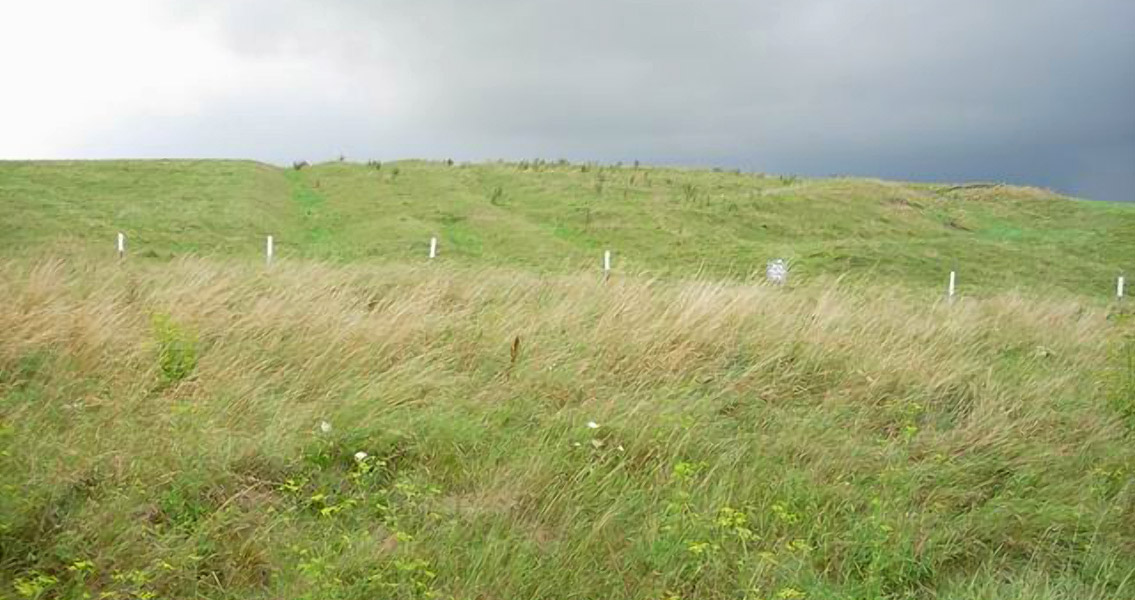
Current Archaeology. The Defence Infrastructure Organisation enlisted the aid of Wessex Archaeology to undertake excavation and study of the mass grave site. Jackie McKinley, an osteologist with the archaeology organisation, remarked that the site was likely a planned cemetery and would have featured some sort of grave identification such as low mounds or markers. While rather large for its date, the cemetery is a normal domestic one judging from the wide range of ages of the deceased, McKinley added. Grave goods were found within many of the burials, including personal possessions such as knives, brooches and glass beads. There was also evidence that those buried within were part of a community that had wide-ranging trade and commerce connections, judging by the Red Sea cowrie shells found in a selection of the graves. One unique object, a small cylinder found buried with a young woman, is of special note; known as a “work box” because other examples unearthed at other dig sites have been found containing pins, the object has yet to be opened. However, x-ray analysis has revealed that there could be several fragmented objects made of a copper alloy within. McKinley stated that the work box would have certainly been a status symbol at the time. Its properties were likely as functional as they were “amuletic”, she added. While there’s no evidence of any Anglo-Saxon settlement within close proximity to the cemetery, there is evidence of why the community chose the site for its burial needs. A pair of prehistoric “hengiform” monuments, edifices that could have been barrows or ring ditches, have been found close by the cemetery. The research team says that right now, based on preliminary findings, these monuments could have been used from as early as the Neolithic to as late as the Bronze Age. Additional prehistoric discoveries at the site include several Neolithic ceremonial pits found to have been filled deliberately with a selection of unique objects. The majority included potsherds from grooved ware pottery in the Woodlands style as well as intact and fragmented axes – one of which seems to have been constructed from a distinctive Cornish green stone. Antlers, aurochs bones, flint hammerstones, and pieces of chalk carved into the shape of a ball and a bowl round out the prehistoric finds. The crown jewel of the Neolithic artifacts, a rare standout oval flint blade known as a discoidal knife, is now one of only three ever found dating back to the time period. Image courtesy of Wikimedia Commons user: Hugh Venables]]>

Sayimys negevensis – was discovered in Israel’s Negev desert (the species was named for the Negev area where it was discovered) and researchers hope it will shed new light on the dispersal routes of several species, including mammals, between Africa and Eurasia during the Early Miocene which occurred between 23 million and 16 million years ago. The discovery has already highlighted Israel’s unique paleogeographic status as an important piece of the Levantine corridor which connected North Africa with Eurasia. Israel is the one place in the Eastern Mediterranean – from Sinai to Anatolia – where Early Miocene fossil sites have been discovered. The research, published in the open access journal PLOS ONE, describes a distant ancestor of today’s gundi: a small rodent who sports bristles (which resemble a comb) on its hind feet’s two middle toes – not surprisingly the gundi is also referred to as a comb-rat. “It is a pivotal species that bridges the gap between an array of primitive Ctenodactylines and the most derived, Early Miocene and later, gundis,” the authors wrote in the PLOS ONE article. Gundis are the only remaining descendants of the Ctenodactylidae family whose ancestors appeared in Asia around 40 million years ago. The species’ widest distribution and greatest diversification occurred from the Far East to Africa, during the Miocene. Today, they live in groups in the deserts and semi-deserts of North and East Africa. “The fossil sites of Israel are in a unique position to offer data on the early times of the large waves of faunal exchanges that took place around 19 million years ago between Eurasia and Africa,” Dr. Raquel Lopez-Antoñanzas, with the University of Bristol, said in a press release. At the time of the Early Miocene, what’s known as Israel today was still attached to Africa. Almost all of the mammals found in modern Israel originated in Africa. Sayimys negevensis is one of only a few species found in Israel with connections to Eurasia. “The new Israeli species is closer in morphology to nearly coeval species found in Pakistan, therefore demonstrating that mammals were already using the Levantine corridor to travel between Eurasia and Africa in the Early Miocene,” Dr. Rivka Rabinovich, a research co-author with the Institute of Earth Sciences and the National Natural History Collections at the Hebrew University of Jerusalem, said in the press release. The new rodent discovery is part of international research being undertaken by scientists from the Israel Geological Survey, Midwestern University in Glendale, Arizona, the University of Manchester and the University of Connecticut; focusing on the paleogeographic implications involving the fauna of Israel during the Early Miocene. For more information www.journals.plos.org Image courtesy of Rivka Rabinovich]]>

Tullimonstrum gregarium, have been found exclusively in the state of Illinois, deep in its coal quarries. The bizarre visage of the Tully Monster – with its long, eel-like body, fins on its tail resembling that of a squid’s back end, and long, tentacle-like neck ending in a mouth reminiscent of a crab claw – has captured the imaginations of scientists and cryptozoologists alike. Because of the strange agglomeration of body parts – which included a pair of stalks that ended in blob-like ovals thought to have been eyes – researchers have been flummoxed as to how to classify the Tully Monster. However, the new research study, headed by University of Leicester PhD student Thomas Clements, managed to reveal some of T. gregarium’s secrets, specifically by investigating those strange eye stalks. In a university press release, Clements recounted how it was the distinctiveness of those stalked structures that inspired the study. Bizarre anatomy in a fossil makes it difficult to choose a starting point, the PhD student added, which led the research team to focus on what they thought was the most interesting feature of the Tully Monster. The idea panned out in a big way. The researchers, who joined forces with colleagues from the University of Texas in Austin and the University of Bristol, found that the dark blobs at the ends of those stalks were composed of microscopically small granules, hundreds of thousands of them, and they were identical chemically and physically to melanosomes, organelles instrumental in the creation and storage of melanin. Almost every animal is capable of producing this pigment, according to the University of Bristol’s Dr. Jakob Vinther, who was also involved in the study. Melanin is instrumental in the wide range of hair and skin color in humanity, for instance; however, it’s also found in the eyes of a large number of animals, where it plays a role in blocking excess light from entering the eye, and allowing a clear visual image to form. What this means for the Tully Monster – finding melanosomes in such high concentrations in the two terminal bulbs on its stalks – is that it has been conclusively proven that the dark blobs were eyes. The team also found that there were two differently-shaped melansomes in the Tully Monster’s eyes. This is a characteristic found exclusively in vertebrates. In other words, not only has it been proven that T. gregarium had eyestalks but also that it was indeed a vertebrate, unlike previous research that suggested the Tully Monster lacked a backbone. These new revelations – the fact that the Tully Monster had rather good vision and that it was indeed a vertebrate – suggest that the animal might have been a fish. A rather bizarre fish, Thomas commented, but a fish nonetheless. The research study, which was published in the journal Nature, can be found online here Image courtesy of University of Leicester]]>

Geology, the study has answered one of the most curious questions surrounding the mass extinction event which took place 65 million years ago. ]]>

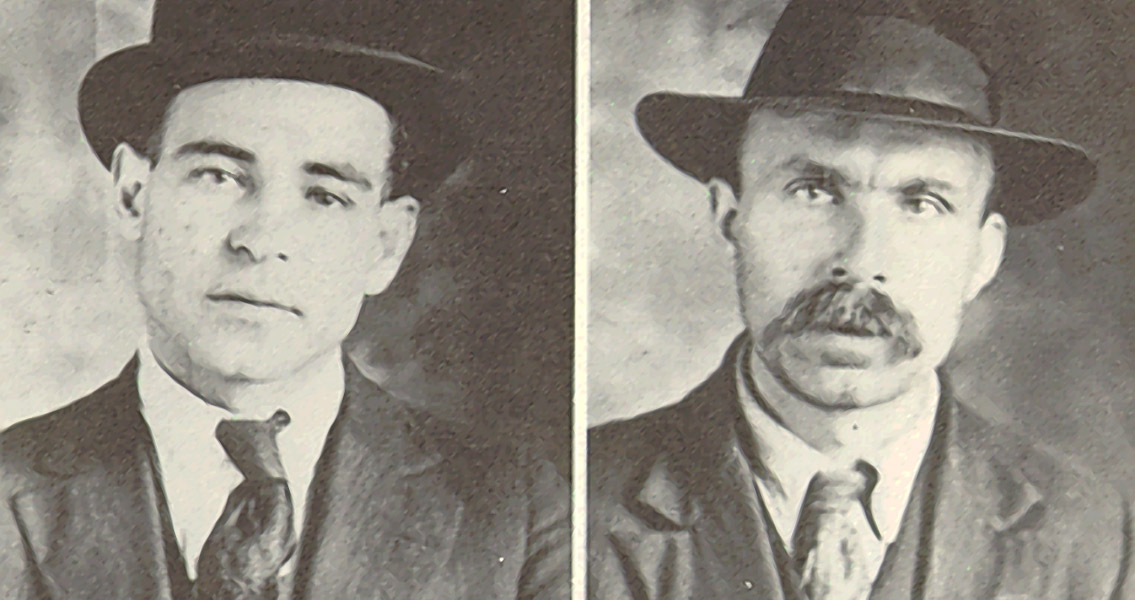
The ability to analyse ballistics in 1920 was of course limited compared to modern standards. Advances over the decades however, have seen the ballistics evidence reexamined several times, starting with the development of the comparison microscope just before the men’s executions in 1927. Each reevaluation of the evidence, in 1927, 1961 and 1983, all came to the same conclusion, Sacco’s revolver was the one which had been used to kill the security guard and the paymaster. On the other hand, some have accused the police of planting the bullet used in ballistics tests, observing that the one which matched Sacco’s gun didn’t match any others at the crime scene. Others argue the gun in Vanzetti’s possession which the prosecution claimed he had stolen from one of the victims, was in fact the wrong caliber and serial number. A book written by Felix Frankfurter, future Supreme Court Justice, in 1927, argued that there was little evidence to support the guilty verdict. It is unlikely if Sacco and Vanzetti’s guilt or innocence will ever be proven either way (there is also a third school of thought which reasons that Sacco was guilty but Vanzetti innocent). What is clear however, is that they were denied justice. As Massachusetts governor Governor Michael Dukakis proclaimed in 1977, the men had clearly not received a fair trial. Guilty or not, they were victims of the prejudices of the time, highlighted most clearly in the repeated refusal to allow them a retrial, despite new evidence surfacing.]]>
