Categories
Breaking News

The Meteorites Currently Bombarding the Earth are Surprisingly Strange

Nature Astronomy, the new paper by lead author Philipp Heck of The Field Museum in Chicago marks the first “big picture look” at these meteorites from deep in the earth’s past. Four hundred and sixty-six million years ago, well before the time of the dinosaurs, there was a spectacular collision in outer space; an unknown object smashed into a massive asteroid and tore it apart, sending chucks of rock and debris falling towards the earth. Today, many millions of years later, it is still the fall out from this collision that is responsible for the majority of meteorites that fall to earth. Heck and his team decided to find out what kind of meteorites were falling to earth before the massive collision. They determined that the kinds of meteorites which bombarded the earth’s surface then are incredibly rare now. “We found that the meteorite flux, the variety of meteorites falling to Earth, was very, very different from what we see today.” explained Heck, in a press release from the Chicago Field Museum. “Looking at the kinds of meteorites that have fallen to Earth in the last hundred million years doesn’t give you a full picture,” explains Heck. “It would be like looking outside on a snowy winter day and concluding that every day is snowy, even though it’s not snowy in the summer.” Put simply, meteorites are pieces of rock that have fallen to earth from outer space (asteroids on the other hand, are pieces of rock still in space). They’re typically formed from the debris of cosmic collisions involving bodies such as moons, asteroids and planets. There are however, a huge number of different types of meteorites, reflecting the compositions of the different bodies involved in the collisions that created them. Analysing the composition of the different meteorites that fall to earth can give scientists valuable insight into the history of our solar system. “We knew almost nothing about the meteorite flux to Earth in geological deep time before this study,” said coauthor Birger Schmitz of Sweden’s Lund University. “The conventional view is that the solar system has been very stable over the past 500 million years. So it is quite surprising that the meteorite flux at 467 million years ago was so different from the present.” Heck’s Swedish and Russian colleagues excavated samples of rock from an ancient seafloor now exposed in a Russian river valley containing meteorites, and then dissolved the rocks in acid so that only microscopic chromite crystals remained. “Chrome-spinels, crystals that contain the mineral chromite, remain unchanged even after hundreds of millions of years,” said Heck. “Since they were unaltered by time, we could use these spinels to see what the original parent body that produced the micrometeorites was made of.” Chemical analysis showed that the meteorites and micrometeorites that fell over four hundred and sixty six million years ago were different to the ones that have fallen since. A full 34 percent of the pre-collision meteorites belong to a meteorite type called primitive achondrites; today, only 0.45 percent of the meteorites that land on Earth are of this type. William Bottke of the Southwest Research Institute, one of the contributors to the paper, said: “Meteorite delivery from the asteroid belt to the Earth is a little like observing landslides started at different times on a mountainside. Today, the rocks reaching the bottom of the mountain might be dominated by a few recent landslides. Going back in time, however, older landslides should be much more important. The same is true for asteroid breakup events; some younger ones dominate the current meteorite flux, while in the past older ones dominated.” Heck and his team now hope to expand their study, to explore different windows in time in order to learn more about the formation and interaction of different bodies in the solar system. Image courtesy of © Don Davis, Southwest Research Institute.]]>

Categories
Breaking News

Timeline of Maya Collapse Pinpointed

Proceedings of the National Academy of Sciences, can be found here Image courtesy of Takeshi Inomata/University of Arizona ]]>

Categories
Breaking News

Archaeological Dig at Colosseum Yields Horse Skull

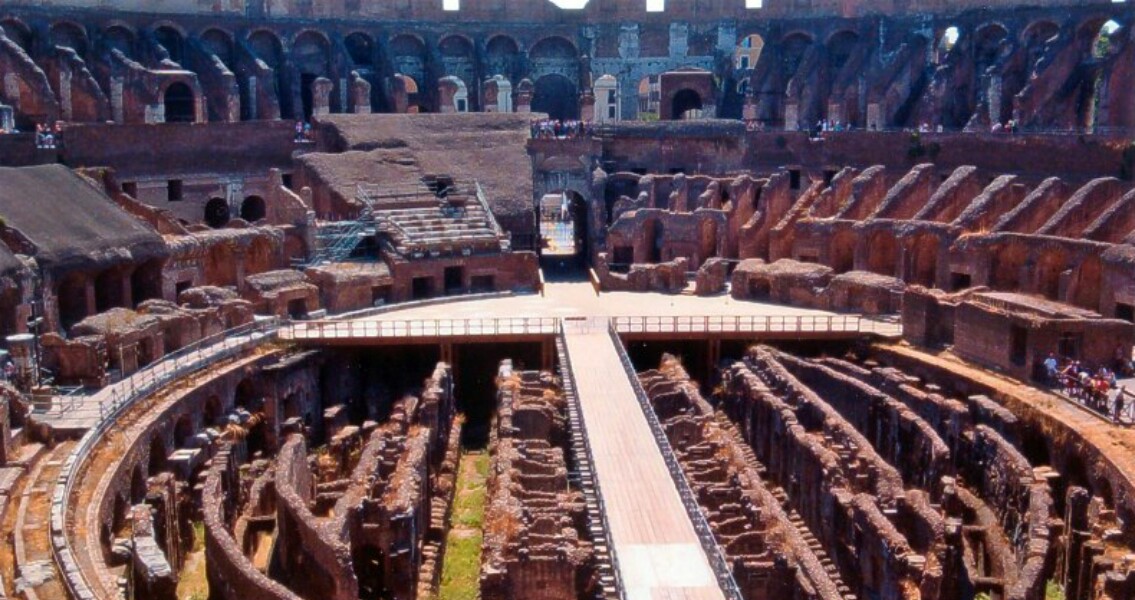
The Local. But hold your horses – this isn’t a Roman-era chariot horse the likes of which you would imagine in scenes reminiscent of Ben-Hur. Chariot races, of course, would have been held at Rome’s nearby Circus Maximus, not the Colosseum, which was primarily the home of gladiatorial combat (though this could have incorporated mounted combat at times). Instead, archaeozoologists say that the equine skull dates back to the twelfth or thirteenth century, well after the fall of the Roman Empire and placing it well out of reach of any bloodsport. In fact, the remains were discovered during routine cleaning of the steps leading down to the massive amphitheater’s basement levels, with the skull being found nearby, according to a statement made by Francesco Prosperetti, the Superintendent for Archaeology for Rome. For now, it’s unclear the age of the horse when it died, the state of health it was in, or just what it might have been doing in the neighborhood. During the twelfth century, large portions of the massive monument were rented out for commercial or residential use, which could have been why a horse would have been within the confines of the Colosseum. Meanwhile, from the late twelfth to the middle of the thirteenth century, the influential Frangipani family of Rome wrested control of the amphitheater away from other tenants, partially transforming the Colosseum into a fortress-like edifice, even going so far as to connect several family houses throughout Rome to the Colosseum by underground tunnel. If the horse skull comes from the period that the Frangipani were the lords of the Colosseum, the horse may have belonged to the family. The Frangipani would have been considered incredibly powerful during their heyday in early thirteenth century Rome. Originally known as the Onicii in the eighth century, the family changed its name to Frangipani. With the name bearing links to the Latin phrase for “breaking bread”, historians believe the family might have gained local fame for distributing food to the masses during a harsh famine. The tactic was widely used by influential families during the time period as a way to garner support among the populace. Whatever the Frangipani did seemed to have worked; the family played a pivotal role in the election of Pope Honorious II in 1124 CE. The family used a combination of bribery to pay off rival houses that supported the choice of Celestine II for the position and outright violence by literally physically attacking Celestine II during the ceremony that would have seen him become Pope officially. Whatever the case may be, the equine skull will need to undergo more thorough analysis before a clearer indication can be made. Once identified more definitively, the animal remains may join others found near the monument, which are on display at the Colosseum’s nearby museum. ]]>

Categories
News

The Japanese Soldier Who Spent 27 Years Waiting for Orders

Categories
Breaking News

Researchers Discover Otzi the Iceman’s Last Meal

Science. ]]>

Categories
Breaking News

Faeces Eating Fungus Shows Humans Sent Megafauna Extinct

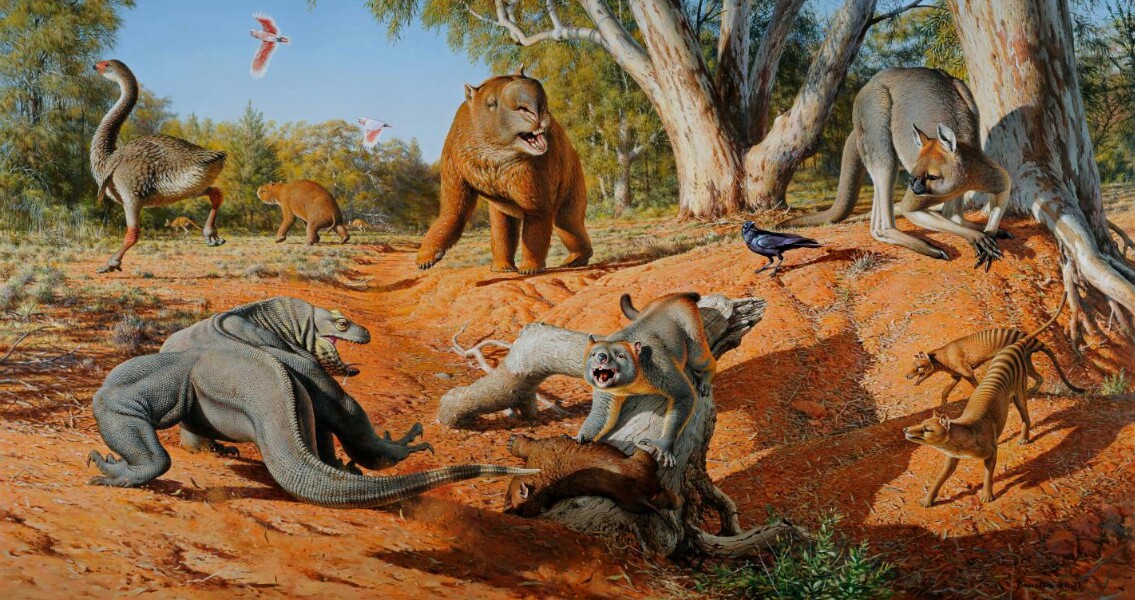
Nature Communications places the blame firmly on humans. Typically, explanations for the extinction of Australian megafauna have focused on either climate change or hunting by humans. The new study, led by scientists from Monash University in Victoria, Australia and the University of Colorado Boulder, has used the ancient faeces left behind by the megafauna to reach its conclusion. The team used a sediment core drilled from the Indian Ocean off the southwest coast of Australia to reconstruct past climate and ecosystems on the continent. The sediment core contains chronological layers of material blown into the ocean including ash, dust, pollen and spores from a fungus known as Sporormiella which thrived on the dung of plant eating mammals. Analysis of the sediment revealed that spores from Sporormiella were in abundance from 150,000 years ago, until plummeting around 45,000 years ago. “The abundance of these spores is good evidence for a lot of large mammals on the southwestern Australian landscape up until about 45,000 years ago,” said Professor Gifford Miller from CU Bolder’s Department of Geological Sciences, one of the study’s authors. “Then, in a window of time lasting just a few thousand years, the megafauna population collapsed.” According to Miller, the study results suggest that shortly after the arrival of humans 85 percent of Australia’s megafauna weighing over 100 pounds went extinct. Tellingly, the sediment core analysis also revealed that Australia’s southwest had dense forests 45,000 years ago, much like it does today. A hotbed of biodiversity, these forests make it unlikely that ecosystem change was behind the extinction of the megafauna. “It’s a region with some of the earliest evidence of humans on the continent, and where we would expect a lot of animals to have lived,” Miller explained. “Because of the density of trees and shrubs, it could have been one of their last holdouts some 45,000 years ago. There is no evidence of significant climate change during the time of the megafauna extinction.” Miller suggests that “imperceptible overkill” could have caused the extinction. A study published in 2006 claimed that even a small amount of megafauna hunting, at a rate as low as one juvenile mammal being killed per person per decade, could well have led to a species going extinct within a few hundred years. “The results of this study are of significant interest across the archaeological and Earth science communities and to the general public who remain fascinated by the menagerie of now extinct giant animals that roamed the planet – and the cause of their extinction – as our own species began its persistent colonization of Earth,” said study leader Sander van der Kaars of Monash University. The issue of the cause behind Australian megafauna extinction is likely to remain controversial, however. Just last week a study was published arguing that humans and certain megafauna coexisted for a least 17,000 years in Australia, highlighting just how complicated the extinction process might have been. Image courtesy of Peter Trusler, Monash University]]>

Categories
Breaking News

Termites, not a God, Created Africa’s Fairy Circles

Nature. ]]>

Categories
Breaking News

65 Byzantine Tombs Discovered in Ancient City in Turkey

Hurryiet Daily News. Located today in the western Turkish province of Mugla, in the center of the Yatagan district, the long-ruined ancient city is thought to have been one of the largest marble cities of antiquity from its founding during the Hellenistic era. Bilal Sogut, the Pamukkale University professor in charge of the excavation, recounted how the tombs, which contained the remains of both adults and children, were just some of the recent finds, which also included artifacts from varied time periods and evidence of a settlement that would have existed 3,500 years in the past. The researcher, who referred to Stratonikeia as “a living archaeological city”, called the site unique for is various characteristics, which included a high number of ancient structures surviving to the present day. The city, which would have at one time been home to the Carians of central Anatolia before the arrival of the Greeks, also holds ties to the Leleges, a pre-Hellenistic people that were said to have been allies of Troy during the Trojan War, the archaeologist said. One of the primary finds, according to Sogut, was the nearly four-foot-long skeleton found within a Byzantine-era tomb that had been undergoing cleaning and preservation works. The remains are thought to have belonged to a young woman who lived nearly 1,300 years in the past. There are high levels of historical continuity, according to the archaeologists, especially on one of the main areas currently under excavation and study. A thoroughfare being called “Western Street”, which was a field repurposed as a graveyard after a church on the site had collapsed, was the location of the 65 Byzantine tombs. Sogut remarked that the finds are currently undergoing conservation, with work continuing into 2017 at the very least. Even when archaeological finds are too far eroded or destroyed by time to be reconstructed, tourists to Stratonikeia will still be able to glimpse what life would have been like in the ancient city; there are plans to virtually reconstruct much of the structures unearthed through the use of 3D visualization technologies. Sogut says that once the excavation, analysis, and conservation efforts are concluded, visitors will be able to see many of the ancient city center’s structures, as they have been “revived” thanks to the use of the 3D technologies. Providing visual three-dimensional physical representations of ancient structures leads to higher levels of impact on visitors, the archaeologist stated, adding that it provides better opportunities for understanding. The 3D rendering, combined with gravure drawings, will be prepared in time to show visitors by the next season, Sogut said. Hopes are high that Stratonikeia, which has been classified as a “Tentative” UNESCO World Heritage Site, will soon be transitioned to full status. Archeological finds such as these, and those uncovered by research teams in the past, can help to expedite this process. ]]>

Categories
Breaking News

Researchers Pinpoint Rainfall Patterns of Ancient Sahara

Science Advances, can be found here Image courtesy of Peter deMenocal]]>

Categories
Breaking News

New Research Reveals Australian Megafauna Coexisted with People

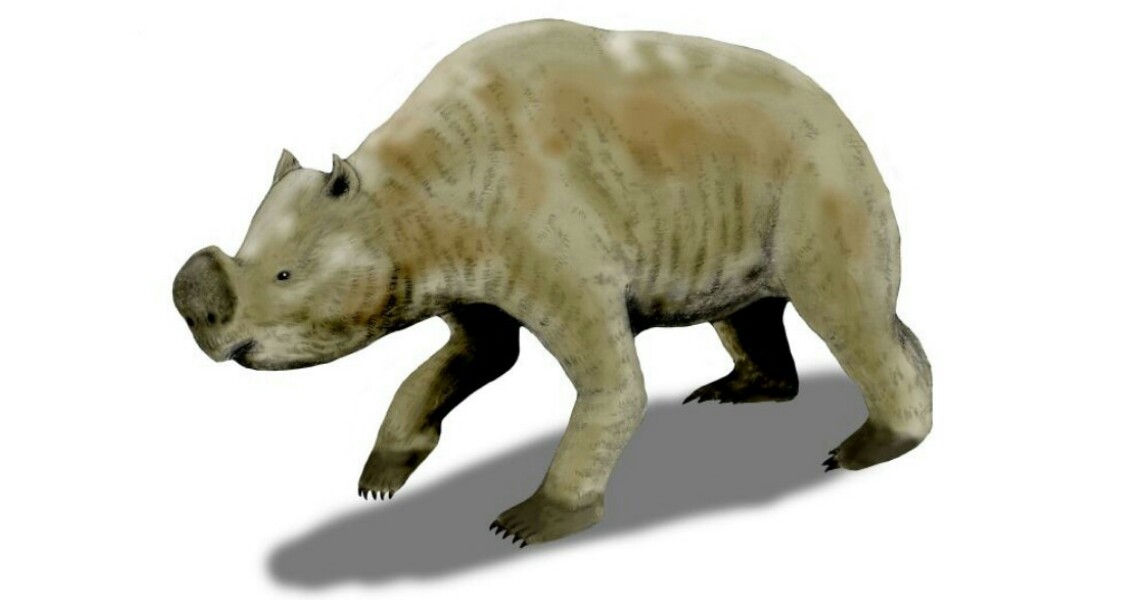
Zygomaturus trilobus, discovered several decades ago may have finally provided the answer. Large and lumbering with big flared cheek bones (zygomatics), Zygomaturus was a marsupial generally the size of a large bull. Little is known about its ecology, or why it went extinct. Excavated on two different occasions during the 1980s, the animal’s upper jaw was shipped to the Australian Museum in Sydney where it was stored still surrounded by the original sediments. The lower part of the jaw is on display at Mungo National Park. Optically stimulated luminescence dating (OSL) was used to test the sediment samples, while the fossils were tested directly using uranium series (U-series) dating. The tests show the specimen died approximately 33,000 years ago. Aborigines arrived in the region about 50,000 years ago. The Zygomaturus specimen indicates megafauna and people coexisted for 17,000 years at least. In fact, the species appears to have lived until the dramatic climate change referred to as the last glacial cycle prior to the Last Glacial Maximum. This date of 33,000 years does not necessarily represent the extinction of Zygomaturus. The deteriorating climatic conditions could have made Willandra Lakes a refuge for both people and megafauna as the surrounding plains became drier, bringing species like the Zygomaturus into increased contact with people. Regardless, the fossil has caused a shift in the debate over megafauna extinction. The research has been published in the Quaternary Science Reviews journal. ]]>