Archäologisches Korrespondenzblatt volume 2017/1. Featured Image: Reconstruction by Jacques Vincent ]]>
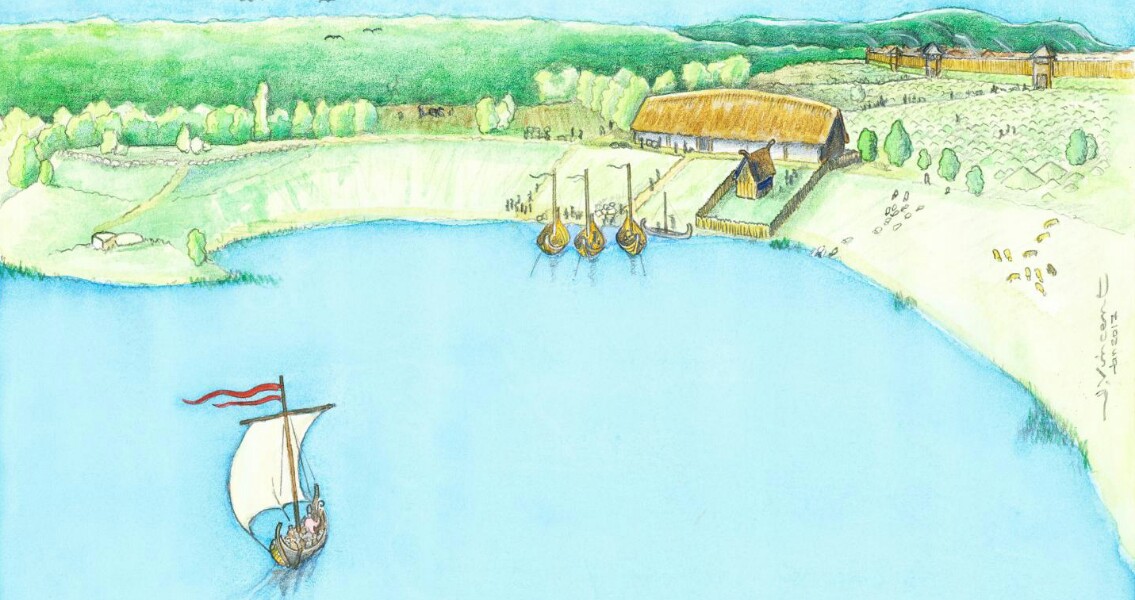
Archäologisches Korrespondenzblatt volume 2017/1. Featured Image: Reconstruction by Jacques Vincent ]]>
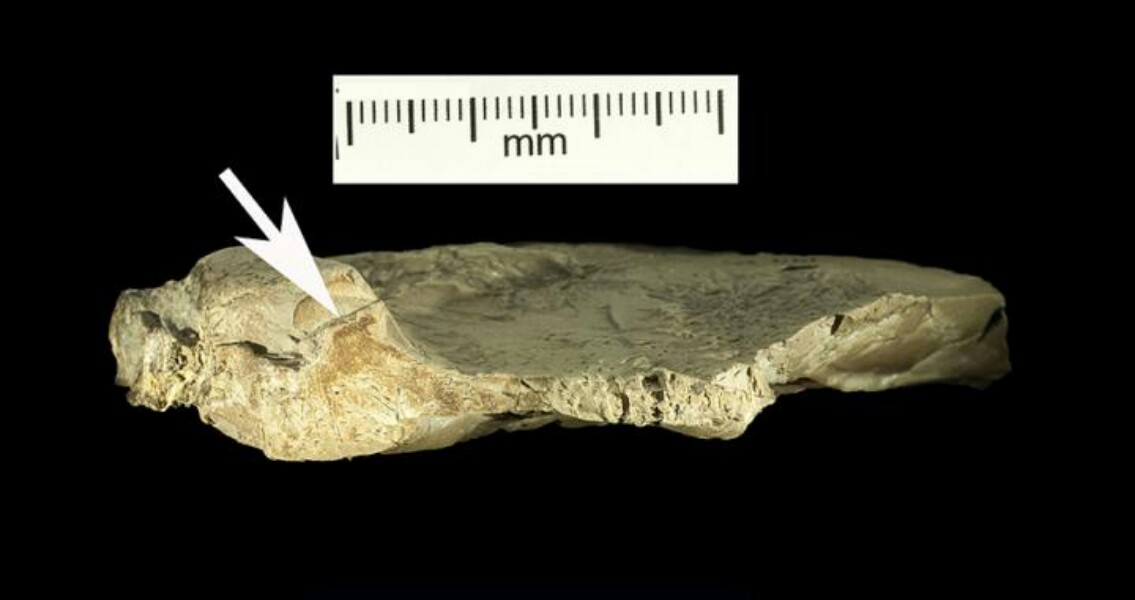
here Image courtesy of David Frayer, University of Kansas]]>

Telegraph. The organization is appealing to the public for anyone who has information regarding Karoline Cohn to contact IAA. They are also attempting to locate Sophie Kollman, a woman who, in 1978, submitted testimony about Karoline Cohn. ]]>

Haaretz, new finds at the Gebel el Silsila necropolis in the form of lavish grave goods show that the individuals buried within were not slaves or menial workers as was first thought. In fact, grave offerings such as crocodiles and cats indicate these individuals, who were likely miners that helped quarry sandstone for construction during the early Eighteenth Dynasty, might have worked hard but were held in high regard. A Swedish archaeology expedition, spearheaded by John Ward and Maria Nilsson, excavated and studied a dozen new tombs, a trio of crypts, and an additional crypt with multiple animal burials, all dating to circa 1543 BCE to 1292 BCE. The discovery of previously-untouched tombs at Silsila – which would have been called Kheny during the Eighteenth Dynasty – has yielded in excess of 55 tombs. Each of these tombs has between 10 to 15 burials, but the majority of these burials have been long-since looted – though the new discoveries show little signs of ancient plundering. The remains of more than 80 people have been recovered so far, according to Nilsson, who said that there were not just men but women and children interred in these tombs. Based on telltale signs of wear on a portion of the skeletal remains, the researcher feels that it’s a good guess that these individuals would have been quarrymen and perhaps their families. Many of these individuals were buried with grave goods in the form of personal belongings. Some were laid to rest with amulets designed to provide protection for the soul’s journey to the world beyond. Such burial goods were expensive, clearly showing these individuals were of a higher social status than conscripted workers or simple slaves, according to Nilsson. More signs indicating the relative wealth and affluence of these ancient Egyptians can be found in the beautiful craftsmanship of the rest of the jewelry that was buried with them. Pendants, scarabs, amulets and earrings found in the tombs show high levels of expertise, indicating that those who worked ancient Egypt’s quarries might have been regarded with high levels of deference – though the researcher was quick to say that there would have to be further study and analysis before this could be concluded categorically. The site is also noteworthy for the high number of animal burials, many of which show signs of being sacrificed prior to being interred. In one instance, a single crypt contained approximately a dozen goats and sheep that look as if they were purposely sacrificed, judging by visible head trauma. Additional remains, which include a pair of crocodiles, a cat and a pair of Nile perch were also included in these animal burials. One of the crocodiles was found outside a tomb, which may indicate that it had expired there after one of the Nile’s many floods. Again, more analysis will be necessary to make final determinations. ]]>

PLOS ONE. Until now, the earliest settlement date for North America was estimated at 14,000 years Before Present (BP), based on the earliest reliably dated archaeological sites. The new study has moved that date back to 24,000 years BP, to a period that coincides with the height of the last ice age. The groundbreaking research was carried out by Ariane Burke, a professor in Université de Montréal’s Department of Anthropology, and her doctoral student Lauriane Bourgeon, with the contribution of Dr. Thomas Higham, Deputy Director of Oxford University’s Radiocarbon Accelerator Unit. A controversial site first excavated forty years ago is at the heart of the latest study. The Bluefish Caves, located on the banks of the Bluefish river in northern Yukon near the Alaskan border, were first studied by archaeologist Jacques Cinq-Mars over a ten year period beginning in 1977. Radiocarbon dating of animal bones discovered at the site led the researcher to hypothesize that human settlement in the surrounding region dated back to 30,000 BP. For thirty years Cinq-Mars’ conclusions have remained controversial in the scientific community, primarily due to the lack of other sites of a similar age. In addition, there was no clear evidence that the horse, mammoth, bison and caribou bones found in the Bluefish Caves were the result of human activity there. Bourgeon set out to answer once and for all whether Cing-Mars’ hypothesis was correct. Over the course of two years she examined 36,000 bone fragments taken from the Bluefish Caves and preserved in the Canadian Museum of History in Gatineau. Fifteen bones showed ‘undeniable’ traces of human activity, according to a University of Montreal press release. Another twenty fragments showed probable traces of human activity. “Series of straight, V-shaped lines on the surface of the bones were made by stone tools used to skin animals,” said Burke. “These are indisputable cut-marks created by humans.” The bones were then submitted for radiocarbon dating. The oldest fragment, a horse mandible showing marks likely caused by the tongue being removed by a stone tool, was dated to between 23,000 and 24,000 years BP. “Our discovery confirms previous analyses and demonstrates that this is the earliest known site of human settlement in Canada,” explained Burke in the press release. “It shows that Eastern Beringia was inhabited during the last ice age.” The results support findings made in studies of population genetics that a group of a few thousand individuals lived in isolation in Beringia between 15,000 and 24,000 years ago. “Our discovery confirms the ‘Beringian standstill [or genetic isolation] hypothesis,'” said Burke, “Genetic isolation would have corresponded to geographical isolation. During the Last Glacial Maximum, Beringia was isolated from the rest of North America by glaciers and steppes too inhospitable for human occupation to the West. It was potentially a place of refuge.” It seems, therefore, that the ancient humans inhabiting the Bluefish Caves were among those who, at the end of the last ice age, migrated south and went on to colonise the entire North American continent, along the coast and down to South America. Image courtesy of Université de Montréal ]]>

FoxNews article. “Only when the dates came back from the lab we were reassured that indeed these were the remains of stables and other activities from the time of David and Solomon.” The research highlights the early community’s sophisticated and refined defense system and trade links, demonstrating a connection with the distant Mediterranean region. In addition to moving food and materials back and forth from other regions, the donkeys housed at the complex would have been used as part of copper production. The fact that one of the biggest ancient copper smelting plants in the Timna Valley is located near the fortification is of particular importance. Ben-Yosef says in the article: “Until now we didn’t have evidence of military conflicts in the copper mines of Timna at this period. Moreover, they are in accord with the biblical accounts depicting wars between David and the Edomites who inhabited this region.” The archaeologist went on to add that given the hotly debated accounts between biblical historians, finding actual evidence is significant. Aviv University notes in a recently released statement that the fabled King Solomon mines are believed by some experts to be located somewhere among the Timna Valley ancient smelting camps. There is no clear description of “King Solomon’s mines” within the Old Testament, but there are references to military clashes between the Edomites (the descendants of Esau, Isaac’s firstborn son and Jacob’s twin brother) and Israel. Discovered in 1934, the copper smelting site in Timna Valley was first believed to be a slave camp dating to the Iron Age. This theory was debunked by Ben-Yosef along with his colleagues in 2014, when they analyzed organic clothing and material finds which indicated a sophisticated, hierarchical society. The research team intends to continue their exploration of the ancient societies in the Timna copper mine area. The research has been published in The Journal of Archaeological Science. ]]>


Seeker. “Any iron tire for racing would be a very thin strip of iron on the outside of the wooden rim, best when heat-shrunk on the wood, to consolidate the whole wheel. The solution makes full sense in engineering thinking, ancient or modern.” Horse and chariot races were part of the sacred games, known as ludi, which were held during archaic Roman festivals. The race’s sacral meaning, although diminished across time, has been preserved by the iconography found at Rome’s primary racetrack, the Circus Maximus. No actual Roman chariots are known to have survived. The small toy model, currently being displayed at the British Museum, is the only archaeological evidence for the reinforced single-tire design. The bronze, hand-sized model represents a biga, a racing chariot with two wheels, driven by two horses. The model is missing the charioteer as well as one of the horses and was likely a toy for a prosperous individual, possibly even Emperor Nero himself who, according to historians, played with toy chariots. “The wheels originally rotated freely on the axle. It was made by someone who knew a lot about racing chariots,” Sandor says in the article. Given that it’s easier to guide horses into left-turns, a majority of chariot races ran counter-clockwise. Therefore, chariots’ had only the right wheels strengthened because the chariots naturally leaned right, overloading the right wheel during left-hand turns. The single tire reinforcement configuration didn’t always mean a faster chariot, however, it may have prevented the wheel from failing, consequently reducing crashes. This alone made it statistically superior on the racetrack. In general, Sandor estimates that the chariots with no iron tires had a 50 percent chance of winning, while vehicles with two iron tires would only win 30 percent of the time. The study, which has been published in the Journal of Roman Archaeology, found that a racing chariot with one iron tire on the right was the best design in regards to durability, safety and chance of winning. ]]>

Nature, can be found online here Image courtesy of Artist: Danielle Dufault. © Royal Ontario Museum]]>
