Categories
Breaking News

More Details Revealed About Iceland’s “Woman in Blue”

American Association of Physical Anthropologists, researchers presented the results of their ongoing examination and testing of the girl’s remains and the objects found buried with her. The incomplete and poorly preserved skeletal remains belong to a young woman determined to have been between 17 and 25 years old (radiocarbon testing of the fabric and tooth show she was born around the year 900 CE and the time of her death was sometime around the year 920 CE). Based on the chemical analysis of one of her teeth, the Woman in Blue moved from the British Isles or Scandinavia to Iceland when she was between five and ten years old, a fact indicated by her change in diet from mostly land animals and plants to one that included a large amount of seafood and fish. It’s unclear if the young woman was a Viking or Northern European, although she was dressed in traditional Viking garb which had been made with Icelandic wool and dyed blue using herbs that were probably brought to Iceland from abroad. The indigo blue plant-based dye is typical of female Viking garments. Buried along with her were an extravagant pearl necklace and two oval Scandinavian brooches made with a copper alloy. Amazingly, a piece of her skin had been preserved underneath one of the Scandinavian brooches which had been pressed against the young woman’s body at the time of her burial. The skin has allowed researchers to determine, among other things, her age and origin. Iceland’s history starts with Viking explorers (and their slaves) settling there in the ninth century – Iceland remained uninhabited even after western Europe had long-been settled. These first permanent settlers and the vast majority of the settlers (but not all) who arrived in Iceland over the following decades were Norwegian. The traditional story for this Norwegian exodus is that it was instigated by people escaping the overly strict rule of then Norwegian king Haraldr Hárfagri (Harold the Fair-haired). Alternatively, people may have simply been leaving Norway because of overcrowding in the western fjords. Seagoing Vikings from Norway, Denmark, and Sweden arrived and settled in several different countries, Iceland being one of them between the year 700 CE and the year 1100 CE, supporting the possibility the “Woman in Blue” came with the Vikings to Iceland. Skin and bone remains from the Woman in Blue were inadvertently stained green by the preservation solution used in the jars they were stored in. These items were transferred recently into jars containing a light paraffin oil in order to maintain their preserved state without staining them further. DNA from the young women is currently being studied by a team of researchers led by Joe and Jakob Walser, both with the University of Iceland in Reykjavik.]]>
Categories
Breaking News

Electrical Construction Sheds Light on Roman Britain

Categories
Breaking News

Fire – Early Humans Knew a Good Thing When They Saw It

Evolutionary Anthropology ]]>

Categories
Breaking News

New Clue in the Study of Fauna Dispersal Routes

Sayimys negevensis – was discovered in Israel’s Negev desert (the species was named for the Negev area where it was discovered) and researchers hope it will shed new light on the dispersal routes of several species, including mammals, between Africa and Eurasia during the Early Miocene which occurred between 23 million and 16 million years ago. The discovery has already highlighted Israel’s unique paleogeographic status as an important piece of the Levantine corridor which connected North Africa with Eurasia. Israel is the one place in the Eastern Mediterranean – from Sinai to Anatolia – where Early Miocene fossil sites have been discovered. The research, published in the open access journal PLOS ONE, describes a distant ancestor of today’s gundi: a small rodent who sports bristles (which resemble a comb) on its hind feet’s two middle toes – not surprisingly the gundi is also referred to as a comb-rat. “It is a pivotal species that bridges the gap between an array of primitive Ctenodactylines and the most derived, Early Miocene and later, gundis,” the authors wrote in the PLOS ONE article. Gundis are the only remaining descendants of the Ctenodactylidae family whose ancestors appeared in Asia around 40 million years ago. The species’ widest distribution and greatest diversification occurred from the Far East to Africa, during the Miocene. Today, they live in groups in the deserts and semi-deserts of North and East Africa. “The fossil sites of Israel are in a unique position to offer data on the early times of the large waves of faunal exchanges that took place around 19 million years ago between Eurasia and Africa,” Dr. Raquel Lopez-Antoñanzas, with the University of Bristol, said in a press release. At the time of the Early Miocene, what’s known as Israel today was still attached to Africa. Almost all of the mammals found in modern Israel originated in Africa. Sayimys negevensis is one of only a few species found in Israel with connections to Eurasia. “The new Israeli species is closer in morphology to nearly coeval species found in Pakistan, therefore demonstrating that mammals were already using the Levantine corridor to travel between Eurasia and Africa in the Early Miocene,” Dr. Rivka Rabinovich, a research co-author with the Institute of Earth Sciences and the National Natural History Collections at the Hebrew University of Jerusalem, said in the press release. The new rodent discovery is part of international research being undertaken by scientists from the Israel Geological Survey, Midwestern University in Glendale, Arizona, the University of Manchester and the University of Connecticut; focusing on the paleogeographic implications involving the fauna of Israel during the Early Miocene. For more information www.journals.plos.org Image courtesy of Rivka Rabinovich]]>

Categories
Breaking News

How a Queen and a Worker (Ant) Evolve from the Same Genes

Categories
Breaking News

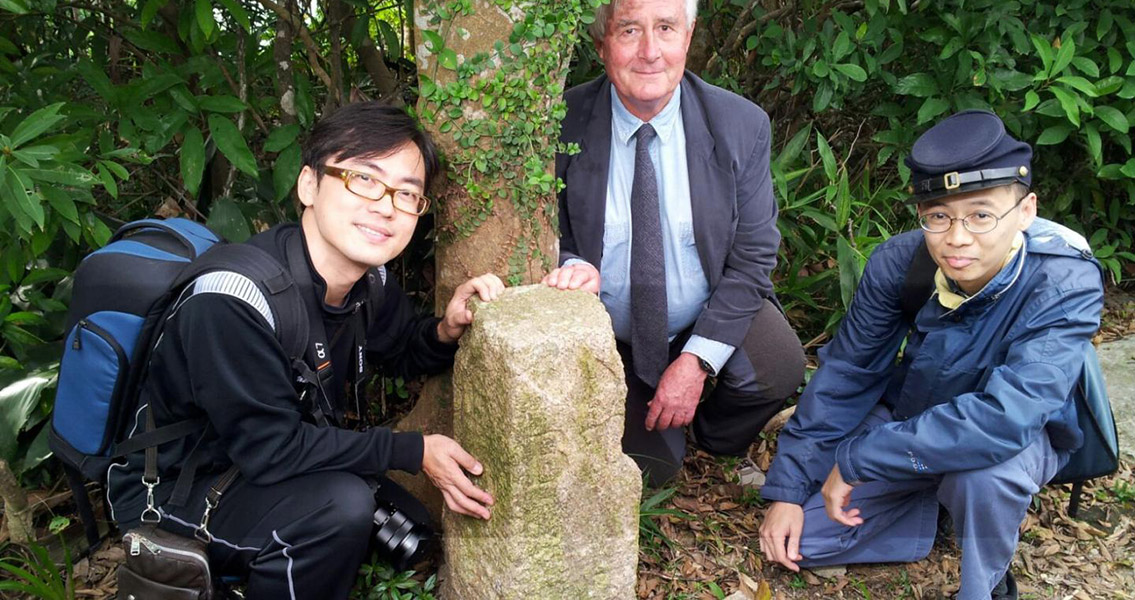
Boundary Stone Accurately Marks Spot for 172 Years

Categories
Breaking News

Discovery of Submerged Structures May Turn Myth to Fact

Indian Times that many of these structures were concealed with a thick layer of aquatic growth, making them difficult to identify. “Some of them are badly damaged due to strong underwater currents and swells. However, we could make out that they were part of a building complex,” Nigam is quoted as saying. Archaeologists believe that the structures may be between 1,100 and 1,500 years old. From previous experiences and as a result of studies on the historical patterns of the sea level in this region, researchers have determined the sea-level approximately 3,500 years ago was lower than it is now, but 6,000 years ago it was actually higher. Archaeologist, T. Sathyamurthy, with the Archaeological Survey of India (ASI), Chennai Circle, told the Indian Times that explorations of this type were gradually providing evidence that myths are often facts. Using sonar technology, researchers with ASI began exploring the coastline of Mahabalipuram and discovered the row of stones seen by people immediately before the tsunami on 2004 and determined they were part of a larger 70-meter-long, six-foot-high wall. They also found the remains of three additional temples; two of which were submerged, and a cave temple within 500 meters of the coast. Historians believe a majority of these structures, as well as the port, may have become submerged as a result of a past tsunami-like occurrence which took place around 952 CE. Geophysical data from previous surveys and explorations also point to a large building complex, possibly a township, being submerged in the sea. A global rise in sea levels of even 1mm to 2mm annually could easily inundate several hundred meters of shoreline over a 2,000-year time period. Another explanation for the structures being under water is tectonic movement or soil erosion.]]>

Categories
Breaking News

Home Sweet Yikes! Cremation Pits Found on Housing Site

Categories
Breaking News

Arctic Ocean Enjoyed Ice-Free Summers Six Million Years Ago

Categories
Breaking News

New Study Looks at the Politics of Human Sacrifice