Categories
Editorial

Universal Basic Income – A Not so Radical History

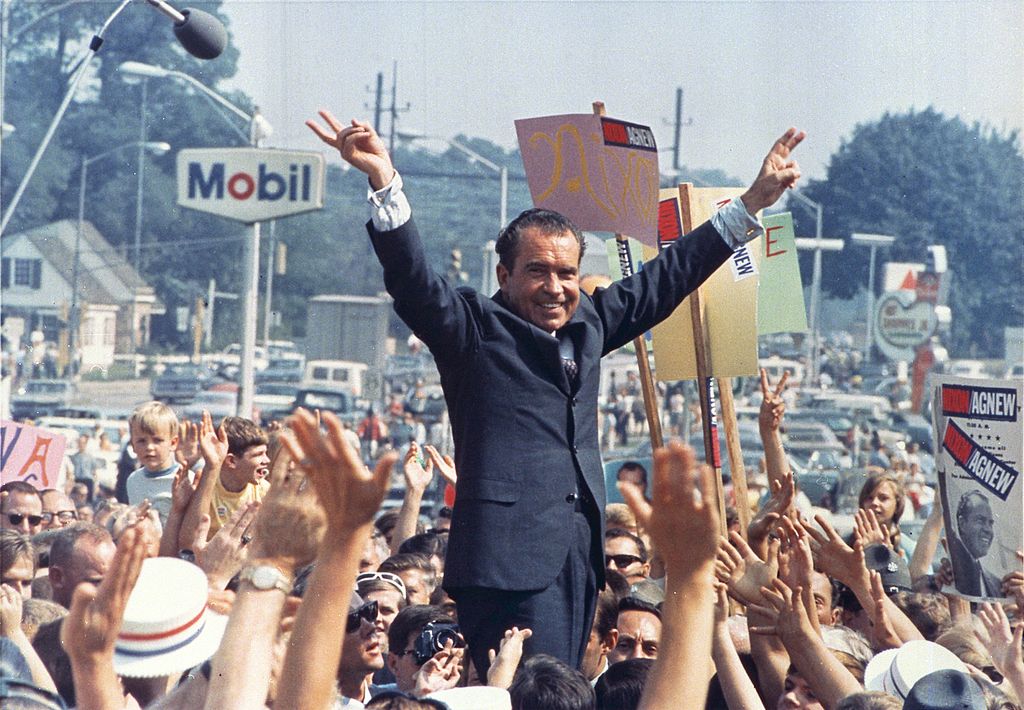
Basic Income Earth Network (BIEN) defines a universal basic income (UBI) as “a periodic cash payment unconditionally delivered to all on an individual basis without means-test of work requirement.” Subtle variations exist in how the scheme should be delivered, but the key features are that it should be universal, unconditional and paid on an individual basis Often considered a recent phenomenon, the idea of UBI has persisted for hundreds of years, discussed and advocated across the political spectrum. Why then, does it still seem so radical? Is Universal Basic Income Socialist? The fact that contemporary entrepreneurs and business leaders such as Richard Branson and Elon Musk have come out in support of UBI points to the idea being far from an immanently Left-Wing one, despite its popularity on that side of the political spectrum. Taking the Merriam-Webster definition of socialism as economic and political theories “advocating collective or governmental ownership and administration of the means of production and distribution of goods”, it becomes clear that UBI isn’t socialist. It would function in a capitalist system and is being tested in countries within that system. A redistribution of wealth is of course intrinsic to a universal basic income, but not government or community ownership of the means of production. UBI isn’t an intrinsically Left-Wing idea. As we’ll see below, its history isn’t even a predominantly radical one. It was only in the 1970s, 1980s and 1990s that it seemed to fall away from mainstream discourse. The Cure for Theft – The Earliest Advocates of a Universal Basic Income In Utopia (1516), the humanist thinker Thomas More set the ground work for a basic income, a character in the novel suggesting it would be more effective than punishment for preventing the crime of theft. “Instead of inflicting these horrible punishments, it would be far more to the point to provide everyone with some means of livelihood, so that nobody’s under the frightful necessity of becoming, first a thief, and then a corpse.” Although More was describing a basic income which was universal for the community, it was not necessarily unconditional, a crucial detail. However, More was pioneering in terms of pointing out a government obligation to provide poor relief – something which doesn’t seem so radical today. In the mid-nineteenth century, ideas of an unconditional basic income started to develop among Utopian Socialists. In France, Joseph Charlier was the first to explicitly argue for it, according to BIEN. For years, a host of thinkers (such as Charles Fourier) had argued that all humans had an equal right to ownership of the land and should therefore be compensated if this right were obstructed (for example, by others owning private property). Charlier used this as a basis to argue for an unconditional right to income – one that wasn’t to be means tested and didn’t come with an obligation to work. A year later, the English philosopher John Stuart Mill made a similar statement in his Principles of Political Economy. “In the distribution [of produce, capital and labour], a certain minimum is first assigned for the subsistence of every member of the community, whether capable or not of labour. The remainder of the produce is shared in certain proportions, to be determined beforehand, among the three elements, Labour, Capital, and Talent.” Charlier might have been a relative outsider and political radical, but Mill is one of the most influential thinkers for modern political thought. UBI had moved beyond its radical origins in 1848. Conservatives, Neoliberals, and Universal Basic Income UBI isn’t limited to liberal, socialist or radical thinkers. It has, in fact, been adopted by prominent conservative and neoliberal thinkers. Friedrich Hayek, born 1899, described himself as a defender of classical liberalism. Nevertheless, he was lauded by conservative politicians such as Margaret Thatcher and Ronald Reagan, and is commonly viewed as a highly influential figure on neoliberal thought. In his Constitution for Liberty (1960), however, Hayek wrote that the state should provide: “a certain minimum income for everyone … a sort of floor below which nobody need fall even when he is unable to provide for himself.” As Matt Zwolinski, associate professor of Philosophy at the University of San Diego argues, Hayek advocating a universal basic income does not contradict his role as a libertarian. Rather, Hayek can be seen as arguing for basic income on a freedom basis. “A basic income gives people an option – to exit the labour market, to relocate to a more competitive market, to invest in training, to take an entrepreneurial risk, and so on,” Zwolinski writes for Libertarianism.org. “And the existence of that option allows them to escape subjection to the will of others. It enables them to say “no” to proposals that only extreme desperation would ever drive them to accept. It allows them to govern their lives according to their own plans, their own goals, and their own desires. It enables them to be free.” Most startlingly, in 1969, Richard Nixon came close to enacting an unconditional, universal basic income in the USA. Millions of dollars were spent organising trials of the scheme across the country. Nixon went as far as presenting the Bill in a televised speech, while a White House poll found that 90% of all newspapers were receptive to the plan. The Bill was accepted in Congress, but various reasons, never got through the Senate. The main point of course, is that as recently as 1969, UBI was not only brought to the US Senate, it was done so by a conservative president. The legislation may not have passed, but it shows it was in the political mainstream. In the 1970s and 1980s UBI appeared to slip out of political discourse, before re-entering the Overton Window in the years since the 2008 recession. It is often portrayed as a radical idea, yet by charting universal basic income’s history it becomes clear it was seen as a valid option in mainstream political discourse long ago. ]]>
Categories
Editorial

Olaudah Equiano – From Slave to Abolitionist

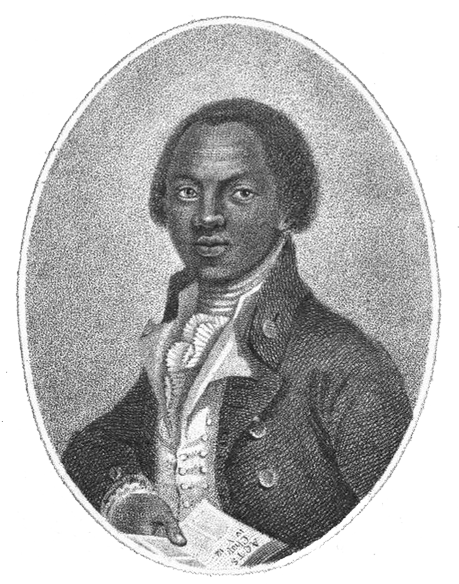
The Interesting Narrative of the Life of Olaudah Equiano or Gustavus Vassa, the African, Equiano’s autobiography, published in 1789, marked a significant turning point in the fight to abolish slavery. Describing his capture in Africa and subsequent life as a slave, the autobiography shone a light on the horrors of the slave experience, making its brutality tangible to those who had been born free. It became a rallying point for the abolitionist cause. It began with a petition for abolition addressed to the British parliament, and ended with an antislavery letter to the Queen. In between it detailed Equiano’s life, providing a rare insight into slavery through the eyes of one of its former victims. Translated into several different languages, The Interesting Narrative… would go on to be read by tens of thousands. Just as significantly, Equiano himself worked tirelessly to promote the book and the abolitionist cause. He embarked on extensive lecture tours across Britain and Ireland, and spent much of the 1790s passionately campaigning for abolition – drawing more and more attention to the issue, notably working closely with Granville Sharp and Thomas Clarkson in the Society for the Abolition of the Slave Trade. Olaudah Equiano’s life was a remarkable one, even before he became a leading figure in the battle to abolish slavery. Born in what is now Nigeria, Equiano was kidnapped and sold into slavery as a child – forcibly transported across the globe, to Barbados and then Virginia. In 1757, Equiano was bought by a naval captain named Henry Pascal, who named him Gustavus Vassa and brought him back to England. For years he served as Pascal’s slave on navy ships, participating in major battles of the Seven Years’ War. The period proved deeply influential on Equiano’s life. Fellow soldiers taught him to read and write, and the basics of mathematics, while Equiano also converted to Christianity, getting baptised in 1759. Freed by Pascal at the end of the Seven Years’ War, Equiano was again enslaved in 1762, shipped from London to the West Indies and taken on by a merchant shipping company. Again, the experience proved hugely influential on Equiano, his relatively high rank meaning he was actually involved in organising the sale and transportation of other slaves. “I was often a witness to cruelties of every kind, which were exercised on my unhappy fellow slaves. I used frequently to have different cargoes of new Negroes in my care for sale; and it was almost a constant practice with our clerks, and other whites, to commit violent depredations on the chastity of the female slaves; and these I was, though with reluctance, obliged to submit to at all times, being unable to help them.” Shrewdly, Equiano traded and saved hard during his time in the West Indies, and by 1766 had raised enough to buy his freedom. After working for several years as an able seaman, he eventually returned to London where he first met anti-slavery campaigner Granville Sharp. It marked the beginnings of Equiano’s career as one of the most influential, if seldom acknowledged, anti-slavery campaigners. He became involved in the Sierra Leone Resettlement Project, which aimed to provide a safe place for freed slaves to live and work; founded the Sons of Africa, which campaigned for abolition through public speaking, letter writing and lobbying; and even appeared in the House of Commons to call for improved conditions on slave ships. Soon, he realised that one of the most potent arguments for abolition he could offer however, was his own life story…]]>

Categories
Editorial

The Longest Suicide Note in History

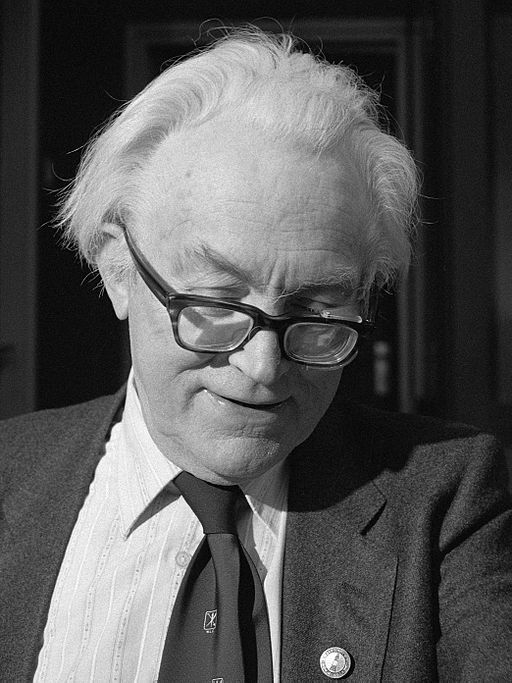
What did the 1983 Labour Party Manifesto say? By 1983 the UK had entered an economic recession. Labour, led by Michael Foot, sought to remedy the situation with an ambitious programme of government investment. The manifesto was explicitly Keynesian in its approach, involving an £11 billion, five year economic plan. It stood in stark opposition to the free market ideology of the Conservative government. The 700 page document was thorough in the plans it detailed. Some key policies included: • Massive investment in industry through a ‘national investment bank’ • Creation of a powerful national oil company to bring the North Sea Oil industry into public ownership • Reversal of the Conservatives’ programme of privatisation, including a renationalisation of industries sold • Withdrawal from the European Economic Community • Britain to take unilateral action to scrap nuclear weapons in order to encourage global nuclear disarmament • All forms of hunting with dogs, such as fox hunting, made illegal • Greater control over bank lending, through the Bank of England • Progressive taxation • Strengthening of the Equal Pay Act Did the 1983 Manifesto really cost Labour the general election? The Conservative party won the 1983 election by a landslide. Some historians claim the 1983 Manifesto was the key reason for Labour’s massive defeat, but a number of other major factors were also at play. Firstly, the Falklands War had come to an end the year before. The conflict provided a massive boost to Thatcher’s popularity, endearing her to the British public, while the victory led to a swell of optimism. The conflict was pivotal in turning around what had initially been a difficult first few years in office. Secondly, Labour was hindered by internal issues and new competition. Divisions in the party saw the creation of a break away party – the SDP (Social Democratic Party). The SDP subsequently formed an alliance with the Liberal party, a move which both weakened Labour and also created a powerful new rival in the election battle. Ultimately, it meant that the votes of those discontented with the Conservative government were split between two parties. Labour went on to lose 60 seats in the election, while the Conservatives gained 58. It was Labour’s worst election performance since 1918, while the Tories secured the biggest majority since that won by Labour in 1945. The Labour Manifesto might have been the longest suicide note in history, but a host of other factors were also at play for the party’s dismal performance in 1983. Image by Marcel Antonisse / Anefo, courtesy of Nationaal Archief ]]>

Categories
Editorial

Jack the Ripper, Giant Bears and Lost Continents – The First Quarter 2017

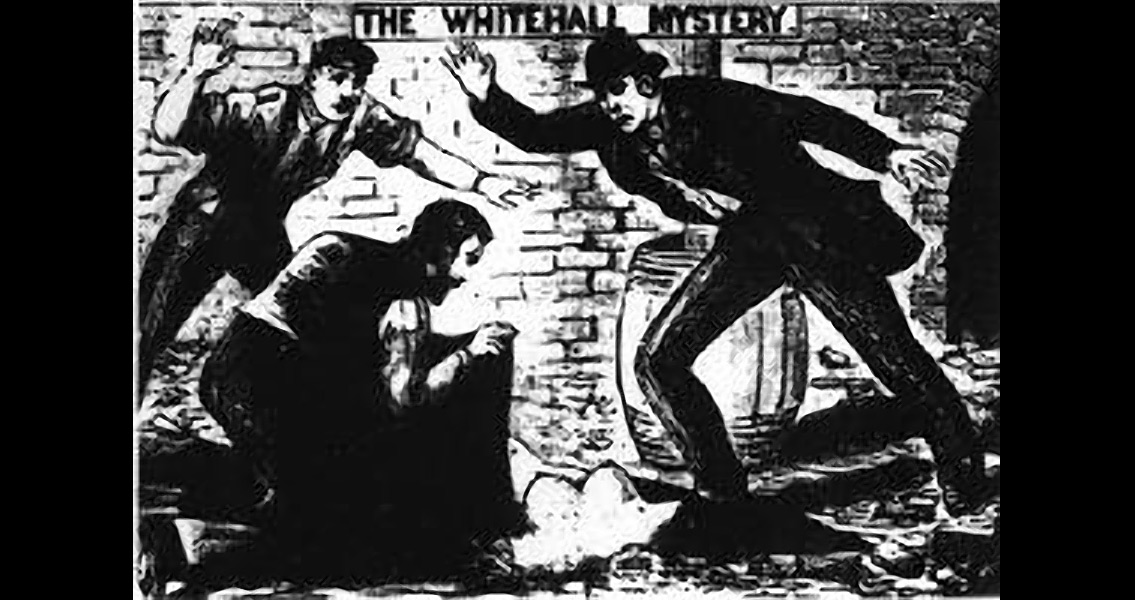
Jack the Ripper’s Final Victim – A Mystery That May Never Be Solved Britain’s most infamous serial killer, Jack the Ripper, has a whole industry surrounding his gruesome deeds in Victorian East London. Typically, most of the speculation about Jack the Ripper concerns his identity, but earlier this year the Ripper story entered the news due to uncertainty over the identity of his final victim. Jack the Ripper lore states that on 9th November 1888 Mary Jane Kelly was murdered and brutally mutilated in her home in Spitalfield’s, East London. The death is widely considered to have brought the Ripper’s reign of terror to an end, yet in 2015 a book claimed that the victim that night was actually a woman named Elizabeth Weston Davies. A team was assembled to determine the plausibility of locating the supposed remains of Mary Jane Kelly and then subjecting them to DNA testing to verify the identity. In March they concluded that uncertainties over the exact location of Kelly’s remains made it impractical to attempt an exhumation, while the level of disruption that would be required to search the graveyard in question would almost certainly mean legal permission wouldn’t be granted. The identity of Jack the Ripper’s final victim will remain shrouded in mystery. A Lost Continent is Discovered In February an international team of researchers confirmed the discovery of a lost continent located beneath the island of Mauritius in the Indian Ocean. The continent was apparently created around 200 million years ago, as the super continent Gondwana began to break apart. Zircon, a mineral formed in volcanic eruptions, was key to the remarkable discovery. The rock that makes up Mauritius dates to 9 million years old, yet 3 billion year old zircons have been found there. Finding zircons of such an advanced age proves that there are much older crustal materials beneath Mauritius, according to the study authors. The geologists claim that these materials could only come from a continent located under the island. A Giant Polar Bear? In late March archaeologists announced the discovery of a giant polar bear skull in northern Alaska. Radiocarbon dating revealed the skull, which is the fourth largest from a polar bear ever discovered, to be 1,300 years old. Measuring 41cm (16 inches) from the back of its neck to the tip of its nose, the skull has an unusually elongated shape much unlike modern polar bears. Scientists speculate that it could be an example of a now extinct species of ‘giant’ or ‘king’ bear. Ethnographers have documented countless stories of ‘oversized’ bears in a variety of Inuit groups. These include accounts of bears that were up to 12 foot long. The researchers speculate that descendants of giant bears, such as the one whose remains were found in northern Alaska, could be the oversized bears recorded by the indigenous populations of Alaska and the Arctic circle. ]]>

Categories
Editorial

Case For the Anthropocene? Megafauna, Ice Ages and Man-Made Deserts

The death of megafauna Some scholars have suggested that humans started making irreversible changes to the planet as far back as ten thousand years ago. When humanity first started to spread across the globe spectacular megafauna inhabited the continents, from Wooly Mammoths in the Northern Hemisphere to giant kangaroos in Australia. Many of these creatures are now extinct, with scientists debating intensely whether this was the result of human activity – such as hunting or competition for food, the drastic climate change at the end of the Ice Age; or a mixture of both. If these mass extinctions were driven by humans, it would signify a massive, permanent change to the planet’s ecosystems. Ecosystem Makers Humanity’s influence has not necessarily been just destructive. There is an increasing number of scientists and archaeologists who argue that two of the planet’s most awe-inspiring ecosystems: the Amazon rainforest and the Sahara Desert, could have been created by human activity. Fertile land found radiating from the remains of ancient settlements in recent years has led some archaeologists to claim that for millennia a massive civilisation once inhabited the Amazon, enriching the soil to allow the rainforest to grow. Earlier this year, a new study looked at the distribution of various tree species to add further support to the idea the Amazon was shaped by human hand thousands of years ago. Earlier this year, a research study claimed humans may have played a role in turning the Sahara from green, fertile and dotted with lakes 10,000 years ago to the desert it is today. The research suggests that the arrival of pastoralism to the Sahara could have upset the region’s ecosystem, cleared vegetation leading to an increased albedo and drastic reduction in rainfall. The theory is a relatively new one, but the team behind it are continuing their search for more evidence to support it. The Little Ice Age A 1677 painting by Abraham Hondius depicts ice skaters on London’s River Thames. To any modern Londoner, such a sight seems unthinkable. The seventeenth century was characterised by plummeting temperatures on a global scale however, which some historians label the Little Ice Age. A number of explanations have been offered for this prolonged period of unusually low temperatures, from increased volcanic activity blocking the sun’s radiation to changing ocean current flows. Some have even suggested a shift in the earth’s orbital cycle could have caused the freeze. Another argument posits a human explanation. Specifically, some scientists claim that the massive population loss in the Americas following the arrival of Europeans led to a huge decline in agriculture and process of reforestation substantial enough to change the oxygen/carbon ratio in the atmosphere and generate a cooling effect. Killing the Aral Sea As recently as the 1970s the Aral Sea was the fourth largest lake in the world, yet only 10% of it now remains, leaving a desert in its place. Situated between Kazakhstan and Uzbekistan, the Aral Sea’s disappearance took less than forty years. In the 1960s irrigation projects by the Soviet Union saw the two main rivers feeding the lake diverted. The consequences have been terrifying. The climate in the area has changed massively due to a huge reduction in rainfall. Fishing communities have been devastated by lost livelihoods. Toxic gases rise from the exposed seabeds, leading to dangerous levels of pollution in the area. Ecosystems that once flourished in the Aral Sea are now all but extinct. Meanwhile, dust storms caused by the dried up land have caused nearby glaciers to melt much faster, in turn leading to massive reductions in the amount of drinking water. Radiation The 1950 date chosen by the Working Group on the Anthropocene is heavily tied in with the proliferation of nuclear weapons and power. Although atomic bombs were being tested in the USA in the 1940s, with the first two used in anger against Japan in 1945, it was in the 1950s that nuclear weapons went global. The nuclear arms race saw more and more countries testing weapons of mass destruction, while nuclear power stations also sprung up around the globe to meet a growing energy demand. These saw radioactive elements flung across the planet, having an immeasurable impact on the environment. There are of course countless other examples which could be mentioned, all of which point to the impact mankind has had on the planet. Some are debatable, some speculative, others, such as the drying of the Aral Sea, impossible to deny. Whether one believes we live in the Anthropocene or not, mankind has undoubtedly left a dramatic mark on the delicate ecosystems and environment of the planet. ]]>

Categories
Editorial

Oswald Mosley – From Tory MP to Anti-Semitic Fascist

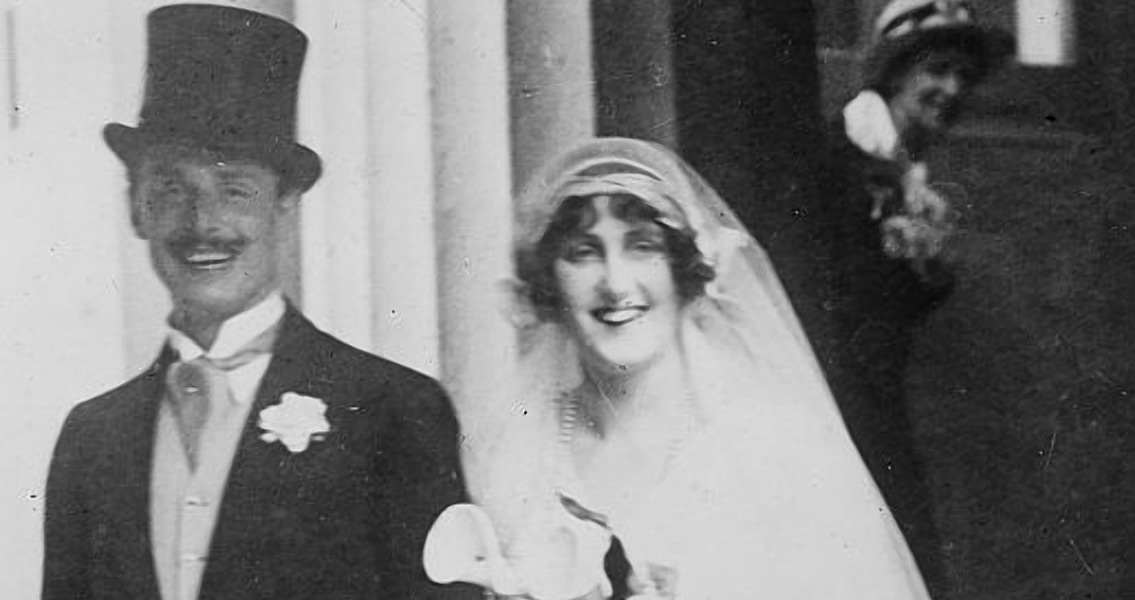
Who Was Oswald Mosley? “He struck me as being an earnest, rather humourless man; a bit of a bore, but in no way abhorrent; just rather dreary, like a Jehovah’s Witness, or one of those figures one meets in out-of-the-way places who produce a cyclostyled plan for world government which they have sent to Adlai Stevenson, Mrs Roosevelt and the late Duchess of Atholl.” Said Malcolm Muggeridge about Oswald Mosley in 1962, shortly after interviewing him for the BBC. Muggeridge’s description of the former leader of the British Union of Fascists makes him seem timid and harmless. Maybe by 1962 that was the case, but in the years leading up to the Second World War Oswald Mosley was a dangerous and influential voice in British politics. In 1932 Mosley united Britain’s fascist movements into the British Union of Fascists. The BUF gained widespread attention: MI5 claimed it had 50,000 members, including several prominent figures in society, and it won public support from the Daily Mail newspaper. The BUF was obsessively nationalistic to the point of authoritarianism. It was explicitly anti-Semitic and anti-Communist, while publicly supporting the policies and governments of Benito Mussolini and Adolf Hitler. The party, its members distinguished by their black shirt uniforms, was frequently involved in violent clashes. The most famous example came in 1936, when Blackshirts attempted to march through East London, an area with a high Jewish and Irish immigrant population. The violent confrontation that ensued has come to be known as the Battle of Cable Street. Mosley’s connections to the worst proponents of fascism was deep. His wedding to Diana Guiness took place in the home of Nazi propaganda minister Joseph Goebbels , and boasted Adolf Hitler as one of its few guests. Oswald Mosley and the Tory and Labour Parties Oswald Mosley was born in London in 1896. He served on the front lines of the First World War, as both a pilot and then as a soldier in the trenches on the Western Front. From 1916, when he was deemed unfit for front line duty due to an ankle injury, he took up a desk job for the rest of the war. In 1918 he became the youngest MP in the House of Commons, winning the Harrow seat for the Conservative Party. In 1924 he switched allegiances, joining the Labour Party. By 1927 he had become one of the leading figures in the party, viewed as a charismatic individual whose ideal of European Socialism meant many saw him as a future Labour prime minister. Mosley was influenced by the economic ideas of John Maynard Keynes, in particular government investing heavily to boost employment and secure the economy. In 1930 he proposed a radical programme to deal with Britain’s unemployment problem. Among other things it advocated a complete overhaul of the systems of government, with public funds being used to bolster the industrial sector. The proposals, which included the provision of old age pensions from the age of sixty, met massive resistance in the Labour government and Mosley’s radical ideas were ultimately blocked. Infuriated, he abandoned the Labour Party and founded the New Party in 1931. That year’s general election proved a disaster, with none of the New Party candidates being elected. Mosley Turns to Fascism and Antisemitism In 1932 Mosley met Benito Mussolini, who had been in power in Italy since the 1920s. Mosley was impressed by the Italian dictator’s government. Upon returning to England he dissolved the New Party, and replaced it with the British Union of Fascists. The new party quickly gained support, taking a fierce stand against Communism, and by October 1933 had its first elected official when Charles Bentinck Budd won a seat on Worthing Town Council. Soon however, the unsettling reality of the BUF’s ideology became apparent. BUF deputy leader William Joyce pledged to a public meeting in 1934 to rid British industry of foreigners “be they Hebrew or any other form of alien… Reclaim what is your own in the fullness of Fascist victory.” The anti-Semitic sentiment also saw the Blackshirts begin staging provocative marches in primarily Jewish populated areas, fostering tensions and igniting riots on British streets. Second World War and Mosley’s Arrest Throughout the 1930s the BUF remained a potent force in British politics, until the outbreak of World War Two. The declaration of war with Germany increasingly turned public opinion against the BUF, Mosley’s support of Hitler proving particularly alienating. On 23rd May, Mosley was arrested as part of new legislation allowing the Home Secretary to imprison without trial anyone believed to be a danger to national security. Soon other prominent BUF members were incarcerated, its publications banned, and the organisation quietly dissolved by 30th May 1940. ]]>

Categories
Editorial

Fascism USA – Priests, Nazis and the New Deal

How do you define fascism? Like any political ideology, it is difficult to define fascism convincingly; debates over definition clouded by historical examples serving as inescapable archetypes. The Oxford Dictionary defines fascism as: “a political philosophy, movement, or regime (as that of the Fascisti) that exalts nation and often race above the individual and that stands for a centralized autocratic government headed by a dictatorial leader, severe economic and social regimentation, and forcible suppression of opposition.” Taking this as a basis, elements of fascism have been seen throughout US history, and in particular in the 1930s. Fascism Versus the New Deal Fascism took hold in Europe in the wake of economic calamity. In the USA, the response to the Great Depression was the election of Franklin D. Roosevelt to the presidency and the implementation of the New Deal – a program of government investment, extension of federal authority and welfare spending designed to stabilise the US economy. Roosevelt was elected president four times, but his liberal politics were far from universally popular. Like Europe, there were those in the US who felt fascism was the only way forward. Father Charles Coughlin Eleven days after the Kristallnacht massacre of Jews in Germany, Michigan based Catholic priest Father Charles Coughlin took to the airwaves in defence of the Nazis’ actions. A swift backlash ensued against Coughlin, culminating in New York radio station WMCA cancelling his show. Nevertheless, Coughlin continued broadcasting from his Michigan church. Father Coughlin associated Judaism with Russian Communism. To him, the actions of the Nazis, including their blatant antisemitism, were a means to fight off Communists. Speaking to a reporter in the late 1930s about the path of politics in the USA, Coughlin said: “I take the road of fascism”. A few years earlier the charismatic priest had formed his own political party, and even made a run for the White House. In 1933 the radio stations carrying Coughlin’s broadcasts had a potential audience of some 40 million people. Rallying against internationalism, bankers and Jews, Coughlin started a new political organisation in 1934, the National Union for Social Justice. Two years later, the party had a candidate in the presidential election. At a rally in Rhode Island, Coughlin declared, “I shall have the courage to stand up and advocate the use of bullets”, promising “more bullet holes in the White House than you could count with an adding machine.” Coughlin’s candidate, William Lemke, suffered an embarrassing defeat by winning just nine hundred thousand votes. Combined with the backlash against his post Kristallnacht broadcast, Coughlin was increasingly pushed into retiring from public life. The German American Bund Father Coughlin wasn’t alone in backing Hitler and the Nazis. Supporters of the German American Bund remained loyal to the Nazis throughout the Great Depression, and into the 1940s. The German American Bund was essentially an organisation of ethnic Germans living in the USA. Its support of Nazism stretched to antisemitism, anti-communism, and an insistence that the USA should remain neutral in the Second World War. German American Bund leader Fritz Kuhn was regarded as the leading antisemite in the USA. His organisation carried out a range of activities around the USA, publishing books and magazines, organising rallies, even maintaining youth organisations similar to the Hitler Youth in Germany. Kuhn was ultimately imprisoned for embezzling funds, while other leaders of the group were arrested as the USA headed towards war with Germany. With support waning, the organisation was eventually banned after the USA entered the fray of World War Two. Father Charles Coughlin and the German American Bund are two American Fascist movements that existed in the run up to the Second World War. There were others, such as the Black Legion; a Ku Klux Klan splinter group which indulged in acts of terrorism and vigilantism, but what makes the German American Bund and Father Coughlin so shocking is the level of public respectability their representatives and their ideas seemed to win. Fascist governments never took hold in the USA in the twentieth century like they did in Spain, Italy, Germany and elsewhere in Europe. However, that doesn’t mean that fascism hasn’t left its mark on US history. ]]>

Categories
Editorial

El Dorado – Between Truth and Legend

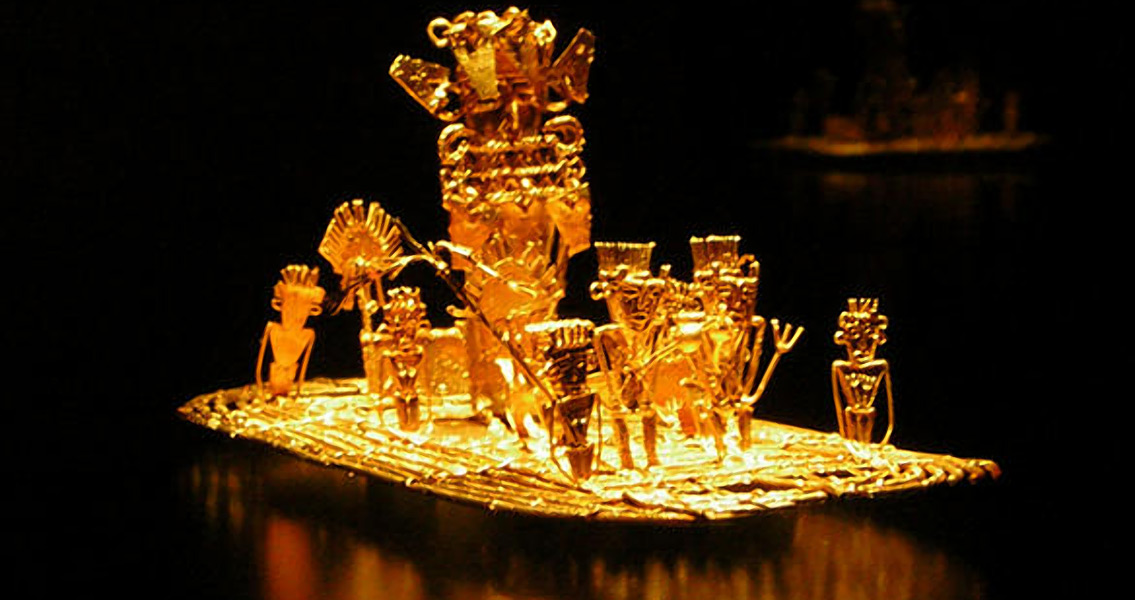
Where Did the El Dorado Myth Come from? As soon as the first Conquistadors ventured into South America in the sixteenth century they started to hear myths of an indigenous tribe with fantastic wealth. One myth in particular captured their imaginations – that of the Muisca tribe hidden high up in the Andes Mountains. Stories said that when a new Muisca chieftain came to power his body was covered in gold dust while jewels were thrown into nearby Lake Guatavita as a sacrifice to a local god or deity. Initially, El Dorado didn’t refer to a city. Meaning ‘The Golden One’, it was the name the Spanish gave to the gold adorned leader of the mysterious Muisca tribe. The elaborate ritual had supposedly ended in the fifteenth century before the Spanish arrived, when ‘The Golden One’ and his followers were attacked by a neighbouring tribe. Nevertheless, due to the sheer amount of gold European settlers found among the indigenous tribes along the northern coast of South America, explorers were convinced there must be a place of great wealth somewhere within the continent’s interior. Draining Lake Guatavita In the 1540s Conquistadors finally entered what is now the Bogota Valley, and by 1545 had subjugated the Muisca tribe. As they began communicating with village elders, the Conquistadors soon realised that nearby Guatavita was the lake from the El Dorado legends. Desperate for gold to keep funding their exploration and exploitation of the New World, the Spanish colonisers became desperate to extract the riches from the lake. Chains of Muisca were forced to scoop out the lake’s water with clay pots, in the hopes that riches would be found in the water. Several decades later, a team of 8,000 labourers were employed to dig a hole in the crater rim housing the lake. Twenty metres of water were drained, revealing golden trinkets and other jewels in the mud. Before the lake could be completely emptied disaster struck, the hole collapsed and hundreds were killed. Exactly how much gold was taken from the muddy banks of Lake Guatavita is unclear, but sources suggest that it was not enough to fund the enormous expense of attempting to drain the lake. The Myth Expands From its beginnings, the myth grew and became increasingly elaborate as it was passed down and adapted through the generations, to the point Conquistadors began searching for a lost city of gold. In the seventeenth century, English explorer Sir Walter Rayleigh launched two expeditions for El Dorado. The second, headed by his son Watt, proved tragic. Exploring the Orinoco River, the team failed to find any sign of the city of gold. To make it worse, they came into a disasterous conflict with Spanish explorers. Watt was killed in the fighting. Heartbroken by his son’s death, Sir Walter returned to England where the disaster escalated. English explorers in the New World had been explicitly ordered to avoid conflict with the Spanish due to the delicate diplomatic situation between the two empires. Sir Walter Rayleigh’s actions were seen as dangerously reckless, and he was executed on the orders of King James. The Truth Behind the Myth There is likely no city of gold hidden in the depths of South America, yet archaeologists have found there is some basis to the initial myth of ‘The Golden One’. Research has shown that the extent and quality of gold production in the area around what is now Colombia was truly remarkable by the late sixteenth century. The Muisca were most definitely a real tribe, and archaeological and anthropological analysis has shown that gold was a central part of their culture. Crucially however, this gold was not a symbol of wealth, it was used purely as a religious offering. As Roberto Lleras Perez, an archaeologist and expert on Muisca gold told the BBC in 2013. “No other society, as far as I know, dedicated over 50% of their production for votive offerings. I think it is quite unique,”. In 1969, villagers found a golden raft in a cave in the hills south of Bogota. It depicted a scene exactly like that described in the myths of Lake Guatavita, adding further credence to the stories of ‘The Golden One’. El Dorado as a place might have been nothing more than a product of the European explorers’ imagination and their thirst for wealth in the New World, but the sacred Muisca rituals behind the myth certainly were real. ]]>

Categories
Editorial

UFO and Alien Believers from History – From Churchill to Newton

Churchill “With hundreds of thousands of nebulae, each containing thousands of millions of suns, the odds are enormous there must be immense numbers which possess planets whose circumstances would not render life impossible.” wrote Churchill in the essay, entitled ‘Are We Alone In The Universe?’ “I am not so immensely impressed by the success we are making of our civilisation here that I am prepared to think we are the only spot in this immense universe which contains living, thinking creatures.” This is far from the first time Churchill has been associated with extra-terrestrial life. Papers released by the National Archives in 2010 alleged that Churchill had ordered a reported encounter between an RAF plane and a UFO over southern England covered-up, for fear of the mass panic it could cause in the the tense wartime environment. Although the evidence backing up this supposed cover-up is largely anecdotal, it’s nevertheless inspired some conspiracy theorists to speculate on just how much Churchill knew about extra-terrestrials. During his second term as Prime Minister in 1952, Churchill ordered an official investigation into UFO sightings over England. That report concluded most UFO sightings were misidentifications in no need of further examination. Douglas MacArthur A hero of the Pacific theatre during the Second World War, General Douglas MacArthur later suffered the disgrace of being relieved of his command after criticising President Truman’s handling of the Korean War. The controversial military leader also held highly controversial views on extra-terrestrial life. “…the next war will be an interplanetary war. The nations of the earth must someday make a common front against attack by people from other planets. The politics of the future will be cosmic, or interplanetary”, he said publicly in 1955, on one of several occasions he openly discussed the possibility of humans coming into contact with Aliens. MacArthur’s high rank in the military meant he was likely privy to a host of classified information, with some speculating this would have extended to UFO sightings. There is little evidence to actually corroborate the belief, however. Ronald Reagan and Jimmy Carter Two US presidents were both incredibly open about their interests in UFOs. While on the campaign trail, Jimmy Carter promised to make public all documents on UFOs. “I don’t laugh at people anymore when they say they’ve seen UFOs. I’ve seen one myself.” Ronald Reagan meanwhile, claimed to have seen a UFO while governor of California. As his aircraft approached for a landing at Bakersfield California in 1974, the future president supposedly saw a mysterious glowing object in the sky and ordered the aircraft pilot to follow it. “We followed it for several minutes. It was a bright white light.We followed it to Bakersfield, and all of a sudden to our utter amazement it went straight up into the heavens. When I got off the plane I told Nancy all about it.” Christiaan Huygens, Isaac Newton and William Herschel Belief in aliens isn’t merely a modern phenomenon. Christiaan Huygens, a leading Dutch scientist of the seventeenth century famous for explaining the nature of Saturn’s rings and discovering its moon Titan, wrote a long treatise on the prospect of extraterrestrial life. ‘Cosmotheoros (or The Celestial Worlds Discover’d: or, Conjectures Concerning the Inhabitants, Plants and Productions of the Worlds in the Planets’, published shortly after Huygens’ death, explained in detail a hypothetical alien race. “That which makes me of this Opinion, that those worlds are not without such a Creature endowed with Reason, is that otherwise our Earth would have too much the advantage of them, in being the only part of the Universe that could boast of such a Creature…” Huygens’ work was criticised at the time as unscientific, while some modern critics have suggested he was in fact being ironic. Nevertheless, other renowned scientists from the period engaged with the idea of alien life. Isaac Newton said in 1701: “For if all places to which we have access are filled with living creatures, why should all these immense spaces of the heavens above the clouds be incapable of inhabitants?”. William Herschel, who discovered Uranus, made a similar argument, speculating that any celestial body could be inhabited – the sun and moon, even comets and asteroids. ]]>

Categories
Editorial

Neanderthals and Humans – What Are the Differences?

Homo neanderthalenisis is now long extinct, the differences between the two species can actually be hard to pinpoint. A fact further complicated by the now widely accepted belief that the two species interbred during the time they both inhabited Eurasia. History The first point of difference between the two species can be found in their respective histories. Neanderthals migrated into Eurasia long before modern humans did. Exactly when they left Africa is far from certain, but scientists generally estimate it was sometime between 300,000 and 200,000 years ago. Humanity’s path to Eurasia is also far from certain. The earliest recognisably modern human fossils have been found in Omo Kibish in Ethiopia, and date to around 200,000 years ago. Genetic and paleontological records suggest modern humans started to leave Africa between 60,000 and 70,000 years ago. Exactly why this migration started is unclear, but it is generally believed to have been due to the onset of the last Ice Age. Some 50,000 years ago the first humans started to arrive in what is now the Middle East (this was likely a different group to the original explorers out of Africa, who instead migrated East through India). It was this group that would eventually go on to colonise much of Europe and Asia. Anatomically modern humans then, arrived in Eurasia much later than their evolutionary cousins. Nevertheless, the two species lived alongside each other for several thousands of years, with the Neanderthals finally going extinct sometime between 40,000 and 30,000 years ago. Appearance Although similar in many ways, there are clear physical differences distinguishing Neanderthals and modern humans. Neanderthals were significantly shorter and stockier than modern humans, with much broader rib cages and pelvises. To give some perspective, the average height for a man in the USA is 1.76 metres. Conversely, based on the fossil records available, the average height for a Neanderthal was just 1.6 metres. A study published late last year suggested that some of these anatomical differences could be the result of the Neanderthals being forced to adopt a much more high protein diet than modern humans. Intelligence and Behaviour One of the hottest topics in scientific research right now involves determining just how intelligent Neanderthals were. For years, the prevailing view was that Neanderthals were primitive, poorly developed brutes when compared to modern humans, only capable of expressing themselves in grunts and groans. Discoveries in the last few years have really brought this assumption into question. ⦁ A study last year presented remarkable evidence that Neanderthals may have used vocal communication in a way similar to modern humans. ⦁ Archeologists working at Neanderthal sites in France believe Neanderthals deliberately collected manganese oxide to use in chemically assisted fire making 50,000 years ago. ⦁ Earlier this year, a study pointed towards Neanderthals being rock collectors, suggesting they placed symbolic importance in the objects around them. This is widely considered a signifier of cultural development. ⦁ Jewellery found at various paleolithic sites has long been a bone of contention, with some arguing it was created by humans, others that it was the work of Neanderthals and thus further proof of how advanced they were. If true, any of these discoveries would point to Neanderthals being for more advanced than their typical depiction in popular culture would suggest. The physical differences between Neanderthals and humans are quiet clear, especially in terms of anatomy. Beyond that though, it’s becoming increasingly uncertain just how distinct we are from our closest extinct evolutionary cousins.]]>