Categories
News

Crew of the Potemkin Surrender
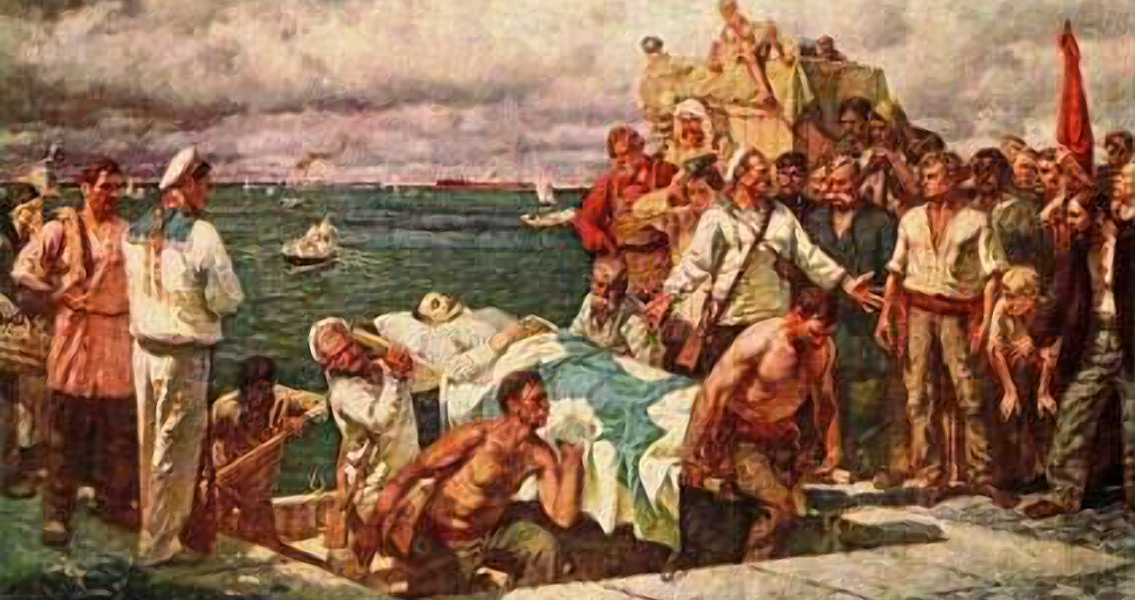
Potemkin surrendered to Romanian authorities at the port of Constantza, on the west coast of the Black Sea. Immortalised in Sergei Eisenstein’s 1925 movie, ‘Battleship Potemkin’, the Potemkin mutiny was one of the most shocking moments of a year of upheaval and unrest in Russia. The striking scenes of Eisenstein’s propaganda film ensured that events on the battleship Potemkin have been remembered more than others from the 1905 revolution as a symptom of the growing conflict between labour and capital which would ultimately split Russia and see the end of the Romanov monarchy. Commissioned in 1903, the Potemkin was one of the newest battleships in Russia’s Black Sea fleet. At sea on 27th June, the ship’s cooks complained that the meat they had been given to prepare was riddled with maggots. The ship’s doctor said that the meat was still fit to use, and instructed the cooks to continue serving it. Hours later a delegation from the crew went to the captain and complained that there were worms in the soup they had been served. Commander Gilarovsky, the ship’s commanding officer, inexplicably flew into a rage which some historians put down to the coarse language used by the crew members, and shot the group’s spokesman, a seaman named Valenchuk. Gilarovsky’s murderous response to the protest inevitably bred more violence. At once the crew members seized the commander and threw him over board. As he struggled in the water he was shot and killed. The refusal of the Potemkin‘s guard to fire on their own ship mates allowed the mutiny to rapidly escalate. A brawl ensued in which sailors were able to seize weapons from the ship’s armory. Several of the ship’s officers and the doctor were shot, while the rest of the officers were imprisoned in one of the Potemkin‘s cabins. A red flag was raised on the ship, and it set sail for Odessa. It was decided that the ship would be governed by a people’s committee, with one of the initial protest’s ringleaders, Matyushenko, elected its leader. At this point protests, riots and unrest were common throughout Russia’s southern cities as the Tsar’s grip on power began to look increasingly fragile. When the Potemkin arrived at Odessa on the 29th June, the unrest in the city quickly escalated as the population tried to deliver food and supplies to the ship’s crew. A violent clash erupted between rioters and government troops which saw huge swathes of the city burnt and over a thousand people killed. Tsar Nicholas II ordered the Russian army to Odessa to suppress the resistance and restore order. They indiscriminately attacked the crowd of protesters, and the Potemkin, powerless to assist the people of Odessa, fled the city. A squadron from the Russian navy was then dispatched to either capture or sink the Potemkin. The ships confronted the Potemkin in the Black Sea, but ultimately refused to open fire out of fear it could trigger mutiny among their own crews. The Potemkin then fled to the Constantza port in Romania to gain vital supplies, but was refused entry. Short on food, and lacking vital supplies to keep the ship running, the crew soon realised they had no choice but to surrender, and on 8th July they handed the ship over to the Romanian authorities. A large chunk of the crew returned to Russia, where they were imprisoned and trialed. Others stayed in Romania, and didn’t return to Russia until after the 1917 Bolshevik Revolution. The mutiny was the culmination of a variety of factors. The February 1905 Bloody Sunday Massacre had shocked the Russian people and galvanised resentment against the Tsarist regime. This led to growing acts of defiance and protest, of which the events on the Potemkin were just one example. In the longer term, Russia’s embarrassing failure in the recent war with Japan, combined with continued terrible conditions for its armed forces, had led to widespread dissatisfaction among all but the highest ranking members of the military. As Eisenstein’s movie about the Potemkin shows, the mutiny was later used by Soviet leaders as a heroic example of the history of the development of communist ideals in the country. Image courtesy of Wikimedia Commons user: HOBOPOCC]]>

Categories
Breaking News

Fire Made Scavenging Safer for Early Humans

chimpanzees have also been found to have a preference for cooked meat. For more information: “The significance of cooking for early hominin scavenging” Image courtesy of Wikimedia Commons user: Alina Zienowicz Ala z ]]>

Categories
Breaking News

Ancient Bobcat Skeleton Found Buried with Humans

www.maneyonline.com Image courtesy of Wikimedia Commons user: Rennett Stowe from USA ]]>

Categories
Breaking News

Medieval 'Kamikaze' Shipwreck Found Near Japan

last Autumn during excavations 200 metres south of Takashima Island. The ship was lying around fifteen metres below the surface, with its bow pointing southward. The remains measure twelve metres long, and three metres across at their widest point. Archaeologists from the University of Ryukyus and the Maatsura Board of Education confirmed on the 2nd July that the shipwreck was indeed part of the Mongolian led invasion force of the thirteenth century. It is the second shipwreck that has been discovered from the Kublai Khan led attempt to invade Japan. Professor Yoshifumi Ikeda from the University of Ryukyus, the leader of the excavations, told the Asahi Tribune that his team had found three other ships at the Takashima Kozaki site which could have been part of the invasion force. The team have reached their conclusion based on a wealth of artefacts discovered in and around the shipwreck, and the structure and shape of the ship itself. Around twenty examples of Chinese ceramic wares, including a white porcelain bowl, a brown glaze pottery vase, roof tiles and iron ware, were found in the shipwreck. These have been dated to the twelfth and thirteenth century, which the archaeologists claim is proof the ship is from the Mongolian invasion. By 1274 Kublai Khan’s empire included most of what is modern day Asia, and he had declared himself emperor of China. In 2011, a team of archaeologists discovered and identified the only other confirmed shipwreck from the attempted Mongolian invasion, just off the coast of Nagasaki. Using ultrasound equipment they discovered the well preserved wreck three feet below the sea bed. 4,000 artefacts were unearthed from the site including cannonballs and stone anchors. Kublai Khan attempted to launch two invasions of Japan in the thirteenth century, at a time when the Mongolian Empire was expanding rapidly through Asia and Europe. Both invasions were prevented by ‘kamikaze’: massive typhoons which forced the Mongolians to abandon their attempts at expansion into Japan. The first invasion took place in 1274, when up to 900 ships landed at Japan’s Hakata bay. Heavily armed with weaponry superior to the Japanese, the Mongolian troops initially made substantial inroads into the country’s territory. The typhoon struck however, forcing them to return to their ships for shelter. Over night the storm intensified, destroying most of the invader’s ships and forcing the remainder to return to what is now Korea. In 1281 a second, much bigger invasion was launched comprised of two fleets, one containing 900 ships, the other 3,500. Improved Japanese sea defences held up the Khan’s forces, holding off the massive invasion. The second typhoon struck, sinking 80% of the fleet and drowning a huge section of Khan’s warriors. Those troops who did make it onto the Japanese mainland were quickly killed by an army of Samurai. Historians speculate that the second invasion was so cataclysmic for the Khan because the preparation had been rushed. Desperate to conquer Japan, a fleet of ships had been hastily assembled, many of which were simply inadequate for the journey across the sea. The archaeologists working at the Takashima Kozaki site hope that the information gleaned from the recently identified shipwreck can be used as a starting point to identify other ships in the region. “We have successfully confirmed the two ships from the Mongolian invasion, and further research on them is expected to lead to the discovery of even more sunken Mongolian ships,” Ikeda told the Asahi tribune. Image by Anige of Nepal – an astronomer, engineer, painter and confidant of Kublai Khan ]]>

Categories
Breaking News

13th Century Mummy Found in Siberia

Categories
Breaking News

Woolly Mammoth Genome Study Reveals Secrets

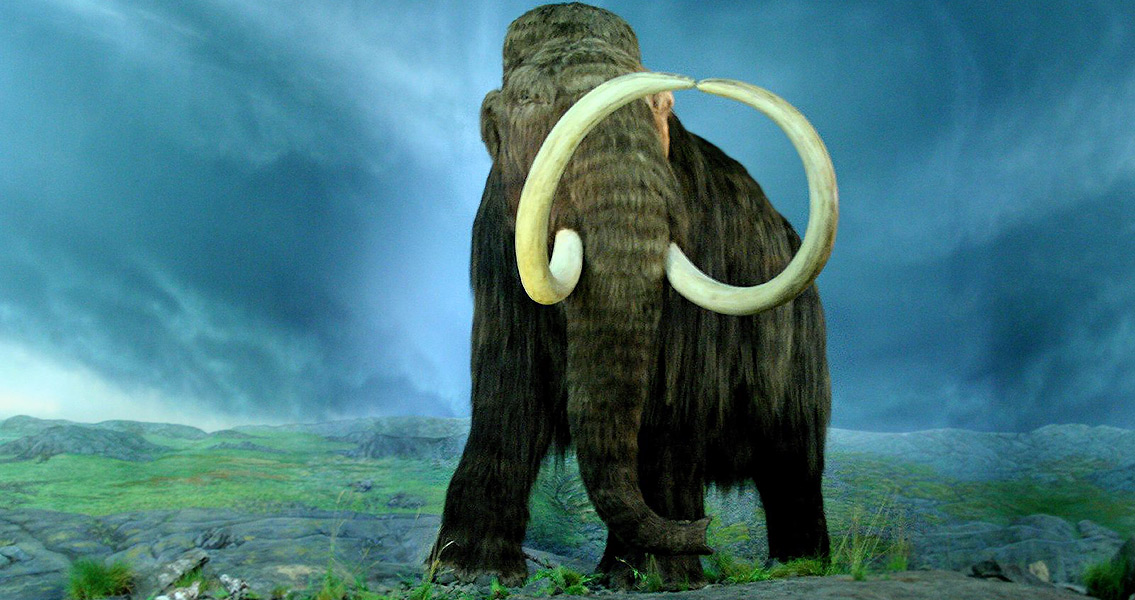
www.cell.com Image courtesy of Wikimedia Commons user: Tracy ]]>

Categories
News

Sir Thomas More Executed

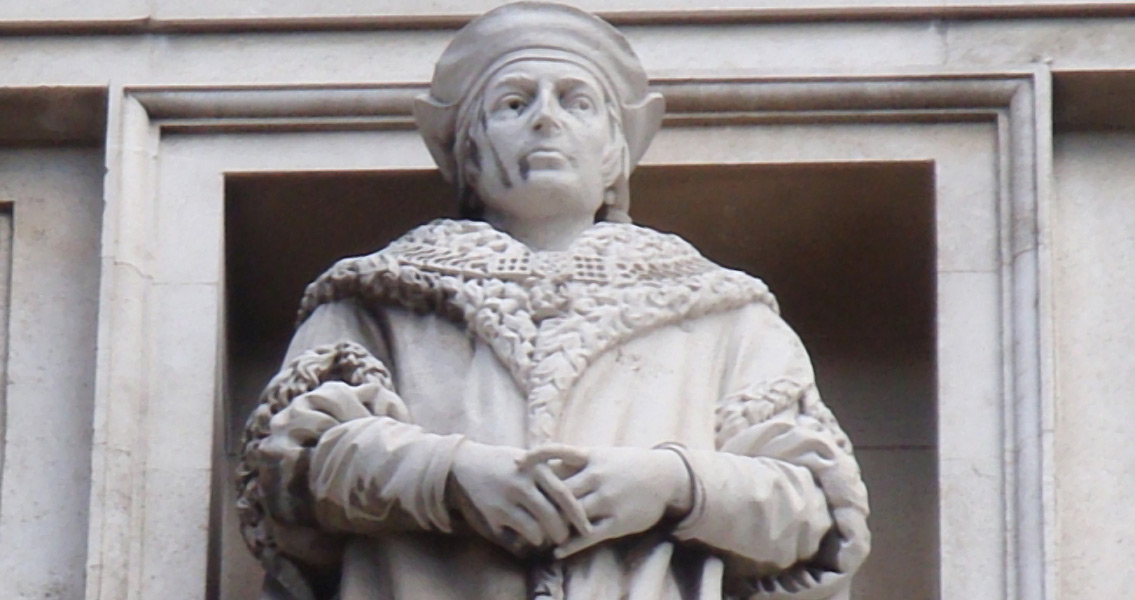
Utopia, is a key piece of political philosophy which remains hugely influential. In it, More describes a fictional society based on equality. It is debated whether More was advocating the world he described, or if the work was purely a means to encourage political debate. Nevertheless, it put forward radical ideas of a society which practiced religious tolerance, gender equality and averted any class systems, making the book seem as radical now as it did in the sixteenth century. More was arrested in 1534, accused of refusing to swear to an oath of succession which essentially confirmed that Henry VIII was a higher authority than the pope, and the head of the Church of England. He was sentenced to death, although he was spared the brutal ordeal of torture reserved for traitors and instead had his sentence reduced to decapitation. Born to a prominent family in London in 1478, More wanted to study Ancient Greek in his youth. Following his graduation from Oxford University, and under pressure from his father, More studied law and became a barrister in 1501. Nevertheless, alongside his legal career More dedicated himself to a study of the Classics while also leading a life of devotion to Catholicism. Such was his commitment to the church that More moved to a monastery just outside London in 1503. Although he ultimately opted to abandon the monastic life in order to serve his country in Parliament, More continued to practice strict regimes of fasting, prayer and penance for the rest of his life. In 1517 More entered the service of Henry VIII and quickly became one of his most important advisers, working among other roles as a diplomat, speech writer and interpreter. In 1521 he was knighted, in 1523 he became the Speaker of the House of Commons and in 1525 Chancellor of the Duchy of Lancaster. The Reformation saw More’s relationship with the king deteriorate drastically. More argued against Henry’s decision to split from the Catholic Church and declare himself the head of the Church of England. He resigned from his position as chancellor, and continued to criticise the king’s decision. It was this defiance which has seen More so widely celebrated by the Catholic church, but it also ultimately cost him his life. Image courtesy of Wikimedia Commons user: Lonpicman]]>

Categories
Breaking News

Fossil Confirms Tropical Climate in North America

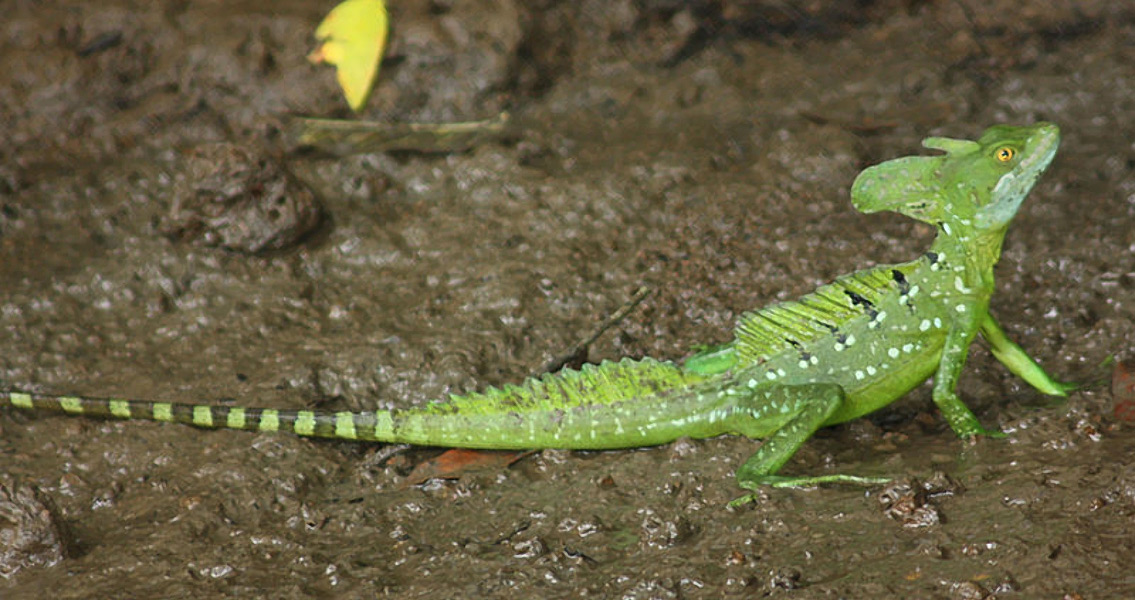
Babibasiliscus alxi and suggested it may have been the first representative of the Jesus lizard family. He said in a press release the lizard was probably active during the day and lived mostly in trees. A bone ridge on the top of its head provided shade from the sun and at the same time probably made it look constantly angry. It had small teeth that ended in three points, suggesting its usual diet included anything from snakes and other lizards to fish, insects, and even plants. However, it also had wide cheekbones, so it is possible that it ate larger animals as well. The basilisk family, which also includes chameleons and iguanas, is among the least studied representatives of the reptile world because there are not many fossils that scientists can study. Today these lizards live across North America, in Central America and as far down south as Ecuador. They are collectively called casquehead lizards, or helmeted lizards, because of the ridge they have on their heads – in some species on just the males, and in others on both females and males. In naming this ancient ancestor of today’s Jesus lizards, Conrad said he had honored an indigenous people from Wyoming, the Shoshone, in whose language “babi” means cousin; pointing to the kind of genetic relationship the ancient species has to modern-day Jesus lizards. These reptiles are called that because of their ability to run across the surface of water over short distances. Based on the fossil record it has previously been suggested that at some point, around 50 million years ago, mid and even high latitudes were characterised by tropical climate but as the weather started cooling down, these heat and humidity loving species moved south. According to Conrad, any evidence of these developments can be useful for the future as it may, he says, “give us an idea of what to expect from our dynamic Earth”, especially at this point in time, when the planet is undergoing another period of global warming. For more information: “A New Eocene Casquehead Lizard (Reptilia, Corytophanidae) from North America. Image courtesy of Wikimedia Commons user: Charlesjsharp]]>

Categories
Breaking News

Ancient Ritual Bath Found Under Jerusalem Home

Categories
News

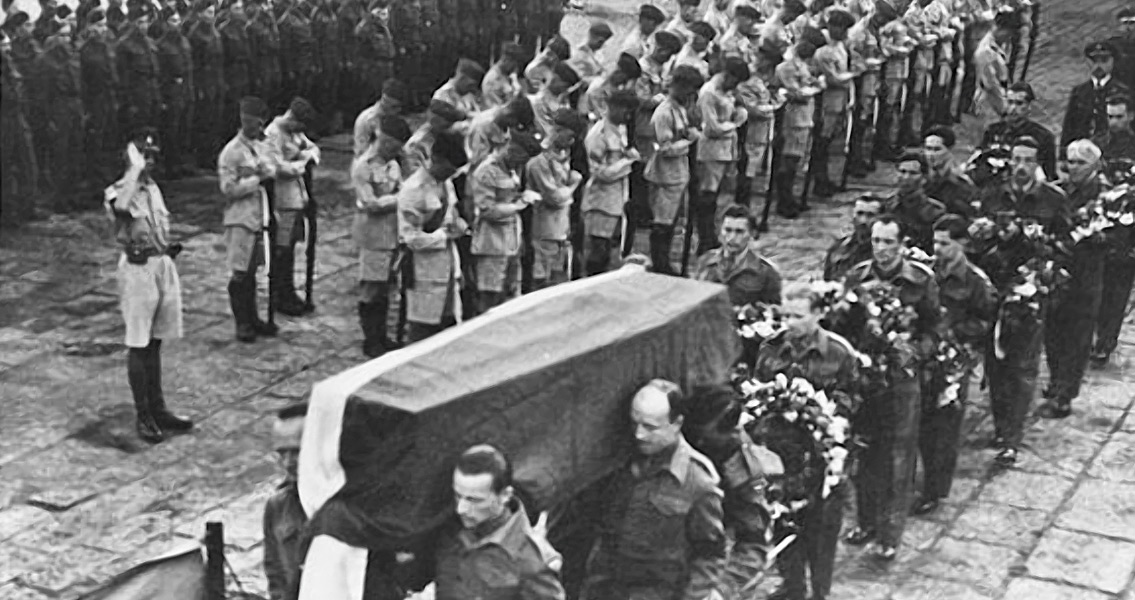
Władysław Sikorski Killed in Plane Crash