Categories
Editorial

The USA and Latin America: A History of Meddling?

Argentina that the US is continuing to meddle in their countries’ affairs. On the one hand, the US President is claiming that the USA’s interference in Latin American is over, while on the other the leaders of two countries in the region have both accused the US of meddling in their affairs within the last month. This continued controversy reveals the at times bitter history of the relationship between the United States and Latin America. European Conquest of the Americas The background of any analysis of the history of US intervention in Latin America has to be the conquest of the Americas by the European Powers in the fifteenth and sixteenth centuries. Eduardo Galeano argued in his book ‘Open Veins of Latin America’ that the conquest of South America by the Portuguese and Spanish Empires set in place a pattern of domination that has continued into the present, with the only change being which ‘imperial’ power received the benefit of this domination. On this basis, the United States has taken control of the benefits of the economic exploitation of Latin America started by the Spanish Conquistadors. Galeano’s description of political economy and exploitation in his book, first published in the 1970s, is of course controversial, but even if one disagrees with the arguments about exploitation, the connections it draws between the Old European Powers and the United States in terms of relationships with South America can provide a useful framework for studying the history of the continent. Within a hundred years of Columbus’ first discovering America, most of the New World was under the control of the Spanish and Portuguese Empires. Whole civilisations had been wiped out, and the resources of the Americas were being expolited to form the basis of Spanish and Portuguese imperial success. Years later, other European powers, and in particular Great Britain, France and Holland, began to try to take advantage of the riches offered in the New World. Acts of piracy, as well as attacks on Spanish colonies, took place in an attempt to secure control of the riches offered in South America and the Caribbean. The key fact is that from the moment of discovery, the Americas were often treated as an economic resource to fight over. The Monroe Doctrine On 2nd December, 1823, President James Monroe announced in his annual message to Congress that “The American continents … are henceforth not to be considered as subjects for future colonization by any European powers.” The declaration, issued in response to a territory dispute with Russia, came to be known as the Monroe Doctrine and has become a defining moment in the development of US Foreign Policy. A bigger concern behind the doctrine was the decline of Spanish authoirity in South America. As revolution against Spanish rule spread throughout the South American colonies, the United States wished to prevent France, Spain, and other European powers attempting to re-exert their influence in the region. The Monroe Doctrine was a means to guarantee mercantile freedom for the United States in Latin America and the Caribbean, bringing to an end the threat of a return of the strict trade laws associated with the Spanish Empire. The Roosevelt Corrollary An extension to the Monroe Doctrine, Roosevelt’s Corollary declared that European Powers would no longer be able to use force to extract debts from Latin American countries. For many historians however, the Corrollary was a justification for direct US involvement in Latin American affairs. The Corollary coincided with the beginnings of increased US activity in the Caribbean and South America. The Spanish-American War of 1898 had officially been fought to liberate Cuba from Spanish rule. In the Platt Amendment to the Cuban-American Treaty of 1903 however, restrictions were placed on Cuban economic and political freedom which lasted until the Castro revolution of 1959. Over the course of the first decades of the twentieth century, the United States increasingly used military force to ensure stability in Latin America, but also to secure the success of governments sympathetic to it. US Navy vessels were used to obstruct Colombian military vessels attempting to suppress the Panamanian Revolution in 1903. The success of the Panamanian Revolution saw the country achieve independence, and guaranteed US control of the vital trade route of the Panama Canal. By 1934, the Dominican Republic, Nicaragua, Cuba and Haiti had all been partially occupied by US forces at some point. Latin America and the War on Communism US intervention in South America continued following the Second World War, and was often linked with broader Cold War foreign policy aims of restricting the spread of Communism. In Cuba, the Bay of Pigs incident of 1961 was a well documented diplomatic catastrophe that saw the United States provide CIA training and financial support to a group of Cuban exiles attempting to reverse the Cuban Revolution and overthrow the recently formed government of Fidel Castro. In Chile, the United States played a key role in the coup led by General Augusto Pinochet which overthrew the democratically elected left-wing governent of Salvador Allende. Exact details of how much aid the USA gave Pinochet are unclear. The withdrawal of economic support, and a banking embargo during Allende’s government however, were a clear attempt to destabilise Chile. Tellingly, economic aid was restored once Pinochet’s government had secured power. The Iran-Contra scandal, where the administration of Ronald Reagan attempted to covertly and illegally fund the Contra rebels against the Sandanista government in Nicaragua, was another clear example of the United States attempting to remove a left-wing anti-American government in South America. There are countless other example of US ‘meddling’ in the Cold War period, many of which are still shrouded in ambiguity. The consistent theme however, was an attempt to prevent left-wing governments, particularly those who attempted to nationalise their countries’ industry, from securing power in the region. Significantly, the late Venezuelan President Hugo Chavez frequently claimed the CIA plotted against him. These accusations were never confirmed, but reveal that the image of the USA meddling in Latin American affairs is well entrenched. Today As mentioned above, South American leaders still accuse the United States of meddling in the affairs of their countries. Galeano’s argument that the United States’ (and previously Europe) are directly responsible for the comparatively weaker economies of the Latin American countries is of course a highly subjective one which has been widely debated, but it is useful for highlighting the connection between the United States and Latin America. Since the Monroe Doctrine there has been a clear connection of interests between the United States and Latin America. Arguing the morality and benefits of this connection is of course a deeply controversial and perilous task, but it is clear that the image of the United States meddling in Latin American affairs is one that is well entrenched and likely difficult to shift. Image courtesy of Wikimedia Commons user: TownDown]]>

Categories
Breaking News

Rum's Complex History in Hawaii

Pacific Historical Review. Opposition to rum-production, however, was vehement. In 1840, a law had been passed banning the distillation of rum. Even in the tough climate of the 1850s there was little enthusiasm for repealing this law. This resistance to rum-production intrigued Kessler, particularly as it would have been relatively easy to begin the lucrative production of the alcohol. Why was there such an eschewing of economic interests on Hawai’i, with planters producing sugar, but no rum? “The short answer is that many of Hawai‘i’s influential early sugar- cane planters were temperance advocates,” Kessler explains. Honolulu supported a community of teetotalers who desired to limit the havoc which could be caused by drunken sailors. These attitudes had deep roots. Alcohol production was rejected by sugarcane producers on religious grounds. American Congregationalist missionaries had introduced sugarcane to Hawai’i in the 1820s. Initially entirely opposed due to its association with rum, sugarcane was eventually accepted by missionaries. Though they remained resolutely opposed to distilling rum, they embraced sugarcane production for its economic, environmental and social factors. Most Hawaiian sugarcane planters in the 1840s and 1850s were descended from these earlier Protestant revivalists. Opposition to the production and sale of liquor became part of the religious moral identity of the planters. “For these Protestant planters, growing sugarcane was much more than agriculture; it was an action vested with cultural and political meaning”, Kessler notes. By the 1870s, however, the opposition to rum-distillation had waned. “Without rum, underfinanced sugar producers were less likely to succeed, and foreign capital was all the more necessary to establish secure operations,” Kessler explained. Foreign investors, attracted to Hawai’i by the opportunity to invest in the plantation system of sugarcane production, did not have the same attitude towards rum as the missionaries had had. Sugar production gradually lost the cultural and moral significance it was imbued with by missionaries, and the ban against distilling rum was lifted in 1874. Hawaiian history is often subsumed into a wider history of the United States of America. Kessler’s work redresses that balance somewhat, allowing us to see both the spread of Christianity, as well as the growth in sugarcane production which was of vital importance to the Hawaiian economy until tourism began to become a lucrative industry in the mid-twentieth century. For more information: www.jstor.org Image courtesy of Wikimedia Commons user: Sandstein ]]>

Categories
Breaking News

Northern Europe Resisted Farming, Ornaments Reveal

Categories
Book Reviews

Herodotus' Histories

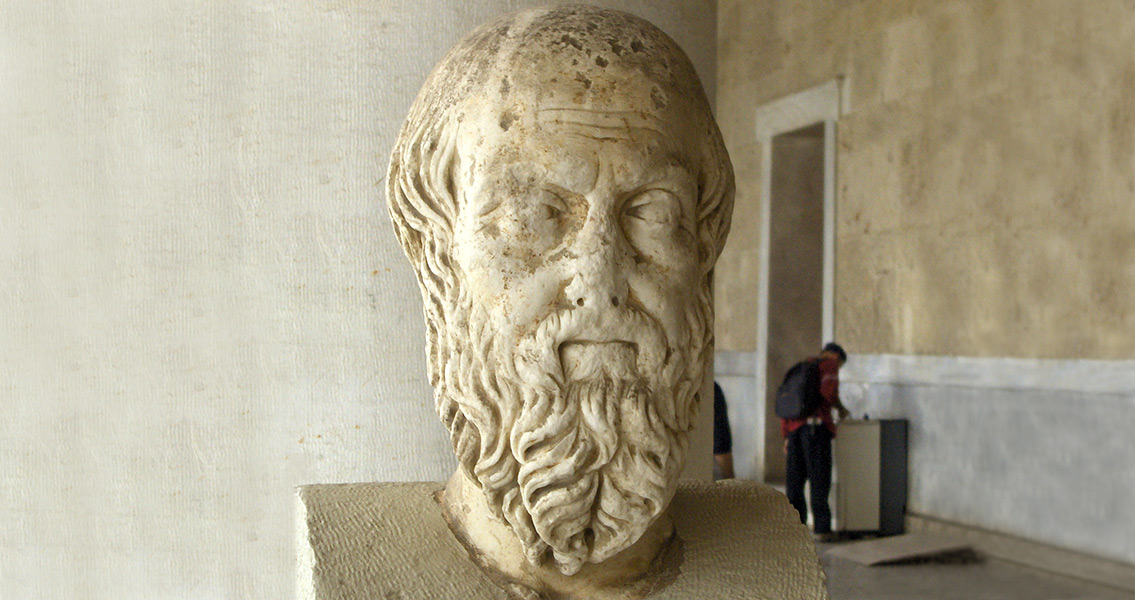
Histories of the war between Greece and Persia is regarded as the first work of narrative history ever produced. It is pioneering in its attempt to provide a broader analysis of the factors behind the conflict, as well as providing one of the few insights available on the host of cultures that had been absorbed into the Persian Empire. Exact details of Herodotus’ life are unknown, but it is clear from the scope and nature of the Histories that he travelled extensively. It is believed that he was born between 500 and 470 BCE, and died sometime after 430 BCE based on the fact that the last event recorded in his Histories took place in that year. It appears that he was born in Halicarnassus, a Greek city in Asia Minor that at the time was under Persian rule. He lived in Athens for a significant part of his life, and some historians have suggested that he was killed in the plague that decimated the city’s population between 429 and 413 BCE. The Greco-Persian Wars were a series of wars fought between the Greek City States and the Persian Empire over a period of more than forty years. A consequence of the continuing expansion of the Persian Empire, the war reached its peak with two Persian attempted invasions of the Greek mainland between 490 and 479 BCE. The wars, and their aftermath, proved crucial in Ancient Greek history. The Greeks defied the odds and successfully repelled the military might of the Persian Empire at the peak of its powers. The victory proved crucial in allowing Greek culture and civilisation to flourish over the next few hundred years, as well as allowing Athens to become more powerful and challenge the previously dominant Spartans. Herodotus’ Histories can be divided into two sections, one of which deals with the origins of the Persian Empire, while the other is a more straightforward narrative of events in the wars themselves. It seems that Herodotus was not content to simply provide a description of the conflict, and felt a need to explain just how the Persian Empire came to be so powerful. As a result, his work illuminates the contrast between the polyglot Persian forces, made up of soldiers from a host of of different regions but united under a strong, forceful leadership, and Greece, a civilisation which shared a language and culture, but was divided by the politics of the City States. In the first four books of the Histories, Herodotus provided a detailed account of the various parts of the Persian Empire, and how they came to be conquered. Influenced by his extensive travels throughout Europe, Asia and Africa, the Histories combine detailed accounts of political maneuverings and military invasions with diversions into the stories and histories of the cultures and people from Africa to Asia who made up Persia at its peak. In Herodotus’ Histories we get detailed accounts of some of the most monumental moments in the history of the Ancient World, such as The Ionian Revolt and the Battle of Marathon. It also depicts some of the period’s most colouful figures, such as the Persian Kings Xerxes and Darius. Herodotus’ storyteller style means the Histories can simultaneously come across as a fantastical tale, and a detailed socio-political examination of two different cultures and the epic battle they fought. What is perhaps most remarkable however, is the balanced approach the author takes, depicting acts of great heroism and great evil on both sides. It is this neutrality which makes Herodotus so pivotal in the development of modern approaches to history. Image courtesy of Wikimedia Commons user: Konstantinos Stampoulis

Related Books


The History of Herodotus book

The History of Herodotus
Translated from the Greek by Herodotus

[gap height=”20″]]]>

Categories
Breaking News

New Perspectives on The War on Poverty

www.juh.sagepub.com Image courtesy of Wikimedia Commons user: Magnolia677]]>

Categories
Breaking News

Mummy “Graveyard” Sheds Light on Peruvian Death Rituals

Categories
News

The Titanic Sets Off

Titanic embarked on its fateful maiden voyage. Departing from Southampton, England, with over 2,200 passengers and crew, the ship was meant to arrive in New York on the 17th April. The product of intense rivalry between ship manufacturers, and in particular that of White Star Line and Cunard, the Titanic was the largest steam ship ever built. Cunnard had launched the Mauritania and Lusitania in 1907, two ships lauded for spectacular exteriors and beautiful interiors. The Titanic was built in response to these two ships, with construction beginning in 1909. Its hull was completed in May 1911, and at the time held the accolade of being the largest movable man made object in the world. As has been well documented in books, television programmes and movies, the Titanic never completed its journey. On the 14th April, at about 11:30pm, the ship struck an iceberg somewhere in the Atlantic. The Titanic‘s look outs had spotted the ice berg just before the impact, and attempts at evasive action had avoided a direct hit. Nevertheless, ice under the surface of the water had created a 300 ft cut into the ship’s hull below the water line. After investigating the harm done to the ship,the Titanic‘s captain realised the damage was too extensive, and the ship would sink. Calls for help were made to surrounding vessels and the order to abandon ship was given. Following a chaotic and ineffective evacuation procedure, the ship sunk three hours after the initial impact with the iceberg. Only 700 people escaped the disaster. Several factors contributed to the horrendous death toll, and various theories have been put forward since as to exactly what went wrong on the Titanic‘s first and only voyage. Many experts focus on design flaws in the ship itself, and the inadequate safety regulations of the period. The Titanic was deemed ‘unsinkable’ as a result of its system of watertight bulkhead doors. These doors could be operated individually or in unison from the ship’s bridge, and were intended to seal off sections of the ship’s hull in the event that it was breached. However, these doors could not prevent water spilling in from other compartments, a feature present in the two liners produced by Cunard. Experts have since hypothesised that if the Titanic had had the same system as the Lusitania and Mauritania, it would not have been sunk by the iceberg. By modern standards, the most shocking failure was the lack of emergency provisions on the ship. The Titanic held sixteen life boats and four Englehardt ‘collapsible’s’ which could only hold 1,178 people between them. As mentioned above, the debut voyage of the Titanic saw the ship carry over 2,200 passengers, and this was not even the ship’s full capacity. Nevertheless, the ship had passed the recommended safety standards of the British Board of Trade Regulations, giving a startling insight into health and safety considerations of the period. Of course, the disorderly evacuation of the Titanic meant that the life boats were not full when they left the ship anyway. An evacuation drill had actually been scheduled for the morning of the 14th April, but was cancelled for reasons which have never been determined. Again, many experts have speculated that completing the drill could have made a significant difference to the effectiveness of the evacuation. Many modern analyses of the Titanic tragedy are perhaps mislead by the benefits of more than a century of hindsight. The tragedy may have been avoidable, it is impossible to say, but the details of the sinking reveal the dramatic changes that have occured in standards of health and safety in the years since.]]>

Categories
Breaking News

New Perspectives on Hurricane Katrina

www.juh.sagepub.com Image courtesy of Wikimedia Commons user: Spellcast]]>

Categories
Breaking News

Neolithic “Spooning” Couple Baffles Scientists

Categories
News

The War of Jenkins' Ear

Rebecca was apparently stopped and boarded by a crew of Spanish coast guards led by Captain Juan de Leon Fandino. The coast guards pillaged the ship, attacked the crew, and ultimately set it adrift. Most shockingly, Jenkins claimed that the Spanish crew had tied him up and cut off his ear. At the time tensions were high between Britain and Spain as they competed for influence and control over the New World. Britain sought to expand its trade in the Americas, and its sailors carried out illicit trade in Spanish territories. Both Spanish and British crews frequently launched raids on the other’s ships, making trade in the Caribbean increasingly expensive and risky. As well as competing over the high seas however, Britain and Spain also found themselves in dispute over claims to land on the North American continent. In the preceding century the two countries had found themselves at war with each other on a number of occasions, as they competed to assert their imperial dominance. Jenkins survived the ordeal and set sail for England with the severed, pickled ear. News of the attack enraged the British public, and Jenkins was supposedly called before the House of Commons (with the severed ear) in 1738, to testify about his ordeal. When asked how he had responded to the assault, Jenkins famously claimed “I commended my soul to God and my cause to my country.” Jenkins’ ear became a symbol for the outrage the British public increasingly felt towards what it perceived as Spanish belligerence on the high seas. Holding Spain accountable became a matter of national pride, and the demand for war grew. Just as significantly, British Prime Minister Sir. Robert Walpole found himself increasingly under pressure from his opposition in Parliament, who used the actions of Spanish ships to paint a picture of a weak, powerless British government. In October 1739, the war started with a series of skirmishes between British and Spanish forces in the Caribbean. Ultimately, it was something of a stalemate, with neither side making significant gains. The real importance of the War of Jenkins’ Ear can be seen with hindsight, for the events it came to foreshadow. French support of Spain ultimately saw the conflict merge into the War of Austrian Succession, the eight year fight over the fate of the Hapsburg Empire following the death of the Holy Roman Emperor, Charles VI. France sought to cripple Austria, as a means to secure its position as the dominant power in mainland Europe. Britain wanted to prevent France becoming too powerful, as a means to secure its own economic well being, and thus came to the aid of Austria. Spain’s alliance with France means that the War of Jenkins’ Ear can be seen as part of a brewing conflict between groups of European powers over influence in both the Old World and the New. The war also symbolised a drastic change in the causes of conflict, at least for Britain. In 1909, Harold W. V. Temperley, a British historian, argued that the War of Jenkins’ Ear had been the first war Britain had fought in “which the trade interest absolutely predominated, in which the war was waged solely for balance of trade rather than for balance of power”. Starting a war over one man’s severed ear might seem feudalistic, if not fantastical, but in reality it symbolised the very modern concerns of securing access to trade and resources. Hysteria surrounding Jenkins’ Ear gave the war its name, but in reality the conflict was a manifestation of a series of defining themes from this period of history. ]]>