Categories
Breaking News

Did Neanderthals Get Herpes and Other Diseases From Humans?

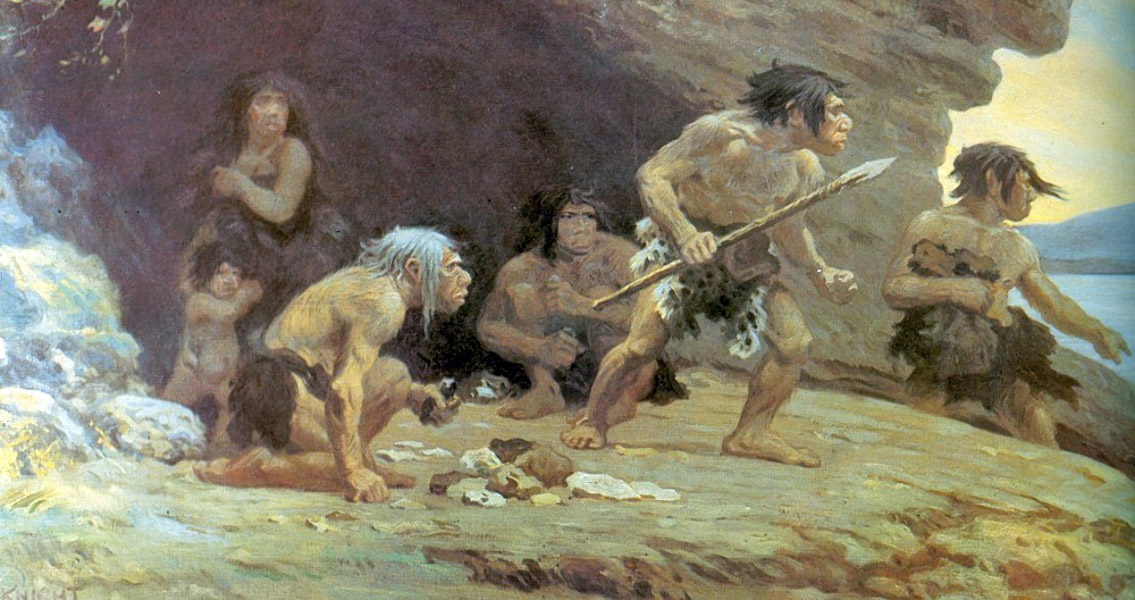
American Journal of Physical Anthropology, challenges the prevailing view that infectious disease outbreaks exploded with the dawn of agriculture, when humans started to live in dense, sedantary populations alongside their livestock. In particular, their results bring into question the idea that diseases such as tuberculosis were initially spread to humans from livestock such as pigs. “We are beginning to see evidence that environmental bacteria were the likely ancestors of many pathogens that caused disease during the advent of agriculture, and that they initially passed from humans into their animals,” said Houldcroft in a Cambridge University press release. Although there is no definitive evidence humans transmitted African diseases to Neanderthals, Houldcroft and Underdown’s paper provides several candidates for diseases that could have been spread in such a way. One is Helicobacter pylori, a stomach ulcer causing bacterium. It is estimated to have initially infected humans in Africa between 116 and 88 thousand years ago. It arrived in Europe 52,000 years ago, while the most recent studies suggest Neanderthals had gone extinct by 40,000 years ago. Herpes simplex 2, the virus which causes genital herpes, is another candidate suggested by the paper. The genome of the disease suggests it was transmitted to humans through chimpanzees, via another as yet unknown hominin species, around 1.6 million years ago. “The ‘intermediate’ hominin that bridged the virus between chimps and humans shows that diseases could leap between hominin species. The herpes virus is transmitted sexually and through saliva. As we now know that humans bred with Neanderthals, and we all carry 2-5% of Neanderthal DNA as a result, it makes sense to assume that, along with bodily fluids, humans and Neanderthals transferred diseases,” said Houldcroft. Neanderthals lived in relatively small, isolated communities, meaning that rather than a rapid epidemic, their decline due to disease was probably quite gradual. “… it is unlikely to have been similar to Columbus bringing disease into America and decimating native populations. It’s more likely that small bands of Neanderthals each had their own infection disasters, weakening the group and tipping the balance against survival,” Other causes may have contributed to the extinction of the Neanderthals, but Houldcroft and Undertown’s work shows that humans spreading disease must be considered as a factor in the species’ decline. For more information: www.onlinelibrary.wiley.com]]>
Categories
Breaking News

Modern Tech Used to Study Ancient Maya Water Storage

Categories
News

Napoleon Dethroned and Exiled

Categories
Breaking News

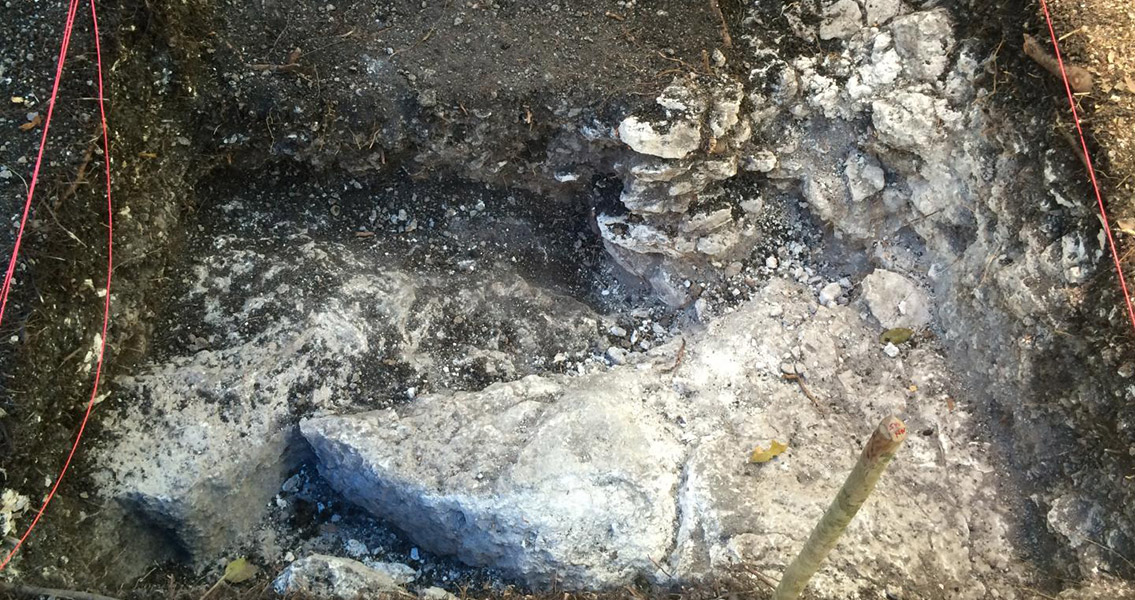
Home Sweet Yikes! Cremation Pits Found on Housing Site

Categories
Breaking News

Arctic Ocean Enjoyed Ice-Free Summers Six Million Years Ago

Categories
News

New Insights into What Happened on Easter Island

Frontiers in Ecology and Evolution, has attempted to provide an answer to the question of the fate of the Rapa Nui people by taking a holistic approach to new evidence discovered over the last decade. According to records, when Captain Cook first set foot on Easter Island in 1774, only 700 Rapa Nui remained. What caused the island’s population to sink so low is a mystery, but there are a number of popular hypotheses. The prevailing view of the island’s history is that it is a microcosmic example of human selfishness leading to a population’s extinction. This narrative claims that the island was first settled by people from east Polynesia sometime between 800 and 1200 CE. As the island’s population expanded, the people started to over-exploit its resources, triggering an ecological catastrophe which in turn led to a social one. Scientific evidence supports this hypothesis by revealing a period of dramatic deforestation between 1200 CE and 1400 CE. Thousands of obsidian points discovered on Easter Island’s south coast are considered by some archaeologists to be weapons, pointing to a massive war among the island’s population as they started to compete for the dwindling resources. Earlier this year however, that interpretation of the evidence was called into question by a study suggesting the points weren’t in fact weapons. Other explanations suggest that the deforestation was caused by a plague of rats who ate the island’s palm fruit, or that in fact the cultural extinction was a result of Europeans arriving on the island, wiping out the population through slave trading and the unintentional spread of diseases the islanders had no immunity to. The main argument made by the latest study is that the truth of the Rapa Nui’s’ fate can not be explained by a single factor. “These different interpretations may be complementary, rather than incompatible,” said Dr. Valenti Rull, a senior researcher of the Spanish National Research Council in Barcelona, Spain, and the lead author of the study. “In the last decade, there’s been a burst in new studies, including additional research sites and novel techniques, which demand that we reconsider the climatic, ecological and cultural developments that occurred.” Taking advantage of the latest analytical methods, Rull and his team are beginning to shed light on many of the uncertainties in the history of Easter Island. In particular, complete sedimentary samples for the last 3000 years have revealed how drought and wet seasons may have influenced the island’s population. Periods of adverse weather could have affected sea travel to and from the island, leading to periods of isolation. Times of drought could have triggered the deforestation shown in the pollen record. Other evidence, such as radio carbon dating and DNA analysis of artefacts and human remains, has provided insights into Easter Island’s inhabitants. It is now possible to see where the islanders lived, what they farmed and ate, and how other cultures influenced them. By combining all of this newly available evidence, the complexity of the Rapa Nui’s story is being revealed. “These findings challenge classical collapse theories and the new picture shows a long and gradual process due to both ecological and cultural changes. In particular, the evidence suggests that there was not an island-wide abrupt ecological and cultural collapse before the European arrival in 1722,” said Rull, in a press release. The causes of the extinction of the people of Easter Island remains a mystery, but the work of Rull and his colleagues shows that to truly trace the story of the Rapa Nui, a combined approach studying climate, ecology, and culture is necessary. For more information, the study is available here]]>

Categories
Breaking News

Scottish Deer Not So Native, New Research Suggests

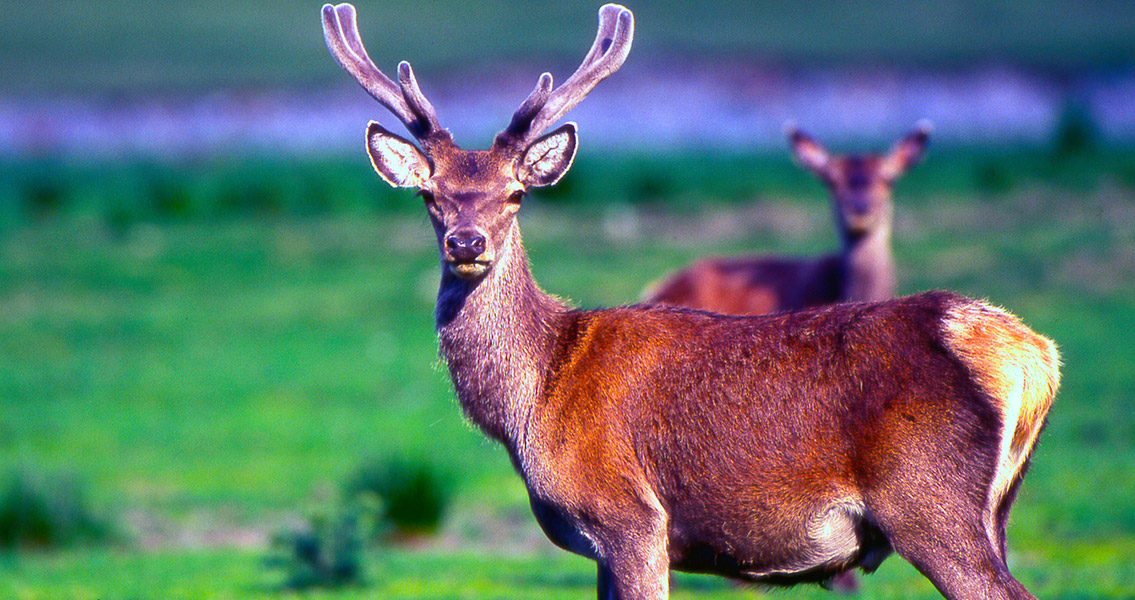
Cervus elaphus, the red deer as a species is widely distributed across Europe, with only regions such as northern Scandinavia and Iceland devoid of the ungulate. Capable of growing to be twice as heavy as the white-tailed deer prominent in North America, there are as many as 400,000 C. elaphus in Scotland alone, Stanton remarked in an interview with Science Magazine online. Red deer have been present in Scotland for thousands of years, according to remains found in archaeological digs on the Scottish mainland as well as the Outer Hebrides and Orkney, two major island chains off the coast. With Orkney at least 16 kilometers from the Scottish mainland – and the Outer Hebrides even further – it’s obvious that ancient red deer didn’t just swim to either of these locations, not with a maximum swimming range of just 7 kilometers or less, according to Stanton. Even during the last Ice Age, when sea levels plummeted, these islands would have still been too far off shore; in other words, the only way these deer would have arrived on these outlying island chains would have been through human intervention. Stanton and his team set out to see where these island deer populations might have originated from by analyzing several dozen sets of remains – some of which were as ancient as 7500 years old – and collecting genetic material from each. The researchers took this data, which had been sourced from remains discovered not just from mainland Scotland but from the Inner and Outer Hebrides and Orkney, and compared it to DNA samples from other regions of Europe, both ancient and modern. There are less than a handful of genetic lines when it comes to the red deer of today – the results of the deer that returned to Europe after the end of the last ice age around 12,000 years in the past. These three or four separate genetic lines are more or less geographical in nature, allowing scientists to generally pinpoint the southern exodus point, according to Stanton. Out of the 72 bone samples in the study, 46 yielded results. The research team identified 14 separate genetic variants known as haplotypes, with a full 10 being unique and never before discovered; these 10 also happened to be unique to islands found off the Scottish mainland. Additionally, deer remains from the Outer Hebrides share none of the same haplotypes with deer on the Scottish mainland – or samples taken from the Inner Hebrides, which are close enough to the mainland for red deer to swim to safely. In other words, there’s a strong suggestion that Outer Hebridean deer were not taken from local populations before being deposited on the further island chain. There’s no definitive locale these deer were taken from as yet, though Stanton says that their general genetic profile is closest in line to red deer from western continental Europe. Stanton and his team’s research, recently published in the Proceedings of the Royal Society B, is available online here]]>

Categories
Breaking News

Remains of 1,500 Year Old Byzantine Church Found in Gaza

Categories
Breaking News

New Study Looks at the Politics of Human Sacrifice

Categories
News

Bonhoeffer, the Priest Who Defied Hitler, Is Executed