Categories
Breaking News

Homo Habilis Were First Out of Africa

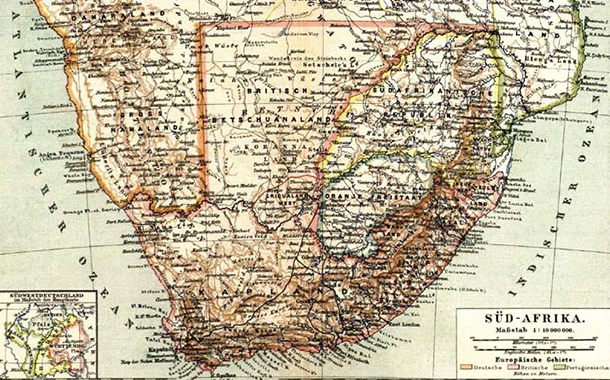
Homo erectus as long believed, but a smaller species, Homo habilis, also called Handy Man, Discovery News writes. The senior author of the study told the website that the Homo habilis species was characterised by more ape-like features than previously thought, such as climbing besides walking on two legs, but also had some features characteristic of modern humans; such as a large brain, and tool-making skills. It was, however, shorter than Homo erectus: a more muscular species more closely resembling modern man. Using the huge dataset, Mark Collard, who is professor at the Human Evolutionary Studies Program of Simon Fraser University, and his team compared a number of alternative evolutionary trees and looked into how well each tree fit in with the dataset. There were three possible outcomes: either the tree was inconsistent with the dataset and was hence rejected, it was partially consistent, or it was fully consistent with the dataset. Based on what they found from the comparisons, the researchers suggest that Handy Man went into Asia and Europe from Africa and somewhere in Asia it gave rise to Homo erectus. Collard explains that the ‘Upright Man’ then went into Africa, a bold suggestion in the face of current consensus but backed by evolutionary data, apparently. The little Handy Man was also the ancestor of another species, this time even smaller: the Homo floresiensis, the ‘Hobbit Humans’ who were thought to have been nothing more than physically deformed humans. In fact, according to the theory of Collard and his team, H.floresienis were a separate species that inhabited the island of Flores in Indonesia. As to where the first modern human originated, Collard says this most likely happened in South Africa. He told Discovery News that “The fact that Australopithecus sediba [a two-million-year-old fossil] groups with Homo is consistent with the idea that the earliest known representative of the genus Homo originated in South Africa.” Another interesting conclusion of the team was that the Neanderthals were almost certainly a species exclusive to Eurasia; there was no evidence that its representatives had ever been in Africa. At the same time the researchers were unable to establish the immediate ancestor of this species, as scientist before them had been unable to trace back the origins of other hominin species from the Middle Pleistocene. Collard said he hoped his team’s findings would encourage further research by other scientists in South Africa, China, and Southeast Asia, where some of the oldest known human fossils have been unearthed. Asked by Discovery News to comment on the study, the director of New York University’s Center for the Study of Human Origins, Terry Harrison, said it would definitely fuel a debate among palaeoanthropologists, hardly a surprise given the way it challenges long-held beliefs in the area. Another commenter, human origins professor Bernard Wood from George Washington University, said the team who did the study had made an important step in furthering our understanding about evolution, which he called “superficial” at present. Image courtesy of Wikimedia Commons user: Royroydeb ]]>

Categories
Breaking News

Eurasians Probably Left Africa Through Egypt

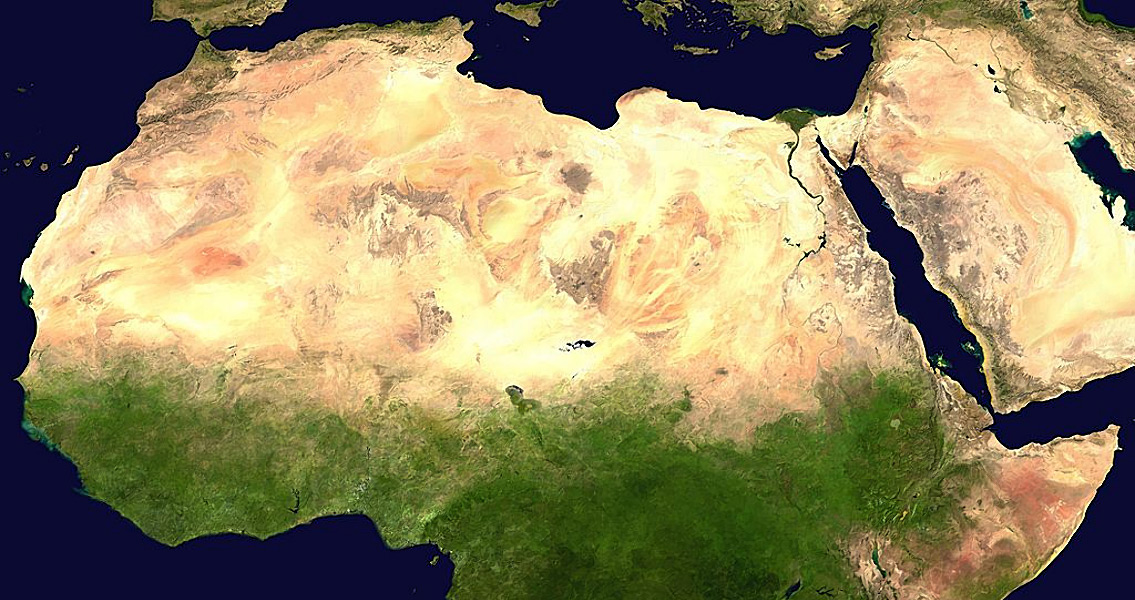
Live Science, the lead author Luca Pagani said that what is most exciting for the team is shedding light on an important stage of the evolution of all European and Asian peoples. This will deepen the understanding of billions of people of their “biological history”. Another of the authors, Toomas Kivisild from the University of Cambridge, told media that the results give a clear map of how modern humans moved out of Africa, even though they do not account for all the aspects of the process or give it any precise timing. One additional benefit of the study is that science has gained a neat genomic database of the genetic diversity present in Ethiopia and Egypt, which can be used as reference in other studies, Phys.org notes. Some questions related to this major exodus in the evolution of humans are still waiting to be answered however, says co-author Chris Tyler-Smith from the Wellcome Trust Sanger Institute. One such question is whether the route through Egypt was the only mass migration of that period, or were there other groups that left the continent without their genetic makeup surviving to the modern day? This question could be answered by the examination of ancient genomes from the areas through which such a migration would have passed. It has been established that the route through Ethiopia was indeed used, but probably by fewer people who did not go beyond the Arabian peninsula and whose genetic makeup has left no trace in the modern day, Pagani told Live Science. Image courtesy of Wikimedia Commons user: NASA]]>

Categories
Breaking News

Cattle Teeth Challenge Theory about African Herder Migration

Proceedings of the National Academies of Sciences. Image courtesy of Wikimedia commons user: Justin Jerez]]>

Categories
Breaking News

Enslaved Africans' Origins Traced

Proceedings of the National Academy of Sciences. Dr Schroeder and her colleagues performed genome analyses on the remains of three enslaved Africans, found buried in the Zoutsteeg area of Philipsburg on the Caribbean island of Saint Martin. It is understood from previous studies that the ‘Zoutsteeg Three,’ one adult female and two adult males, were buried in the seventeenth century and most likely came from Africa, rather than having been born in the New World. The new study enriched the poorly preserved DNA of the Zoutsteeg Three using a technique known as whole genome capture. “Those remains had essentially been lying on a Caribbean beach for hundreds of years so their preservation was really not good,” Dr Schroeder explained. “But by enriching the poorly preserved DNA in those samples we were able to obtain enough data to be able to dig deeper into the genetic origins of those three individuals we analyzed.” Dr Schroeder and her colleagues found that one of the Zoutsteeg Three had originated among Bantu-speaking groups in northern Cameroon. The other two came from a different area, most likely from non-Bantu speakers in the area which is now Nigeria and Ghana. “To our knowledge, these findings provide the first direct evidence for the ethnic origins of enslaved Africans,” writes Dr Schroeder in her study. “The data suggest that the Africans who reached Saint Martin were drawn from diverse cultures and societies.” The study has several major implications for the study of history. Most importantly, it clearly shows that it is possible to get extensive genome data from poorly-preserved archaeological remains; Dr Schroeder’s work clearly shows the value of her whole-genome capture method, which enables us to use samples which were previously thought to be too poorly degraded. This is particularly important in the Caribbean as artefacts deteriorate considerably in tropical settings. Genome-wide analyses are very useful for tracing the genetic origins of individuals, in this particular case victims of the transatlantic slave trade. Dr Schroeder’s work provides an alternative record which enhances our understanding of a long-standing historical problem, one where documentary sources can not tell us enough. For more information: www.pnas.org Image courtesy of Wikimedia commons user: Jgdc47B ]]>

Categories
Breaking News

Clues of Human Origin Found in 2,330-Year-Old Skeleton

Categories
Breaking News

Ancestors' Search for Scarce Water Was Key in c

Categories
Breaking News

New Clues on How Humans Migrated Out of Africa