Categories
News

Revealed: The Nazis' 'Who's Who' Contact List for LA

Novak, a writer for Gizmodo. “The card index file was found among the Consulate Office effects stored in the Bekins Warehouse, 116 South Western Avenue, Los Angeles. The cards were 3″x 5″ in size and for the most part contained no further information than the name, address and telephone number.” reads a 1945FBI memorandum about the list. “The file apparently contained the names, addresses and telephone numbers of individuals contacted by the Consul or other members of the Consulate staff. Many of the names on the list are those of prominent citizens in Southern California. No explanation accompanied the list.” Why the Nazi regime stored such a list is far from clear. It shouldn’t be assumed that everyone on it worked with the Nazis, or even came into regular contact with them. It does raise interesting questions however, about the links the Nazis were able to make with American society, particularly in the years before the USA entered the Second World War against the Axis powers. Some on the list definitely did work with the Nazis. Dr Erich Breitung, for example, was head of the Nazi party’s American Information Services in 1933. The organisation’s sole goal was to distribute Nazi propaganda throughout the USA, and it had offices throughout the country to that end. Norman Chandler, a future publisher of the LA Times, is unsurprisingly on the list. Chandler visited Nazi Germany in the 1930s as a guest of the regime. He had spent much of the decade defending Hitler and the Nazis against liberal journalists, until war made it impossible to continue doing so. Others listed make the cards seem like a who’s who of American society. Show business names recorded include Jason Joy; Twentieth Century Fox’s head of public relations, Hans Peter; an art director at Twentieth Century Fox, and Henry Noerdlinger; from MGM’s research department. From the world of Academia is Ernest C. Moore, the co-founder of UCLA, and Dr. M. Delbruck from Caltech. A host of other university professors and lecturers are included, as well as W.A. Bryan, the director of the Los Angeles Museum. From the world of business is Robert Gross, at the time the head of Lockheed, and from the media: Mrs. R. W. Trueblood and Edwin Schallert of the LA Times. The list provides a shocking reminder of just how involved the Nazis were in the culture of their future Allied enemies in the decade before the outbreak of the Second World War. For years, representatives of the regime went to great lengths to spread Nazi propaganda internationally, and it is often easy to forget just how successful they were, and how divided opinion was concerning the Nazis. In Britain, King Edward VIII agreed with some Nazi policies, and famously disagreed with his country’s involvement in the Second World War. In 1937, a year after abdicating the throne, he had personally met Hitler in Germany. For some in the US and Western Europe, the Nazis were a more attractive prospect than the Communists that had taken over the Soviet Union, and therefore garnered some sympathy. The Consulate list provides a reminder that public opinion towards the Nazis was far from unified in the 1930s. ]]>
Categories
News

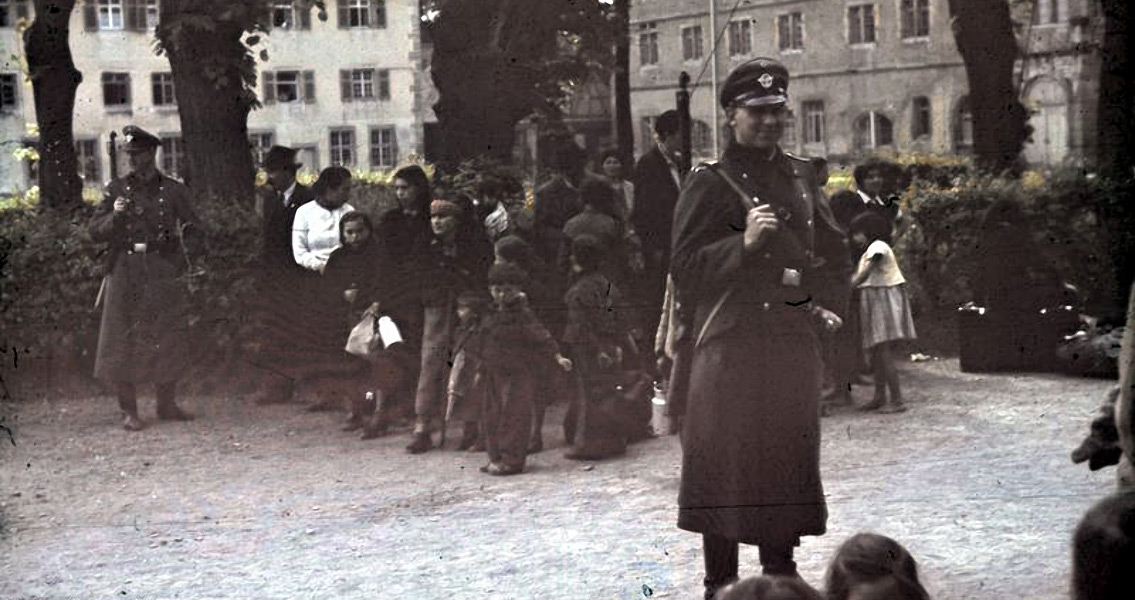
Black and Brown Triangles – Himmler Targets Gypsies

Categories
Breaking News

80-Year-Old Nazi Time Capsule Unearthed in Poland

Mein Kampf, other books and historical materials describing the town of Falkenburg, as it was known then. Ordensburg Krössinsee was one of three educational centers constructed in the 1930s in Germany for the purpose of training future leaders of the Nazi Party. It was built near the town of Falkenburg in what was Germany at the time. Today it’s the town of Zlocieniec, Poland, and the former training camp is used by the Polish army The individual buildings and designated areas which made up the facility included a Hall of Honor, twenty separate living quarters, a dining hall, an educational hall, the commander’s house, administrative buildings, a house for female employees, a sick bay, a sports field, an arena for riding, horse barns and two towers (although four had been planned). A hotel, swimming pool and water sports facility were also planned but never constructed. To attend the educational center, cadets, called Ordens Junkers, had to be a minimum 5 feet 4 inches (1.63 m) tall and be between 23 and 26 years old. They were required to be racially pure, in good health and have no physical limitations. Classes included the study of politics, world history and philosophy, while afternoons were spent on battle tactics, military drills, equestrian techniques (a program for which it was recognized), and sports. In 1937, the facility was shared with the Hitlerjungen or Hitler Youth. Between 1933 and 1945, the Hitler Youth was Germany’s only official youth organization and consisted of the Hitlerjugend for males between the ages of fourteen and eighteen and the Deutsches Jungvolk for younger boys between ten and fourteen years old, as well as the League of German Girls. The Hitler Youth members would become the sole occupants of the camp following the invasion of Poland in 1939 and the start of World War II. The capsule and its contents have been transferred to the National Museum in Szczecin for translation, categorizing, preservation and display. ]]>

Categories
Breaking News

Documents Belonging to “Scotland’s Schindler” Discovered

Huffington Post. Haining was born in 1897 and moved to Budapest to take a position as matron of the Jewish Mission School, where 315 pupils, 48 of them boarders and a number of them orphans, were educated. As the Nazis moved across Europe, her situation became increasingly dangerous, resulting in her superiors ordering her to return to Scotland on three separate occasions. Haining, however, refused to leave “her” girls behind. Rev. Ian Alexander, the Secretary of the Church of Scotland World Mission Council, explained to the Huffington Post: “Scottish missionaries were advised to return home from Europe during the dark days of the Second World War but Jane declined and wrote ‘if these children need me in days of sunshine, how much more do they need me in days of darkness’.” For four years Haining was able to keep the children in her care safe, despite constant Nazi surveillance. She was ultimately betrayed by the son-in-law of the school’s cook, after she caught him eating the scarce amount of food intended for the girls. Charged with the following eight offenses: working alongside the Jews, weeping at the sight of the girls wearing yellow stars in class, firing her housekeeper, listening to BBC news broadcasts, receiving a large number of British visitors, being politically active, visiting British war prisoners, and sending war parcels to British prisoners; Haining was imprisoned and ultimately sent to Auschwitz, along with several of her wards, where she later died. Her will, which was dated July, 1942, includes instructions pertaining to the distribution of her belongings and money, and many of the photographs feature her young wards. She is believed to be one of ten Scottish people to have been killed in the Nazi death camps. Haining was named in Jerusalem’s Yad Vashem as one of the Righteous Among the Nations. The items will be housed at the Church of Scotland, in Edinburgh. ]]>

Categories
News

'Angel Of Death' Josef Mengele Arrives At Auschwitz

Categories
News

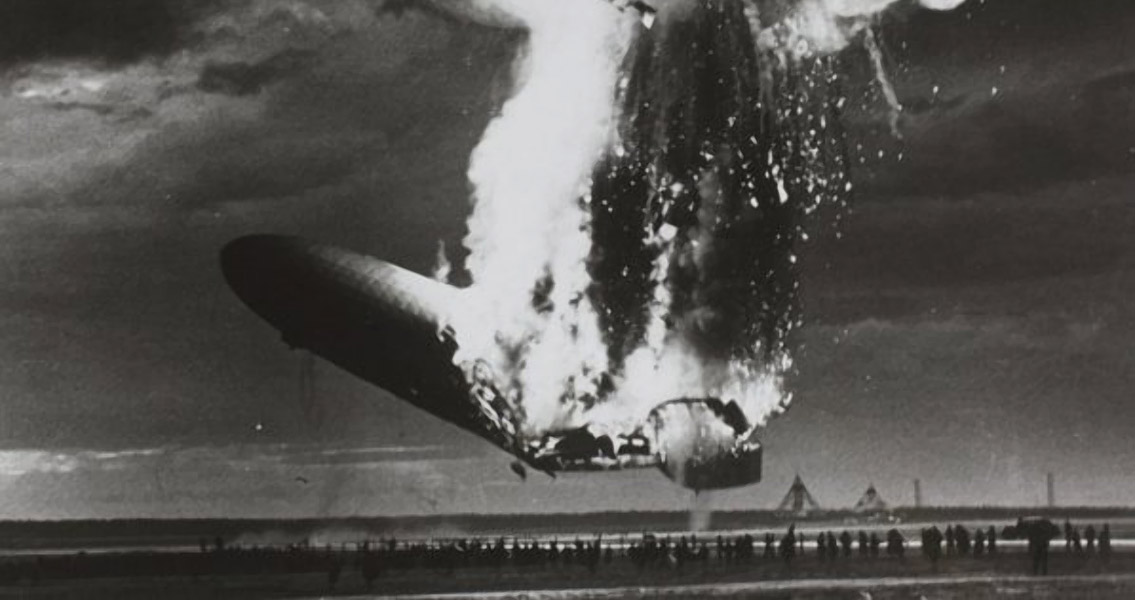
The Anniversary of the Hindenburg Disaster

Categories
News

Anniversary of the Bombing of Guernica

Categories
Editorial

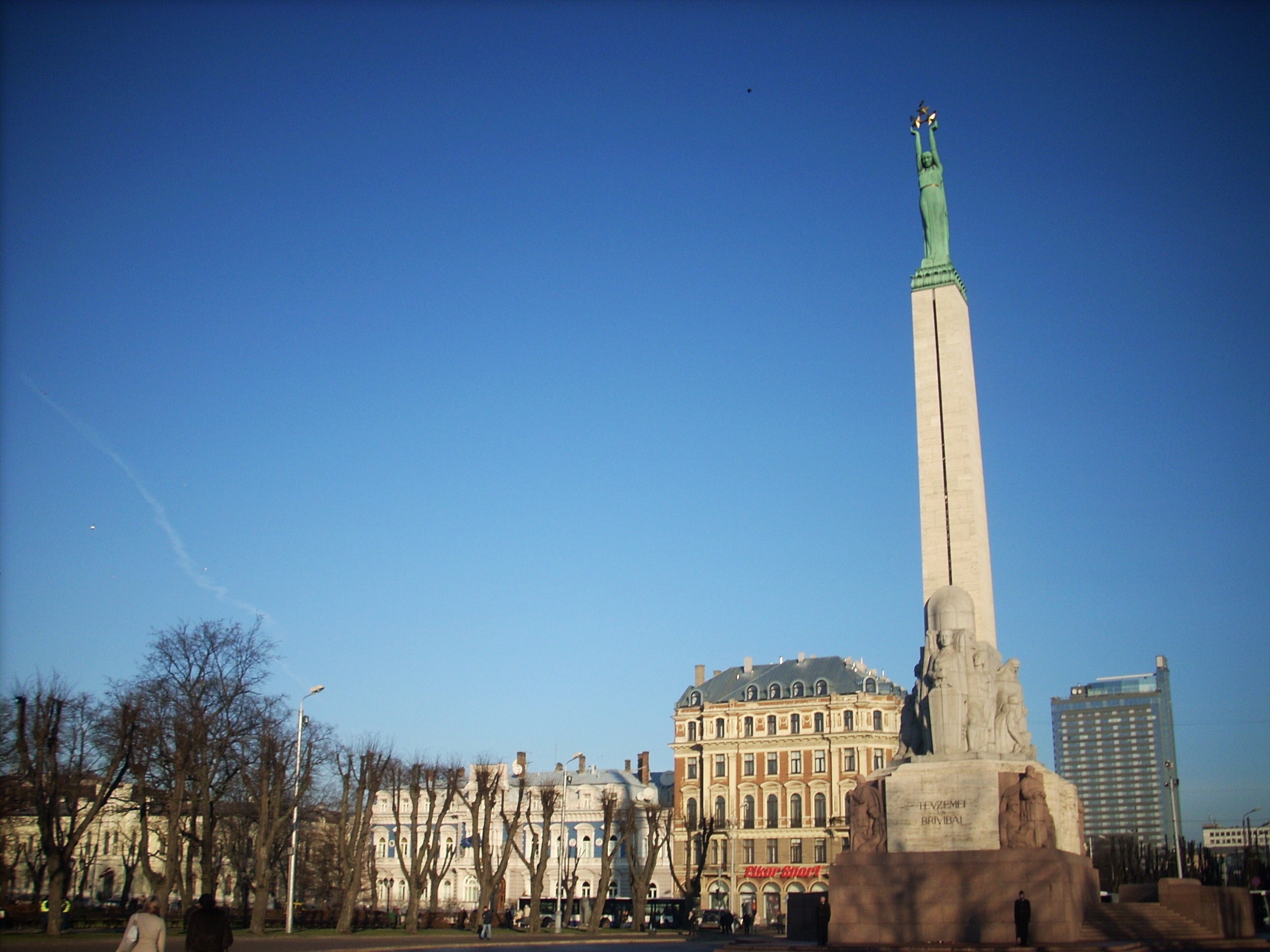
€185 billion – the Cost of the USSR's Occupation Of Latvia

Categories
Breaking News

Jews Fight Back in Warsaw Ghetto Uprising

Zydowski Zwiazek Wojskowy, trans. The Jewish Military Union) and ZOB (Zydowska Organizacja Bojowa, trans. The Jewish Combat Organisation) to combat the Nazi soldiers. The two groups, the ZOB with around 500 members, the ZZW some 250, soon elected to work together to resist German attempts to destroy the ghetto. In October 1942, the ZOB managed to establish contact with the Home Army, an underground movement of the Polish military which resisted the Nazi occupation. They made a deal which saw the Home Army supply ZOB with weapons, mostly hand guns and explosives. Resistance had become the only option for those imprisoned in the Warsaw Ghetto. The chances of success were slim, but their fate under Nazi rule had been made increasingly obvious. Death seemed more and more inevitable, at least armed resistance offered some chance of survival. “Whomever you talk to, you hear the same cry: The resettlement never should have been permitted. We should have run into the street, set fire to everything in sight, have torn down the walls, and escaped to the Other Side. The Germans would have taken their revenge. It would have cost tens of thousands of lives, but not 300,000.” wrote Emmanuel Ringelblum in 1942, in his diary of life in the Warsaw Ghetto. “Now we are ashamed of ourselves, disgraced in our own eyes, and in the eyes of the world, where our docility has earned us nothing. This must not be repeated now. We must put up a resistance, defend ourselves against the enemy, man and child.” Shortly after the Nazi invasion of Poland, Warsaw’s Jewish citizens were forced into the barb wire fenced ghetto. More Jews from across Poland and Nazi occupied Eastern Europe were sent to the site, so that some 400,000 people ended up living in an area covering less than two square miles. Forced to live on inadequate rations, disease and starvation soon started to kill thousands each month. From July 1942, Jews from the Warsaw Ghetto started to be rounded up and taken to the Treblinka concentration camp at a rate of roughly 6,000 a day. The Nazi authorities initially claimed Treblinka was a labour camp, but news soon got to the ghetto that being transferred meant almost certain death. The first act of resistance came on 18th January, 1943, when ZOB fighters ambushed the Nazi forces sent in to round up some of the ghetto’s population for transfer. Fighting lasted for a few days, and several Nazi soldiers were killed before they could withdraw. Two months later, Heinrich Himmler announced that the ghetto was to be emptied of its population on 19th April, to celebrate Hitler’s birthday. When SS soldiers entered the ghetto on the 19th they were faced with 1000 ZOB fighters armed with homemade bombs and guns. Frantic fighting ravaged the streets while the non-combatant residents hid themselves in secret underground bunkers. The SS soldiers soon withdrew, but the respite was short lived. On the 24th April an all out military assault was launched on the ghetto. For a month relentless fighting wrecked the ghetto, as the ZOB waged guerrilla warfare against the Nazi troops in an attempt to fend off transportation to Treblinka. As the battle continued, Nazi soldiers set about systematically destroying the ghetto block by block, obliterating the bunkers where Jewish residents had been hiding. ZOB soldiers continued their fight from the sewers, but on 8th May their cause was all but lost with the destruction of their command centre, and the group’s leaders committed suicide to evade capture. By 16th May the Warsaw Ghetto was under Nazi control, and transportation to Treblinka resumed en masse. Some 300 German soldiers were killed in the uprising, while thousands of Jews lost their lives in the fighting. Any Jewish survivors were sent to Treblinka, where most perished before the end of the war. The heroic last stand by the ZOB may have ended in tragic defeat, but it was remarkable in terms of the amount of Nazi forces it diverted, especially considering the resistance fighters’ limited resources. Although it failed to save the people of the Warsaw Ghetto, it had aided the Allied war effort with the Nazi troops it occupied.]]>

Categories
News

Bonhoeffer, the Priest Who Defied Hitler, Is Executed