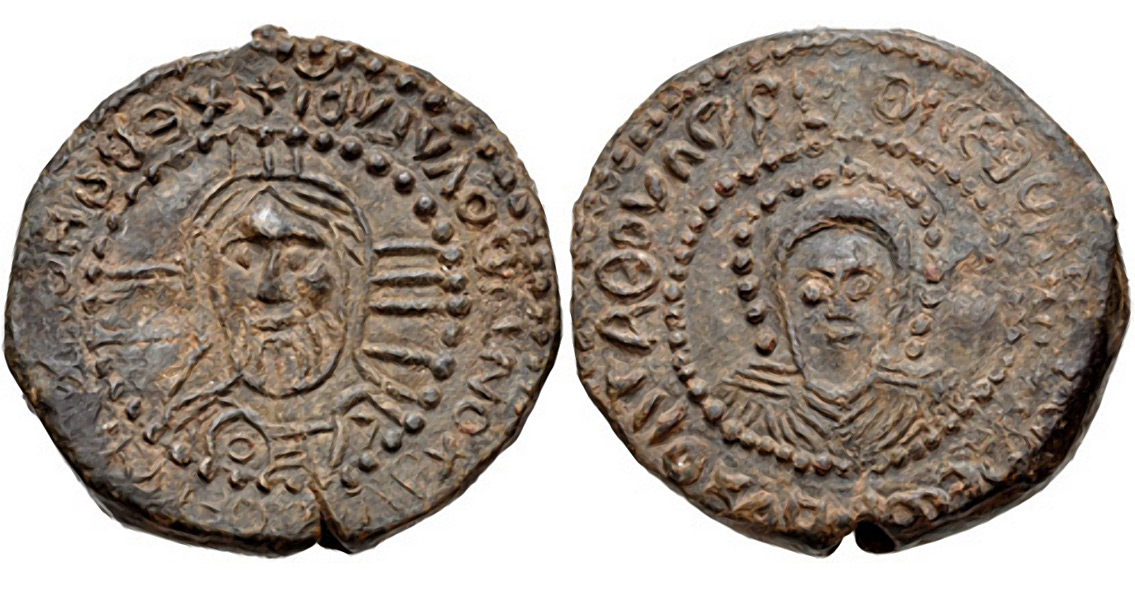
History Compass, Ian Mladjov, from the Department of History, Bowling Green State University, Ohio, USA, noted that “when it comes to diplomatic relations, the phrase ‘too close for comfort’ perfectly describes the relationship between the medieval Byzantine and Bulgarian states in the Balkan peninsula.” The Byzantine Empire was the predominantly Greek-speaking remains of the Eastern Roman Empire. Its citizens referred to themselves as ‘Romans’ and the ruler retained the title of ‘Emperor’. Mladjov argues that the conflict between Bulgaria and the Byzantine Empire was about more than simple territory or wealth. The bloody conflict was rooted in prestige. Interestingly, the siege of Constantinople in 912 did not end in an agreed peace. At a ceremony between the Patriarch of Constantinople and Simeon, the Bulgarian king was placated and given a crown, although not the imperial title. Simeon returned home after the meeting, laden with gifts, but with no formal peace treaty being signed. After returning to Bulgaria, Simeon began using the imperial title and, curiously, even styled himself ‘Emperor of the Romans.’ In all contemporary sources, it is made very clear that Simeon was never offered the title of emperor. In fact, it appears that Byzantine rulers went to great lengths to preserve the Byzantine emperor’s exclusive monopoly on the Roman imperial title. “For a long time, the significance and importance of [this] event were overlooked,” Mladjov explains. Much more attention has been paid to subsequent events, particularly Simeon’s adoption of the imperial title. For Mladjov, the crowning of Simeon by the Patriarch is of crucial importance, revealing a tremendous amount of information about how the Byzantine Empire conducted itself with its neighbours. “Clearly, the form a crown took was less important than the coronation itself,” Mladjov writes. “Whatever the idiosyncrasies of Simeon’s coronation by Patriarch Nicholas in 913, it must have been considered acceptable to him. The implications of our sources are clear: Simeon had been recognized as emperor, apparently only of his own people, by the Byzantine court and left for home in peace.” Simeon seems to have sought parity with the Byzantine Empire. Mladjov argues that Simeon identified recognition as fellow emperor as a means to redress the situation where the Byzantines claimed authority over Bulgaria. Diplomatic relations in the medieval world were rife with states posturing for status. The Byzantine Empire, in particular, wanted to maintain an aura of superiority to other states. As this episode shows, the Empire’s neighbours desired parity and respect from the Byzantines. Sometimes, this was expressed in demands for recognition as fellow emperors. The Byzantine Empire’s response to this was impressively nuanced, they crowned Simeon I as emperor and of the same rank as the Byzantine emperor. Importantly, however, Byzantium never conceded the title of emperor of the Romans; instead they crowned Simeon the emperor of his own, non-Roman people. For more information: www,onlinelibrary.wiley.com Image courtesy of Wikimedia Commons user: Cplakidas ]]>

Live Science points out, between 1.5% and 2.1% of the DNA of all present-day people outside Africa is Neanderthal DNA. Another thing that has been established is that the Neanderthals declined and died out very quickly. The reasons for this decline, however, remain a subject of dispute. Some of the theories put forward have to do with climatic changes that deprived these pre-humans of their main food and habitat. These changes may have been caused by volcanic eruptions, some researchers believe. Yet a lot of work has been focusing on the possible role of modern humans: whether they rose in numbers and spread across the continent so quickly that they literally displaced the Neanderthals, or whether their superior evolutionary level equipped them with skills that made them better at surviving. The most recent research in this respect hypothesised that it was the mastery of fire that gave modern humans the upper hand, allowing them to cook their food, and thus being able to extract more nutrients than is possible from raw meat and vegetables. At the same time, studies are continually shedding new light on the Neanderthals themselves, prompting a rethink of the long-held belief that they were an extremely primitive species. One such study discovered that the Neanderthals had a surprisingly well developed aesthetic sense, made and wore jewellery, and another has revealed they were no strangers to herbs as part of their diet. Image courtesy of Wikimedia Commons user: AquilaGib]]>
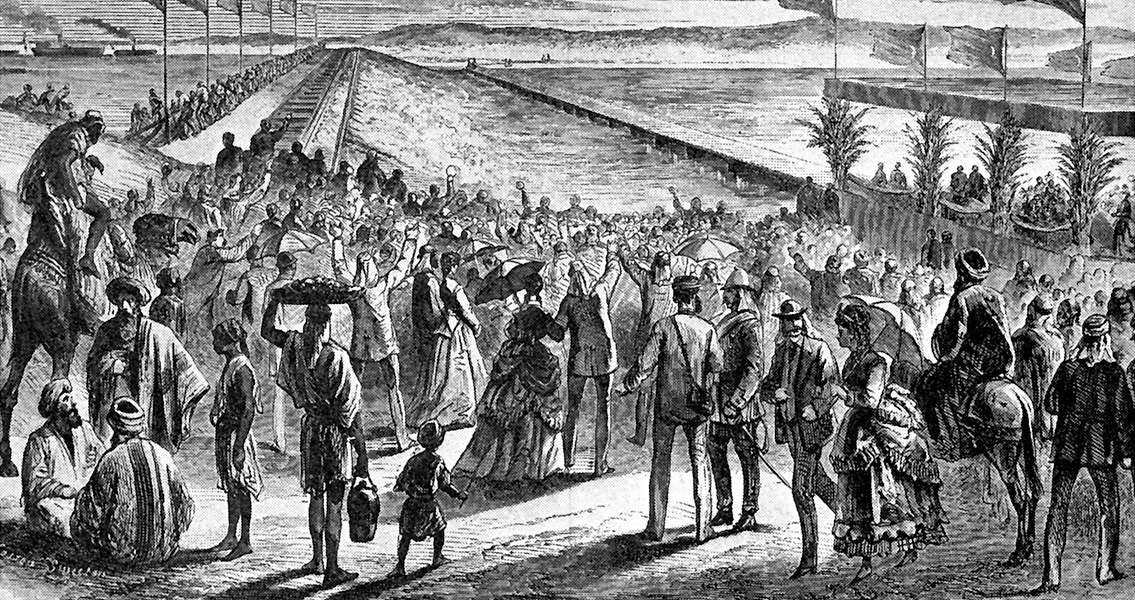
Suez Crisis of 1956. A remarkable feat of engineering, the Suez canal, whose construction started in 1859, is still responsible for 8% of the world’s shipping, with 50 ships passing through it daily. ]]>
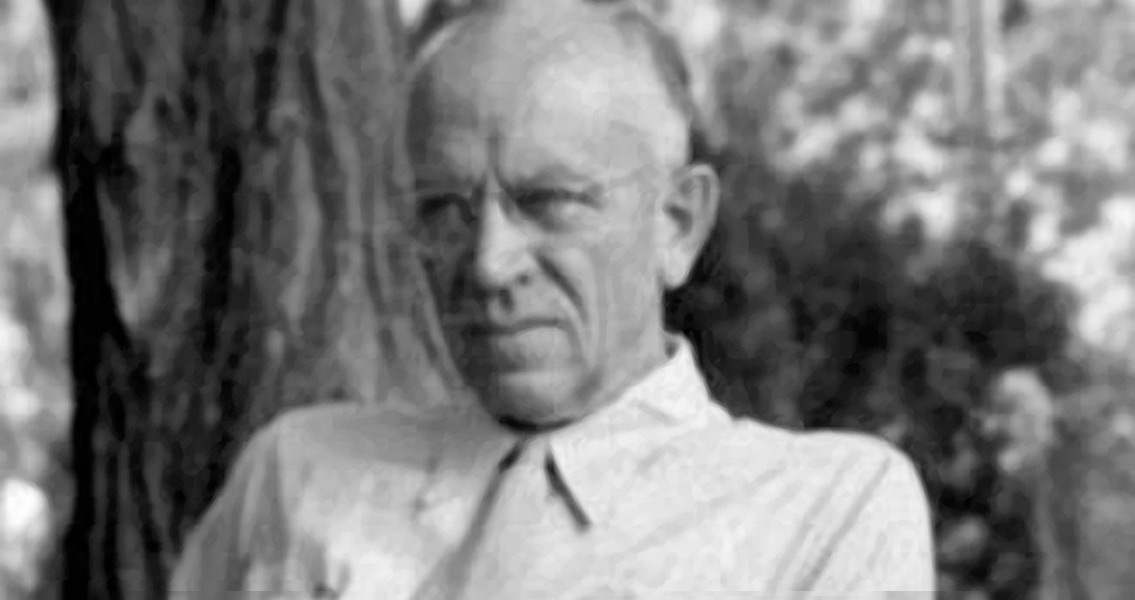
Pacific Historical Review. “But the very fact that even so careful a thinker as Leopold could contemplate ethically questionable policies in pursuit of his environmental vision raises important questions… In this respect, I believe Leopold serves as a cautionary tale.” By examining unpublished articles written by Leopold, Powell has sought to explore Leopold’s fears. “Dread of overpopulation is an underexplored aspect of Leopold’s wilderness thinking,” Powell explained, “and environmentalism is an often-overlooked factor.” The idea of ‘wilderness,’ Leopold argued, was coupled with the character of racial stocks. Frontier virtues, it was thought, were bred into people. “Through this allusion to ‘‘breeding,’’ he hinted that wilderness had shaped the American people not only socially but also genetically,” Powell explains. “Old Stock white Americans had developed in the second half of the nineteenth century to distinguish themselves from allegedly inferior immigrants from southern and eastern Europe.” Tied in with this vision of the wilderness was a Malthusian understanding of the world. Thomas Malthus, an English clergyman, wrote one of the most influential texts on population in the late-eighteenth and early-nineteenth century. He argued that because human population increased at a “geometric ratio”, but food production rose at an “arithmetic ratio”, humans could never completely overcome scarcity, want, and conflict. Beginning in the 1920s, Leopold articulated an enduring understanding of wilderness as an unpopulated space for individual and national rejuvenation. As he formulated his argument, Leopold became increasingly critical of population growth. Leopold argued that humans, through overpopulation, endangered the planet’s soils and water supply, Powell explains in his article. “Although he presented these ideas in his game management lectures, he never published a developed formulation of this position,” Powell writes. “[Leopold argued] that population growth was robbing Americans of the opportunity to enjoy the rejuvenating environs of unoccupied wilderness.” These two essential characteristics of Leopold’s thinking – supposed superiority of Old Stock Americans and the problem of decreasing wilderness area due to a growing population – can lead to a rather unsavoury conclusion. Leopold, Powell argues, sought to control population growth in order to preserve the wilderness. Worryingly, Leopold only expounded controlling those of non-white ethnicity. “Wilderness is less a wondrous place than an inherently exclusionary idea that has empowered certain groups while disempowering others,” Powell concludes. “When defense of wilderness has lapsed into critiques of population growth, it has in a sense extended this exclusionism on to the world’s unborn.” Whilst we should not discredit Aldo Leopold’s work – he was an important thinker who championed a very important environmental cause – it is important to view him in his intellectual context. Powell has made an important study, which allows us to understand Leopold more. For more information: www.jstor.org Image courtesy of Wikimedia Commons user: Yllosubmarine ]]>
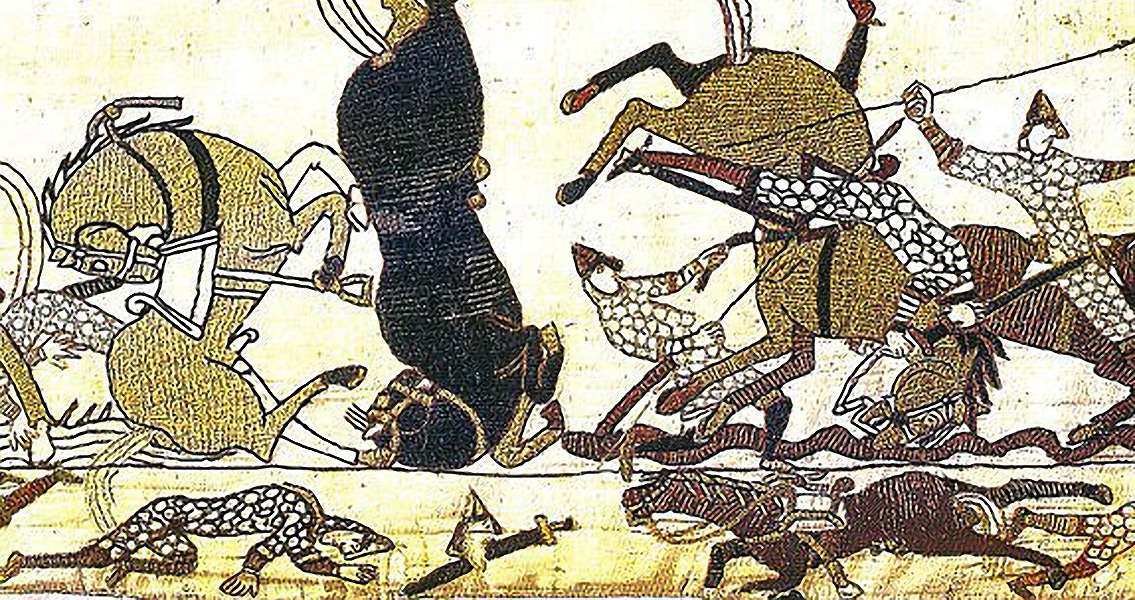
Geography providing the basis of much our knowledge. The Roman Conquest, starting from 43 CE, led to a significant increase in diversity. Traders from across the Roman Empire were drawn to the Roman colonies in England, and soldiers from as far away as Africa were deployed there. Following the Roman withdrawal many of these people left Britain, but there is little doubt that the years of Roman occupation led to a diversification of the inhabitants of the British Isles. After the Romans abandoned their colonies in Britain, several centuries of colonisation by Germanic Tribes followed. These groups, the Angles, Jutes and Saxons, settled in the south of England, and slowly became the ‘English’. This was followed by Viking influences, starting from the eighth century. Initially raiders who attacked and pillaged Anglo-Saxon communities, Norse armies began to settle in the north of England from the ninth century. Again, the Vikings ultimately left the British Isles, but they undoubtedly left a mark on the population. The final major invasion of the British Isles in the early medieval period came in 1066, with the Norman Conquest. The story of William the Conqueror is well known, but it is important to acknowledge the long term impact the Normans had on English culture. French influence permanently altered the largely Germanic language, and can still be heard in modern English. Norman traditions also filtered through into British politics and law, with traces that can still be seen to this day. The Norman, Viking and Roman immigration to Britain was largely facilitated though invasion and military expansion. In the centuries since, immigration has remained a central part of British history, one far too complex to discuss here. As politicians debate ideas of immigration and British identity, it is important to remember just intertwined foreign influence is with the country’s past.]]>

www.pnas.org Image courtesy of Wikimedia Commons user: Kimse]]>