Categories
Breaking News

Neanderthal Gender Division of Labour Revealed

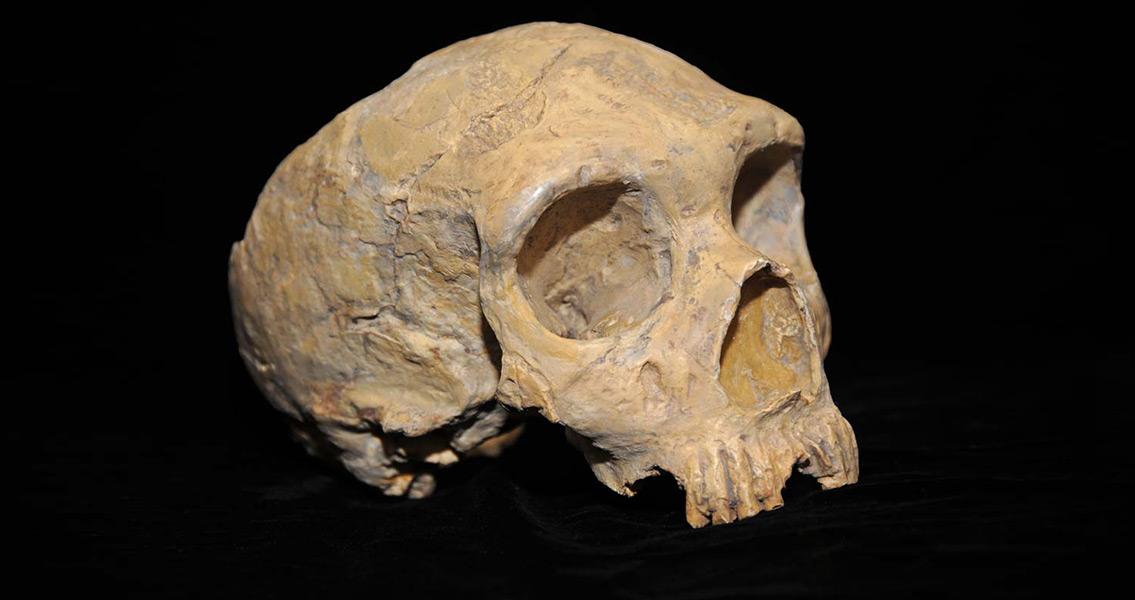
Journal of Human Evolution. “Neanderthals [however] might not have had such extreme sex-related specialization, at least in terms of the provisioning of food, with both males and females participating in the hunting of big game.” No previous work has explored what happened after Neanderthals had sufficient food, however. The Neanderthal teeth which Estalrrich and Rosas examined were taken from three different sites: El Sidron Cave in Spain, l’Hortus in France, and Spy in Belgium. All the Neanderthal teeth showed signs of significant wear. Interestingly, this wear was different to the damage usually caused by chewing food. Neanderthals are known to have had extensive anterior dental wear and their teeth often show scratches and chips. This is due to Neanderthals having used their front teeth as a tool for tasks such as food preparation, tool production and preparing skins. It is thought that Neanderthals used their mouths as a third hand, for activities other than the provisioning of food. “The fundamental observation is that all of the individuals present instrumental striations and dental chipping, regardless of provenance, age, and sex,” the team wrote. “Thus, similar behaviors could be expected among them, with all members of the groups performing tasks involving their teeth as tools, and leaving similar type of marks.” The division of labour amongst Neanderthal communities, therefore, was flexible. All Neanderthals, regardless of sex or age, used their teeth as tools. Subtle differences, however, were found between male and female Neanderthals. Teeth from female Neanderthals have more striations (linear marks or blemishes revealing wear on tooth enamel) than males, and the striations are longer. Extrapolating from these striations, Estalrrich and Rosas inferred possible behavioural situations. They believe that females were cutting different material to males and doing it more often. “That could mean a separation between sexes, or a sexual division of labor in activities other than foraging,” they wrote. Estalrrich and Rosas have decisively proved that Neanderthals used their mouths as tools. They have shown that teeth were not just for food preparation, but were useful in making tools and fashioning animal skins. Moreover, different striation patterns hint at social divisions amongst Neanderthal communities. “The results presented here illustrate how Neanderthals used their mouth as a third hand, and may indicate some subtle differences suggesting individual roles within the groups,” the report concludes. Image courtesy of Wikimedia Commons user: AquilaGib www.sciencedirect.com ]]>
Categories
Breaking News

Story of Human Evolution Challenged

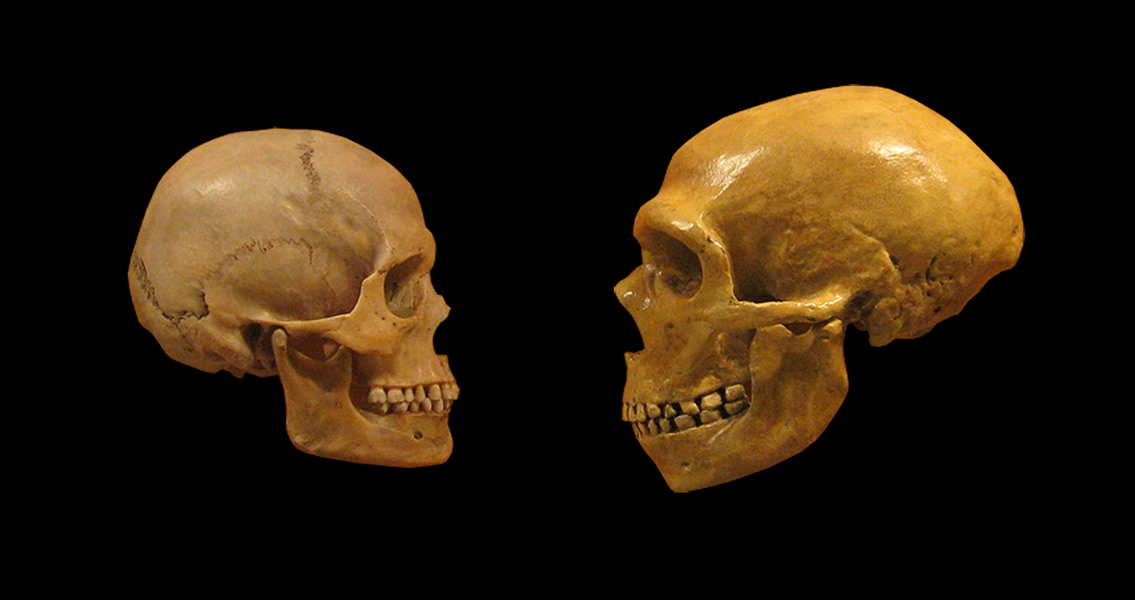
Homo, had evolved from smaller early humans becoming taller, heavier and longer-legged. This process eventually resulted in Homo erectus, which was able to migrate out of Africa and colonise Eurasia. Whilst we know that small-bodied H. erectus, averaging less than five feet tall and weighing under 50 kilograms, were living in southern Europe by 1.77 million years ago, the origin of the larger body size associated with modern humans has been elusive. The paucity of knowledge about the origins of larger members of the Homo genus is primarily a result of a lack of evidence. Previous estimates of body size had been based on well-preserved specimens which were easy to assign a species to. Since these samples are rare and disparate in terms of both space and time, little is known about geographical and chronological variation in the body sizes of the early Homo. A joint study between the Universities of Cambridge and Tübingen has shown that increases in body size occurred thousands of years after H. erectus left Africa; this growth in Homo body sizes primarily took place in the Koobi Fora region in modern Kenya. “The evolution of larger bodies and longer legs can thus no longer be assumed to be the main driving factor behind the earliest excursions of our genus to Eurasia,” said Manuel Will, co-author of the study which has been published in the Journal of Human Evolution. By using tiny fragments of fossil, the team were able to estimate our earliest ancestors’ height and body mass. Their findings, rather surprisingly, indicate a huge diversity in body size; this is particularly surprising as the wide variation we see in humans today was thought to be a relatively recent development. “If someone asked you ‘are modern humans 6 foot tall and 70kg?’ you’d say ‘well some are, but many people aren’t,’ and what we’re starting to show is that this diversification happened really early in human evolution,” said Dr Jay Stock, co-author of the study. Stock and Will are the first scientists in 20 years to compare the body size of humans from between 2.5 and 1.5 million years ago. They are also the first to use fragmentary fossils – many as small as toes, none longer than 5cm – to estimate body sizes. By comparing measurements of fossils from sites in Kenya, Tanzania, South Africa and Georgia, the researchers have revealed substantial regional variation in the size of early humans. Groups who lived in South African caves, for example, were 4.8 feet tall on average. Some of the skeletons found in Kenya’s Koobi Fora region would have stood nearly 6 feet tall, a height comparable to the average height of modern British males. “Basically every textbook on human evolution gives the perspective that one lineage of humans evolved larger bodies before spreading beyond Africa. But the evidence for this story about our origins and the dispersal out of Africa just no longer really fits,” said Stock. It appears that Stock and Will have rewritten the history of the development of early humans; diversity has deep roots amongst the Homo genus. www.sciencedirect.com Image courtesy of Wikimedia Commons user: DrMikeBaxter]]>

Categories
Breaking News

Aztec Empire Politics More Complex Than Thought

Journal of Archaeological Science. A possible explanation for why the Aztecs did not intervene in Tlaxcallan’s obsidian gathering is that obsidian was a plentiful resource. “Obsidian was widely available and was an everyday good. It probably wasn’t worth the time and expense to try to cut off Tlaxcallan’s supply of obsidian from El Paredón because other sources were available,” Millhauser writes. Millhauser and his team’s research emphasises the complexity of international relationships in Aztec-era Mesoamerica. Conflict was not as widespread or continual as previously thought. “The fact that they got so much obsidian so close to the Aztec Empire makes me question the scope of conflict at the time,” Millhauser says. “Tlaxcallan was able to access a source of household and military goods from a source that required it to go right up to the border of enemy territory.” Another important aspect of this research is that it reveals an economic divide between Tlaxcallan and the Aztecs. The Aztecs obtained most of their obsidian from a source other than El Paredón. Almost 90 percent of Aztec obsidian came from a site to the north known as Pachuca; Tlaxcallan only obtained around 14 percent of their obsidian from Pachuca. “All of this drives home the fact that geopolitics mattered for the economies of ancient states,” Millhauser says. “Political stances and political boundaries influenced everyday behaviour, down to the flow of basic commodities like obsidian. The popular conception of the Aztec Empire as all powerful before the arrival of Cortés is exaggerated. The region was a politically and culturally complicated place.” For more information: www.sciencedirect.com Image courtesy of Wikimedia Commons user: Nemissimo]]>

Categories
Breaking News

European Military Prowess Challenged

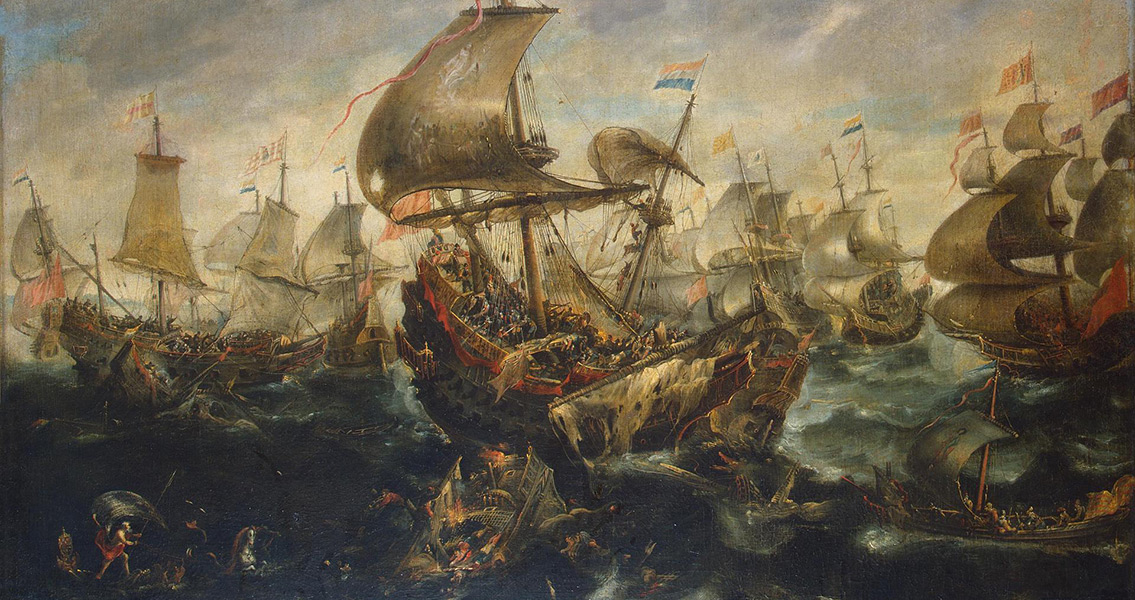
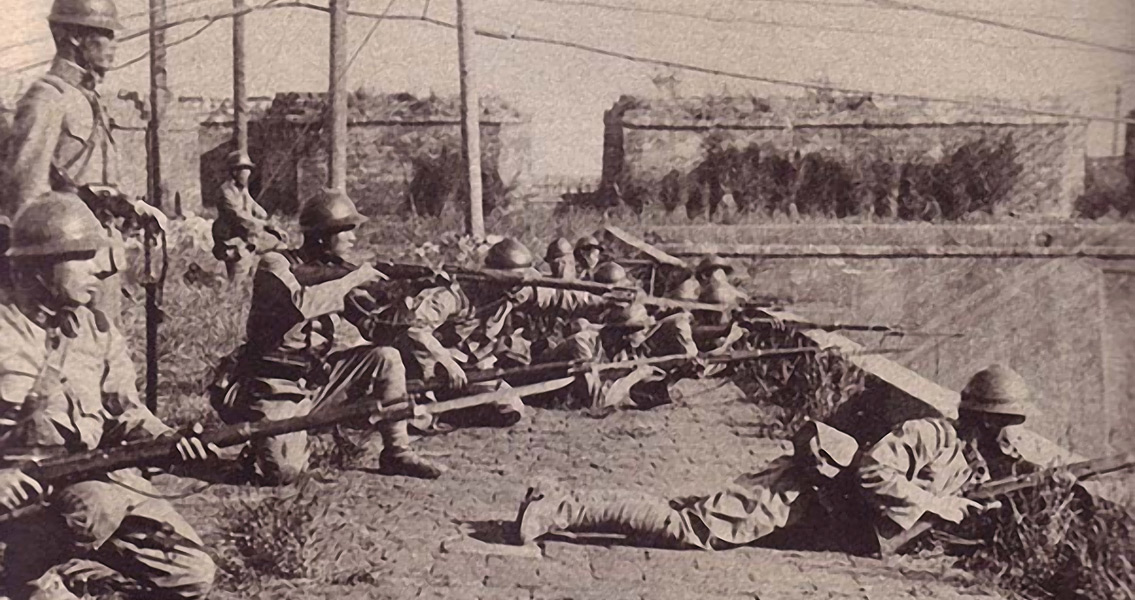
Deadliest Warrior – a television programme which anachronistically pits historical soldiers against one another to find out who would ‘win’ – attests to the appeal of such discussions. A new work has analysed the power of European militaries in the Early Modern period when they came up against their Asian contemporaries. Heated debate over the respective prowess of European soldiers and those from other parts of the world has a very long history. European pamphlets printed in the seventeenth century debated the potential impact of Japanese mercenaries. Some were impressed by the prowess and valour of Japanese warriors; others praised European soldiers for their skill and organisation. In historical circles this debate is scaled up. Individual soldiers are not compared, but armies and navies can be discussed with regard to a central historical question: Did European countries possess a significant military advantage that armies in Asia, the Americas, and elsewhere could not match? This question is important as it could offer an explanation for what is called the “rise of the West.” In an attempt to provide an answer, Adam Clulow, a historian from Monash University, Melbourne, Australia, has assessed the scholarship surrounding this debate. His work is published in the most recent edition of History Compass. Traditionally, it is thought that early modern European powers underwent an unprecedented military revolution. The resultant technological advances – particularly the capital ship, infantry firepower, and the artillery fortress – transformed the continent; leading to a dramatic shift in the power balance between Europe and the rest of the world. It was these tools which allowed Europeans to conquer over 35% of the world by 1800. This model of European expansion, however, has been hotly debated. Many opponents of this model claim that there was not a significant lag between the supposed ‘European military juggernaut,’ as Clulow puts it, and other parts of the world. Military organisation in Europe, therefore, should not be seen as exceptional. New research has forged a middle ground between these two positions. By looking at the Sino-Dutch war (1661-1668), it is possible to see a ‘limited advantage template.’ Clulow states that this conflict allows us to see that “while Europeans did possess a genuine technological advantage, most notably in forts and ships, it was not nearly as expansive as is sometimes assumed by supporters of the military revolution thesis.” Clulow, an expert on Tokugawa Japan, also notes that Europe had not always been able to fully utilise its technological advantages. European powers were unable to use maritime violence against Japan, for example. One reason for this was that the overseas resources the European forces were able to muster were simply not enough to challenge the regime of Tokugawa Japan. “The result was that the potential impact of superior military technology was so consistently blunted that it was essentially eliminated from the equation,” Clulow remarks. Technological advances can often give a military force a decisive upper hand in a conflict. Deadlier weapons and stronger armour are of obvious benefit in a fight. These advantages, however, are only useful if they can be effectively deployed. Clulow’s work clearly shows that rather than overestimate the importance of technology, we should remain cautious in drawing assumptions. Image courtesy of Wikimedia Commons user: Trzęsacz www.onlinelibrary.wiley.com]]>

Categories
Breaking News

Diverse Maya Groups Cooperated on Vast Building Projects

www.pnas.org Image courtesy of Wikimedia Commons user: Laslovarga]]>

Categories
Breaking News

Richard III's Reburial Commences

Categories
Breaking News

Early Humans Butchered Elephants, Half a Million Years Ago

PLOS ONE, provides the first direct evidence of Palaeolithic humans having used stone tools in preparing animal carcasses and hides. It is known that early humans developed Acheulian technology around 1.5 million years ago. Acheulian technology is a sophisticated method of making tools, where two faces of hand axes or scrapers are flaked off to form a blade. These Acheulian tools have often been found alongside animal bones, but the evidence that humans had used these tools specifically to butcher animals was circumstantial. “At the Revadim quarry, a wonderfully preserved site a half-million years old, we found butchered animal remains, including an elephant rib bone which had been neatly cut by a stone tool, alongside flint handaxes and scrapers still retaining animal fat,” said Prof. Barkai. “It became clear from further analyses that butchering and carcass processing indeed took place at this site.” By examining the surfaces and edges of the tools to determine their function, (a technique known as ‘use-wear analysis’) and using Fourier Transform InfraRed (FTIR) residue analysis to identify prehistoric organic compounds, researchers were able to show direct proof of flint tools being used in butchering animals. The team also undertook some experimental archaeology, creating replicas of the blades to determine how they may have been used. They found that the hand axe made a very useful multipurpose tool; a prehistoric ‘Swiss army knife’ good for cutting bones, tough sinews and hide. The scraper, however, was a much more specialised tool. With its slimmer and more fragile blade, it was much better suited to separating fur, fat and muscle, the team found. Prof. Barkai believes that these tools come from a very important part of human development. “There are three parts to this puzzle: the expansion of the human brain, the shift to meat consumption, and the ability to develop sophisticated technology to meet the new biological demands. The invention of stone technology was a major breakthrough in human evolution,” Prof. Barkai said. “Fracturing rocks in order to butcher and cut animal meat represents a key biological and cultural milestone.” For more information: www.journals.plos.org Image courtesy of Wikimedia Commons user: Fæ ]]>

Categories
Breaking News

Japanese Historians Spark Controversy Over 'Comfort Women'

www.historians.org Image courtesy of Wikimedia Commons user: Takabeg ]]>

Categories
Breaking News

Arabic Inscription Found on Viking Ring

www.onlinelibrary.wiley.com Image courtesy of Wikimedia Commons user: File Upload Bot (Magnus Manske)]]>

Categories
Breaking News

Stolen Iraqi Artefacts Returned

www.ice.gov Image courtesy of Wikimedia commons user: Flickr upload bot]]>