Categories
Breaking News

Ancient Judean Scroll Bears First non-Biblical Mention of Jerusalem

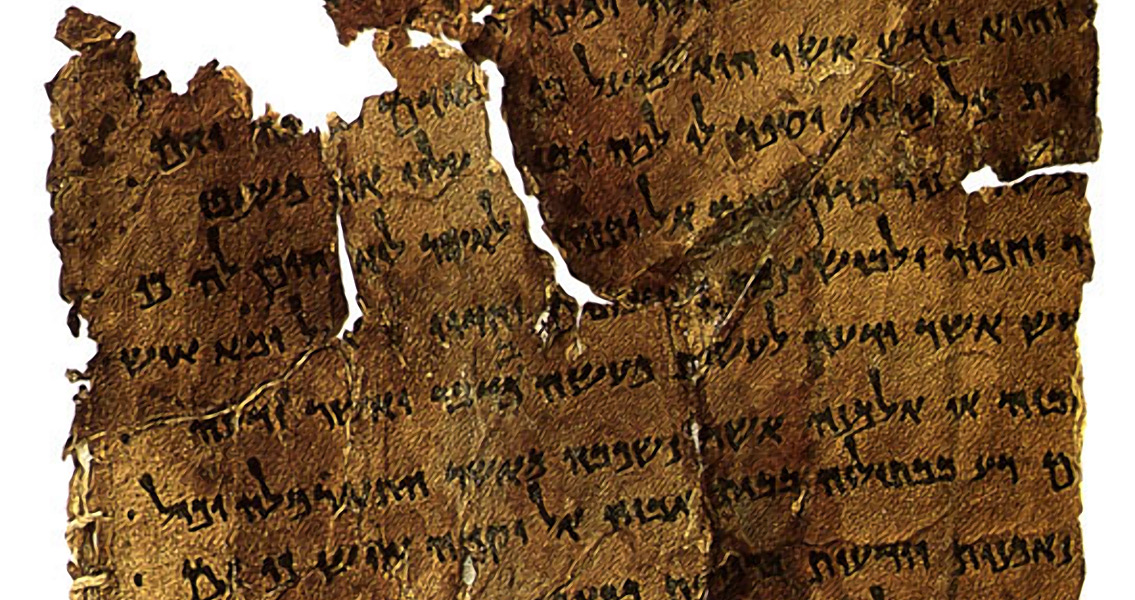
USA Today, Israeli archaeologists have dated the scroll to the seventh century BCE, the time of the First Temple. The scroll itself, written in ancient Hebrew, is made of papyrus; once translated it revealed the details of a purchase order for a shipment of wine, with the relevant text reading “from the King’s maidservant, from Na’arat, jars of wine, to Jerusalem.” The Israel Antiquities Authority robbery prevention unit recovered the papyrus. As it was initially discovered decades ago in the same region as the famous Dead Sea Scrolls, this shipping order was likewise well-preserved thanks to the dry, arid climate of the West Bank, a region also known as the Judean Desert. Eitan Klein, the unit’s deputy director, remarked that the newly-recovered and analyzed scroll is some of the rarest evidence that the Kingdom of Judah had some sort of organized administrative bureaucracy in place at the time. The find, Klein added, underlines just how central a role Jerusalem played as the financial capital of the entire kingdom during the time period, especially the second half of the seventh century BCE. There are three possible kings that the wine might have been intended for, Klein said, based on historical data gleaned from the Hebrew Bible. Israel Hasson, the director of the IAA, remarked that this new discovery proves that the caves of the Judean Desert hold an untold number of archaeological finds of such tremendous importance. Calling for a systematic investigation into the desert cave systems, Hasson added that time is of the essence, considering how delicate these scrolls are – and how susceptible they are to changing climatic conditions. The new find is not without controversy, however, especially in light of a highly contentious and criticized decision by UNESCO, the world heritage administrative arm of the United Nations, to ratify a pair of resolutions to refer to the Temple Mount – the epicenter of Jewish worship around the globe – exclusively by its Arabic name. While Jerusalem is considered the third holiest site in Islam behind Mecca and Medina, the decision to exclude Judaism’s ties to the city – and by extension the city’s ties to the Christian faith – has resulted in a public outcry from many in Israel’s government. One such politician, Miri Regev, a former Israeli Defense Forces brigadier-general and the current minister of culture and sport for the country, seized on the discovery of the papyrus scroll as a tool for politicizing the event, declaring that the reference to Jerusalem was additional tangible proof that Jerusalem “was and will remain the eternal capital of the Jewish people.” Regev added that the Temple Mount, a site that she called “the very heart of Jerusalem and Israel”, will nonetheless continue to be the most holy site for Judaism and the Jewish people regardless of the UNESCO ratifications, both now and in the future. ]]>
Categories
Breaking News

Swords Found in 6th-Century Japanese tomb One-of-a-kind

Asahi Shimbun newspaper. The two weapons were located alongside the skeletal remains found within the tomb, indicating that the individual buried within was of high social status, according to the Kagoshima University Museum’s Tatsuya Hashimoto. An associate professor of archaeology who was involved in the research, Hashimoto remarked that the swords likely belonged to someone very close to the upper echelons of the Yamato kingdom, perhaps even a servant to someone close to the king of the dynasty which once ruled Japan during the third to seventh centuries CE (known as the Kofun Period). Burial Site 139’s style and construction reinforce its ties to the Kofun Period, as it matches other underground tunnel tombs found in the Mizazaki prefecture and the nearby Kagoshima prefecture. In addition to the swords, there were two sets of remains found in 139, additional weapons and armor, and grave goods such as horse harnesses as well. Careful curation work by the Gangoji Institute for Research of Cultural Property was conducted on both swords. One weapon was found to be approximately 142 centimeters long, including the remains of a wooden pommel; researchers say that the fully reconstructed length of the sword would be approximately 150 centimeters, giving it the title of the longest sword ever found in an ancient Japanese tomb. Details such as a warp-patterned brocade on the scabbard of the sword further distinguish the weapon, as there have only been three other archaeological finds of the expensive textile, known as “tatenishiki”, dating back to the Kofun Period. The other weapon, an 85 centimeter long sword with a round pommel decorated with silver, features hilt wrappings made from granular ray skin. Researchers believe that the sword originated from the Paekche Kingdom, one of the “Three Kingdoms” that once ruled the Korean Peninsula. Paekche is thought to have had strong ties to Yamato Japan. Surviving historical documents indicate that cultural exchange between the two regions was strong, with the Korean kingdom exporting works of art and religious teachings in exchange for military aid in its struggles with its neighbors – reinforcing the theory that the ray-skin decorated sword might have been made there and was then purchased by, or given as a gift to, one of the individuals found in Burial Site 139. ]]>

Categories
Breaking News

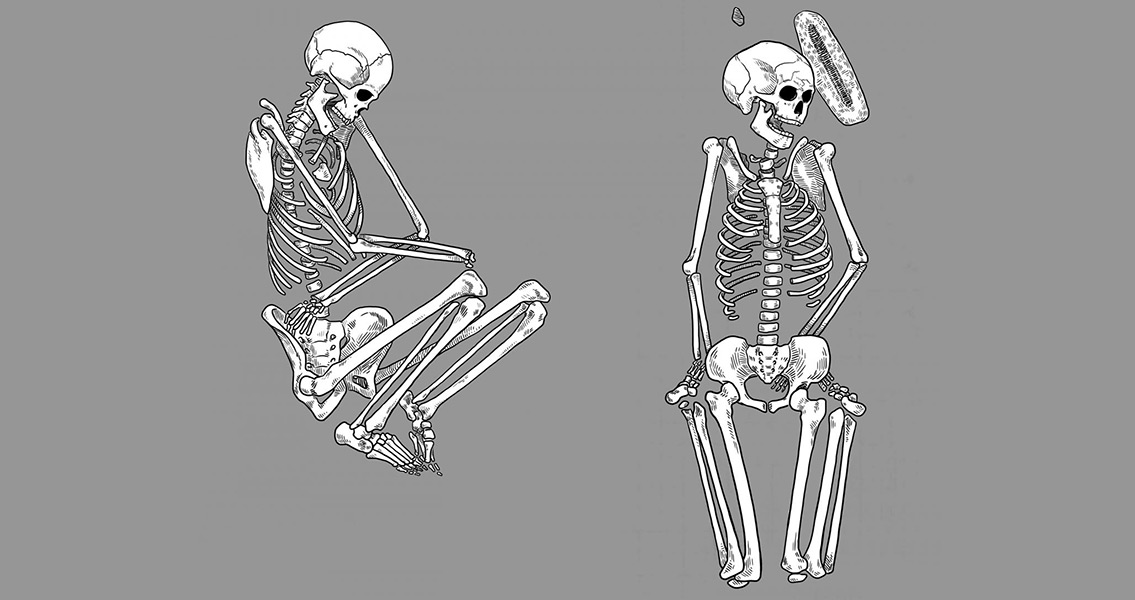
Ancient Desert Graves Indicate Possible Blood Feuds

here Illustration by Caitlin McPherson]]>

Categories
Breaking News

Chinese Fossilized Fish Sheds New Light on Jaw Evolution

Qilinyu rostrate, a fish-like Silurian placoderm species, has led to new information regarding the evolution of the jaw in vertebrate species. The roughly 423 million year old fossil is approximately 126 millimeters in length – with an estimated total body length for the creature of 20cm – and is associated with several different species including the Guiyu and Megamastax (classified as osteichthyans), the Entelognathus (a maxillate placoderm) and the Dunyu (a galeaspid). Osteichthyans, which include tetrapods and bony fish species, have facial and bone structure differences when compared to placoderms. The discovery of Entelognathus revealed a placoderm with many facial characteristics more suited to osteichthyans, but the relationship between Entelognathus’ development and the rest of the placoderms from the same time period remained uncertain until this new discovery. According to a recently published research study by the Chinese Academy of Sciences, Sweden’s Uppsala University, and the Institute of Vertebrate Paleontology and Paleoanthropology of Beijing, the new Qilinyu fossil bridges the gap between placoderms such as Entelognathus and osteichthyans. The new specimen, according to the team of international researchers, has dentary, premaxilla, and maxilla structures that are constructed in the same way as the gnathal plates of less advanced placoderms while also predating the addition of certain lower jaw bones that characterized the evolutionary move away from gnathal jaws to maxillate ones. According to Uppsala University professor Per E. Ahlberg, one of the authors of the new study, examining the jaw bones of both Qilinyu and Entelognathus reveals that both fish species combine the characteristics of placoderm gnathal plates and bony fish jaw bones. Extrapolating from these findings, Professor Ahlberg remarked that if gnathal plates from placoderm species represented an inner jaw arcade that was similar to certain bones of bony fish species, there would be an expectation to find gnathal plates in distinct locations in Qilinyu and Entelognathus. With no evidence of these gnathal plates, the professor states that one interpretation of this is to conclude that the jaw bones of humans are lightly remodeled gnathal plates of placoderms, accomplished through several hundred million years of evolutionary process. Based on the team’s findings, Professor Ahlberg remarked that it looks as if substantial anatomical details of humanity can be traced back even beyond early bony fish species, into the Silurian period in the form of these “ungainly” placoderm species. The scientific community has largely agreed with the team’s findings, with John Long, the Society of Vertebrate Paleontology’s president and professor from Australia’s Flinders University, commenting that the new insights into Qilinyu help to fill a large gap in the evolution of vertebrate jaws. The new research study, published recently in the journal Science, can be found online here Image drawn by YANG Dinghua]]>

Categories
Breaking News

Stone Age Humans Heat-treated Stone Tools

PLOS ONE, is available here Image courtesy of Delagnes et al (2016)]]>

Categories
Breaking News

Ancient Modern Drug Analogues Found in Istanbul

Categories
Breaking News

Slaves Helped Build University of Mississippi

The DM Online, there were a minimum of nine slaves – possibly more – who lived on a property known today as Rowan Oak, the home of celebrated American novelist William Faulkner. Located in Oxford, the Greek Revival house and its surrounding 40 acres of land were sold to Ole Miss in 1972 by the Faulkner family, but before the Nobel laureate purchased the property in 1930, it had been owned by Colonel Robert Sheegog, a Tennessean slave owner. Riley Anderson, an archaeology student involved in the research, remarked that Sheegog’s main residence was approximately an hour from Oxford at a location where he was known to have kept approximately 70 slaves. Research has shown that the slaves he kept at Rowan Oak – a mixture of men, women, and children that lived in a pair of structures on the property – were specifically leased to the university to aid in its construction efforts. This approach to history is often overlooked, Anderson stated, indicating that most historical research is concerned with discussing those responsible for the establishment of an institution such as Ole Miss, and not those that aided in physically building it. Anthropology professor Tony Boudreaux, the director of the university’s center for archaeological research, is co-teaching the course with Maurine Meyers. Boudreaux says that the impetus behind the initiative is to not only accomplish the center’s research goals but also to provide archaeology students with field experience, of which there has been much. In examining Rowan Oak, the class has assisted in surveying the ground in order to aid in determining where to excavate. Some artifacts have already been uncovered during this process, Boudreaux remarked. Broken glass, broken dishes, a handful of pottery shards and several nails that would have been used in fence posts or buildings have been gleaned from the site, but the anthropologist stated that more excavation will be needed to place the artifacts in proper context of the time. Anthropology graduate student Dalton Capps says that it’s important to recognize the history of slavery not just in the development of Ole Miss but on college campuses everywhere. Many universities are excellent at representing their own history, Capp said, but may not pay as much homage to the issue of slavery. Research data from the excavation will be submitted to the Mississippi Department of Archives and History as well as presented to Ole Miss administration members. ]]>

Categories
Breaking News

Prehistoric Sex: The Spread of DNA – and Sexually-Transmitted Infections

Categories
Breaking News

25 Dead Sea Scroll Fragments Translated and Published

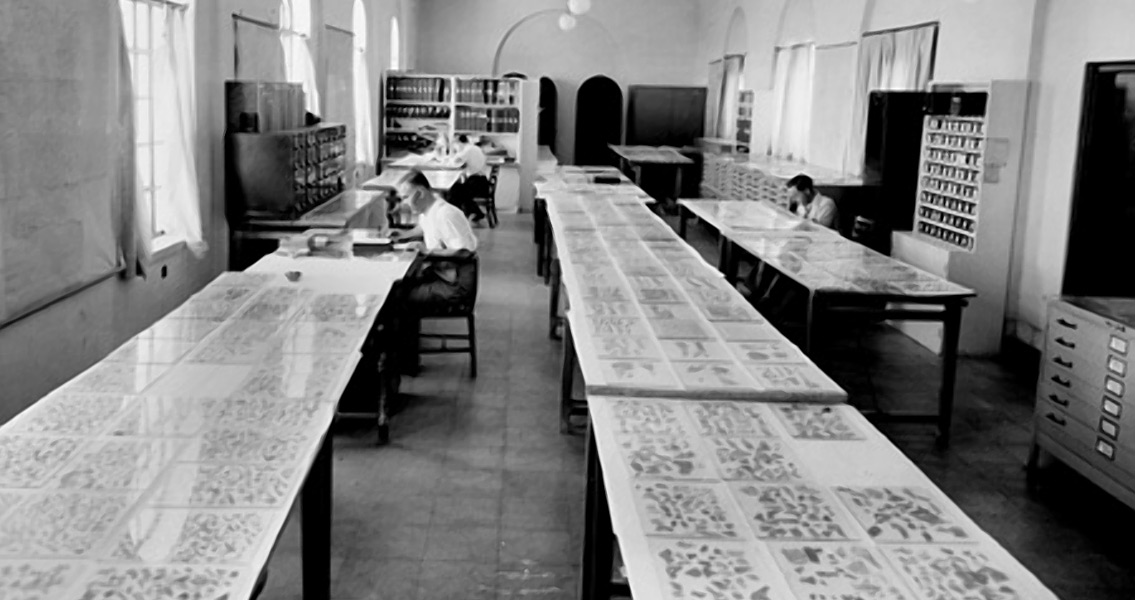
Dead Sea Scrolls has been published, providing a priceless look into the state of the Hebrew Bible nearly 2,000 years in the past. According to a recent story in Live Science, archaeologists have announced the publication of two books containing the fragments. Within these excerpts, researchers uncovered some of the promised rewards for the Hebrews that abided by the rules God put down for them so famously in the Book of Leviticus in the form of the Ten Commandments, among countless others. These fragments, discovered on the West Bank within caves at the archaeological site of Qumran, come from a wide array of books of the Torah, the Hebrew Bible – known as the Old Testament to those of the Christian faith. In addition to the books of Genesis, Exodus, and Leviticus, as many as 15 other books of the Torah are represented in these scroll fragments, including the books of Deuteronomy, Samuel, Ruth, Kings, Micah, Nehemiah, Jeremiah, Joel, Joshua, Judges, Proverbs, Numbers, Psalms, Ezekiel and Jonah. One of the two books, published by The Schøyen Collection, international collectors of landmark cultural manuscripts, includes newly-translated passages from the Book of Leviticus that delineate God’s promises of reward to the Hebrews. For observing the Sabbath and following the rest of the Ten Commandments, the fragment promises the faithful that their fields will be fertile and without drought, and that they will be blessed with peace: “I will look with favor upon you, and make you fertile and multiply you,” the fragment concludes. These scroll fragments are among the most ancient biblical manuscripts ever to be discovered by archaeologists. Originally placed within the caves of Qumran to safeguard them against vengeful Roman armies sent to quell revolution in Judea during the Second Temple period, the scrolls themselves have been radiocarbon dated to dates as ancient as 200 BCE. A combination of radiography and paleographic dating techniques has resulted in an age range of 385 BCE to 82 CE. Nearly 900 manuscripts were uncovered in Qumran during archaeological study ranging from 1947 to 1956. Who wrote the Dead Sea Scrolls is largely unknown. Many point to the Essenes as the scribes of these manuscripts, a sect of devout Jews that lived under Roman rule in Judea. Research and investigation is still underway on these fragments to ensure that they are not forgeries. Once questions of authenticity are answered fully, these fragments are likely to be incorporated into existing museum exhibits both in Israel and around the world. While the arid conditions of the Judean desert helped to preserve these scroll fragments for nearly two millennia, exposing them to handling and study has led to an increased risk of deterioration. Digital imaging techniques developed by tech giant Google have contributed to the distribution of virtual copies of these fragments around the world to aid in their study. Providing digital versions of these scrolls has enabled Israeli archaeological officials to preserve the physical fragments while still subjecting them to rigorous academic study. ]]>

Categories
Breaking News

Ancient City Gutted By Fire in Three Hours, Study Says

LiveScience, researchers from Israel’s Weizmann Institute of Science created their own mud bricks by taking soil, removing any large stones, and then creating a mixture of water, straw, and mud. This mixture was then poured into brick molds and cured in an oven. This method of construction was popular in antiquity and continues to be popular within the region today thanks to how cost-effective it is, according to Ruth Shahack-Gross, one of the scientists involved in the project, as the main building material is soil that can be sourced from the local landscape. Analysis of the remains of burned bricks at Tel Megiddo revealed that they reached a core temperature of approximately 600 degrees Celsius (more than 1,100 degrees Fahrenheit). Researchers subjected their own bricks to intense heat in an oven to re-create the conditions the ancient city’s bricks experienced, running the experiment on several different types of bricks made with varying construction ratios and of different shapes and sizes. The research results indicated that the bricks reached the temperature threshold in as little as two to three hours. Surprisingly, the amount of straw used in constructing mud bricks had little influence on how long it took for modern bricks to reach a core temperature of 600 C. Smaller bricks reached this target temperature more quickly than larger bricks, which was expected. Researchers said that the fire could have spread even faster thanks to items within Tel Megiddo’s dwellings such as bedding, oil, matting, furniture and wooden support beams. The new research study is the first of its kind, and to that effect many scientists have suggested follow-up experiments to account for any number of other factors that can contribute to a fire. The age of the bricks being subjected to heat may play a role, as older bricks with voids within them from decayed straw may not burn at the same rate as new bricks. Additionally, with fire being inherently chaotic, temperature alone may not be the best way to measure an event such as an entire city burning to the ground. In real-world situations, mud bricks may not be heated from all sides such as in the experiment but from only one side, depending on the location of the fire’s ignition point. Shahack-Gross stated that the limitations of this initial experiment are indeed clear, and that the research team is fully aware that conducting experiments in a laboratory under controlled conditions cannot truly mimic the events of the past. The research study, recently published in the journal Antiquity, can be found online here]]>