Categories
Breaking News

Ancient Chinese Artefact Found in Georgia

Ancient Origins, shows that the artefact is very old, even though researchers still have to find a way of reliably dating it using radiocarbon or other methods. So far, the surest sign pointing to it being a truly ancient artefact are the symbols decorating it and its very shape. The shape and the symbols appear in different Chinese dynasties spanning a period between 2070 BCE and 256 BCE. There is a dragon figure along the blade, for instance, which was common during the rule of the Shang dynasty, between 1600 and 1046 BCE, but had first appeared during the previous dynasty, Xia, which dominated China between 2700 and 1600 BCE, and was still in use in the dynastic period that followed Shang, the Zhou dynasty (1046 to 256 BCE). According to one of the researchers working on the sword, Siu-Leung Lee, the grotesque mask found on the handle and on the guard of the sword, called Taotie, originates even earlier, in the time of the Liangzhu culture which thrived between 3400 and 2250 BCE. It is, however, most common in artefacts from the Shang and Zhou dynasties. What makes the find even more fascinating is the similarity between the Taotie symbol and a symbol used by the Mesoamerican Olmec culture. This is not the first example of this similarity. Parallels have been drawn between ancient Chinese and Olmec mythology and symbology for a hundred years now. The Olmec culture is actually believed to have originated around 1500 BCE, soon after the rise of the Shang dynasty in China. Some scientists, according to Haskell, believe the Chinese culture had a direct and formative influence over the Olmec civilisation which spread over later cultures in the region, including the Mayans. One such similarity regards jade, which during the Shang dynasty was considered to be more valuable than gold, Haskell notes, both in China and among the Olmecs. The Mesoamerican culture learned how to work jade during its Middle Formative period, between 900 and 300 BCE, a mastery that may have been revealed to them by the Chinese. The author actually compares the extent of Chinese influence on the Mesoamerican culture with the effect of the European conquest of the region in the sixteenth century. In answer to the question how the votive object reached Georgia, Haskell supplies an explanation connected to the travelling habits of the Olmecs and other cultures around the Gulf of Mexico. The cultural influence of the Olmecs spread both into South and North America through neighbourly exchanges with other local cultures. They were also skilled seamen, travelling in dugout-log canoes capable of long journeys, so it is possible that they spread their culture during these journeys as well. it remains to be established, if possible, whether the votive sword was left by Chinese travelers to Georgia or was part of the exchange between the Asian culture and the Olmecs. Image courtesy of Wikimedia Commons user: Hiart]]>

Categories
Breaking News

Huge Dog Tomb Unearthed in Egypt

remains at all in the bandages. Team leader Lidija McKnight explained that this could have meant only some soft parts of the animals were mummified, without bones, because every part of the animal was considered sacred enough to qualify as a sacrificial offering. For more information: “The Catacombs of Anubis at North Saqqara” Image courtesy of Wikimedia Commons user: Namiac]]>

Categories
Breaking News

Did Ebola First Strike In Ancient Greece?

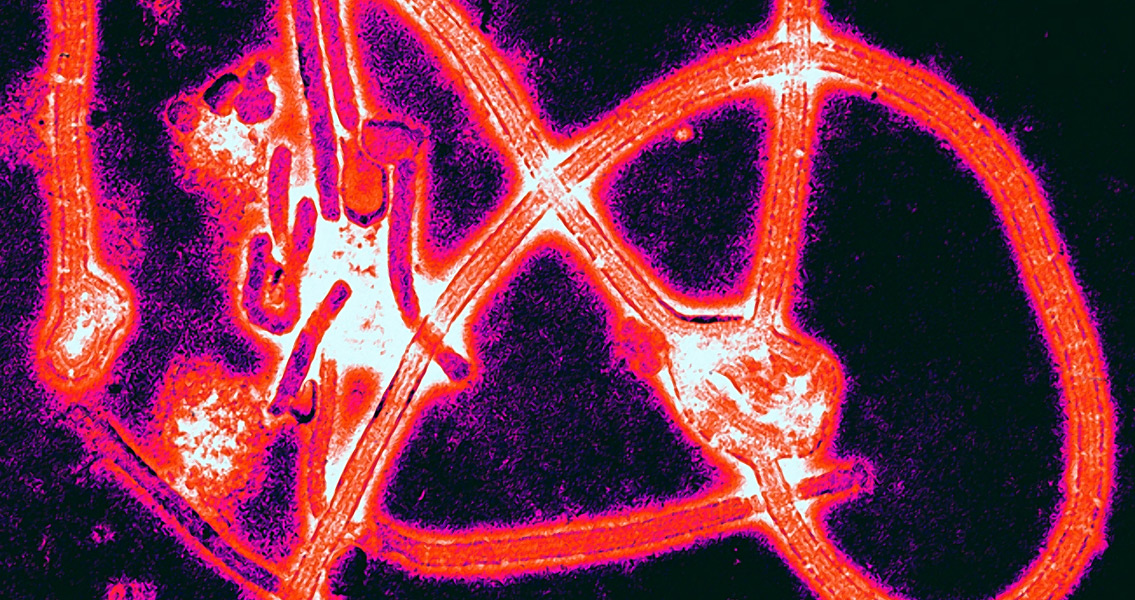
Live Science reports. The first official record of an Ebola outbreak in humans is from 1976, when the disease struck the Democratic Republic of Congo. Yet the Plague of Athens, also called by scientists the Thucydides syndrome because the ancient historian himself contracted it and later recorded the events from the time, had pretty similar symptoms to the viral disease. These included headache, fever, fatigue, stomach pain and pains in the joints as well as severe vomiting, diarrhea, and reddening of the eyes. According to Thucydides, some of the affected also experienced coughs, rashes, seizure, and even loss of digits, perhaps due to tissue necrosis. The illness that struck ancient Greece also caused severe dehydration. Kazanjian is basing his suggestion not only on the similarity of symptoms, however. Based on Thucydides records, the Plague of Athens originated in sub-Saharan Africa, a region the ancient historian and his contemporaries called Aethiopia and also the region where modern outbreaks of Ebola have occurred, the researcher told Live Science. He believes the virus was spread by Africans who had traveled to Greece in search of employment as servants and farmers. In modern times, it has been established that two species of fruit bats native to sub-Saharan Africa are carriers of the disease and since bat soup is a delicacy in the region, there has been a suggestion that this is the way in which the zoonosis passed from the animals to people. The disease in Athens, Thucydides wrote, killed the sufferers within seven to nine days (as Ebola typically does), and only a minority survived. What’s more, physicians and those who attended to the sick were among the first to die, which is true of modern Ebola outbreaks, although this has also been true of other highly infectious diseases through the ages. One further parallel between the Plague of Athens and modern Ebola outbreaks is how fear aggravated the sufferers’ condition and also helped the spread of the disease as people crowded together. Kazanjian writes in his paper that Thucydides’ account of the period provides a historical perspective to how communities react to the outbreak today, often making it more difficult for medical personnel and volunteers to control the outbreak. The latest outbreak of the virus in Africa took 11,000 lives, according to figures from the World Health Organisation, out of around 27,000 people who contracted it. According to WHO records this was the largest Ebola outbreak in history. The Plague of Athens struck the city state during its war with Sparta, the Peloponnesian War, Ancient Origins notes, leading to the death of about a quarter of its population. The cause of the outbreak has been subject to much debate, with suggestions ranging from smallpox and typhus, to bubonic plague and anthrax. Kazanjian himself does not insist that his suggestion should end the debate, admitting the cause of the Plague of Athens “remains elusive.” For more information: “Ebola in Antiquity?” Image courtesy of Wikimedia Commons user: Thomas W. Geisbert, Boston University School of Medicine]]>

Categories
Breaking News

Earliest Evidence of Manmade Pollution Found

Homo erectus, but had similarities with both Homo sapiens and Neanderthals, perhaps providing further evidence of interbreeding among hominin species. Image courtesy of Wikimedia Commons user: 66AVI]]>

Categories
Breaking News

3,000-Year-Old Inscription Found at Ancient Judean Dig

Categories
Breaking News

Compassion Helped Fuel Human Evolution

Complexity, Compassion and Self-Organisation: Human Evolution and the Vulnerable Ape Hypothesis ]]>

Categories
Breaking News

New Paper Tackles Macedon Royal Tomb Mystery

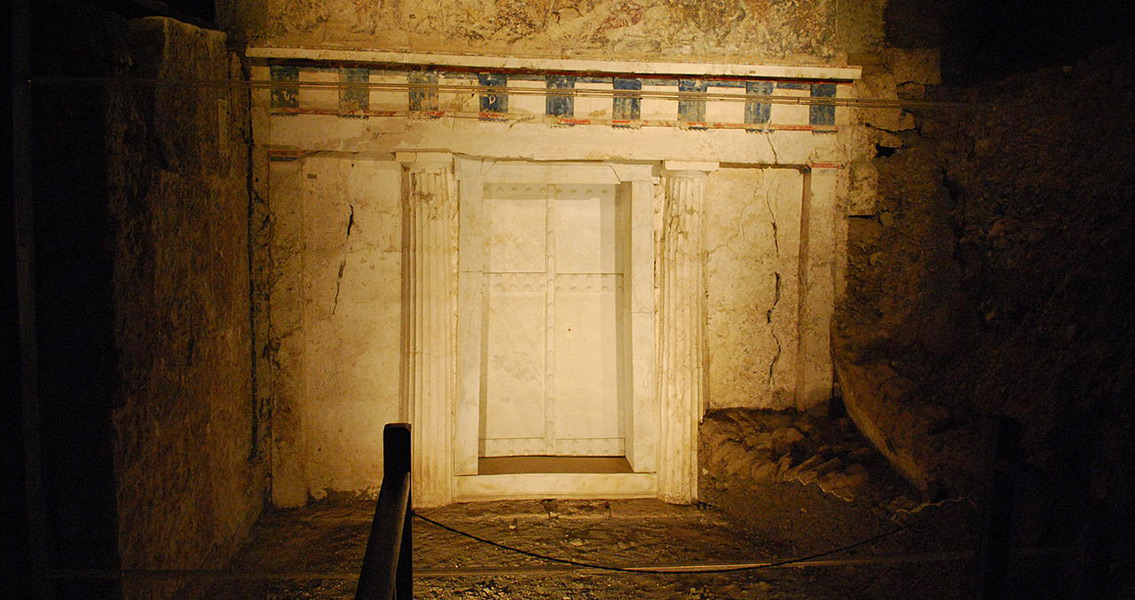
Live Science writes. Antikas told Live Science in an e-mail that all the objects in the tomb’s antechamber apparently belonged to its female occupant and nothing could be linked to the male remains. He added that this suggested the woman was Philip II’s seventh wife, the daughter of the Scythian king Ateas. In addition to the artefacts, the team found she was a habitual horse rider and had suffered a broken leg in the past meaning one leg was shorter than the other, which is why her protective leg gear was different lengths. As for the male skeleton, the researchers tried to find any marks on it that could be used for identification, like University of Bristol anatomist Jonathan Musgrave had done in the 1980’s. He reconstructed the face of the male occupant of the tomb and claimed there was a notch in the bone above one of the eyes, corresponding to a wound sustained by Alexander’s father in battle. Later, however, another scientist, paleopanthropologist Antonis Bartsiokas, argued that the notch noted by Musgrave as a distinguishing mark of Philip II had been a result of the cremation that the body underwent. Cremation is the second line of argument regarding the identity of the tomb’s male occupant. When a dead body is cremated soon after death, with the flesh still on it, bones tend to bend. When the body has stayed in the ground for some time, the bending is not so pronounced as there is not so much flesh. While Philip II was cremated soon after he died, Philip III was first buried, then exhumed a year later and given a royal funeral, including cremation. So far, neither of the two opposing camps has presented any conclusive evidence about the extent of bone bending that would unquestionably tip the scales in one direction or the other. Most scientists that Live Science contacted asking for comments on the new paper, which has been approved for publication by the International Journal of Osteoarchaeology, declined to comment, but one who did was anthropologist Maria Liston from Canada’s Waterloo University. She told Live Science that the dating of the female skeleton was “overconfident” and it was impossible to give such a narrow range given the methods used. What’s more, she said that the Greek team had based its dating in part on the status of the body’s collarbones and the extent of their fusion with the sternum. Liston said that this fusion was usually complete by the age of 29 but the team’s data actually suggested the woman was younger than this, which meant she may have been Philip III’s wife, Eurydice, who was about 20 when she died. It seems the mystery will remain for the time being until some new evidence presents itself or technology develops to a stage that can yield more conclusive results. For more information: New Finds from the Cremains in Tomb II at Aegae Point to Philip II and a Scythian Princess Image courtesy of Wikimedia Commons user: Panegyrics of Granovetter (Sarah Murray) ]]>

Categories
Breaking News

Decentralisation Made Ancient Greece Economic Success

Categories
Breaking News

Rabbit-Hunting Helped Modern Humans Gain Upper Hand

DNA analysis that the Neanderthals started declining in numbers very soon after the first modern humans set foot in Europe. Part of the reason may have been the new diseases that modern humans brought to the Neanderthals, and the fact that the latter had no immunity against them, unlike the modern humans. Climate change also had a big part to play in the decline of the Neanderthals, with some authors suggesting the cause of the change was a series of volcano eruptions, which could explain why they declined so fast. It seems one could say with a reasonable degree of certainty that there was no one single reason why the Neanderthals died out and modern humans thrived, but each of the reasons so far identified allows us a deeper understanding of this stage in human evolution and greater insight into how our own species came to be where it is today. For more information: Rabbits and hominin survival in Iberia Image courtesy of Wikimedia Commons user: Bernard Dupont]]>

Categories
Breaking News

European and Asian Cultures Born From Mass Migration

Population genomics of Bronze Age Eurasia ]]>