Categories
Breaking News

Study Finds Parallel Between Language and Genetic Diversity

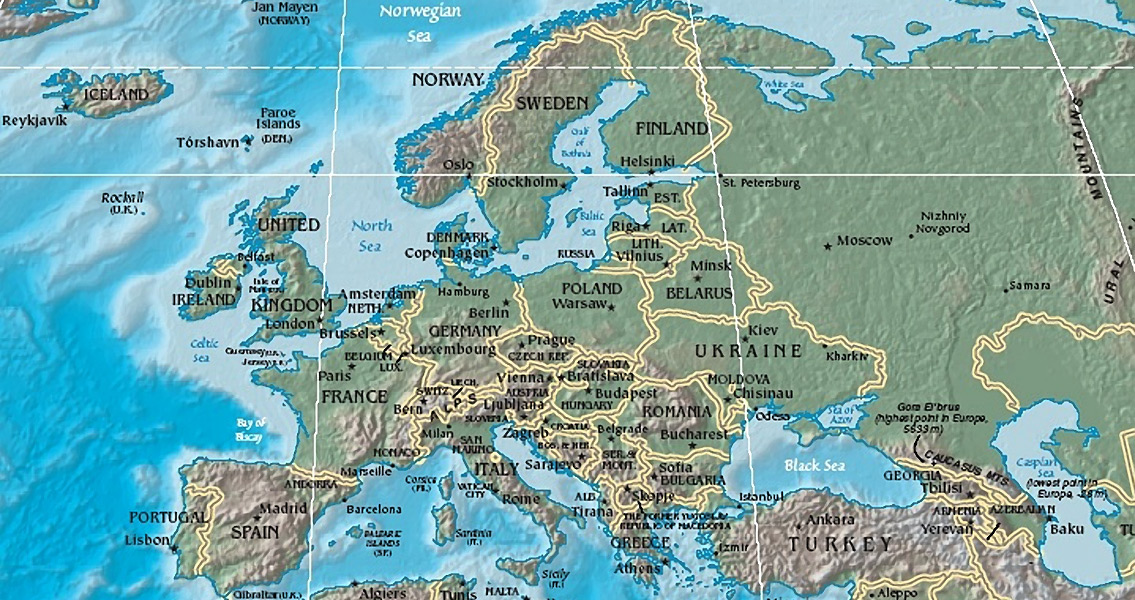
American Journal of Physical Anthropology, suggests that linguistic diversity can predict genetic diversity better than geographical distribution. This idea about a parallel between genetic and linguistic diversity was first put forward by Charles Darwin but so far it has been difficult to devise a methodology that would allow science to actually prove this correlation. With the help of geneticists and linguists from two Italian universities, Ferrara, and Modena and Reggio Emilia, the lead author of the study, linguist Giuseppe Longobardi, developed a methodology using two new tools for comparative linguistics research. The first tool was a refined list of Indo-European cognate words and the second a hitherto unavailable method of language comparison, which can be used to estimate linguistic diversity based on “a universal inventory of grammatical polymorphisms”. This method allows researchers to compare languages from different families, which is what the team did, comparing languages from the Indo-European and the Uralic families. Using these tools, the team identified two sets of linguistic distances, they wrote in the paper, one syntactic and one lexical. Then they used matrix correlation tests to compare these sets with certain values of geographical and genomic distances. The methodology was applied to fifteen European languages and the respective nations. In a press release from the University of York, Longobardi said that, for instance, the French and the Russians speak notably different languages, they have “a certain degree of linguistic diversity”. The study, however, found that the degree of genetic diversity between two populations in Europe was proportional to the extent of linguistic diversity. As a general historical rule, he added, it can be assumed that populations as geographically and linguistically diverse as the Japanese and the Kenyans, for instance, will also be proportionally diverse genetically. Still, as every rule, this also has exceptions. In the case of European populations and languages, the marked exceptions are Hungarians, who are genetically very close to the Slavic and Germanic peoples but linguistically very different. The diversity resulted from a conquest, which brought the new language into the territory of what is today Hungary. Longobardi said the study will now be expanded to include languages spoken outside Europe, hopefully reaching a global scale at some point. This expansion will allow the scientists to see if the rule holds true and they are even hoping that it could tell them exactly when and how the Indo-European languages were brought into Europe. In addition to the purely linguistic perspective, however, the team are hoping that their findings and any future ones will also help the study of genetics. As Longobardi said, “Ultimately being able to identify the ancestry of a population just on the simple basis of the language they speak may benefit identifying genetic properties of these populations, which could ultimately be of practical use even for medical research.” For more information: “Across language families: Genome diversity mirrors linguistic variation within Europe” Image courtesy of Wikimedia Commons user: public domain, CIA]]>
Categories
Breaking News

49,000-Year-Old Milk-Based Paint Found in South Africa

“A Milk and Ochre Paint Mixture Used 49,000 Years Ago at Sibudu, South Africa” Image courtesy of Wikimedia Commons user: Gribeco ]]>

Categories
Breaking News

Extreme Weather Swings Kept Dinosaurs Away From Tropics

www.pnas.org Image courtesy of Wikimedia Commons user: Heinrich Harder (1858-1935)]]>

Categories
Breaking News

Democracy May Have Predated Ancient Greece

Current Anthropology. The authors note that this ancient form of democracy would have been very different from what we have come to associate with the term in the more recent periods of human history, but they suggest that this early egalitarian structure gave a substantial advantage to people who were good communicators and more persuasive than the rest of their community. The presence of this advantage led to the emergence of a new idea of leadership that no longer focused on physical abilities alone but also involved cognitive ones, such as linguistic skills and the “ability to form and influence coalitions”. The second driver of socio-political development besides leaders’ ability to persuade their followers was the followers’ to partake in decision-making, making it a consensual process. The study’s conclusions could have important implications with regard to our understanding of how political systems emerged and developed throughout human history. While it’s true that more complex systems developed much later, it is fascinating to suggest that even back in the early years after hominins split from their quadruped cousins, they had the capacity to form coalitions in order to accomplish a common goal. In fact, the authors note in their paper, it was this propensity for cooperation that made hominins better equipped for the formation of large and lasting coalitions. This helped them improve their survival chances by becoming better prepared to overcome predators and supply food for the community. The study questions the ideas that have over the last seven centuries dominated political and social sciences. One of these is the theory of Homo economicus, which posits that humans are driven by self-interest and the urge to maximise the benefits they can create or receive, a theory that has dominated biology and political sciences, as well as economics, the study authors point out. The other dominant theory, which conflicts with this one, is the theory of cultural hegemony, strong in social sciences and anthropology, which suggests that culture is what dominates a community and its members are but “passive internalisers” of this culture. For more information: “The Evolutionary Origins of Human Political Systems” Image courtesy of Wikimedia Commons user: Oyoyoy ]]>

Categories
Breaking News

5,500 Year Old Beaker With Fingerprint Found in Denmark

a study of beads and other items used for personal decoration. The reason remains unclear but whatever it was, it seems to have been eventually beaten by the benefits of farming and husbandry. Image courtesy of Wikimedia Commons user: Woodys ]]>

Categories
Breaking News

Was the Parthenon Athens’ Treasury?

Categories
Breaking News

Must Farm Yields Comprehensive Picture of Bronze Age Life

Culture24. The whole settlement collapsed into the river after the fire and later it sank beneath the sediments in the river bed. Over time the artefacts sank deeper below what became fens, so today they are in a deeper palaeochannel, which has ensured their much better preservation than same-age discoveries made in shallower channels, according to the Must Farm website. This combination of circumstances has allowed researchers a glimpse into the everyday life of late Bronze Age people. Among the best preserved items are nine log boats, pots, jars, parts of clothing and personal decorations, and glass beads, Culture24 reports. The team even found footprints from the inhabitants of the settlement. There are also structural elements that have led the researchers to suggest that the settlement was protected by wooden posts. The team are now hoping to find remains from the timber structure that allowed people to go around the fens, fishing gear and more artefacts shedding light on how people in this settlement lived. However, Gdaniec added they were not looking forward to finding human remains because that would mean those people had died a violent death in the fire, a possibility which cannot be ruled out. Commenting on the latest finds, another team member, David Gibson, who is the archaeological manager of the Cambridge Archaeological Unit, told Culture 24 that the diversity of the artefacts discovered at Must Farm is pretty much unique. Usually, he said, the discoveries at late Bronze Age sites consist of pits, post holes and some metal artefacts. At Must Farm, on the other hand, a site spanning 1,100 square metres, there is evidence that can tell us a lot more about life at the time. Duncan Wilson from Historic England compared the site to the Mary Rose, the Tudor warship that contained thousands of well preserved artefacts, allowing scientists to gain vital insights into life in England under Henry VIII. The current dig season at Must Farm will take a total of nine months and is part of a four-year project. The artefacts will be put on display at the Peterborough Museum. Image courtesy of Wikimedia Commons user: Hugh Venables]]>

Categories
Breaking News

Dig for Necropolis Unearths Flint Tool Workshop in Bulgaria

Top Novini Razgrad reports. Initially, it was a small-scale enterprise, part of a settlement mound, but in later centuries it expanded. The archaeologists actually believe that many of the stone tools from that era found across Bulgaria came from this one workshop, which was “huge” for its time. Besides the flint tools, the team also found a number of other items, including objects shaped as animals and people, bone needles, plaster fragments, loom weights, and cult objects, which led them to suggest that there was a larger settlement in addition to the settlement mound. For now, the excavation works have been suspended but they will be renewed in September, the team leader said. That next stage of the work will extend the dig into a nearby abandoned school in Kamenovo, a small town, dating from 1910. At the time of the school’s construction, several graves were unearthed in what was to be the yard, along with artefacts dating from the same period of the Late Charcolithic. Archaeology in Bulgaria, a historical website, adds that the dig site was researched by a team of French archaeologists fifteen years ago, who believed it was the location of “workshops for prestigious flint tools”. The reason for their suggestion was the fact that such tools were found in the graves of apparently wealthy individuals from the time, providing an early example of social stratification in the region. Flint was the usual raw material for stone tools in prehistoric times in what is now Bulgaria, and it originated as a domestic practice, writes researcher Boryana Mateva in a paper on the exploitation of flint deposits in northeastern Bulgaria. The first flint people used came from the troughs of local rivers and only in later centuries, during the late Charcolith, did flint-tool making turn into an industrial activity in which the raw material was sourced from mines and processed in workshops. These workshops were part of a complex system that involved the mine, where, according to Skorpil, the initial selection of the flint was done (leaving “bad lumps” and taking only the good ones to the workshop); a primary workshop near the mine, where the pieces were initially processed; and a secondary workshop, close to the settlement, where the stones were turned into tools. Image courtesy of Wikimedia Commons user: Didier Descouens]]>

Categories
Breaking News

Did Ancient Greeks Believe In Zombies?

“Walking Dead and Vengeful Spirits” Image courtesy of Wikimedia Commons user: Zde]]>

Categories
Breaking News

More Evidence of Human-Neanderthal Interbreeding in Europe

Vulnerable Apes hypothesis, added another perspective to the question of interbreeding: it may well be the case that the Neanderthal who passed his or her genes to the Oase man also had Homo sapien genes from an earlier hybridisation. This suggestion points to a greater than traditionally believed complexity of human evolution, especially in light of other recent studies that have revealed the Neanderthals were far from the primitive cavemen we used to think they were. For more information: An early modern human from Romania with a recent Neanderthal ancestor Image courtesy of Wikimedia Commons user: Gregory F. Maxwell]]>