
“Cooperation is related to dispersal patterns in Sino-Tibetan populations ” Image courtesy of Wikimedia Commons user: Zoharby ]]>

www.jeb.biologists.org]]>
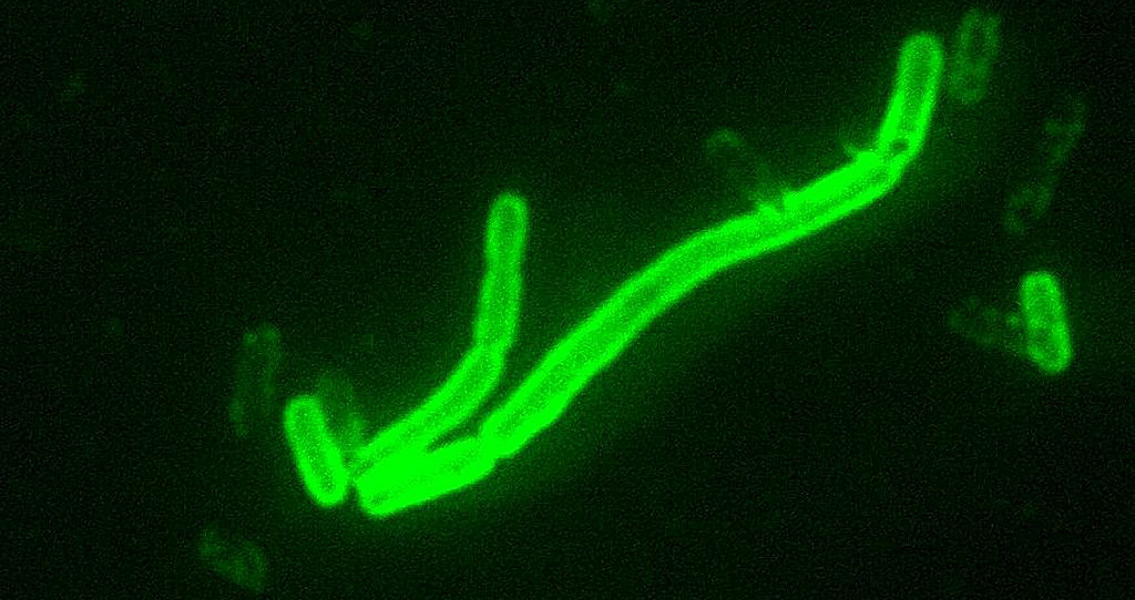
Yersinia pestis, was common among humans much earlier than the first historical records of plague epidemics suggest. An analysis of DNA extracted from Bronze Age human teeth showed that Y. pestis affected people in Asia and Europe as far back as 4,800 years ago. However, it was not for another thousand years that the bacterium developed characteristics allowing it to cause bubonic plague, the disease typically associated with it. What led the scientists, from the Universities of Gothenburg and Copenhagen, to believe that the plague is much older than commonly thought was an earlier genomics study they did on people from the Bronze Age, EurekAlert reports. That study revealed that the period, between 3000 BCE and 1500 BCE, was very dynamic in terms of migratory trends. These trends were found to have had a substantial effect on the modern-day demographic make-up of Europe and Asia. The team’s interest was sparked by the reasons behind these migrations. One of the authors of the study, Morten Allentoft from the Centre of GeoGenetics at the University of Copenhagen, told EurekAlert that one of the reasons for migration could have been epidemics that drove people away from a certain area, or decimated the population in another area, creating conditions for its repopulation. The question they asked themselves was whether these epidemics may have been caused by pestilence. To find an answer, they studied 89 billion raw DNA sequences extracted from the teeth of 101 Bronze Age and early Iron Age individuals taken from archaeological digs and museums. In seven of the samples, dated to between 2794 BCE and 951 BCE, there was evidence of the Y. pestis bacterium. Further analysis suggested that the original pathogen that Y. pestis evolved from first emerged around 5,783 years ago. To compare, the first historical records of plague-like epidemics appear in the common era, first in the sixth century, with the so-called Plague of Justinian, and then, of course, in the Middle Ages, when the Black Death took the lives of as much as half the population of Europe. There have been suggestions that Y. pestis was responsible for the Plague of Athens from 2,500 years ago and the Antonine Plague, but no hard evidence in support of this suggestion has been presented so far. Interestingly, the DNA analysis showed that even though they could get infected by the pathogen, Bronze Age people did not get it from fleas, which are among the main vectors of plague transmission. The bacterium apparently only developed the gene that allowed it to survive in the gut of fleas later, in the Stone Age. One earlier study that New Historian recently reported, suggested that the plague is in fact older than humans, by tens of millions of years, and even as early as that a strain of it could be transmitted by fleas. For more information: “Early Divergent Strains of Yersinia pestis in Eurasia 5,000 Years Ago” ]]>


www.sciencedirect.com]]>


www.geology.gsapubs.org]]>

3.8-Ga zircon that contains primary graphite inclusions”, states the study. The presence of graphite – pure carbon – is hugely significant. The zircon was completely crack free until the scientists opened it, meaning the carbon could not have come from contamination during another geological process. The distinctive signature of the carbon contained in the zircon, a specific ratio of carbon -13 and carbon 12, is one typically associated with the presence of photosynthetic life, giving an insight into the complexity of the organisms that might have existed over 4 billion years ago. “There is no better case of a primary inclusion in a mineral ever documented, and nobody has offered a plausible alternative explanation for graphite of non-biological origin into a zircon”, Harrison said in the UCLA press release. The ratio of uranium to lead in the zircon told the scientists that the zircon was 4.1 billion years old. The graphite must be older than the zircon itself, but it is impossible to determine exactly how much older. The results of the study, which has been published in the Proceedings of the National Academy of Science, could have far reaching consequences for the understanding not just of the development of life, but the history of the planet in general. It’s traditionally believed that around 4 billion years ago the world was a boiling, molten, hellish place. As Harrison explained in the UCLA press release, this assumption now seems increasingly unlikely, “The planet was probably much more like it is today than previously thought.” For more information: www.pnas.org]]>