
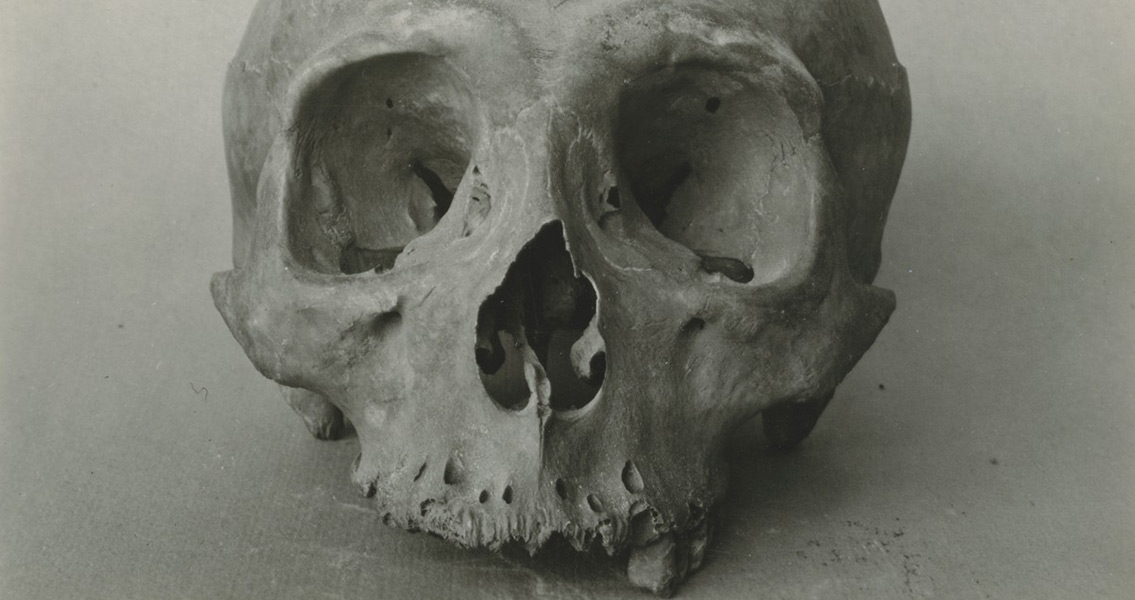
Science Advances, throws into question genetic explanations of the process of migration into South America. “When you look at contemporary genomic data, the suggestion, particularly for South America, was for one wave of migration and that indigenous South American people are all descendants of that wave,” said Noreen von Cramon-Taubadel, an associate professor of anthropology at the University at Buffalo and the paper’s lead author, in a press release. “But our data is suggesting that there were at least two, if not more, waves of people entering South America.” The study authors claim that the differences in cranial morphology (skull shape) among Paleoamericans from the Lagoa Santa region of Brazil suggest multiple waves of population dispersal across the Bering Strait from Asia and down through North America into South America. It is widely accepted that the first humans entered the Americas 15,000 years ago and quickly dispersed down into South America via a Pacific coast route. The point of contention is whether there was a single dispersal or if the process happened in waves. Despite using an innovative new technique, the results reached by von Cramon-Taubadel and colleagues’ study are similar to those shown in other morphological based analyses. Key to the pioneering method used in the new study is the understanding that although all humans have a common ancestor, not all fossils necessarily contribute to the ancestry of living people. Certain ancient populations of anatomically modern humans didn’t make a significant contribution to current human populations, typically because they didn’t survive long enough. Von Cramon-Taubadel, along with colleagues Professor Mark Hubbe from Ohio State University’s Department of Anthropology and André Strauss from the University of Tübingen, looked at existing populations as descendants of many different possible branches of “a theoretical tree of relatedness”. Statistics based on skull morphology were used to determine where in the theoretical tree the team’s sample best fit. The key advantage of this method is that rather than relying on predetermined patterns of dispersal, it takes into account all possible patterns of relatedness. Previous studies have attempted to observe overall similarities between prehistoric skeletons and the morphologies of living people, failing to account for those populations who left very little mark on modern South Americans despite being represented in the fossil record. “There are other fossils, particularly in the Americas and Eurasia where at the moment we are not 100 percent sure how they fit into the human picture,” von Cramon-Taubadel explains. “We could use this method to elucidate where they sit and to what extent those populations actually play a role in the modern ancestry of people in those areas.” ]]>

Last month, White and colleagues announced the discovery of a 38,000 year old engraving of an aurochs – representing some of the earliest known graphic imagery found in Europe. Since then a further sixteen blocks have been found, including a pointillist image of a mammoth, in a nearby rock shelter known as Abri Cellier. Crucially, one of the limestone blocks was found still in place, allowing it to be carbon dated to 38,000 years old according to the article in Quaternary International detailing White and colleagues’ findings. Abri Cellier has long been a vital window into Aurignacian art. Excavations carried out there in 1927 led to fifteen engraved or otherwise altered stones being discovered. The 16 blocks discovered by White and his team had actually been left behind by the 1927 excavators, highlighting the problems with identifying art from the European Aurignacian. The engravings on the stones are incredibly rudimentary, and in 1927 would have been difficult to interpret. The new article by White and colleagues provides evidence that the 38,000 year old origin for the sixteen newly discovered engravings can also be applied to the fifteenth found in 1927 which now reside in the French National Prehistory Museum. White and colleagues’ discoveries in the Vézère Valley are adding weight to isolated discoveries made elsewhere pointing to a form of pointillism being employed by Europeans in the Aurignacian. A rhinoceros image found on a cave wall in Grotte Chauvet, France, for instance, was likely created by dozens of dots being painted on a hand before then being applied to the cave wall. For ten years the work of White and his team has been drastically improving the understanding of Upper Paleolithic graphic imagery in southwestern France. Indeed, the team’s work has increased the sample of Aurignacian graphic arts in the region by 40%. ]]>

Science Nordic. “The openings don’t seem to sit next to each of the post rows, and we’re slightly amazed by that. But maybe it functioned as a sort of labyrinth–at least that’s how we imagine it. That way you weren’t able to look inside the common space, which may have been an advantage.” Generally, a palisade type of construction is built for defense, however, the rows of poles at Stevns would have stood approximately two meters tall and were placed in a way that would have allowed a person to squeeze through, suggesting a gathering area. Numerous palisade enclosures have been discovered in Denmark and Sweden in recent years, with some of the most intriguing sites found on Bornholm, a Danish island in the Baltic Sea. In 1988 a large timber palisade (one of two on the island) enclosing a sun temple was excavated by archeologists at Vasagårds Field on the south side of the island. The Stevns site may have also had a ritualistic purpose. One difference between the Stevns site and the Bornholm palisades is that the poles at Bornholm are located much more tightly together. It’s also probable the Bornholm fences were built prior to the ones at Stevns. Dating analysis of the Stevns site is not yet complete, however, several of the pottery fragments found there indicate it may date to the latter half of the Middle Neolithic Funnel Beaker Culture between 2900 BCE and 2800 BCE. The Funnel Beaker culture draws its name from its characteristic beakers, ceramics and amphorae which were formed with funnel-shaped tops and found in dolmen burials. A dolmen is a type of megalithic tomb with a single chamber, which typically consisted of a flat horizontal capstone supported by at least two vertical megaliths. “We’ve unfortunately not found any circular shaped constructions like they have on Bornholm, but the similarities between the enclosures makes me think about rituals in our finds too,” Sloth says in the article. Image courtesy of Danish Geodata Agency / Pernille Rohde Sloth ]]>

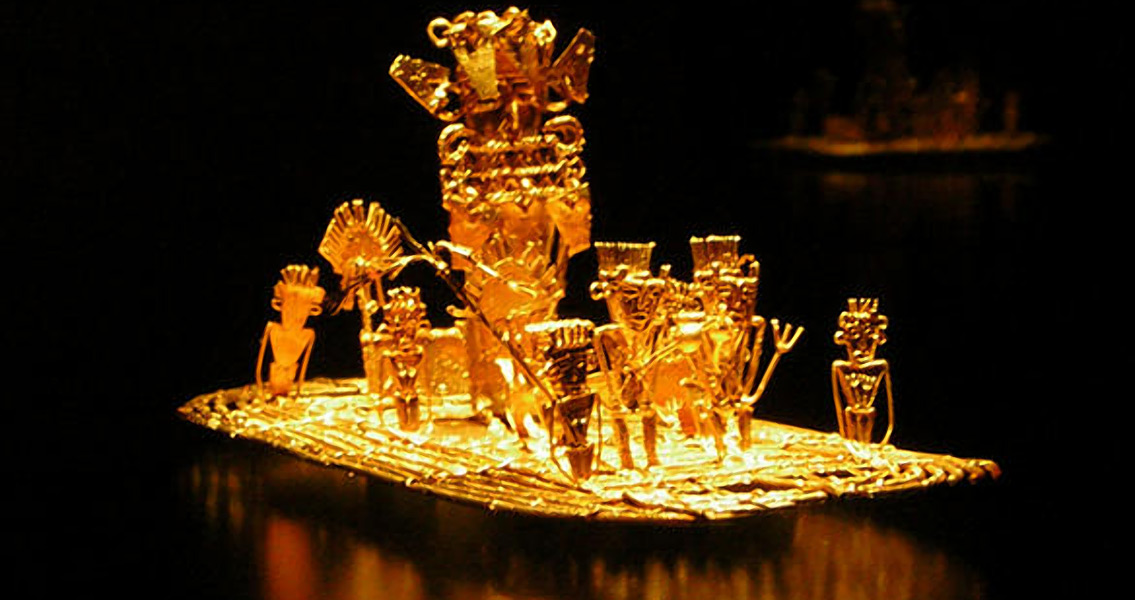
Where Did the El Dorado Myth Come from? As soon as the first Conquistadors ventured into South America in the sixteenth century they started to hear myths of an indigenous tribe with fantastic wealth. One myth in particular captured their imaginations – that of the Muisca tribe hidden high up in the Andes Mountains. Stories said that when a new Muisca chieftain came to power his body was covered in gold dust while jewels were thrown into nearby Lake Guatavita as a sacrifice to a local god or deity. Initially, El Dorado didn’t refer to a city. Meaning ‘The Golden One’, it was the name the Spanish gave to the gold adorned leader of the mysterious Muisca tribe. The elaborate ritual had supposedly ended in the fifteenth century before the Spanish arrived, when ‘The Golden One’ and his followers were attacked by a neighbouring tribe. Nevertheless, due to the sheer amount of gold European settlers found among the indigenous tribes along the northern coast of South America, explorers were convinced there must be a place of great wealth somewhere within the continent’s interior. Draining Lake Guatavita In the 1540s Conquistadors finally entered what is now the Bogota Valley, and by 1545 had subjugated the Muisca tribe. As they began communicating with village elders, the Conquistadors soon realised that nearby Guatavita was the lake from the El Dorado legends. Desperate for gold to keep funding their exploration and exploitation of the New World, the Spanish colonisers became desperate to extract the riches from the lake. Chains of Muisca were forced to scoop out the lake’s water with clay pots, in the hopes that riches would be found in the water. Several decades later, a team of 8,000 labourers were employed to dig a hole in the crater rim housing the lake. Twenty metres of water were drained, revealing golden trinkets and other jewels in the mud. Before the lake could be completely emptied disaster struck, the hole collapsed and hundreds were killed. Exactly how much gold was taken from the muddy banks of Lake Guatavita is unclear, but sources suggest that it was not enough to fund the enormous expense of attempting to drain the lake. The Myth Expands From its beginnings, the myth grew and became increasingly elaborate as it was passed down and adapted through the generations, to the point Conquistadors began searching for a lost city of gold. In the seventeenth century, English explorer Sir Walter Rayleigh launched two expeditions for El Dorado. The second, headed by his son Watt, proved tragic. Exploring the Orinoco River, the team failed to find any sign of the city of gold. To make it worse, they came into a disasterous conflict with Spanish explorers. Watt was killed in the fighting. Heartbroken by his son’s death, Sir Walter returned to England where the disaster escalated. English explorers in the New World had been explicitly ordered to avoid conflict with the Spanish due to the delicate diplomatic situation between the two empires. Sir Walter Rayleigh’s actions were seen as dangerously reckless, and he was executed on the orders of King James. The Truth Behind the Myth There is likely no city of gold hidden in the depths of South America, yet archaeologists have found there is some basis to the initial myth of ‘The Golden One’. Research has shown that the extent and quality of gold production in the area around what is now Colombia was truly remarkable by the late sixteenth century. The Muisca were most definitely a real tribe, and archaeological and anthropological analysis has shown that gold was a central part of their culture. Crucially however, this gold was not a symbol of wealth, it was used purely as a religious offering. As Roberto Lleras Perez, an archaeologist and expert on Muisca gold told the BBC in 2013. “No other society, as far as I know, dedicated over 50% of their production for votive offerings. I think it is quite unique,”. In 1969, villagers found a golden raft in a cave in the hills south of Bogota. It depicted a scene exactly like that described in the myths of Lake Guatavita, adding further credence to the stories of ‘The Golden One’. El Dorado as a place might have been nothing more than a product of the European explorers’ imagination and their thirst for wealth in the New World, but the sacred Muisca rituals behind the myth certainly were real. ]]>

Nature Communications, the researchers note that the crypt was purposefully constructed for a high status member of the community. The initial burial was for a man in his forties killed by a blow to the head. His burial is the richest ever found in the southwest USA, his grave goods including 11,000 turquoise beads and 3,300 shell beads alongside other artifacts including abalone shells and a conch shell trumpet originating from the Gulf of California. The other thirteen burials in the building had taken place over the course of the following 300 years. This led the team to wander if the fourteen people had all been related. DNA analysis found that all of the individuals shared the same mitochondrial genome sequence. Inherited only from the mother, matching mitochondrial DNA not only suggests a group of individuals were from the same family, but that the inheritance was matrilineal. Once the matrilineal connection had been established, the team looked to determine specific relationships among the individuals. “Using DNA sequences from the nuclear genome combined with the radiocarbon dates, we identified a mother-daughter pair and a grandmother-grandson relationship,” said Kennett. “For the first time, we’re saying that one kinship group controlled Pueblo Bonito for more than 300 years,” said Steve Plog, Professor of Archaeology, University of Virginia, who worked with the team to radiocarbon date the remains. “This is the best evidence of a social hierarchy in the ancient Southwest.” The study is available at Nature Image: Selection of turquoise and shell artifacts found in Room 33 of Pueblo Bonito (Chaco Canyon, New Mexico, USA), courtesy of Roderick Mickens ©American Museum of Natural History]]>

The Guardian. “Actually, it would be more like an elephant with a number of mammoth traits. We’re not there yet, but it could happen in a couple of years.” Already dubbed a “mammophant”, the animal would have numerous mammoth traits such as small ears, shaggy hair and blood that allows the animal to tolerate freezing temperatures. The existence of an actual mammophant however, is still years beyond the creation of an embryo. Future plans, which could take more than a decade to realize, are to grow the embryo in an artificial womb in a lab. The scientists believe their modifications can help the endangered Asian elephant, and help battle global warming by reducing the rate at which Arctic permafrost is thawing. As the permafrost thaws, the process of microbes consuming the organic material beneath it releases huge amounts of the greenhouse gas methane into the atmosphere. When herds of mammoths wandered the Arctic, they suppressed forest growth which in turn prevented the melting of permafrost. “They keep the tundra from thawing by punching through snow and allowing cold air to come in,” Church explained in the article, “In the summer they knock down trees and help the grass grow.” There are critics of the team’s work who consider the revival of extinct creatures to be filled with unpredictable consequences, such as the impact such an introduction would have on elephants and other animals. Regardless of the ethical considerations the team of scientists continues their work. They successfully grew a mouse embryo inside an artificial womb for 10 days, half of its 20-day gestation period. An elephant calf‘s gestation period is 660 days, making growing one a much more difficult feat. Professor Church recently spoke about his team’s progress trying to recreate the long-extinct mammoth’s genetic blueprint over the past two years at the annual meeting of the American Association for the Advancement of Science (AAAS) in Boston. ]]>