Categories
Breaking News

Salmonella Outbreak May Have Ravaged Aztec Civilization

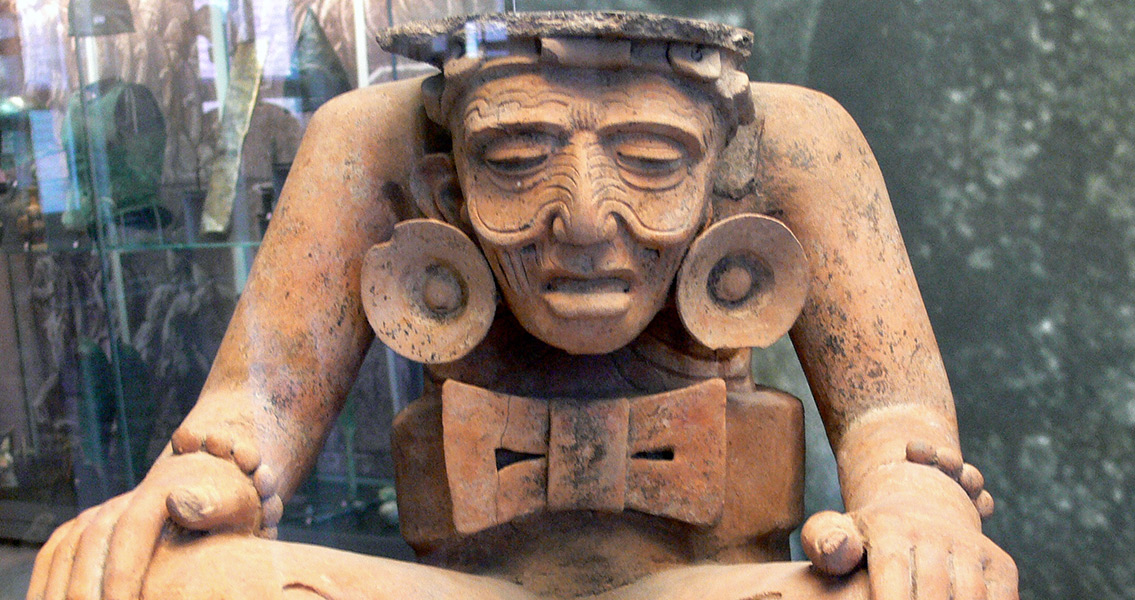
Nature, scientists say that DNA recovered from Mexican burials – specifically stomach bacterium – can be linked to the pestilence that wiped out four fifths of the native population in the 1540s. Before the first Spanish conquistadors arrived in Mexico in 1519, estimations put the native population at approximately 25 million; just 100 years later, that figure had plummeted to around 1 million, driven by Spanish conquest and multiple disease epidemics. These epidemics, called “cocoliztli” in the Aztec language of Nahuatl, raged between approximately 1546 and 1576. Two of the largest cocoliztli are thought to be responsible for the deaths of anywhere between 7 million and 18 million indigenous people in the highlands of Mexico alone. The causes of these cocoliztli have long been debated, as other diseases such as typhus, smallpox, and measles have all been ruled out by previous scholarship. A recent theory, from a 2002 research study from the National Autonomous University of Mexico, proposed a combination of catastrophic drought and viral hemorrhagic fever as the culprit. Two new studies have tried a different tack. Researchers from the Max Planck Institute in Germany, led by evolutionary geneticist Johannes Krause, examined the teeth of nearly 30 individuals who are thought to have died during the 1545 cocoliztli. Scientists extracted teeth from the remains and sequenced their DNA, recovering traces of ancient bacteria from several samples. This ancient DNA was found to be a match with the genome of salmonella. Additional work led the team to pinpoint the specific strain of the bacterium, revealing that Paratyphi C, a type of salmonella that causes an illness similar to typhus, was the likely culprit. The strain is an active one, mostly seen in developing countries today, with a 10% to 15% mortality rate if left untreated. Meanwhile, a second study from the University of Warwick in the UK and spearheaded by microbiologist Mark Achtman, dovetails with this first piece of research. The remains of a woman from Trondheim, Norway, interred around 1200 CE, were found to also hold traces of Paratyphi C. The discovery not only shows the salmonella strain was active in Europe, it’s also the earliest evidence of the bacterium to date. This doesn’t in and of itself link the Norwegian instance of Paratyphi C to its appearance in Mexico of course, nor could it be proof positive that the infection was spread to native Aztecs by European imperialists. However, it’s not out of the question, especially since there are some who can become carriers of Paratyphi C without becoming sick. In other words, a Spanish conquistador who looked otherwise healthy could have infected native populations. Without natural resistances to the bacterium, indigenous peoples would have been ravaged by the infection. The two research studies, both which have been published on the BioRxiv servers, are available here and here]]>
Categories
Breaking News

Tully Monster Mystery Far From Solved

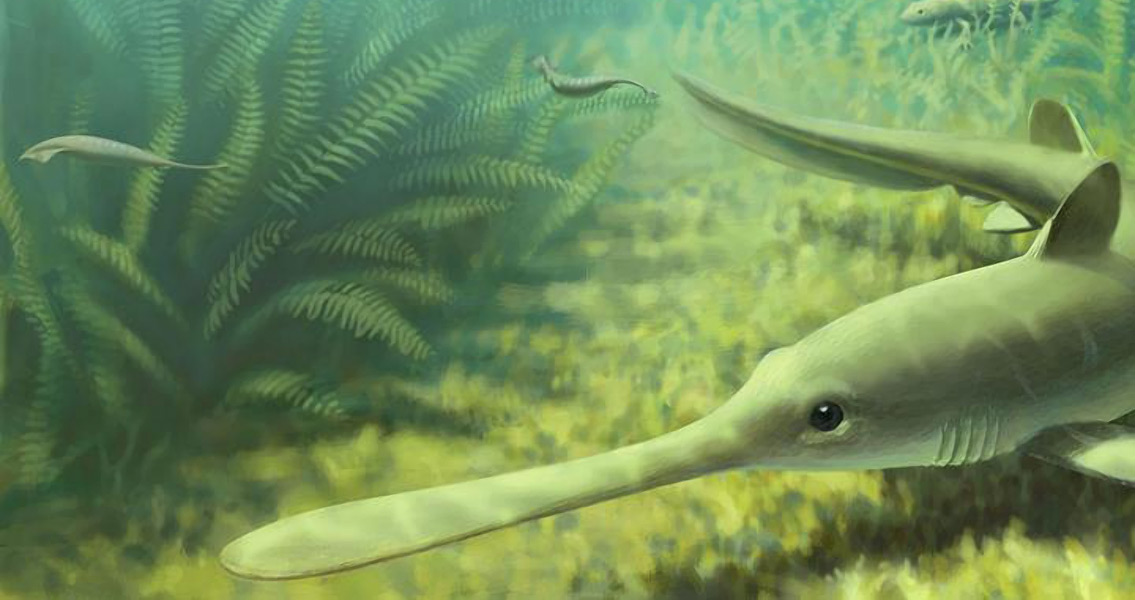
Tullimonstrum gregarium, aka the Tully Monster, a bizarre 300 million year old creature whose remains have been found exclusively in the state of Illinois, has long been a source of mystery to scientists. Made from a strange looking mixture of body parts – a long eel like body, tail fins resembling a squid’s back end and a long tentacle like neck culminating in a crab claw like mouth – Tully Monster has been almost impossible for scientists to categorise. Last year, two studies claimed to have finally brought the mystery of the Tully Monster to a close. The first claimed to have found evidence of a primitive backbone among Tully Monster fossils. It was a discovery which led the authors to conclude the creature had been a fish similar to a modern lamprey. Headed by PhD student Thomas Clements from the University of Leicester, UK, the second study also claimed to have convincing proof the creature was a vertebrate. The conclusion was based on evidence proving that two long stalks coming from the creature’s body were eyes. Clements’ team argued that such eye stalks are only known to exist in creatures with backbones. Now, a team of paleobiologists led by Lauren Sallan claim both studies are wrong. “This animal doesn’t fit easy classification because it’s so weird,” said Sallan, an assistant professor in the University of Pennsylvania’s Department of Earth and Environmental Science. “It has these eyes that are on stalks and it has this pincer at the end of a long proboscis and there’s even disagreement about which way is up. But the last thing that the Tully monster could be is a fish.” Published in the journal Paleontology, Sallan and colleagues’ report argues there is little convincing evidence Tully Monster was even a vertebrate. “It’s important to incorporate all lines of evidence when considering enigmatic fossils: anatomical, preservational and comparative,” said Sam Giles, a junior research fellow at the University of Oxford and a coauthor of the study. “Applying that standard to the Tully monster argues strongly against a vertebrate identity.” The team’s biggest criticism is the fact that none of the 1000 Tully Monster remains studied so far show signs of the structures believed to be universal in aquatic vertebrates. “You would expect at least a handful of the specimens to have preserved these structures,” Sallan said. “Not only does this creature have things that should not be preserved in vertebrates, it doesn’t have things that absolutely should be preserved.” As Sallan’s team point out, accurately classifying such an unusual creature is vital for the broader understanding of evolution. “Having this kind of misassignment really affects our understanding of vertebrate evolution and vertebrate diversity at this given time,” Sallan explained. “It makes it harder to get at how things are changing in response to an ecosystem if you have this outlier. And though of course there are outliers in the fossil record — there are plenty of weird things and that’s great–if you’re going to make extraordinary claims, you need extraordinary evidence.” Since its discovery in the 1950s Tully Monster has been through a host of different classifications. It seems the mystery surrounding its identity is far from solved. “Initially it was published as a worm,” Sallan said. “There is a well-constructed argument that it is some kind of mollusc, like a sea cucumber. And there’s another very strong argument that it’s some kind of arthropod, similar to a lobster.” Featured Image: An illustration depicts what Mazon Creek may have looked like 300 million years ago, complete with Tully monsters (the two small swimming creatures), a large shark and a salamander relative. Courtesy of John Megahan ]]>

Categories
Breaking News

The First Gate Ever Found at a Jewish Town Named for Gates

Times of Israel. The town’s affluence could have served as a reason for the heightened security. Beit She’arim was the home to many prominent and wealthy Jews, so the community might have been named from the fortifications built to keep them safe. Another possibility is that it was the site of an important Roman fortress. Erlich and her team have plans to return and continue excavations at both Beit Zaid and Beit She’arim next season. ]]>

Categories
Editorial

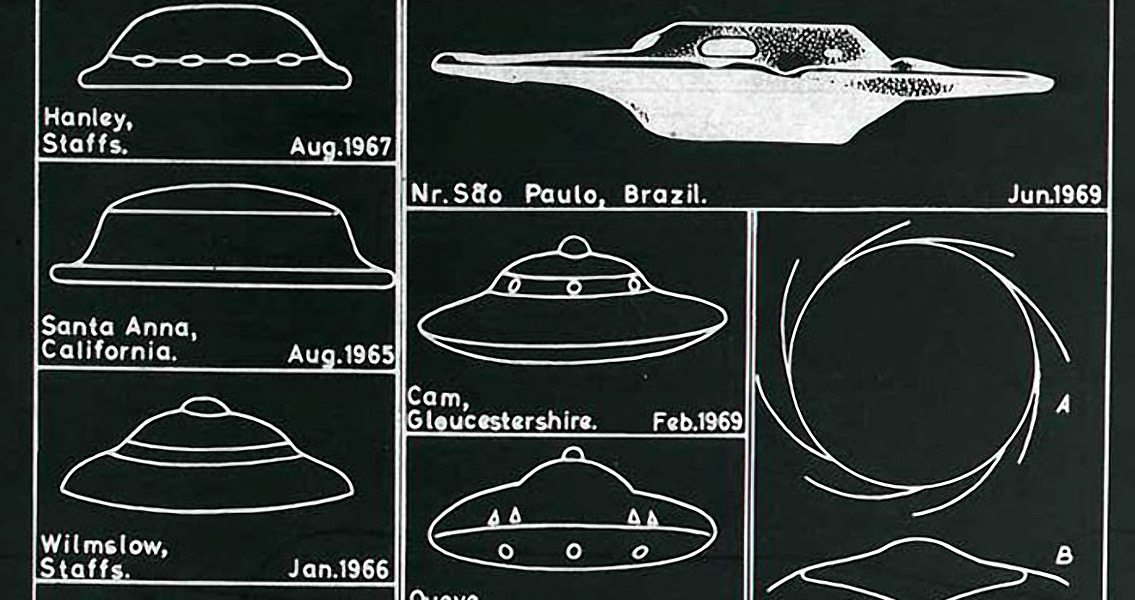
UFO and Alien Believers from History – From Churchill to Newton

Churchill “With hundreds of thousands of nebulae, each containing thousands of millions of suns, the odds are enormous there must be immense numbers which possess planets whose circumstances would not render life impossible.” wrote Churchill in the essay, entitled ‘Are We Alone In The Universe?’ “I am not so immensely impressed by the success we are making of our civilisation here that I am prepared to think we are the only spot in this immense universe which contains living, thinking creatures.” This is far from the first time Churchill has been associated with extra-terrestrial life. Papers released by the National Archives in 2010 alleged that Churchill had ordered a reported encounter between an RAF plane and a UFO over southern England covered-up, for fear of the mass panic it could cause in the the tense wartime environment. Although the evidence backing up this supposed cover-up is largely anecdotal, it’s nevertheless inspired some conspiracy theorists to speculate on just how much Churchill knew about extra-terrestrials. During his second term as Prime Minister in 1952, Churchill ordered an official investigation into UFO sightings over England. That report concluded most UFO sightings were misidentifications in no need of further examination. Douglas MacArthur A hero of the Pacific theatre during the Second World War, General Douglas MacArthur later suffered the disgrace of being relieved of his command after criticising President Truman’s handling of the Korean War. The controversial military leader also held highly controversial views on extra-terrestrial life. “…the next war will be an interplanetary war. The nations of the earth must someday make a common front against attack by people from other planets. The politics of the future will be cosmic, or interplanetary”, he said publicly in 1955, on one of several occasions he openly discussed the possibility of humans coming into contact with Aliens. MacArthur’s high rank in the military meant he was likely privy to a host of classified information, with some speculating this would have extended to UFO sightings. There is little evidence to actually corroborate the belief, however. Ronald Reagan and Jimmy Carter Two US presidents were both incredibly open about their interests in UFOs. While on the campaign trail, Jimmy Carter promised to make public all documents on UFOs. “I don’t laugh at people anymore when they say they’ve seen UFOs. I’ve seen one myself.” Ronald Reagan meanwhile, claimed to have seen a UFO while governor of California. As his aircraft approached for a landing at Bakersfield California in 1974, the future president supposedly saw a mysterious glowing object in the sky and ordered the aircraft pilot to follow it. “We followed it for several minutes. It was a bright white light.We followed it to Bakersfield, and all of a sudden to our utter amazement it went straight up into the heavens. When I got off the plane I told Nancy all about it.” Christiaan Huygens, Isaac Newton and William Herschel Belief in aliens isn’t merely a modern phenomenon. Christiaan Huygens, a leading Dutch scientist of the seventeenth century famous for explaining the nature of Saturn’s rings and discovering its moon Titan, wrote a long treatise on the prospect of extraterrestrial life. ‘Cosmotheoros (or The Celestial Worlds Discover’d: or, Conjectures Concerning the Inhabitants, Plants and Productions of the Worlds in the Planets’, published shortly after Huygens’ death, explained in detail a hypothetical alien race. “That which makes me of this Opinion, that those worlds are not without such a Creature endowed with Reason, is that otherwise our Earth would have too much the advantage of them, in being the only part of the Universe that could boast of such a Creature…” Huygens’ work was criticised at the time as unscientific, while some modern critics have suggested he was in fact being ironic. Nevertheless, other renowned scientists from the period engaged with the idea of alien life. Isaac Newton said in 1701: “For if all places to which we have access are filled with living creatures, why should all these immense spaces of the heavens above the clouds be incapable of inhabitants?”. William Herschel, who discovered Uranus, made a similar argument, speculating that any celestial body could be inhabited – the sun and moon, even comets and asteroids. ]]>

Categories
Breaking News

Migration To Americas Came in Waves, According to Big Data

Categories
Breaking News

Volcano May Explain Mysterious 100-Year Maya Dark Age

Geology. ]]>

Categories
Breaking News

Scottish Archaeologists Find 3,000-Year-Old Spearhead

Categories
Breaking News

Earth's Magnetic Field Fluctuations Revealed in 2,800 Year Old Pottery

Proceedings of the National Academy of Sciences is available here]]>

Categories
Breaking News

Oldest Venomous Vertebrate Evolved Well Before Snakes

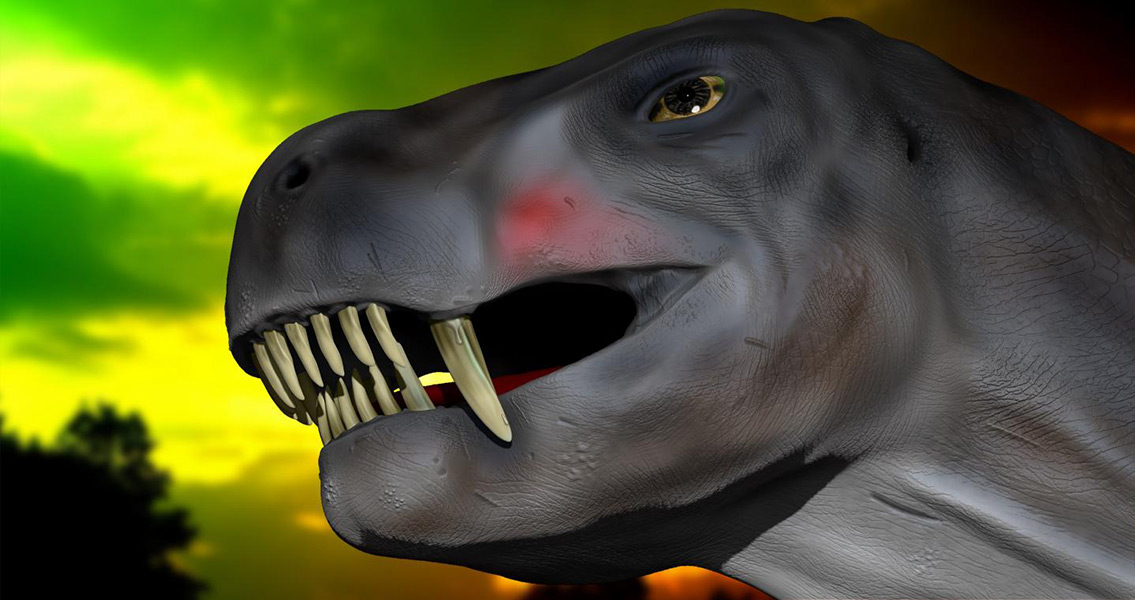
Euchambersia, a therapsid which was one of the evolutionary precursors to mammals. Euchambersia pre-dates the rise of even the first dinosaur by millions of years. While technically a reptile, it is inextricably tied to the rise of countless mammalian species, including our own. Euchambersia lived around 260 million years in the past. The small, dog-sized proto-mammal developed a unique biology in order to better protect itself from larger, more aggressive predators of the era, and also to aid it in hunting prey of its own. Living in South Africa near Colesberg in a region known as the Karoo, the therapsid evolved to develop a circular and deep fossa in its upper jaw behind its canine teeth. Venom would be produced in this hollow to be delivered in a bite through a complex series of canals and grooves in the Euchambersia’s bones and teeth. Today, the most well-known venomous animals are of course snakes, but Dr. Benoit pointed out that their fossil record only stretches back around 167 million years. Proving that Euchambersia even had venom glands was problematic, as the glands don’t fossilize. Benoit and his fellow Wits University researchers, along with the aid of London’s Natural History Museum, employed 3D imagery and CT scanning techniques to analyze the only pair of fossilized Euchambersia skulls found to date. The results of this analysis were described as “stunning”, as the therapsid was found to have had anatomical adaptions that indicated venom production. These adaptations included the fossa and a network of canals and grooves, as well as additional, previously undiscovered teeth that had sharp ridges which would have aided in injecting venom through the Euchambersia’s bite. The therapsid’s venom would have been passively introduced through its bite, unlike modern snakes with their needle-like grooved fangs that act to inject venom directly into their prey. In fact, the venom of the Euchambersia flowed freely into its mouth and through the ridges on the outside of its canines into whatever it had bitten. Dr. Benoit said that Euchambersia could have used its venomous bite for hunting or protection. With the majority of modern venomous species using their bite for hunting, the researcher feels that the therapsid would have likely followed the same route. Additionally, Dr. Benoit pointed out that animals from that time period, specifically therapsids, were not all insectivores but instead had a diverse diet. The new research paper, published in the journal PLOS ONE, can be found online here Image courtesy of Wits University]]>

Categories
Breaking News

Veteran Archaeologist Discovers Temples in Northern Sudan