Categories
News

The Life of George Eliot (Mary Ann Evans)
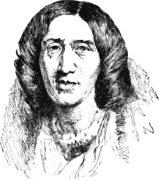
 Literary Beginning Now Mary Ann Evans became independent with an income of a hundred pounds a year bestowed on her from her father’s estate. It was far from a fortune but more than enough to meet her needs. Now she faced the challenge of what course to follow in life. She was already well beyond the normal marriageable age for women in her society. Her marriage prospects were discouraging. It was at this time that she started to have her writings published. The well-known Westminster Review began publishing her stories. In 1851 she became Assistant Editor of this publication. It was very unusual at the time for a publication to have a woman in such an important position but Evan’s literary skills were too good to forgo. Private Scandal There may well have been other reasons for Evan’s acceptance onto the staff of the Westminster Review. Her editor, Henry Lewes took a romantic interest in the young authoress. His wife had deserted him and his three children. Mary Ann Evans came to fill her place but their relationship was never formalised in the church wedding social norms at the time expected. Evans’s very respectable mid-Victorian family circle were scandalised by the life she was leading. Lewes encouraged Mary Ann’s creative writing by offering ideas for themes and editing the manuscripts. She decided to use a male penname since she thought that in that way her words would receive the serious attention she believed they deserved. Literary Fame  In 1857 Blackwood’s Magazine published her “Scenes from Clerical Life” In 1859 she enjoyed her first major literary success when her novel “Adam Bede” became a best seller. The character of Adam Bede was based in part on her recollections of her father. She also worked into the novel her religious and artistic views. The historical background of the Chartist political unrest of the late 1830s and 1840s would have been familiar to most of readers. In her subsequent novels she continued to explore the religious and moral issues of the day that occupied her mind. For example, “Middlemarch” (1872) is set in the period of conflict surrounding the passing of the 1832 Reform Act. The heroine of the novel finds herself trapped in a loveless marriage and contending with the social limitations women faced at this time. In perhaps the most famous of all her novels, “the Mill on the Floss” (1860), the tragic tale of the miller’s daughter is viewed by literary experts as representative of Evan’s own struggles and conflict with her own family. The death of Maggie and her brother in the flood is also viewed as symbolic of the way the authoress viewed her own life. In her last major work, “Daniel Deronda” (published in 1876) she chose again to explore the frustrations of an unhappily married society lady while also finding a way to attack religious prejudices of the day. Following the death of Henry Lewes, Mary Ann Evans married a friend who was 20 years younger than her – John Cross. She died on 22 December 1880 and was buried in London. ]]>

Categories
Breaking News

Ancient Schistosome Parasites Linked to Agriculture

Categories
Breaking News

Rare Coin from Emperor Nero Found in England

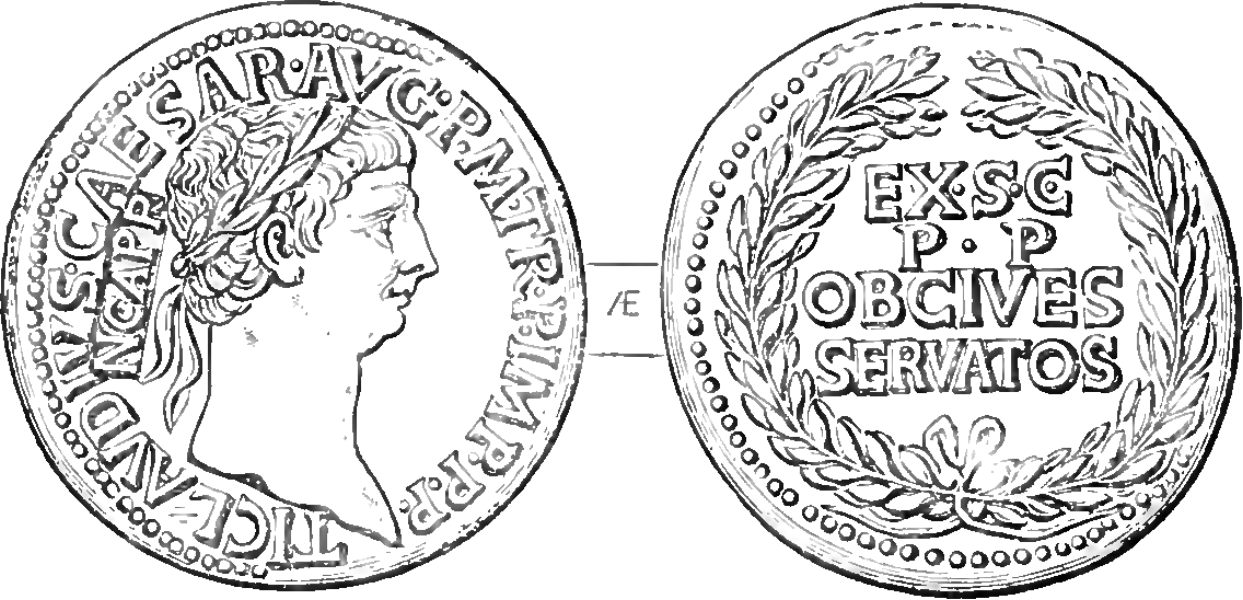
th century. What makes this revelation even more surprising is that the archaeological site where the excavations are taking place has been subjected to thousands of searches and it has also offered countless coins over the years, but amazingly this is the very first gold coin to be excavated here. Albert, the one who actually discovered the coin, humbly stated that he was completely shocked and surprised to see something shining out of the soil as if it was dropped moments ago. In fact, the coin is also considered to be much older than the archaeological layer where it was found. This led researchers and historians to believe that the coins were in circulation for almost 300 years before they were lost to time. ]]>

Categories
Book Reviews

The Struggle Of King Arthur And Mordred

The Origins of the Legend Historians continue to speculate if King Arthur, Mordred and the other scenes and players in the legend have any historical basis. For the most part the story is associated with fifth or sixth century Wales. If a prototype for Arthur did exist he might have been a Celtic chieftain rallying his forces to fight off the Saxon invaders. References have been found to figures that might have been the model for King Arthur in some of the scare writings that survive from the Saxon period in British history, but none of the associations made are conclusive. Two Medieval writers share the responsibility for publicising the tale and incorporating in it many of the elements familiar to us today. In 1138 Geoffrey of Monmouth wrote a history of the Kings of Britain. Many allege that he drew more on his imagination than on any older records that had come to his notice. Others claim that some of what he wrote corresponds with information in earlier documents that have now come to light. Whatever the authenticity of his facts, Geoffrey introduced his readers to a King Arthur, Queen Guinevere, Merlin the Wizard and of course, King Arthur’s arch enemy Mordred. In this version of the tale King Arthur goes to fight against the Roman Empire in Gaul (France of today). The evil Mordred takes advantage of the opportunity to usurp Arthur’s throne and take Queen Guinevere as his wife. The news reached King Arthur on campaign. He returns to his kingdom and fights a fierce battle with Mordred at a place called Camlann, Mordred is killed but Arthur is mortally wounded. In the late medieval period Thomas Malory published a revised and comprehensive version of the Arthur stories, entitled “The Death of Arthur” (Le Morte d’Arthur). The publication of this work coincided with the introduction of the printing press. Malory’s work became one of the first books printed in England and standardised many aspects of the Arthur legend, for example, the idea of Arthur and his knights sitting at the Round Table dates from this publication. The bitter enmity between Arthur and Mordred continues to form a key part of the story but in a key change from Geoffrey of Monmouth’s narrative Queen Guinevere remain loyal to King Arthur. Why have these tales survived the years? The fact that the reader of this article is likely to be familiar with tales of Arthur and Mordred is a testimony to their enduring power. Yet they are more than simple stories. The Arthur tales have contributed culturally to the shaping of Britain’s identity. Over all these years they continue to serve a useful purpose. People are attracted by the idea that there was once an age when chivalrous knights rode about the British countryside fighting treacherous enemies like Mordred, or even supernatural dragons and other monsters. During World War Two, tales of Arthur’s bravery against the country’s enemies provided a rallying point for resistance to German aggression. Today the interest is probably largely of an escapist nature. Regardless of whether or not there is a basis in history, it seems that tales of Arthur and Mordred still serve a purpose in our hi-tech age. References  The Legends of King Arthur and His Knights by James Knowles The Legends of King Arthur and His Knights by James Knowles PIBN:  1000104500 [gap height=”20″] Wikipedia King Author [gap height=”20″]  ]]>

Categories
News

The Most Influential President of the Usa – Abraham Lincoln

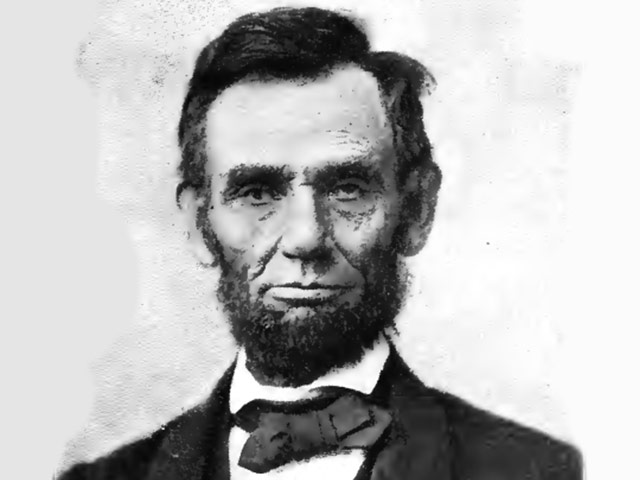
th, 1809. In his own words his paternal and maternal ancestors came from “undistinguished families.” He lost his mother at the age of ten. He grew up on the wild western frontier of the United States. He was large and very strong for his age and was soon adept at using an axe. He also got an early introduction to hunting. He describes in his autobiography how he shot a wild turkey at the age of eight. Lincoln’s opportunities to acquire an education were limited in this isolated location. He claimed that he only learned to “read, write, and cipher” in his youthful years but his ambition and natural talents made up for the lack of formal education. He was an inveterate reader and when he exhausted the limited reading material his poor house contained he would go to borrow books from neighbours. Although he was physically well-suited to farm work and other manual labour his intellectual strivings would not leave him content with a farm worker’s life. In his twenties Lincoln moved to New Salem, Illinois. He supported himself as a store keeper and post master. For a short period he also served as an officer in one of the Indian wars but his military service was not particularly distinguished. However, his oratory and ways with people endeared him to the local community. In 1834 he was elected to the local legislature. In the later 1840s he also served for a brief period in Congress. At the same time he was serving as a legislator Lincoln qualified as a lawyer and built up a successful legal practice. For most of the 1850s Lincoln concentrated on his legal work, but he was not able to remain indifferent to the growing divide in America over the issue of slavery. Lincoln was a keen opponent of slavery but that was not equivalent to saying that he believed black Americans should have equal rights with white citizens. The reputation he developed as an eloquent but moderate opponent of slavery stood him in good stead when he contested the Senate seat of Stephen Douglas in 1858. Although he did not unseat Douglas his debating skills made a strong impression across the nation. He was thus a natural choice for the Republican Party in the Presidential elections of 1860. Lincoln was not considered the mostly likely to win the election but contrary to expectations he triumphed by gaining 180 out of 303 electoral votes. A good claim can be made that Lincoln’s greatest achievement was rising from a humble background to the country’s highest office, but most people would rate his time in the Presidency as his most outstanding success. Certainly the challenges he faced would have broken someone of lesser caliber. Lincoln bore no responsibility for the breakup of the union and the bitter Civil War that tore such a deep wound in the nation. His talent in leading the United States during this stormy period made a major contribution to the victory of Union forces. His inspiring addresses to the nation and his courageous decision to abolish slavery made his presidency a seminal period in the shaping of America’s identity. When John Wilkes Booth assassinated Lincoln on April 14, 1865, he thought he was striking a blow in support of the Confederacy. In actuality his act deprived America of the best person able to heal the nation’s wounds.]]>
Categories
Breaking News

Ancient Plague Victims Dound in Egypt

th Century BC for a steward named Harwa and was used even after his death. Harwa’s successor Akhimenru’s tomb can also be found here. A group of scientists who work for the Italian Archaeological Mission to Luxor (MAIL) have finally found a major breakthrough, laying fruit to the 15 years of excavation and research work that has been performed in the region. Recent archaeological excavations have unearthed the remains of a number of victims who fell to the ancient plague that was termed as the end of the world by St. Cyprian. LiveScience reports that the remains found by archaeologists at the site were covered with a layer of lime, an ingredient that was used as a disinfectant in history. Researchers have also uncovered kilns where this lime was produced and countless human remains that have been scattered over something that resembles a monstrous bonfire. This has led theorists to believe that the plague victims were incinerated in Ancient Egypt. Researchers have also found pottery within the kiln that allows them to date the site to the 3rd Century AD, a period when the Plague of Cyprian was ravaging through the entire Roman Empire. Bishop Saint Cyprian further chronicled accounts of the suffering of those afflicted by the plague in his Latin text that has been entitled De Mortalitate. According to the saint, excessive vomiting, limbs being taken off due to contagion and bleeding from the eyes were common among all plague victims. Plague might have been termed as a form of measles or smallpox by modern day scientists, but it certainly took its toll on the Roman Empire and Ancient Egypt. Apart from claiming more than 5000 people on a daily basis in Rome, it also claimed two emperors (Hostilian and Claudius II Gothicus). Even though the plague was not the end of the world as predicted by Saint Cyprian, most historians believe that the great plague of Cyprus was one of the major reasons that weakened the Roman Empire and ultimately led to its downfall. The lack of religious rites at the funeral complexes also give rise to theories that the ancients tried to curb the spread of the disease by burying their dead in a quick and efficient manner. The burial monument also has traces of being abandoned after the plague, never to be used again. According to Francesco Tiradritti, the director of MAIL, the fact that these sites were used for burial of infected corpses doomed them for centuries until tomb raiders once again entered them in the 19th century. The discovery of this undisturbed complex also allows historians to further their insights into an era known as the Pharaonic Renaissance, a period that lasted from the 7th Century BC to the 6th Century BC. ]]>

Categories
Book Reviews

Transylvania in Fiction

Reference: Dracula by Bram Stoker Dracula by Bram Stoker PIBN: 1000280764 [gap height=”20″]]]>

Categories
Breaking News

The Great Auk Bone Excavated

Bone from the Extinct Great Auk Unearthed at the Scottish Seabird Center An upper arm bone of the extinct Great Auk, also known as Scotland’s Dodo, was unearthed in an archeological dig at the Scottish Seabird Center at a location called the Kirk Ness site. Archaeologists were excavating the grounds of the Scottish Seabird Center when they uncovered this invaluable piece of bone fragment of the Great Auk, also known as Scotland’s Dodo. The archaeological dig, led by Addyman Archeology and supported by Historic Scotland, uncovered a number of invaluable animal bones belonging to the mid-18th century, in addition to the bone of the Great Auk. This bone fragment was, reportedly, unearthed near the entrance area of an old building. The Great Auk, also called as Scotland’s Dodo, was a flightless, Penguin-like bird. The meter-tall bird, while extant, had a range that extended from north-eastern United States all the way across the Atlantic, and covered the British Isles and Northern parts of Spain and France. As the bird could not fly, it was an easy target for hunting. Moreover, it was a staple food of people in the Middle Ages, both because of its inability to fly and its availability in abundance. However, the Great Auk started experiencing a severe decline in its population because of massive hunting, until it finally became completely extinct by the middle of the 19th century. The bird was last seen on St. Kilda British Waters in 1840. The Great Auks largely bred on the rocky and remote islands present in the Atlantic Ocean region. Since these islands provided great access to food, these birds flourished. The birds were also found on the coasts of Iceland, Greenland and Canada, and as far as the British and Norwegian coastlines. Mr. Tom Brock, Chief Executive of the Scottish Seabird Center said, “The discovery of the Great Auk bone on site at the Scottish Seabird Centre is fascinating but also very sad.We are so fortunate in Scotland to have a rich variety of seabirds and we must use the extinction of the Great Auk as a warning to future generations to look after our wonderful wildlife and the marine environment as an absolute priority.” Mr. Brock also said, “There are both behavioral and environmental lessons that must be taken from this internationally-important finding, and as an educational and conservation charity we will remain dedicated to inspiring people to enjoy, protect and learn about wildlife and the natural environment.” Although this excavation sheds light on the Great Auk and endangered wildlife, it is also believed be able to provide better insights into human society during the Middle Ages. Remains of various domestic buildings, in addition to the remnants of daily life at North Berwick, manage to provide us with a limited but encouraging glimpse of the way in which people and wildlife of East Lothian had been at that time. It will also help us gain a sounder understanding of extinction as a phenomenon, and help us make better decisions regarding our present-day environmental scenarios. Mr. Todd Addyman, of Addyman Archeology, said, “The discovery of the Great Auk bone at Kirk Ness is an illuminating find, as we seek to understand and document the importance of the area in the history of wildlife and human habitation in the Middle Ages. We hope that its discovery helps historians and conservation experts, such as the Scottish Seabird Centre, to educate future generations about the precious nature of our natural resources.” Senior Archeology manager of Historic Scotland, Mr. Rod McCullagh, said, “In the last two decades, there has been a renaissance in our understanding of the archaeology and history of early Medieval Scotland. The discovery of the remains of domestic buildings and the associated detritus of daily life at Kirk Ness gives us a glimpse of what ordinary life was like in East Lothian at this time. That ‘daily life’ involved the killing of such valuable birds as the Great Auk is no surprise but the discovery of this single bone perhaps attests to a time when hunting did not overwhelm such a vulnerable species.” ]]>

Categories
News

Human Skin or Sheepskin?

th century. The library at Harvard holds over 15 million books but librarians still have no clue as to how many in that collection are actually bound by human skin. The books in question include “Des destinées de l’ame…,”  by Arsène Houssaye;  A book about French philosophy, a book on medieval law (Spanish) dating back to the 17th century and a collection of Roman poetry . Although the book on Spanish medieval law contains suggestive inscriptions at the back of the book, they have turned out to be inaccurate. Laboratory tests on proteins found in the binding have concluded that it is sheepskin, rather than human. There is no distinct difference these books when compared to other books, and without an inscription that states what material makes up the covers there is no real clue as to what the material of the covers consist of. The books do not really resemble human flesh and skin bindings are only recognizable to someone who is an expert; the discolored look similar to books that have been around for many years makes these books look fairly normal.  The law book includes an inscription that suggests that it was done in honor of a dear friend rather than something fiendish. “the bynding of this booke is all that remains of my dear friende Jonas Wright, who was flayed alive by the Wavuma on the Fourth Day of August, 1632. King Mbesa did give me the book, it being one of poore Jonas chiefe possessions, together with ample of his skin to bynd it. Requiescat in pace.” Lawrence S Thompson, states that the practice of anthropodermic bibliopegy i.e. binding books in human skin goes all the way back to the 13th century with a French Bible. The practice took shape in the 17th century however, with evidence stated in a Crimson article. The article reports that on exhibition was the “finest collection of miniature books”. Included among the collection was a book bound in skin. The most famous book that has been bound as human skin is the book by James Allen, entitled “The Highwayman; Narrative of the Life of James Allen alias George Walton”. The book lies at the Athenaeum and is bound by Allen’s own skin at his request.  He asked that the book be presented to a man he tried to rob. Other books have been tested including the book entitled “Practicarum quaestionum circa leges regias Hispaniae”. The results were inconclusive regarding whether or not it was indeed human skin]]>

Categories
Editorial

Protect and Record Your Heritage Through Rock Art

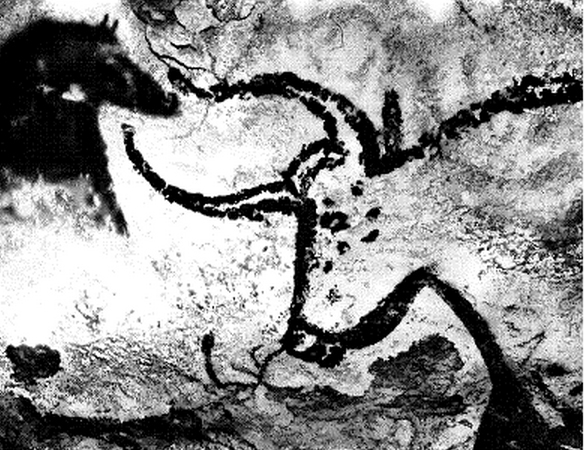
Vandalism a crime, not art Rock art could be used for understanding ancient symbols, religions, cultural boundaries, origins, beliefs and even factors like gender relationships and should be protected from Vandalism Rock art can be an extremely precious phenomenon especially depending on the era it belongs to, the impact of the images and the significance of historic background. They are supposed to be preserved the way they are, so archeologist and anthropologists can extract the comparative study of the human societies that existed before, their culture and development. It is a complex field as well, as one has to predict the most accurate depiction of these pieces of art and establish a link, if any. Art-of-the-Stone-Age,-page-29Thanks to the Pharaoh, Egypt is an example many of us know for rock art reflecting heritage and culture. The Egyptians had their Gods and language carved all over the ancient rocks is an evidence of how they lived, what their beliefs were, what their culture was, what psyche they followed and much more can be concluded from these precious pieces of artifacts. But not being famous for rock art does not mean that there are no such sites reflecting heritage anywhere else in the world. Every place has a history and heritage to go with and same is the case with Australia. Australia has a number of sites that contain rock art that date back to 40,000 or even 100,000 years old. The rock art is a reflection of the culture and beliefs of these localities. These indigenous pieces of art, especially those in the Kimberly, are believed to be 60,000 years old, which is five times older than the Egyptian pyramids. These pictures of men, women and children with their tools, animals and the different actions reflect a lot about how they lived and what their beliefs were. This rock art should be protected from a serious crime, vandalism, as no one wants to lose track or disrupt history. A recent case of vandalism was witnessed in Burrup Peninsula, where the biggest and most important collection of rock carving can be found which is dated back to the ice ages. The maximum fine for such an act is a hefty one as well of up to $20,000. These sites have to be protected by the Government in case of vandalism. The Australian Government should also make sure that all the sites of rock art and ancient rocks are recorded and registered with all the details so we never lose track of them in the times to come. They should start a campaign about such sites and what they reflect about our heritage. In fact, one should cover the 100 most important sites across the globe and have a comparative analysis of the heritages worldwide. With the rain, dust and reptiles crawling over these precious pieces of art, they have survived and they will survive in the future as well, only if protected from vandalism. Such rock art that reflects history is a precious symbolic sign of the past, one can relate to. These sites are a library for history, and should be registered and recorded which is a very inexpensive process.]]>