Categories
Breaking News

Walking On Two Legs Changed Evolution of Human Skulls

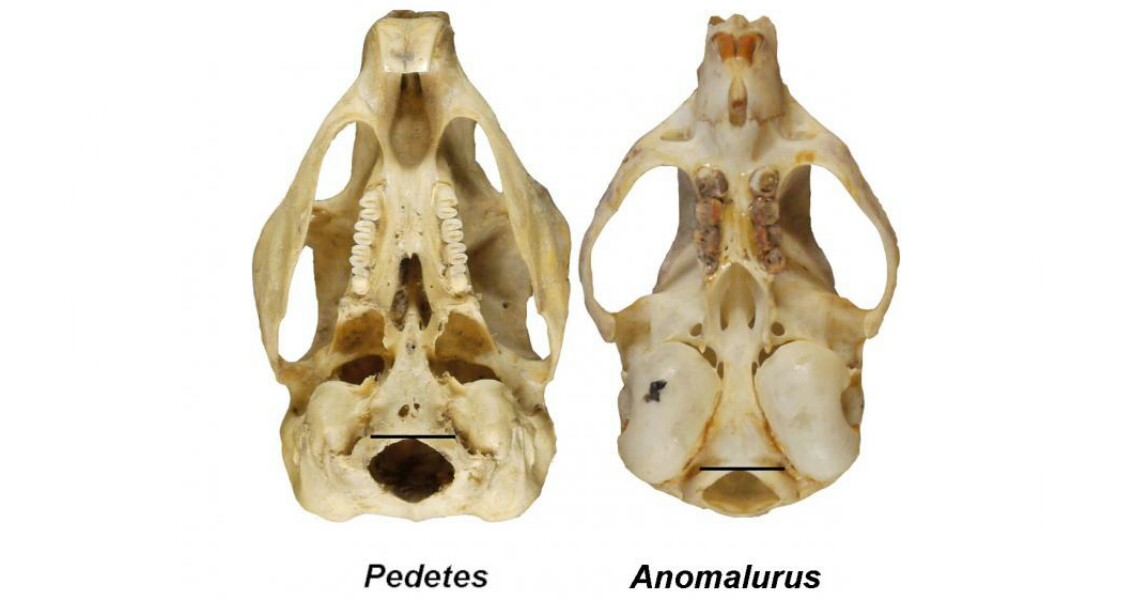
Journal of Human Evolution. This connection has long been highly controversial among biologists and archaeologists. The earliest humans climbed trees and walked on the ground, offering them flexibility of movement and the ability to evade predators. It is widely held that between 6 and 3 million years ago the gradual transition began from climbing trees to walking upright the majority of the time. This switch to exclusively walking on two legs inevitably coincided with significant physical changes, such as longer legs. Homo erectus, around 1.9 millions years ago, had leg and thigh bones very close to those of modern humans, evolved for walking on two legs over long distances. Humans differ from other primates in that the foramen magnum, the large hole at the base of the skull which the spinal cord passes through, is shifted forward. Many scientists argue that this is down to the evolution of bipedalism – the head needing to be balanced directly on top of the spine to aid walking. This connection between the foramen magnum and bipedalism is far from universally accepted, however. In 1925, Raymond Dart first questioned the connection in his description of ‘Taung child’, a 2.8 million-year-old fossil skull of the extinct South African species Australopithecus africanus. Last year, a study by Kent State University biological anthropologist Aidan Ruth further questioned the connection between walking on two legs and the forward shifted foramen magnum. Gabrielle Russo, an assistant professor at Stony Brook University, and UT Austin anthropologist Chris Kirk have provided convincing evidence in their new study that the forward shifted foramen magnum is not just a feature of humans and their fossil relatives, but bipedal mammals more generally. “This question of how bipedalism influences skull anatomy keeps coming up partly because it’s difficult to test the various hypotheses if you only focus on primates,” Kirk said in a press release. “However, when you look at the full range of diversity across mammals, the evidence is compelling that bipedalism and a forward-shifted foramen magnum go hand-in-hand.” Their groundbreaking study sampled the largest number of mammal species to date, as well as deploying new methods to measure aspects of foramen magnum anatomy. By comparing the position and location of the foramen magnum in 77 mammal species, from primates to rodents, Russo and Kirk make their case that bipedal mammals have a more forward-positioned foramen magnum than even their most closely related quadrupedal relatives. “We’ve now shown that the foramen magnum is forward-shifted across multiple bipedal mammalian clades using multiple metrics from the skull, which I think is convincing evidence that we’re capturing a real phenomenon,” Russo said. Establishing the link between bipedalism and the foramen magnum’s position is hugely significant. The connection could allow archaeologists to determine much more accurately whether extinct fossil hominids walked on two feet like modern humans, or on four like modern great apes. The specific measurements offered by the study could be applied to future research to provide a map of the evolution of bipedalism. “Other researchers should feel confident in making use of our data to interpret the human fossil record,” Russo concluded. Image shows comparison of the positioning of the foramen magnum in a bipedal springhare (left) and its closest quadrupedal relative, the scaly-tailed squirrel (right). Image credit: Russo and Kirk, Journal of Human Evolution ]]>
Categories
Breaking News

New Theory on Bipedal Development in Dinosaurs Unveiled

The Journal of Theoretical Biology, can be found here Image courtesy of Scott Persons]]>

Categories
Breaking News

The Dinosaur That Had Teeth as a Baby, but Not as an Adult

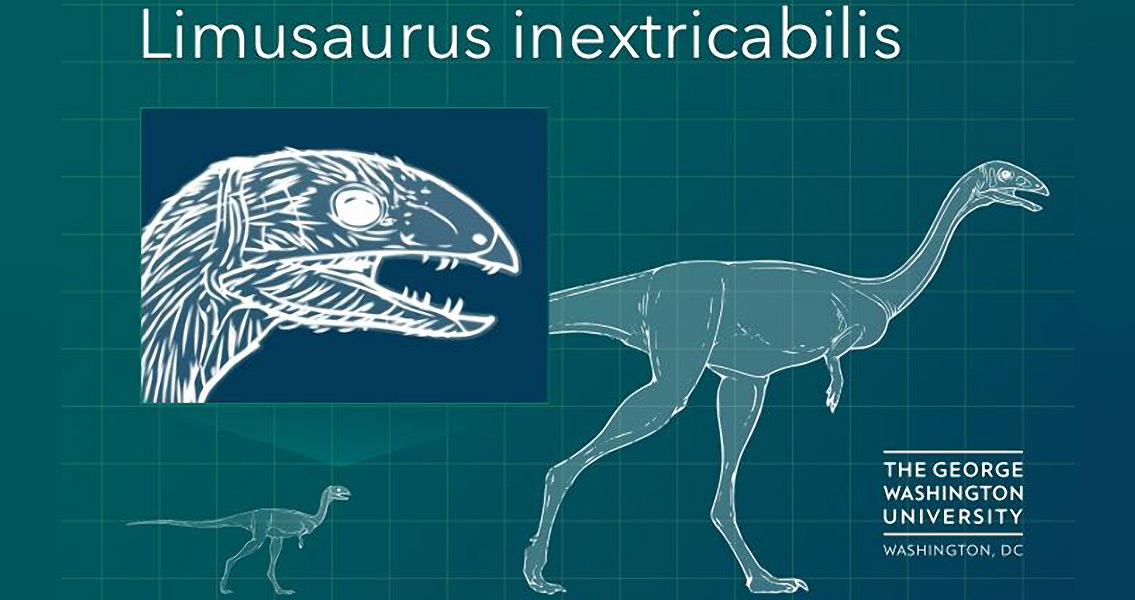
Current Biology, could explain why birds have beaks but not teeth. Limusaurus inextricabilis, the species in question, was a beaked therapod which lived in Western China during the Jurassic period – between 201.3 million years ago and 145 million years ago. Limusaurus inextricabilis is the only member of the Limusaurus genus. The research team from George Washington University in Washington D.C., USA, and the Capital Normal University in Beijing, China, analysed nineteen Limusaurus skeletons discovered in Xinjiang Province, China. The remains were unearthed from ‘death traps’ where the creatures had become fatally trapped and buried in mud. Ranging in age from babies to adults, the unfortunate victims of the muddy death traps provided the researchers with a pattern for Limusaurus‘ tooth development and loss over time. While the baby skeletons had small, sharp teeth, the adults were consistently toothless. “This discovery is important for two reasons,” said James Clark, a co-author on the paper and the Ronald Weintraub Professor of Biology at the George Washington University’s Columbian College of Arts and Sciences, in a press release. “First, it’s very rare to find a growth series from baby to adult dinosaurs. Second, this unusually dramatic change in anatomy suggests there was a big shift in Limusaurus’ diet from adolescence to adulthood.” Limusaurus is part of the theropod group of dinosaurs which are considered evolutionary ancestors of birds. Interestingly, theropods were ancestrally carnivorous but a number of species in the group were herbivorous or omnivorous. The team’s findings could point to an unusual change in diet for Limusaurus as they grew older. The babies of the species could have been meat eaters, while the adults were herbivores. The sharp teeth would have been needed to chew meat, but not plants. Chemical analysis of the Limusaurus bones supports this theory of a changing diet. It is hoped that further analysis of the Limusaurus fossils could provide an insight into how the descendants of theropods, such as birds, evolved with no teeth. It is possible that the origins of this trait can be found in the changes Limusaurus experienced in their development from childhood to adulthood. “For most dinosaur species we have few specimens and a very incomplete understanding of their developmental biology,” said Josef Stiegler, a graduate student at George Washington University and study co-author. “The large sample size of Limusaurus allowed us to use several lines of evidence including the morphology, microstructure and stable isotopic composition of the fossil bones to understand developmental and dietary changes in this animal.”]]>

Categories
Breaking News

Human Heel to Toe Stride Finally Explained Through Treadmill Study

Journal of Experimental Biology, explains why human’s walk the way they do Humans are very much set in the way they walk, something which obscures the fact that our stride is actually pretty curious. To Webber it is a particularly pertinent issue. Barefoot runners run in a way that sees them land on the middle or balls of their feet instead of their heels, a stride which would feel unnatural when walking. “Humans are very efficient walkers, and a key component of being an efficient walker in all kinds of mammals is having long legs,” Webber explains in a press release from the University of Arizona. “Cats and dogs are up on the balls of their feet, with their heel elevated up in the air, so they’ve adapted to have a longer leg, but humans have done something different. We’ve dropped our heels down on the ground, which physically makes our legs shorter than they could be if we were up on our toes, and this was a conundrum to us (scientists).” Webber suggests our stride can be explained by limb length. Key to his explanation is the idea that humans move like an inverted swinging pendulum. The body essentially pivots about the point where the foot meets the ground, with the centre of pressure sliding across the length of the foot from heel to toe as we take a step. This means that the true pivot point occurs in the centre of the foot, but at a ‘virtual point’ several centimetres below the ground. Our heel to toe stride then, extends the length of our ‘virtual legs’: the points we pivot around which are longer than our actual legs. “Humans land on their heel and push off on their toes. You land at one point, and then you push off from another point eight to 10 inches away from where you started.” Webber says in the press release. “If you connect those points to make a pivot point, it happens underneath the ground, basically, and you end up with a new kind of limb length that you can understand. Mechanically, it’s like we have a much longer leg than you would expect.” Webber and his team reached their conclusion after monitoring study participants on a tread mill. They compared those who walked normally with those they’d asked to walk toe first. They quickly observed that those who had to walk toe first were slower, and used 10% extra energy in their strides. “The extra ‘virtual limb’ length is longer than if we had just had them stand on their toes, so it seems humans have found a novel way of increasing our limb length and becoming more efficient walkers than just standing on our toes,” Webber said. “It still all comes down to limb length, but there’s more to it than how far our hip is from the ground. Our feet play an important role, and that’s often something that’s been overlooked.” Ancient footprints preserved in volcanic ash in Tanzania show that ancient hominins had a heel to toe stride up to 3.6 millions years ago. Nevertheless, our feet have changed over the years. Early bipeds had longer feet than modern humans – 70 percent of the length of the femur compared to 54 percent in modern humans, which likely helped them become very fast, efficient walkers. Webber suggests that as modern humans evolved the heel first style of walking their feet got proportionally smaller, allowing us to become better runners, possibly as a means to evade predators. “When you’re running, if you have a really long foot and you need to push off really hard way out at the end of your foot, that adds a lot of torque and bending,” Webber said. “So the idea is that as we shifted into running activities, our feet started to shrink because it maybe it wasn’t as important to be super-fast walkers. Maybe it became important to be really good runners.” ]]>

Categories
Breaking News

Did Acceptance of Autism Fuel Evolutionary Success?

Time and Mind argue that integration of people with such skills into a community would have played a vital role in the development of specialists. A compelling example comes from a 2005 ethnographic study of a reindeer herder from Siberia. The man held a remarkably detailed memory of the parentage, character and medical history of each of the 2,600 reindeer under his care. The grandfather, who was a respected member of his community with a wife, son and grandchildren despite being uncomfortable in the company of other humans, made a vital contribution to the management and survival of his reindeer herd, and the community as a whole. Of course, evidence of ancient autism is hard to detect. “The archaeological record doesn’t give us a skeletal record for autism, but what it does do is give us a record for other people who have various differences and how they have been integrated.” Dr. Spikins said. Clues concerning autism’s long history can be found in cave art and other artefacts, however. “There has been a long-standing debate about identifying traits of autism in Upper Paleolithic cave art.” “We can’t say some of it was drawn by someone with autism, but there are traits that are identifiable to someone who has autism. It was also roughly at that time that we see collaborative morality emerging.” Dr Spikins explained. The study can be found here Image courtesy of University of York ]]>

Categories
Breaking News

Earliest Evidence of Right-Handedness Discovered

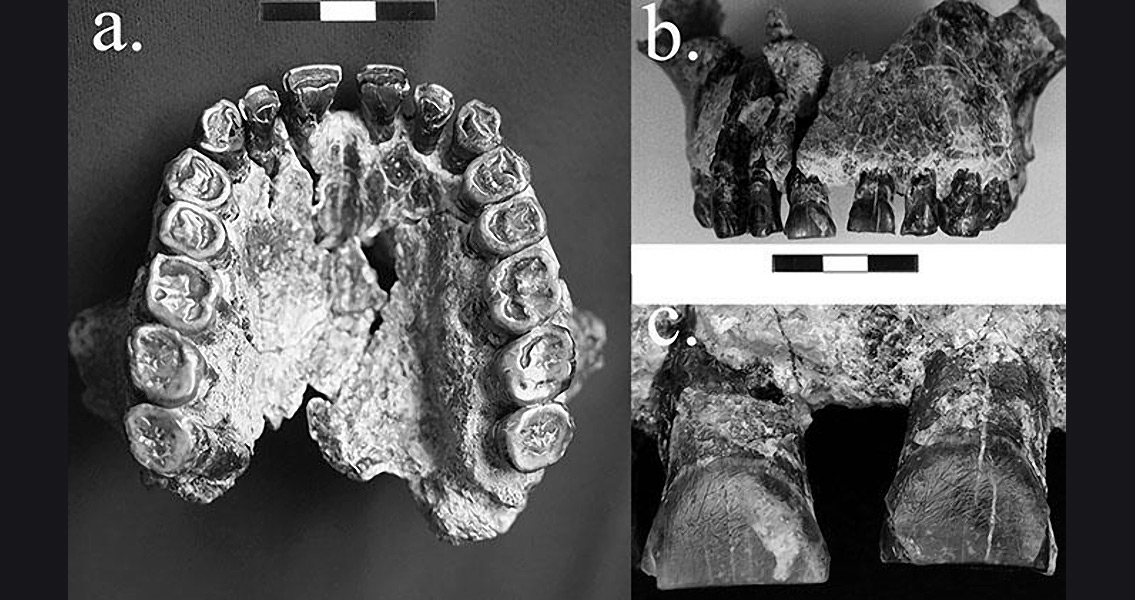
Homo habilis fossil. Although scientists have learnt a lot about “handedness”, they still haven’t been able to precisely explain why humans favour using one hand over the other, or why human populations are biased towards right handedness over left handedness. The lack of a standard, empirical definition for measuring handedness means scientists disagree on what percentage of the human population are left or right handed. However, it is agreed that the majority of humans are right handed (between 70 and 95 percent) and the minority left handed (30 to five percent). By comparison, the ratio among apes is 50:50. At 1.8 millions years old, the Homo habilis fossil studied by the University of Kansas researchers marks the oldest known evidence of right handedness in the fossil record. “We think that tells us something further about lateralization of the brain,” said David Frayer, a KU professor emeritus of anthropology and the lead author of the study, in a press release. “We already know that Homo habilis had brain lateralization and was more like us than like apes. This extends it to handedness, which is key.” Brain lateralisation refers to the fact that the left and right hemispheres of the brain are not exactly alike, leading to certain neural processes and cognitive functions being more dominant in one hemisphere than the other. Scientists have long theorised that this brain lateralisation has some correlation to a person’s handedness. Frayer and team made their discovery by analysing labial striations – small cut marks, which are lip side of the anterior teeth in the intact Homo habilis jaw fossil. Known as OH-65, the fossil was found in a stream channel of the Olduvai Gorge in Tanzania. Most of the deep cuts on the lip face of the upper front teeth veered downwards from left to right. After analysing the marks, Frayer and his team believe they most likely came from OH-65 using a tool with its right hand to cut food it was holding in its mouth while pulling at it with its left hand. The scratches can be seen with the naked eye, but the team used a microscope to accurately determine their alignment. “Experimental work has shown these scratches were most likely produced when a stone tool was used to process material gripped between the anterior teeth and the tool occasionally struck the labial face leaving a permanent mark on the tooth’s surface,” said Frayer. The direction of the marks strongly suggests that the Homo habilis specimen was right handed. Of course, OH-65 is only one sample but it could be the first evidence of a dominant handed pre-Neanderthal. As such, it could lead to the search for similar marks in other Homo fossils, allowing scientists to gain further insight into the development of handedness. “Handedness and language are controlled by different genetic systems, but there is a weak relationship between the two because both functions originate on the left side of the brain,” explained Frayer. “One specimen does not make an incontrovertible case, but as more research is done and more discoveries are made, we predict that right-handedness, cortical reorganization and language capacity will be shown to be important components in the origin of our genus.” A host of different studies have pointed towards brain reorganization, the use of tools and use of a dominant hand all occurring early in the human lineage. This latest study, published in the Journal of Human Evolution, is the first to look into the directionality of striations in the earliest specimens of our evolutionary lineage. It shows how something seemingly as basic as the dominance of one hand over the other is well embedded in our evolutionary history. “We think we have the evidence for brain lateralization, handedness and possibly language, so maybe it all fits together in one picture,” said Frayer. Image courtesy of David Frayer]]>

Categories
Breaking News

American Alligators are as Old as They Look

Gavialosuchus americanus: the huge crocodile which once dominated the coastline of Florida but went extinct around 5 million years ago, and alligator fossils at a variety of locations indicated that the two species could have coexisted. Despite their adaptability and resilience, American alligators were nearly driven to extinction by hunting early in the twentieth century. The number of alligators left in the wild has significantly increased under The Endangered Species Act, and with a more comprehensive evolutionary history, conserving the habitats where alligators have been the dominate species for millions of years may be more effective. “The same traits that allowed alligators to remain virtually the same through numerous environmental changes over millions of years can become a bit of a problem when they try to adapt to humans,” Whiting is quoted as saying in the statement, “Their adaptive nature is why we have alligators in swimming pools or crawling around golf courses.” Although modern alligators do appear prehistoric, the group they’re part of, Crocodylia, has been around for at least 84 million years, with a diverse line of ancestors that dates back to over 200 million years ago, as far as the Triassic. This research was published in the Journal of Herpetology and Palaeogeography, Palaeoclimatology, Palaeoecology. ]]>

Categories
Breaking News

Mammoth Skull Find Raises New Evolutionary Questions

The Mammoth Site who worked with the national park team, called the fossil “spectacular-looking”. He added that it was one of the best mammoth skulls he had ever seen himself – and that he had seen many good mammoth skulls during his professional career. The fossil was first discovered by national park biologist Peter Larramendy in 2014. The sharp-eyed scientist spotted one of the skull’s tusks jutting out from a canyon wall, prompting an investigation and excavation. Based on radiocarbon dating of nearby charcoal samples conducted by the US Geological Survey, the fossil is thought to be about 13,000 years old. This timeline puts the mammoth living concurrently with Arlington Man: a set of remains discovered on Santa Rosa Island in 1959 which potentially represent the oldest known human skeleton yet to be found in North America. However, now that the mammoth skull has been fully excavated for analysis, the mystery has deepened instead of becoming clearer. Wilkins says the species the mammoth belongs to is uncertain, as it does not fit the profile of the pygmy mammoth, a species of mammoth that lived on the Channel Islands and grew to about six feet tall. The pygmy mammoth was an evolutionary offshoot of the larger, 14-foot-tall Columbian mammoth, which was common across the North American continent at the time. The solution to this mystery may be revealed through a study of the skull’s fossilized teeth. Doing so could help scientists determine the age of the creature before it died. It also has the potential to reveal the genetic makeup of the mammoth, placing it more decisively in either the Columbian or the pygmy bloodline. There is the possibility of a third result, as the mammoth skull could represent a transitional species between Columbian and pygmy mammoths – evidence of the evolutionary adaptation to a smaller habitat as it was selected as an advantageous trait. The likelihood of this being the case seems low, however. The next stop for the fossilized skull will be the Santa Barbara Museum of Natural History. Once it arrives, it will be properly preserved and studied before being put on display and made available to the general public. The second-largest island of the Channel Islands, Santa Rosa is approximately 26 miles from the city of Santa Barbara. During the last Ice Age, Santa Rosa and the surrounding islands were one solid landmass only five miles off the coast, making it relatively easy for large animals such as the Columbia mammoth to migrate to the island. Later, the island would come to be inhabited by a maritime Paleocostal population of early humans that are thought to have been the progenitors of the native Chumash people who resided on the island until being displaced by white settlers. ]]>

Categories
Breaking News

Scientists May Have Finally Answered Why We Have Such Big Brains

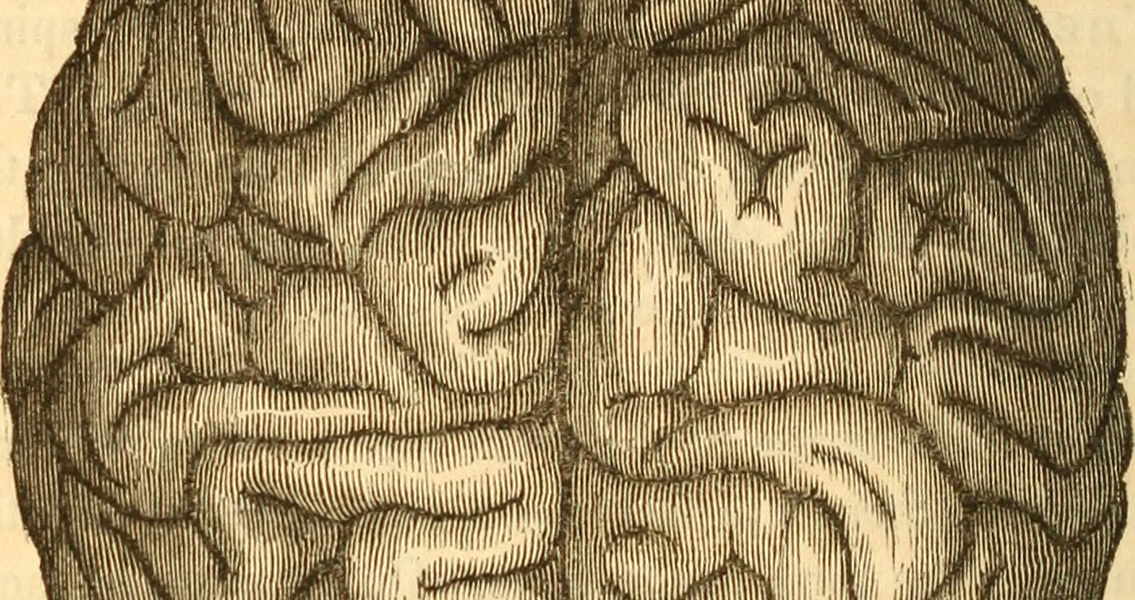
Scientific Reports, the newly released study suggests that the incredible development of the brain is connected to the formation of large, cooperative social groups. As humans started having to judge a person’s relative standing and making decisions about who to cooperate with, their brains’ were challenged like never before. The team of computer scientists from Cambridge believe it was this which promoted the rapid expansion of brain size over the last two million years. The authors also claim that their results show that evolution favours those who are willing to help and cooperate with others who are at least as successful as themselves. “Our results suggest that the evolution of cooperation, which is key to a prosperous society, is intrinsically linked to the idea of social comparison – constantly sizing each up and making decisions as to whether we want to help them or not.” explained lead author Roger Whitaker, from Cardiff University’s School of Computer Science and Informatics. “We’ve shown that over time, evolution favours strategies to help those who are at least as successful as themselves.” In comparison to almost every other animal, human brains are larger as a percentage of body weight. More remarkably, since the emergence of the first species of the Homo genus some two million years ago, the human brain has more than doubled in size. Compared to more distant ancestors such as the australopithecines, which lived between two and four million year ago, human brains have more than tripled in size. What accounted for this remarkable increase has long puzzled scientists. The Cardiff University team used computer modelling to run hundreds of thousands of simulations, or ‘donation games’, as a means to understand decision making strategies in simplified humans. From these simulations they attempted to understand why certain types of behaviour strengthened over time. For each round of the donation game, two simulated players were randomly selected from the population. The first player then made a decision on whether or not to donate to the second, based on a judgement of the second player’s reputation. If the player elected to donate, the first suffered a cost while the second received a benefit. Their reputation was then updated in light of their decision, before the next game was initiated. According to the team, the results suggest making relative judgments to help others has been important for human survival. They also claim that the complexity involved in having to regularly assess and reassess individuals has been difficult enough to promote the expansion of the human brain through the generations. Professor Robin Dunbar, an evolutionary psychologist from Oxford University who was involved in the study, previously proposed the social brain hypothesis. “According to the social brain hypothesis, the disproportionately large brain size in humans exists as a consequence of humans evolving in large and complex social groups.” he explained. “Our new research reinforces this hypothesis and offers an insight into the way cooperation and reward may have been instrumental in driving brain evolution, suggesting that the challenge of assessing others could have contributed to the large brain size in humans.” The implications of the study are not just limited to understanding our most ancient history, however. The authors suggest it could also be applied to engineering and in particular to the development of autonomous machines. “The models we use can be executed as short algorithms called heuristics, allowing devices to make quick decisions about their cooperative behaviour,” Professor Whitaker said. “New autonomous technologies, such as distributed wireless networks or driverless cars, will need to self-manage their behaviour but at the same time cooperate with others in their environment.” ]]>

Categories
Breaking News

New Research on Evolution of the Eyes of Vertebrates

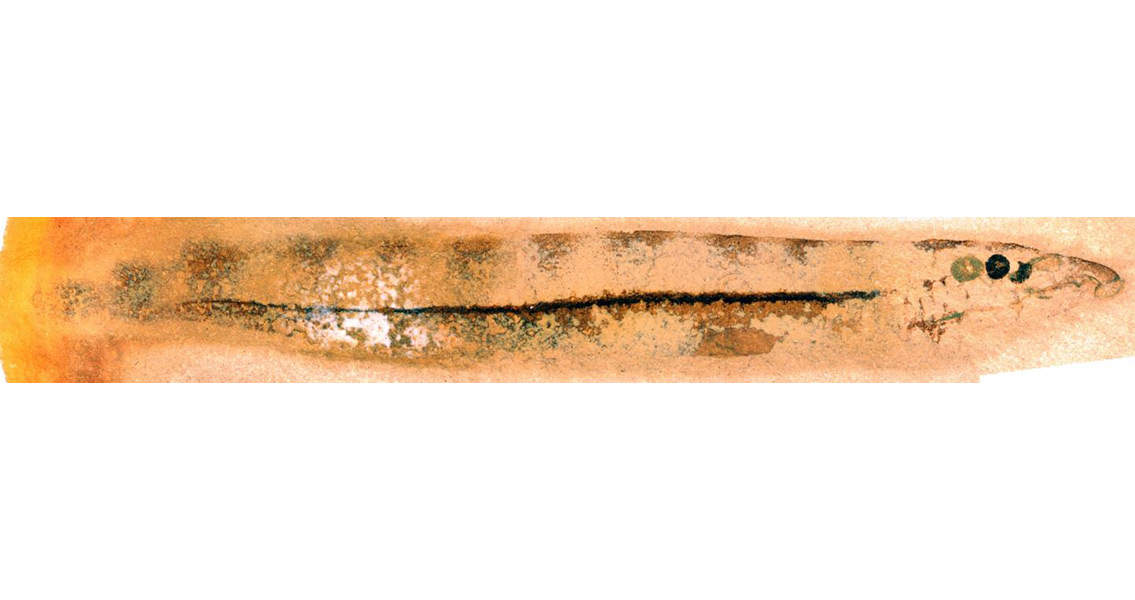
The Proceedings of the Royal Society B, can be found online here Image courtesy of Rober Sansom]]>