Categories
Breaking News

Did Neanderthals Get Herpes and Other Diseases From Humans?

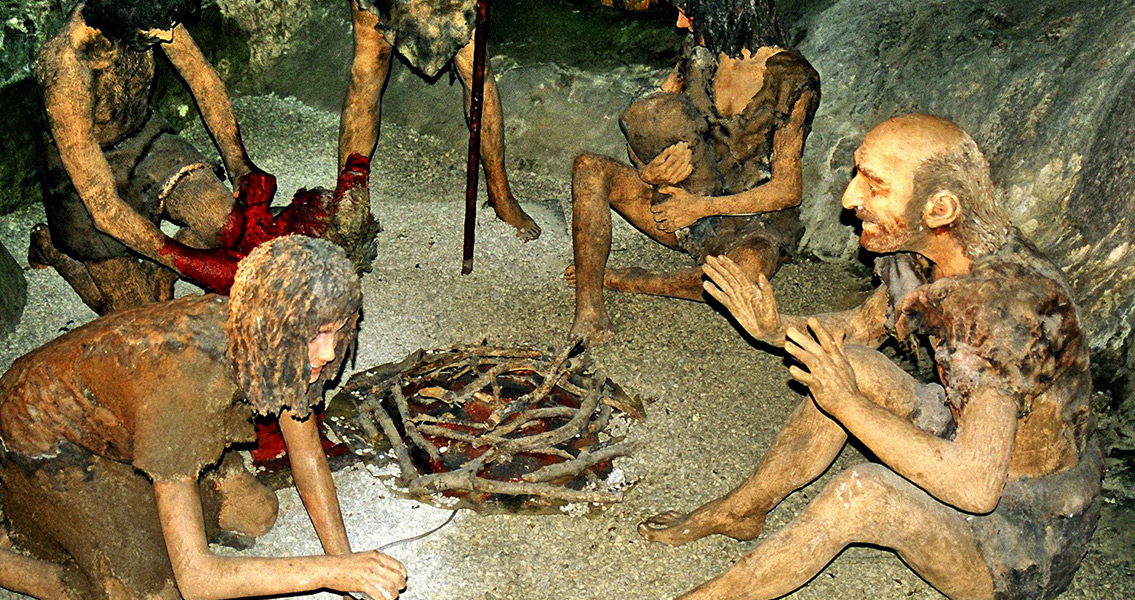
American Journal of Physical Anthropology, challenges the prevailing view that infectious disease outbreaks exploded with the dawn of agriculture, when humans started to live in dense, sedantary populations alongside their livestock. In particular, their results bring into question the idea that diseases such as tuberculosis were initially spread to humans from livestock such as pigs. “We are beginning to see evidence that environmental bacteria were the likely ancestors of many pathogens that caused disease during the advent of agriculture, and that they initially passed from humans into their animals,” said Houldcroft in a Cambridge University press release. Although there is no definitive evidence humans transmitted African diseases to Neanderthals, Houldcroft and Underdown’s paper provides several candidates for diseases that could have been spread in such a way. One is Helicobacter pylori, a stomach ulcer causing bacterium. It is estimated to have initially infected humans in Africa between 116 and 88 thousand years ago. It arrived in Europe 52,000 years ago, while the most recent studies suggest Neanderthals had gone extinct by 40,000 years ago. Herpes simplex 2, the virus which causes genital herpes, is another candidate suggested by the paper. The genome of the disease suggests it was transmitted to humans through chimpanzees, via another as yet unknown hominin species, around 1.6 million years ago. “The ‘intermediate’ hominin that bridged the virus between chimps and humans shows that diseases could leap between hominin species. The herpes virus is transmitted sexually and through saliva. As we now know that humans bred with Neanderthals, and we all carry 2-5% of Neanderthal DNA as a result, it makes sense to assume that, along with bodily fluids, humans and Neanderthals transferred diseases,” said Houldcroft. Neanderthals lived in relatively small, isolated communities, meaning that rather than a rapid epidemic, their decline due to disease was probably quite gradual. “… it is unlikely to have been similar to Columbus bringing disease into America and decimating native populations. It’s more likely that small bands of Neanderthals each had their own infection disasters, weakening the group and tipping the balance against survival,” Other causes may have contributed to the extinction of the Neanderthals, but Houldcroft and Undertown’s work shows that humans spreading disease must be considered as a factor in the species’ decline. For more information: www.onlinelibrary.wiley.com]]>
Categories
Breaking News

New Research Suggests Humans Drove Hobbits to Extinction

Homo floresiensis, aka the ‘Hobbit’ people, were first discovered on the island of Flores in Indonesia and ever since researchers have wondered how they were able to co-exist with early humans when no other group had. The answer? They didn’t. New excavations and dating have concluded that the Hobbit people died away 50,000 years ago, tens of thousands of years earlier than previous testing indicated. In fact, the new data suggests that instead of living alongside them, modern humans may have driven H.floresiensis to extinction. In hindsight though, the error is clear to see. The first Hobbit fossils were considered too precious and fragile to undergo radiocarbon analysis. In lieu of testing the bones, researchers gathered charcoal found nearby under the assumption it had accumulated at the same time as the fossils. The charcoal was tested and dated to 11,000 years old. Modern humans spread throughout Australia and Asia around 50,000 years ago. “Somehow these tiny people had survived on this island 30,000 years after modern humans arrived”, Richard Roberts, with the University of Wollongong, told Nature “We were scratching our heads. It couldn’t add up.” Previous research shows the Neanderthals disappeared shortly after the arrival of modern humans in Africa and Europe. So the team continued excavations in Liang Bua (the limestone cave where the original fossils were found), primarily to search for more remains, and to gain a better understanding of the enormous cave and its geology. Freshly excavated rock and dirt (removed from the same layer of sediment as the Hobbit bones) was tested using several different methods and the results showed the samples were 100,000 to 60,000 years old. Tom Higham, with the University of Oxford, UK, considers the recent dating results compelling, telling Nature “These results are tantalizingly close to the earliest evidence for modern humans in the region, which might suggest a causal link to the subsequent disappearance of H. floresiensis.” Homo floresiensis (which translates as Flores Man) would have been around 3.5 feet (1.1 meters) tall. A total of nine partial skeletons were recovered in 2003, and included one with a complete skull, which is referred to as “LB1”. It’s been determined that LB1 is the skeleton of a 30-year-old female (nicknamed the Little Lady of Flores or “Flo”). Her height has been estimated to be 3 feet and 6 inches (1.06 meters). There has been intense and continuous research since their first discovery just to determine whether or not the Hobbit people represent a species separate from modern humans. Some experts have posited that the historical H. floresiensis could be connected to the Ebu Gogo myths which were prevalent on the island of Flores. Although the new research answers the co-existence question, others remain. For example; what is the Hobbit people’s evolutionary connection to other primitive humans and did they mate with modern humans? It’s also been noted that Liang Bua’s unusual geology would have made it easy for researchers to make the mistake of connecting the charcoal remains to the Hobbit remains over ten years ago. Image courtesy of Wikimedia Commons user Avandergeer]]>

Categories
Breaking News

Survival of the Fittest: Neanderthals Unable to Compete

here. ]]>

Categories
Breaking News

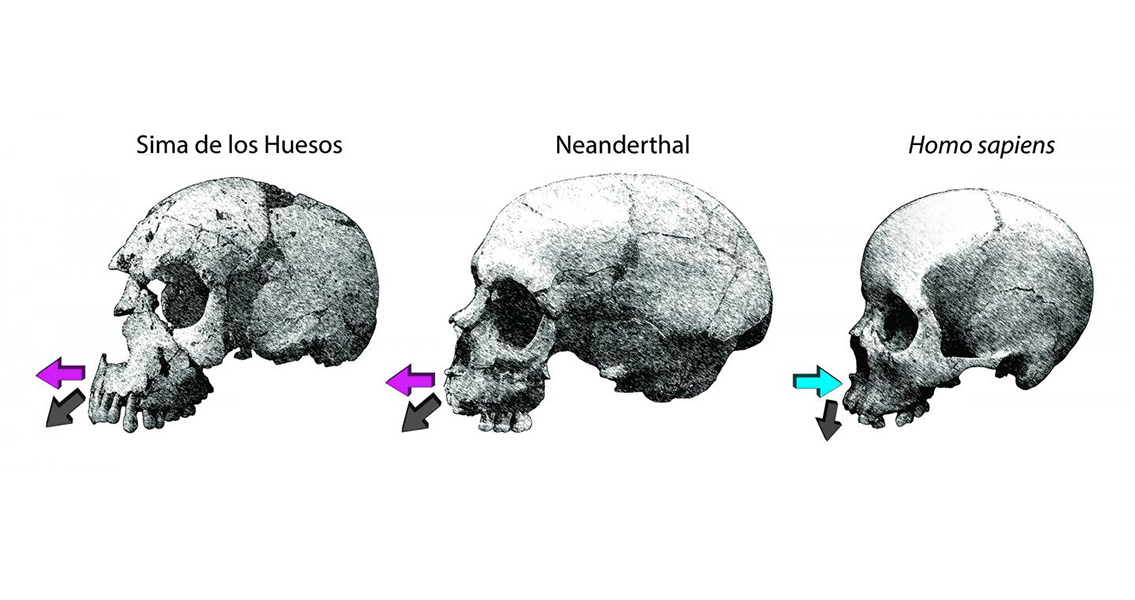
Neanderthal and Human Facial Growth Differences Revealed

www.nature.com Image courtesy of Rodrigo S Lacruz]]>

Categories
Breaking News

New Strand of European Ancestry Discovered

www.nature.com/ncomms ]]>

Categories
Breaking News

Hunting Contributed to Mammoth Demise

with giant reptiles. Another one, from this month, suggested that humans change the habitats they enter much more quickly than previously thought, at least in some ecosystems. For more information: Test of Martin’s overkill hypothesis using radiocarbon dates on extinct megafauna ]]>

Categories
Breaking News

Humans and Giant Lizards Co-Existed in Australia

factsheet on the Capricorn Caves website. The manager of the cave complex commented in the UQ press release that “This study also begs the question — what else is entombed in our caves and what else can we learn?” For more information: Temporal overlap of humans and giant lizards (Varanidae; Squamata) in Pleistocene Australia ]]>

Categories
Breaking News

New Evidence Supports Humans’ Role in Neanderthal Demise

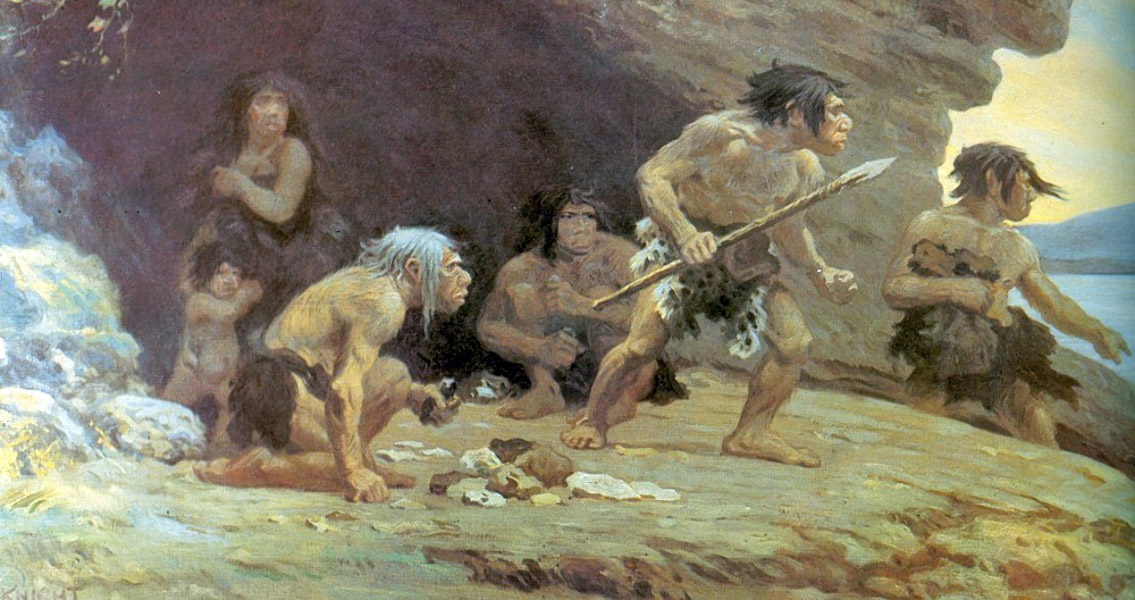
Live Science points out, between 1.5% and 2.1% of the DNA of all present-day people outside Africa is Neanderthal DNA. Another thing that has been established is that the Neanderthals declined and died out very quickly. The reasons for this decline, however, remain a subject of dispute. Some of the theories put forward have to do with climatic changes that deprived these pre-humans of their main food and habitat. These changes may have been caused by volcanic eruptions, some researchers believe. Yet a lot of work has been focusing on the possible role of modern humans: whether they rose in numbers and spread across the continent so quickly that they literally displaced the Neanderthals, or whether their superior evolutionary level equipped them with skills that made them better at surviving. The most recent research in this respect hypothesised that it was the mastery of fire that gave modern humans the upper hand, allowing them to cook their food, and thus being able to extract more nutrients than is possible from raw meat and vegetables. At the same time, studies are continually shedding new light on the Neanderthals themselves, prompting a rethink of the long-held belief that they were an extremely primitive species. One such study discovered that the Neanderthals had a surprisingly well developed aesthetic sense, made and wore jewellery, and another has revealed they were no strangers to herbs as part of their diet. Image courtesy of Wikimedia Commons user: AquilaGib]]>

Categories
Breaking News

Early Human Children Played with Toys

Categories
Breaking News

Ancient Skeleton Reveals Genetic Origins of Europeans