Categories
Breaking News

Humans Migrated To North America 10,000 Years Earlier Than Thought

PLOS ONE. Until now, the earliest settlement date for North America was estimated at 14,000 years Before Present (BP), based on the earliest reliably dated archaeological sites. The new study has moved that date back to 24,000 years BP, to a period that coincides with the height of the last ice age. The groundbreaking research was carried out by Ariane Burke, a professor in Université de Montréal’s Department of Anthropology, and her doctoral student Lauriane Bourgeon, with the contribution of Dr. Thomas Higham, Deputy Director of Oxford University’s Radiocarbon Accelerator Unit. A controversial site first excavated forty years ago is at the heart of the latest study. The Bluefish Caves, located on the banks of the Bluefish river in northern Yukon near the Alaskan border, were first studied by archaeologist Jacques Cinq-Mars over a ten year period beginning in 1977. Radiocarbon dating of animal bones discovered at the site led the researcher to hypothesize that human settlement in the surrounding region dated back to 30,000 BP. For thirty years Cinq-Mars’ conclusions have remained controversial in the scientific community, primarily due to the lack of other sites of a similar age. In addition, there was no clear evidence that the horse, mammoth, bison and caribou bones found in the Bluefish Caves were the result of human activity there. Bourgeon set out to answer once and for all whether Cing-Mars’ hypothesis was correct. Over the course of two years she examined 36,000 bone fragments taken from the Bluefish Caves and preserved in the Canadian Museum of History in Gatineau. Fifteen bones showed ‘undeniable’ traces of human activity, according to a University of Montreal press release. Another twenty fragments showed probable traces of human activity. “Series of straight, V-shaped lines on the surface of the bones were made by stone tools used to skin animals,” said Burke. “These are indisputable cut-marks created by humans.” The bones were then submitted for radiocarbon dating. The oldest fragment, a horse mandible showing marks likely caused by the tongue being removed by a stone tool, was dated to between 23,000 and 24,000 years BP. “Our discovery confirms previous analyses and demonstrates that this is the earliest known site of human settlement in Canada,” explained Burke in the press release. “It shows that Eastern Beringia was inhabited during the last ice age.” The results support findings made in studies of population genetics that a group of a few thousand individuals lived in isolation in Beringia between 15,000 and 24,000 years ago. “Our discovery confirms the ‘Beringian standstill [or genetic isolation] hypothesis,'” said Burke, “Genetic isolation would have corresponded to geographical isolation. During the Last Glacial Maximum, Beringia was isolated from the rest of North America by glaciers and steppes too inhospitable for human occupation to the West. It was potentially a place of refuge.” It seems, therefore, that the ancient humans inhabiting the Bluefish Caves were among those who, at the end of the last ice age, migrated south and went on to colonise the entire North American continent, along the coast and down to South America. Image courtesy of Université de Montréal ]]>

Categories
Breaking News

Prehistoric Humans Playing with Fire Changed European Landscape

Homo erectus begins around 400,000 years ago. Evidence of the widespread use of fire by modern humans’ dates back to approximately 125,000 years ago. An earlier report by Leiden’s Human Origins group had already proposed that Stone Age hunter-gatherers may have significantly modified their natural environment through the use of fire. This new research confirms the first hypothesis, and may also provide one of the earliest examples of this kind of large-scale impact by humans throughout all of Europe. The research was funded by the European Research Council, the Swiss National Science Foundation and the European HERCULES research program. The findings have been published in the journal PLOS ONE.]]>

Categories
Breaking News

Sex With Neanderthals Still Benefiting Humans

in Science Daily. Titled ‘Archaic Hominin Admixture Facilitated Adaptation to Out-of-Africa Environments’, the study by Rachel M. Gittelmann, Joshua G. Schraiber, Benjamin Vernot, Carmen Mikacenic, Mark M. Wurfel and Akey has been published in the journal Current Biology. It argues that as humans left Africa, interbreeding with Neanderthals and other archaic hominins allowed them to develop various traits for survival. Neanderthals left Africa hundreds of thousands of years before modern humans, around 300,000 years ago. Modern humans made their way away from the continent sometime between 100,000 and 60,000 years ago. It has been well established that as modern humans made their way to new parts of the world, they encountered and sometimes had children with various archaic humans, such as Neanderthals and Denisovans. Remains of this breeding can still be seen in people today. Previous studies have shown that non-African humans inherited about 2% of their genome from Neanderthals. People of Melanesian ancestry take between 2% and 4% of their genome from Denisovan ancestors. In the study, the researchers searched a sample of 1,500 individuals from East Asia, Europe and South Asia, as well as 27 from Island Melanesia, for archaic DNA sequences in their human genomes. In particular, the team were searching for archaic DNA sequences which appeared at a higher frequency than one would expect unless the genes were beneficial in some way. Neanderthal and Denisovan DNA sequences are typically found at low frequencies, generally less than 5%. However, Gittelmann et al found 126 locations where the archaic sequences exist at much higher frequencies, up to 65%. 31 of those regions are involved in human immunity, while seven play a role in determining characteristics of our skin. These attributes inherited from archaic hominins could have played a vital role in our survival after leaving Africa, allowing human populations to spread. “The ability to increase to such high population frequencies was most likely facilitated because these sequences were advantageous,” Akey explained. “In addition, many of the high-frequency sequences span genes involved in the immune system, which is a frequent target of adaptive evolution.” As humans left Africa they encountered a host of unfamiliar, challenging environments. Tellingly, the team’s results suggest that many of the genes received from Neanderthals and Denisovans are connected to interactions with the environment. Hybridization through interbreeding, therefore, could have been the most efficient way for humans to adapt to the potentially hostile new lands they were encountering.]]>

Categories
Breaking News

Researchers Place Extinct Horse with Humans in Oregon

Equus conversidens: a small, short-legged extinct species of horse, also known as the Mexican horse, which roamed parts of North America at one time, coexisted with the people living in the Paisley Caves area of Oregon over 14,000 years ago. By using discriminant analysis, an approach which relies on the data available to calculate an unknown species’ identity, the authors of the study studied horse toe fossils unearthed during previous archaeological investigations in 2009 and 2010 at Paisley Caves. This research represents the first time this analytic and replicable approach has been utilized to identify a species of horse based solely on toe bones. It is also the first time this specific horse species has been found in Oregon. An archaeologist with the University of Oregon (UO) and one of the study’s co-authors, Dennis Jenkin’s work at Paisley Caves is well-documented. Evidence, which included human feces dating back 14,000 years, identified the site as one of the earliest to be occupied by humans in North America. When the team uncovered horse remains there, paleontologists studying Pleistocene mammals also became interested in the find. “We knew that horses were around at the same time as the first Americans, but we wanted species-level information about those horses,” paleontologist Edward Davis said in an article on the UO website. Davis and Jenkins then turned to Eric Scott, curator at the John D. Cooper Archaeological and Paleontological Center in California and an expert on ice-age horses. Scott maintains large sets of data on the remains of extinct species from archeological sites across the western United States. “Sites like Paisley are important in understanding the paleoecology of North America,” Davis said in the article, “It’s pretty rare to find this kind of reliable fossil evidence of humans coexisting with large Pleistocene mammals.” “It’s often imagined that humans are to blame for the extinctions of ice age megafauna,” Jenkins is also quoted as saying in the UO article, “but at Paisley and elsewhere in North America, we see humans and horses coexisting for at least a thousand years, which suggests a different story.” These fossils, along with other items discovered at Paisley Caves, will be available for public viewing at the university’s Museum of Natural and Cultural History. The exhibit, Oregon—Where Past is Present, opens in November and features touch-screen technology, enhanced artifact displays and a brand new section called Paisley Caves and the First Americans. The study, a collaboration between researchers from the UO, Harvard University and California State University, has been published in the Journal of Vertebrate Paleontology. ]]>

Categories
Breaking News

The Last Continent Colonized by Homo Sapiens

Categories
Breaking News

23,000-Year-Old Fish Hooks Discovered on Okinawa

CNN that humans are thought to have originally crossed over to Australia approximately 50,000 years ago, but that any evidence of maritime adaptation by humans had only been reported between Australia to Wallacea, a collection of primarily Indonesian islands. “Our findings suggest that Paleolithic people had adapted their maritime technologies to live not only in Wallacea and Australia, but a much wider geographic zone,” Fujita told CNN. “We found fish and human bones that dated back some 30,000 to 35,000 years. We don’t know what kind of tools were used to catch these fish, but we’re hoping to find some even older fishing tools.” The study was recently published in the journal Proceedings of the National Academy of Sciences. An image of the hooks can be found here: here ]]>

Categories
Breaking News

High Protein Diet Caused Differences Between Neanderthals and Humans

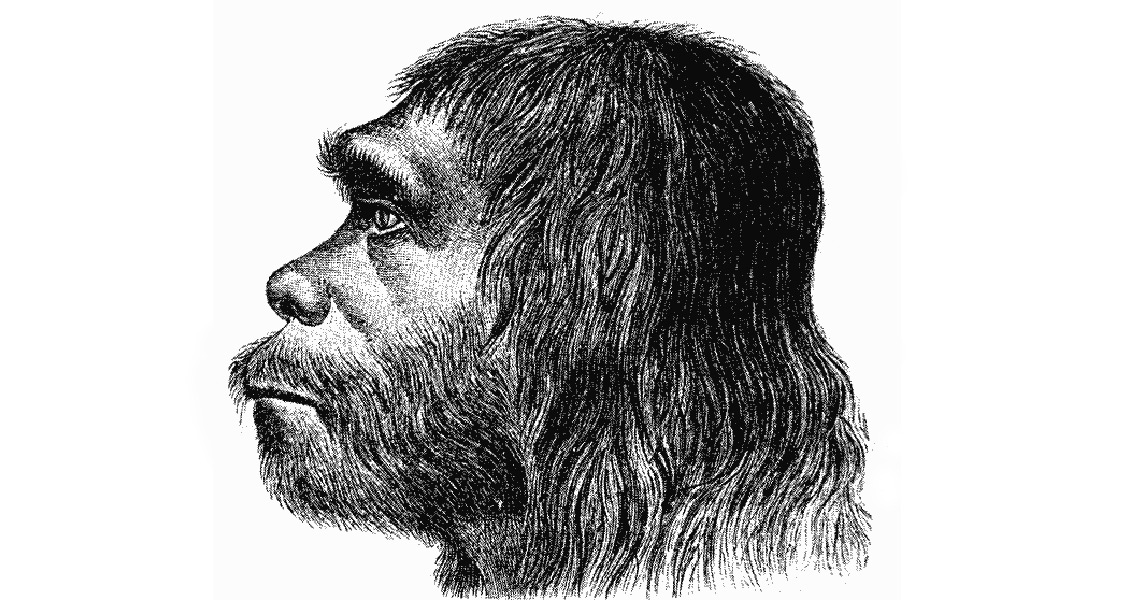
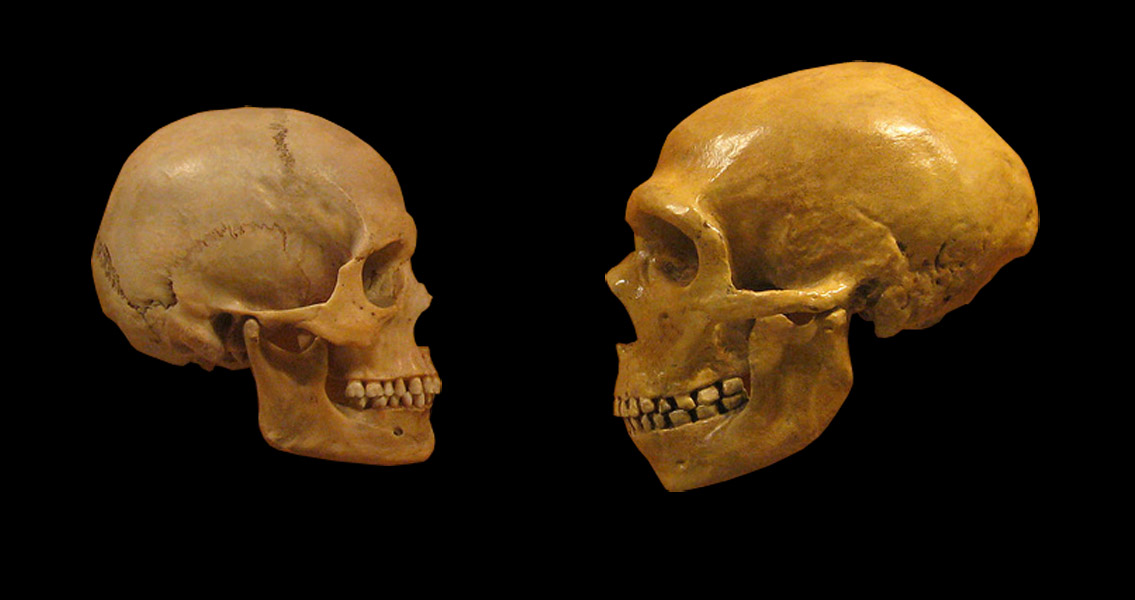
homo sapiens‘ closest extinct relatives. Although bearing many physical similarities to a modern human, there is no doubt that the two species are markedly different in appearance. Neanderthals were shorter and stockier than humans, with significantly wider rib cages and larger pelvises. Published in the July edition of the American Journal of Physical Anthropology, the new study argues that these differences were the result of Neanderthals having to adapt to a high-protein diet. The conclusion was reached using a model the researchers developed to detect dietary stress. Neanderthals lived in Ice-Age Europe, demonstrating remarkable resilience by surviving the brutally cold conditions. The authors of the study, from the Tel-Aviv University (TAU) in Israel, suggest that Neanderthals changed their diets during the coldest periods of the Ice Age, taking between 74% and 85% of their caloric intake from animal fat when carbohydrates weren’t available. However, during winter, large animals shed some of their fat content, a fact which according to the model developed by the researchers would have led to a “significant stressful dietary fat deficit” for the Neanderthals. The authors suggest that this deficit could have been ameliorated by an increased capability to convert protein into energy. “Given that high protein consumption is associated with larger liver and kidneys in animal models, it appears likely that the enlarged inferior section of the Neandertals’ thorax and possibly, in part, also his wide pelvis, represented an adaptation to provide encasement for those enlarged organs.” the authors write, in the abstract to their study. “During harsh Ice-Age winters, carbohydrates were scarce and fat was in limited supply. But large game, the typical prey of the Neanderthal, thrived,” explained study coauthor Miki Ben-Dor, of the Department of Archaeology and Ancient Near Eastern Cultures at TAU, in an interview with the Pakistan Observer. “This situation triggered an evolutionary adaptation to a high-protein diet – an enlarged liver, expanded renal system and their corresponding morphological manifestations. All of these contributed to the Neanderthal evolutionary process.” Ben-Dor continued. The liver is the organ responsible for converting protein into energy, and is therefore likely to enlarge with a high protein diet. Such a diet also increases metabolism, placing a greater demand on the kidneys and bladder to remove toxic urea, and in turn leading to their enlargement. Consequently, the study reasons, Neanderthal pelvises and rib cages had to evolve to house these larger organs. Protein only makes up 30% of the diet for homo sapiens on the other hand, meaning humans have a limited ability to convert protein to energy. Homo sapiens therefore increase their intake of fat and carbohydrates to meet their nutritional needs. ]]>

Categories
Breaking News

New Research Shows Homo Erectus Shared Modern Human Qualities

Homo erectus in northern Kenya have provided experts from the Max Planck Institute for Evolutionary Anthropology in Leipzig a unique opportunity to study and understand the modern human ancestor’s movement patterns and social structure, using data that relates directly to their dynamic behaviors. Utilizing innovative analytical techniques, the team have been able to demonstrate that the H. erectus footprints have preserved evidence showing a walking style similar to that of modern humans, as well as a group structure that is also consistent with the social behaviors of humans. Habitual bipedal movement is a defining feature separating modern humans and other primates, and the evolution of this behavior within our clade would’ve had profound effects on our early ancestors’ biology. How and when a bipedal, human-like gait first emerged in hominins has long been debated, largely due to disagreements over how to infer biomechanics from skeletal remains. Additionally, certain characteristics of group structure and social behaviors which distinguish other primates and humans were believed to have emerged as a result of important evolutionary events, yet there’s no agreement on how to detect indications of group behavior through archeological or fossil records. Following the 2009 discovery of hominin footprints, found to be 1.5 million years old, near Ileret, Kenya; continued work in the region by the team from Max Planck led to the discovery of hominin trace fossils of unprecedented size for this time period, including five separate sites with a total of 97 preserved tracks that were created by a minimum of 20 Homo erectus individuals. Using an experimental method, the researchers have learned that the shapes of the footprints are indistinguishable from the shape of those of modern people who are habitually barefoot, and most likely reflect similar foot mechanics and anatomies. “Our analyses of these footprints provide some of the only direct evidence to support the common assumption that at least one of our fossil relatives at 1.5 million years ago walked in much the same way as we do today,” Kevin Hatala, with the Max Planck Institute for Evolutionary Anthropology and The George Washington University, said in materials from the Institute. Based on experimental approximations of body mass using the hominin tracks from Ileret, the team has also inferred the genders of numerous individuals who walked across these surfaces and, for the two largest excavated surfaces they have developed hypotheses in regard to the social structure of the H. erectus groups. At each of these two sites evidence exists of several adult males, which implies a certain degree of tolerance and even cooperation among them. Male cooperation underlies a variety of social behaviors which separate modern humans from other primates. “It isn’t shocking that we find evidence of mutual tolerance and perhaps cooperation between males in a hominin that lived 1.5 million years ago, especially Homo erectus, but this is our first chance to see what appears to be a direct glimpse of this behavioral dynamic in deep time,” Hatala said in the press release from the Institute. ]]>

Categories
Breaking News

Neanderthal Mutations Could Still be Affecting Humans

GENETICS. Harmful mutations present in the genome of Neanderthals made them up to 40% less fit reproductively than modern humans, according to the study. Although most of the effects have since been lost to time, these mutations likely passed to non-African humans when they interbred with Neanderthals. It is suggested that the mutations could still be affecting the fitness of some populations today. The study was led by Kelley Harris of Stanford University, along with her colleague Rasmus Nielse, from the University of California Berkley and Copenhagen University. “Neanderthals are fascinating to geneticists because they provide an opportunity to study what happens when two groups of humans evolve independently for a long time–and then come back together,” Harris explained. “Our results suggest that inheriting Neanderthal DNA came at a cost.” It is now widely accepted that modern humans interbred with Neanderthals, our closest extinct genetic relatives, with between 2% and 4% of genetic material in modern, non-African human populations having a Neanderthal origin. A study published earlier this year suggested that anything from the risk of depression to nicotine addiction could be connected to the mixing of human and Neanderthal genomes. Due to their smaller, more concentrated population, inbreeding was much more common among Neanderthals than modern humans, leading to their decreased genetic diversity. Harris and Nielsen were particularly fascinated by the fact that the Neanderthal genetic contribution to the modern human genome is uneven, but not random. Neanderthal sequences tend to be concentrated in certain areas, but totally absent elsewhere. “Whenever geneticists find a non-random arrangement like that, we look for the evolutionary forces that caused it,” Harris remarked. They hypothesised that the explanation could be found in natural selection. In small populations, like the Neanderthals, natural selection is less effective, allowing mutations to persist and have a larger influence. If such a mutation is introduced back into a larger population (such as modern humans) however, it’s quickly lost in the march of natural selection. To understand this process, Harris and Nielsen used computer programs to simulate mutation accumulation during Neanderthal evolution and estimate how humans were affected by the influx of Neanderthal genetic variants. They concluded that Neanderthals would have carried many mild, harmful mutations, combining to make them 40% less fit than humans in evolutionary terms. Their results also suggest that humans and Neanderthals had actually interbred much more freely and frequently than previously believed. The findings suggest that thousands of years ago, when both humans and Neanderthals inhabited the earth, closer to 10% of non-African humans’ genomes would have been Neanderthal. Shockingly, Harris and Nielsen suggest that a fraction of the harmful Neanderthal genetic mutations could still be present in modern human populations. They estimate the result could be a 1% lower reproductive fitness in modern day non-Africans. For more information: www.genetics.org]]>

Categories
Breaking News

Fire – Early Humans Knew a Good Thing When They Saw It

Evolutionary Anthropology ]]>