Categories
Breaking News

More Evidence of Human-Neanderthal Interbreeding in Europe

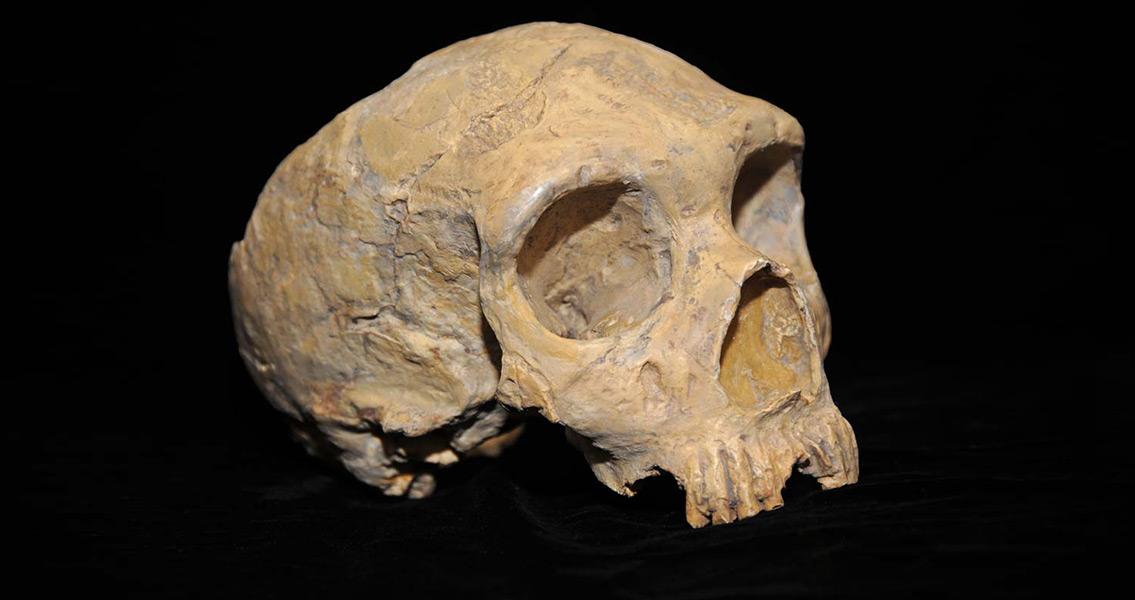
Vulnerable Apes hypothesis, added another perspective to the question of interbreeding: it may well be the case that the Neanderthal who passed his or her genes to the Oase man also had Homo sapien genes from an earlier hybridisation. This suggestion points to a greater than traditionally believed complexity of human evolution, especially in light of other recent studies that have revealed the Neanderthals were far from the primitive cavemen we used to think they were. For more information: An early modern human from Romania with a recent Neanderthal ancestor Image courtesy of Wikimedia Commons user: Gregory F. Maxwell]]>

Categories
Breaking News

Rabbit-Hunting Helped Modern Humans Gain Upper Hand

DNA analysis that the Neanderthals started declining in numbers very soon after the first modern humans set foot in Europe. Part of the reason may have been the new diseases that modern humans brought to the Neanderthals, and the fact that the latter had no immunity against them, unlike the modern humans. Climate change also had a big part to play in the decline of the Neanderthals, with some authors suggesting the cause of the change was a series of volcano eruptions, which could explain why they declined so fast. It seems one could say with a reasonable degree of certainty that there was no one single reason why the Neanderthals died out and modern humans thrived, but each of the reasons so far identified allows us a deeper understanding of this stage in human evolution and greater insight into how our own species came to be where it is today. For more information: Rabbits and hominin survival in Iberia Image courtesy of Wikimedia Commons user: Bernard Dupont]]>

Categories
Breaking News

Oldest Murder Victim Discovered

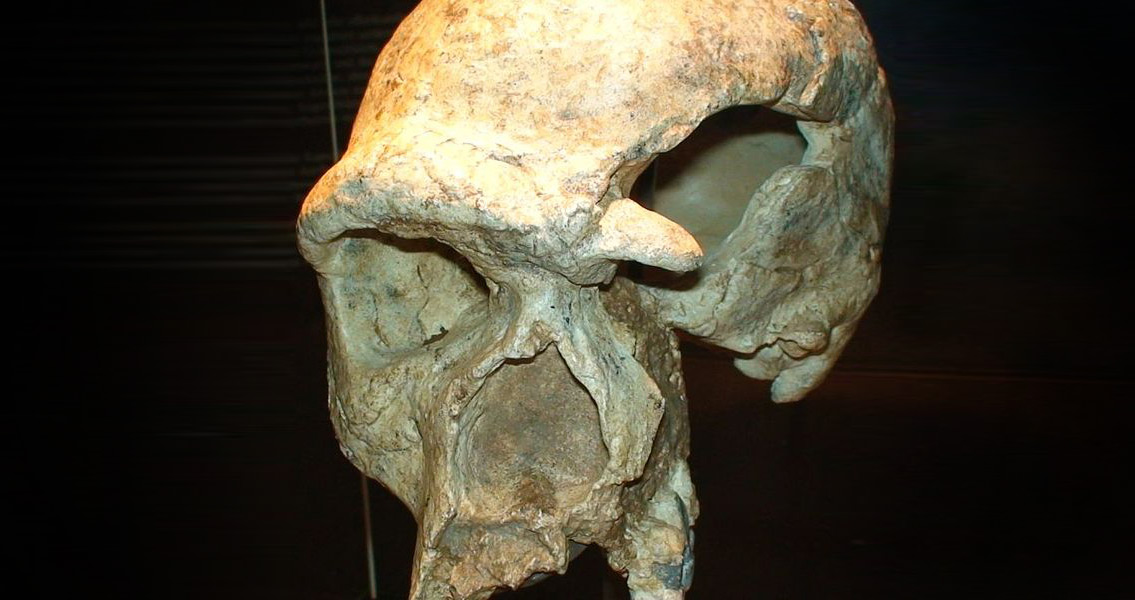
PLOS ONE journal. What makes the find particularly interesting is the fact that it is the earliest known example of murder, taking place much earlier than the appearance of the Homo genus on the world scene. The proof that the Neanderthal’s death was the result of deliberate injury can be seen in the presence of two nearly identical fractures to the frontal skull bone of the individual. Examination of the fractures revealed that they had been inflicted with one weapon and the trajectory that could be inferred from their shape and size told scientists that this weapon had been used in a close, face-to-face, conflict. Moreover, the authors say, the fact that there is more than one fracture, given that the severity of each of them would have been lethal, suggests “an intention to kill.” The major conclusion of the analysis was that intentional killings were part of our ancestors’ lives, something for which there has not been abundant evidence from this period of pre-human history. According to the authors, any insight into early hominin violence is of interest because it sheds light on the relations within communities and between different communities with regard to resources and their distribution, the density of the population, and the distribution of land. The authors also note in their paper that up until now there has been no evidence of “direct traumatic injury” in hominins from the Middle Pleistocene, although there has been previous evidence of non-fatal injuries and cannibalism. There is also abundant evidence from the Middle and Upper Pleistocene of skull trauma, although the sufferers survived in the majority of cases. In fact, only two fossils have been discovered that could be said to have belonged to people who died violent deaths, but not with a high degree of certainty, the PLOS ONE paper authors write. One of these two fossils has a lesion on one of the ribs but the shape of the bone actually suggests he lived for a few weeks after the injury was inflicted, so it cannot be established whether the lesion was the real, or only, cause of death. The other fossil shows signs of severe trauma to the first thoracic vertebra, which has been taken as the cause of this individual’s death, but it is unclear whether this trauma was caused by the deliberate actions of another hominin or was the result of an accident, while hunting, for example. It is the scarcity of fossils bearing the clear marks of an intentional death that makes the Spanish find so precious for the scientific community. It might also provide clues as to why there were so many people in this cave, which, at the time, could only be accessed through a 13-metre high chimney. Two of the hypothesis put forward so far have been ruled out, namely predators or geological activity dragging the bodies there. The two remaining hypotheses have to do with accidental falls and intentional killings. These latest findings could support the latter hypothesis. For more information: www.journals.plos.org Image courtesy of Wikimedia Commons user: Jose-Manuel Benito]]>

Categories
Editorial

April History News Round-Up

Neanderthals The fate of our closest, extinct relatives: the Neanderthals, as well as the relationship modern humans had with them, have been a constant source of fascination. This month, intriguing new ideas and considerations have been added to the ongoing discussion of what happened to the Neanderthals. A study by Anna Goldfield, an archaeologist from Boston University, and Ross Booton, a mathematical biologist from Sheffield University, used mathematical modelling to determine the impact of the mastery of fire on both human and Neanderthal populations. Although there is evidence that Neanderthals used fire, it is clear that they did not use it as consistently as humans. Mastery of fire has a number of major benefits. Firstly, of course, cooking food kills bacteria, making it safer to eat. It also increases the amount of processable protein that can be taken from the food. Therefore, the populations that mastered fire had a much better chance of survival. Based on the model, Booton and Goldfield concluded that modern humans using fire consistently would have allowed their populations to grow, while the Neanderthals would have declined. Fire mastery allowed modern human populations to flourish, which in turn led to them depriving Neanderthals of crucial resources. Other studies released this month have added further theories to the discourse about why the Neanderthals became extinct. A study by authors from Cambridge and Oxford Brookes Universities has used genetic analysis to conclude that disease spread could have led to the Neanderthal’s extinction. The authors argue that humans migrating out of Africa brought new diseases with them which the Neanderthals would have lacked immunity to. Elsewhere, a study by researchers at the University of Bologna, in Ravenna, analysed various hominin and Neanderthal teeth fossils and concluded that the Neanderthal decline started shortly after modern humans had first arrived in Europe. This adds significant weight to theories which argue humans played a part in the Neanderthal’s decline. Connections Between the Past and Present Other studies have focused on issues from the past that remain poignant in the present. Data collection by governments or private institutions, whether on their own citizens or those of other countries, is a civil liberties concern that has remained at the forefront of public discourse for the last few years. A study by Margo Anderson, Professor of History and Urban Studies at the University of Wisconsin, has shown that government collection and use of ‘Big Data’ is far from just a recent development. Anderson argues that following the Japanese attack on Pearl Harbour, the US government used 1940 census data to round up the Japanese ancestry population living on the West Coast of the USA. In total, some 100,000 people were held in US concentration camps for the duration of the war. In 1790, Congress had forbid the use of census data to ‘harm’ US citizens. The treatment of Americans of Japanese ancestry shows how perceived ‘national security threats’ could lead to reinterpretations of exactly what government collected information could legitimately be used for. Recent riots in Baltimore, as well as last year’s in Ferguson, have highlighted the continued controversies over policing in the United States. Undoubtedly, there are a host of complicated social, political and economic issues behind the riots in these two cities, that cannot be fairly analysed here. What is clear however, is that a sense of racial discrimination by various police forces has been an important factor. An article by Themis Chronopoulos, from the University of East Anglia, has argued that a reaction against police misconduct was a major theme in the African American Civil Rights Movement of the 1960s. Histories of the Civil Rights Movement tend to focus on discrimination in schools, voting rights, public housing and employment law as the major causes for protest. Chronopolouos claims, “Survey after survey during the period revealed that one of the overriding concerns of urban blacks was police misconduct and that this issue functioned as one of the primary causes of riots.” This conclusion can perhaps help us frame the riots in Baltimore into a wider historical context. Both the study on the Civil Rights Movement, and the one on state use of data, provide a valuable reminder of the constant connetion between history and the present. ]]>

Categories
Breaking News

New Evidence Supports Humans’ Role in Neanderthal Demise

Live Science points out, between 1.5% and 2.1% of the DNA of all present-day people outside Africa is Neanderthal DNA. Another thing that has been established is that the Neanderthals declined and died out very quickly. The reasons for this decline, however, remain a subject of dispute. Some of the theories put forward have to do with climatic changes that deprived these pre-humans of their main food and habitat. These changes may have been caused by volcanic eruptions, some researchers believe. Yet a lot of work has been focusing on the possible role of modern humans: whether they rose in numbers and spread across the continent so quickly that they literally displaced the Neanderthals, or whether their superior evolutionary level equipped them with skills that made them better at surviving. The most recent research in this respect hypothesised that it was the mastery of fire that gave modern humans the upper hand, allowing them to cook their food, and thus being able to extract more nutrients than is possible from raw meat and vegetables. At the same time, studies are continually shedding new light on the Neanderthals themselves, prompting a rethink of the long-held belief that they were an extremely primitive species. One such study discovered that the Neanderthals had a surprisingly well developed aesthetic sense, made and wore jewellery, and another has revealed they were no strangers to herbs as part of their diet. Image courtesy of Wikimedia Commons user: AquilaGib]]>

Categories
Breaking News

Modern Humans Brought Fatal Disease to Neanderthals

Homo sapiens and environmental changes, but a new study has suggested a new direction for research: disease spread. According to scientists from Cambridge and Oxford Brookes Universities, modern humans, when they left Africa and entered Europe, brought with them diseases that the Neanderthals had never encountered before and could not fight as effectively as the newcomers. In addition, because of interbreeding, modern humans became armed with immunity from some diseases that were new for them. Simon Underdown, Anthropology Lecturer at Oxford Brookes, and Charlotte Houldcroft, Infectious Diseases Researcher at Cambridge, the co-authors of the study, explain that the new diseases which modern humans brought with them could have played the lead role in the decline of the Neanderthals. Dr. Underdown states that Neanderthal populations were becoming increasingly isolated by the time modern people arrived on the European continent, gradually impoverishing their gene pools and consequently limiting their capacity to develop immunity to new diseases and even cope with already familiar ones. The research consisted of analysing a number of recent studies on the genetics of Neanderthals and early modern humans, as well as an examination of genetic research dating the origins of common pathogens. A surprising suggestion the two authors came up with based on their study is that many of the illnesses we associate with modern humans seem to have been prevalent among Neanderthals as well, including diseases such as tuberculosis and typhoid fever. Previously, these and other pathogen-caused diseases were thought to have come into being relatively recently, around 11,000 years ago, when humankind started settling down in communities and farming animals. The theory was that they had started off as ‘zoonoses’ – diseases that pass from animals to humans. Underdown and Houldcroft’s research, however, suggests that it may have been the other way round, with the diseases originating as far back as 250,000 to 40,000 years ago – the period when the Neanderthals were the dominant primate species in Europe and Asia. After modern humans had gained the upper hand and started settling in densely populated communities, they passed the diseases on to their farm animals. Another aspect in which this latest study is important is that it adds to a growing body of evidence that Neanderthals were not the backward, more-animal-than-human creatures we traditionally think they were. Instead, recent archaeological studies have revealed that Neanderthals were most likely skilled craftsmen with a pronounced aesthetic sense, even making and wearing jewellery. A supporting fact for hypotheses claiming modern humans and Neanderthals did not differ so much is interbreeding, as proven by DNA analyses of early modern humans. These analyses have revealed that early modern humans shared a lot of genes with Neanderthals, a clear indication of interbreeding that seems to have been beneficial for one of the parties, and fatal for the other. Image courtesy of Wikimedia Commons user: Imageengineer]]>

Categories
Breaking News

Neanderthal Gender Division of Labour Revealed

Journal of Human Evolution. “Neanderthals [however] might not have had such extreme sex-related specialization, at least in terms of the provisioning of food, with both males and females participating in the hunting of big game.” No previous work has explored what happened after Neanderthals had sufficient food, however. The Neanderthal teeth which Estalrrich and Rosas examined were taken from three different sites: El Sidron Cave in Spain, l’Hortus in France, and Spy in Belgium. All the Neanderthal teeth showed signs of significant wear. Interestingly, this wear was different to the damage usually caused by chewing food. Neanderthals are known to have had extensive anterior dental wear and their teeth often show scratches and chips. This is due to Neanderthals having used their front teeth as a tool for tasks such as food preparation, tool production and preparing skins. It is thought that Neanderthals used their mouths as a third hand, for activities other than the provisioning of food. “The fundamental observation is that all of the individuals present instrumental striations and dental chipping, regardless of provenance, age, and sex,” the team wrote. “Thus, similar behaviors could be expected among them, with all members of the groups performing tasks involving their teeth as tools, and leaving similar type of marks.” The division of labour amongst Neanderthal communities, therefore, was flexible. All Neanderthals, regardless of sex or age, used their teeth as tools. Subtle differences, however, were found between male and female Neanderthals. Teeth from female Neanderthals have more striations (linear marks or blemishes revealing wear on tooth enamel) than males, and the striations are longer. Extrapolating from these striations, Estalrrich and Rosas inferred possible behavioural situations. They believe that females were cutting different material to males and doing it more often. “That could mean a separation between sexes, or a sexual division of labor in activities other than foraging,” they wrote. Estalrrich and Rosas have decisively proved that Neanderthals used their mouths as tools. They have shown that teeth were not just for food preparation, but were useful in making tools and fashioning animal skins. Moreover, different striation patterns hint at social divisions amongst Neanderthal communities. “The results presented here illustrate how Neanderthals used their mouth as a third hand, and may indicate some subtle differences suggesting individual roles within the groups,” the report concludes. Image courtesy of Wikimedia Commons user: AquilaGib www.sciencedirect.com ]]>

Categories
Breaking News

Volcanic Eruption Contributed to Neanderthal Decline

Categories
Breaking News

Neanderthals Disappeared Earlier than Thought

Categories
Breaking News

Bone Tool Made By Neanderthals Found in France