Categories
Breaking News

Neanderthals Were Cannibals, Gruesome Discovery Suggests

Phys.org late last year. Helen Rougier, an anthropologist from California State University Northridge, led the team studying the broken bones. Inhabited since the Paleolithic Era, the Goyet caves first came to the attention of archaeologists and anthropologists in the nineteenth century. According to the researchers, the proof that the cuts and fractures were due to cannibalism can be found in the bones of other animals close to the caves’ entrance. Horse and reindeer bones had been broken in the same way as the Neanderthals’. Discoveries in the last few years have shown Neanderthals were much more sophisticated than the primitive cavemen they are commonly portrayed as. Studies have revealed evidence that they practiced burial rituals and made an effort to treat the bodies of their dead with care. At the same time however, there has been mounting evidence that they also practiced cannibalism. Until this latest gruesome finding, cases of cannibalism had only been found at Neanderthal sites in southern Europe, such as the El Sidron and Zafarraya sites in Spain, and the Moula-Guercy and Les Pradelles sites in the south of France. The Goyet caves however, are located in the Ardennes Forest in Belgium. The Neanderthal diet has long been a source of interest for anthropologists. Last year, a study in the American Journal of Physical Anthropology claimed that the differences between Neanderthal and modern human anatomy could be explained by differences in diet. Neanderthals were shorter and stockier than humans, with significantly wider rib cages and larger pelvises. The study claimed that these differences were the result of the Neanderthals having to adapt to a high protein diet, especially during brutally cold ice ages. It is suggested in the American Journal of Physical Anthropology study that during the coldest periods of the last ice age, Neanderthals took between 74% and 85% of their caloric intake from animal fats. With the only prey available having been large game, the authors suggest the Neanderthals experienced evolutionary adaptations in the form of bigger livers and renal systems – such adaptations would have also required morphological changes to house the expanded organs. On the other hand, it would be wrong to assume Neandethals were simply carnivores. Another 2016 study suggested that the Neanderthal diet comprised 80% meat and 20% vegetables, based on the isotope composition in the collagen found in their bones. Further stressing just how important vegetables were in the diet of our extinct cousins, a later study determined that this ratio of meat and vegetables was the same even for Neanderthals inhabiting the comparatively barren Mammoth steppe, where plants would have been much harder to come by. The age of the supposedly cannibalised bones from the Goyet Caves, roughly 40,000 years old, is hugely significant. This was a period when the Neanderthals were heading towards extinction. Homo sapiens had arrived in Eurasia, likely creating increased competition for resources and possibly even coming into direct conflict with Neanderthals. Inhabiting Eurasia for tens of thousands of years, Neanderthals were likely as diverse in their behaviour as modern humans are. Findings like those from the Goyet caves add weight to the idea that in times of desperation, the Neanderthals could have been pushed towards cannibalism. ]]>

Categories
Editorial

King Tut, Neanderthals and Plague – The History News of 2016 (Part 2)

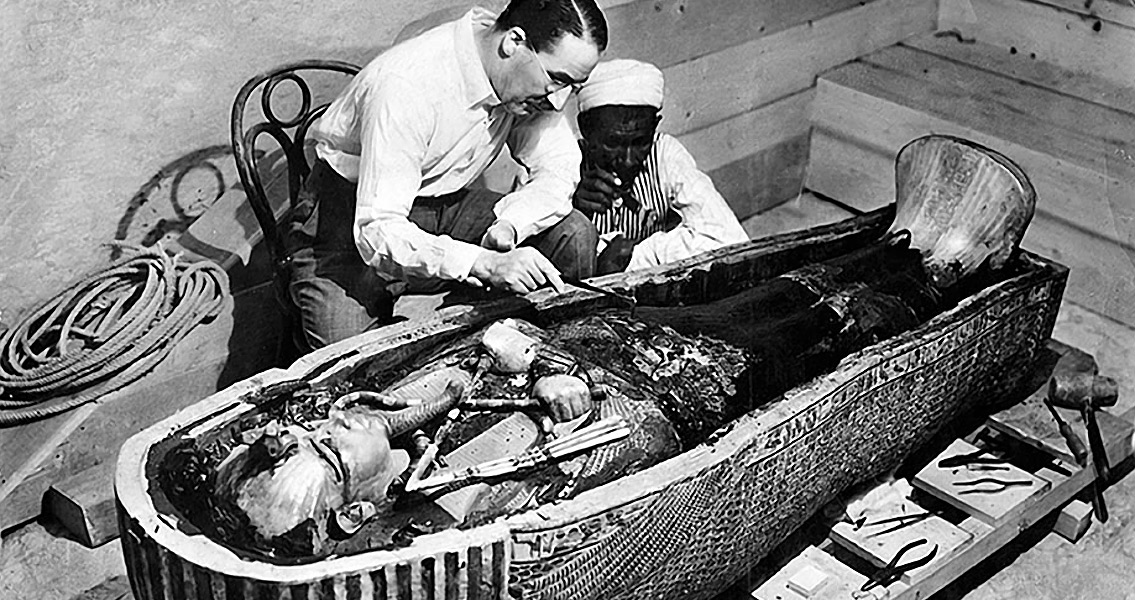
here. Controversy Surrounding King Tut’s Tomb One of the most bizarre stories of the year took place over a few months of the spring, and concerned the constantly fascinating tomb of Tutankhamun. In March, Egypt’s Antiquities Minister, Mamdouh Eldamaty, announced at a press conference that cutting edge radar scans had revealed the presence of hidden chambers in King Tutankhamun’s burial chamber. It was a revelation which sparked intrigue across the globe, as anyone with even the slightest interest in Egyptology began to speculate about what could still be hidden in the tomb of Ancient Egypt’s most famous Pharaoh. A few weeks later, doubts started to appear about the Egyptian Antiquities Ministry’s claims. Radar experts unconnected to the project started to question the findings, while others called for more evidence to be released to back up the claims and allow peer review. In May, the results of another series of scans were released, commissioned by National Geographic to verify the possibility of the existence of a hidden chamber. Announced at the Second Annual Tutankhamun Grand Egyptian Museum Conference in Cairo, the results of the second investigation suggested there was in fact no hidden chamber, directly contradicting the earlier study. The Egyptian Antiquities Authority is now carrying out additional scans in the hope of finding out once and for all if there are any more secrets to King Tut’s tomb. Just How Smart Were the Neanderthals? It’s a question that has been asked many times: just how similar are we to our closest extinct evolutionary cousins, the Neanderthals? For a long time the Neanderthals were considered to be primitive and unintelligent when compared to modern humans. Findings from 2016 however, brought that idea into question like never before. A study published in September added new fire to the long running debate over whether the Neanderthals were capable of creating jewellery. Almost since the moment they were discovered in central France half a century ago, a collection of prehistoric tiny, centimeter-long necklaces created from ivory, shells and animal teeth have been a source of contention among scientists who debate if the Neanderthals could have made the items. Using new research methods relying upon ancient proteins to date and identify bone fragments found at the site, researchers concluded that Neanderthals had lived there, supporting the idea they created the jewellery. Another study published in September carried out an in depth comparison between Neanderthal and modern human ears. The results of the pioneering research challenged the idea that Neanderthals would have only spoken in primitive grunts and groans, suggesting the possibility that Neanderthals had been capable of speech like modern humans. In December, a study from the University of Southampton revealed that Neanderthals had kept returning to the same coastal site on Jersey for a period of over 140,000 years. Through analysing stone tools, the study authors concluded that Neanderthals had kept making regular journeys back to the site for generations. The study raises interesting questions, firstly about what motivated the Neanderthals to keep returning to the site, but also about the extent to which they understood the geography around them – perhaps even some early form of mapping – to keep finding their way back there. What We Know, and What We Don’t About the History of Disease 2016 witnessed a series of shocking revelations and radical theories about the history of disease. In April, a startling study suggested that humans could have played a part in the extinction of Neanderthals by passing on a host of diseases, such as tapeworm, tuberculosis, stomach ulcers and types of herpes. The authors of the study argue that as humans left Africa, they exposed the Neanderthals to new diseases which their immune systems had not built any resistance to. Weakening the hunter-gatherer species, it would have made it harder for them to collect food, in turn causing communities to collapse. A study published in December made the shocking claim that smallpox is nowhere ear as ancient as often thought. Previously, it was believed that smallpox could be traced at least as far back as Ancient Egypt. However, a team of geneticists reconstructed the smallpox genome, based on DNA taken from the remains of victims in a crypt in Lithuania. They found that all strains of the disease had an ancestor from no further back than 1580. If true, the findings would cause a dramatic rewriting of history. Smallpox has been used by historians to explain millions of deaths and tragedies through the centuries, yet if it’s not as ancient as typically thought, such ideas will have to be rethought. Most significantly, the date of 1580 precludes the idea that the European colonisation of the Americas in the fifteenth century saw the devastating introduction of smallpox to the continent; resulting in millions of deaths for the indigenous populations. It was only in 2013 that scientists unequivocally proved that the bacteria Y.pestis played a role in both plague pandemics of the Middle Ages – the Plague of Justinian between the sixth and eighth centuries, and the second pandemic between the fourteenth and seventeenth centuries that peaked with the Black Death. A study published in January 2016 revealed that a single genotype of Y.pestis had persisted in Europe from the fourteenth to the seventeenth centuries. The findings suggest that the plague survived in Europe for three hundred years in as yet unidentified reservoir. In September, a new study reconstructed the bacterial genome responsible for the Plague of Justinian. The study found that the strain of Y.pestis responsible was far more diverse than previously thought, and also infected people far beyond the region historically documented. With plague reemerging in certain parts of the world, such studies have relevance beyond history. The greater our understanding of historical plague outbreaks, the better chance we have of combating it in the present. ]]>

Categories
Breaking News

Why did Neanderthals Keep Returning to the Same Jersey Caves?

Antiquity. ]]>

Categories
Breaking News

Barren Tundra Couldn't Put Neanderthals Off Vegetables

study from scientists at the Senckenberg Center for Human Evolution and Palaeoenvironment (HEP) in Tübingen analysed the bone collagen of Neanderthal remains from two sites in Belgium and concluded that the Neanderthals there at least had a diet of roughly 80% meat, 20% vegetables. Power took advantage of innovative new methods to determine the diet of Neanderthals who lived in the Mammoth steppe region. Until recently there was a distinct lack of ways to trace prehistoric food consumption; restricting research into ancient diets. Power used cutting edge microscopy methods to analyse food consumption in Neanderthals. By studying microbotanical particles in the plaque of Neanderthals from six different sites, including Croatia, Italy and Russia, he found that Neanderthals from all of the regions regularly ate plants and vegetables. To verify the accuracy of using tooth plaque to reconstruct diets, Power performed similar tests on the teeth of a group of recently deceased chimpanzees. The diet of those chimpanzees had been monitored for over twenty years, and the test results showed that teeth plaque did indeed reflect diet over an extended period of life. Crucially, by comparing data from different climatic regions and periods, Power showed that whatever the conditions or time, plants were consistently a significant part of the Neanderthal diet. It’s a conclusion which begins to throw serious doubt on the idea that a limited diet was a key driver of the Neanderthals’ extinction. It also adds to the ever more complicated image forming of the Neanderthals, with a stream of new evidence showing they were perhaps not as simple as popularly thought. “One of the big lessons of my work on Neanderthals was that the only reason we find the result surprising is that we expect Neanderthals to resemble modern human hunter gatherers in the way they foraged for food, but they didn’t.” Power explained in a Universiteit Leiden press release. “In the past we saw them as primitive cavemen with very basic behaviour, but now we have updated our view and see them as very modern. But that doesn’t mean we can afford to pigeonhole Neanderthals into our own particular version of humanity. They had their own unique pattern.” Beyond raising questions about the extent to which we should consider Neanderthals ‘primitive’, Power’s study also throws into doubt ideas about the Mammoth steppe; showing how much still needs to be learnt about the Pleistocene epoch. As Power explained: “The Mammoth steppe is an environment that we don’t really understand because it no longer exists due to climate change and megafauna extinction. It may well be that these ancient grasslands were far more useful to Neanderthals than we thought.” ]]>

Categories
Breaking News

Could Neanderthals Speak Like Modern Humans?

producing jewelry. Following the discovery of the first Neanderthal fossils at the the start of the twentieth century, archaeologists dismissed our closest extinct cousins as primitive; the latest discoveries are increasingly challenging this assumption. Published in the Proceedings of the National Academy of Sciences, the study led by Alexander Stoessel and Jean Jacques Hublin from the Department of Human Evolution, Max Planck Institute for Evolutionary Anthropology, analysed ossicles in both Neanderthals and Homo Sapiens. The three tiniest bones in the body, ossicles are the coupling between the ear drum and the oval window of the inner ear. Until now, it was considered impossible to perform detailed comparisons of Neanderthal ossicles due to an extremely limited sample size, and the unavailability of methods to analyse the relationship between the bones and other parts of the ear structure. For their study, the authors present the largest sample of Neanderthal ossicles unearthed to date, from a variety of different geographic regions, and times. Using detailed ‘Micro CT scans’, the team were able to quantify the shape and functional properties of Neanderthal ossicles. From this, they were able to make comparisons with AMHs, as well as African Apes. “Based on microcomputed tomography images, our comparative 3D shape analysis of Neandertal ossicles shows striking shape differences between Neandertals and anatomically modern humans. However, these morphological differences do not affect the functional properties of the ossicles, potentially indicating consistent aspects of vocal communication in Neandertals and AMHs.” the team write in the study. Scientists have previously suggested that Neanderthals were so primitive they were only able to speak in grunts and groans. The new research adds to other recent studies arguing Neanderthals may in fact have had the ability to speak. The team’s findings suggest that despite some clear anatomical differences between the ears of Neanderthals and modern humans, they essentially functioned in the same way, giving Neanderthals similar auditory sensitivity to humans. When compared to the African apes however, the human and Neanderthal ear anatomies have little in common. “These functionally equivalent solutions could indicate selective pressures acting on the middle ear for conserving a similar auditory sensitivity inherited from the last common ancestor of anatomically modern humans and Neanderthals.” It’s a conclusion that suggests the differences between humans and Neanderthals could be more down to the species taking separate evolutionary paths than one being more advanced than the other. The study also raises fascinating questions about the origins of the complex languages humans use today For more information, the study itself can be found here]]>

Categories
Breaking News

New Research Says Neanderthals Were Jewelry-Makers

Science, other scientists have been touting the new research as “a landmark study” proving that Neanderthals had enough intelligence to make these cognitive symbolic leaps. Much of the controversy stems from the date of the artifacts, as they were made around 42,000 years in the past – a time when Neanderthals were well in decline while modern humans were spreading across Europe and replacing them. However, after University of York bioarchaeologist Matthew Collins examined some of the unidentified bones discovered at the dig site and found them too small to use more traditional DNA identification methods on, he and his colleagues made the decision to use the new ancient protein analysis method instead. Analysis proved conclusively that the bone fragments were human, but it was still unclear if they had once belonged to a modern human or an archaic species such as a Neanderthal. To further pinpoint the identity, Collins and his colleagues conducted a comparison of the collagen within the fragments to those produced by modern humans and those produced by archaic humans. Collagen in Neanderthals contained high levels of an amino acid known as aparagine, as evidenced from previously-sequenced Neanderthal DNA; modern humans do not produce aparagine but instead have aspartic acid in their collagen. The researchers found evidence of aparagine amino acid, pointing to the bone fragments being of Neanderthal origin. Additionally, the type of collagen within the bone is only present in types of bone that are still growing, which combined with the presence of nitrogen isotopes associated with breast-fed children has led the scientists to believe that at least a portion of the bone fragments were from a Neanderthal infant. The findings have fanned the flames of debate when it comes to claiming that Neanderthals were incapable of creating symbolic jewelry of the type found on the site. It may be, according to some scientists, that Neanderthals living on site learned of the tools and techniques used for creating such jewelry from modern humans migrating to the area. The new data points towards renewed evidence that our archaic human cousins created these pieces of art themselves. Collins and his research team’s new study, published in the Proceedings of the National Academy of Sciences, can be found online here]]>

Categories
Breaking News

High Protein Diet Caused Differences Between Neanderthals and Humans

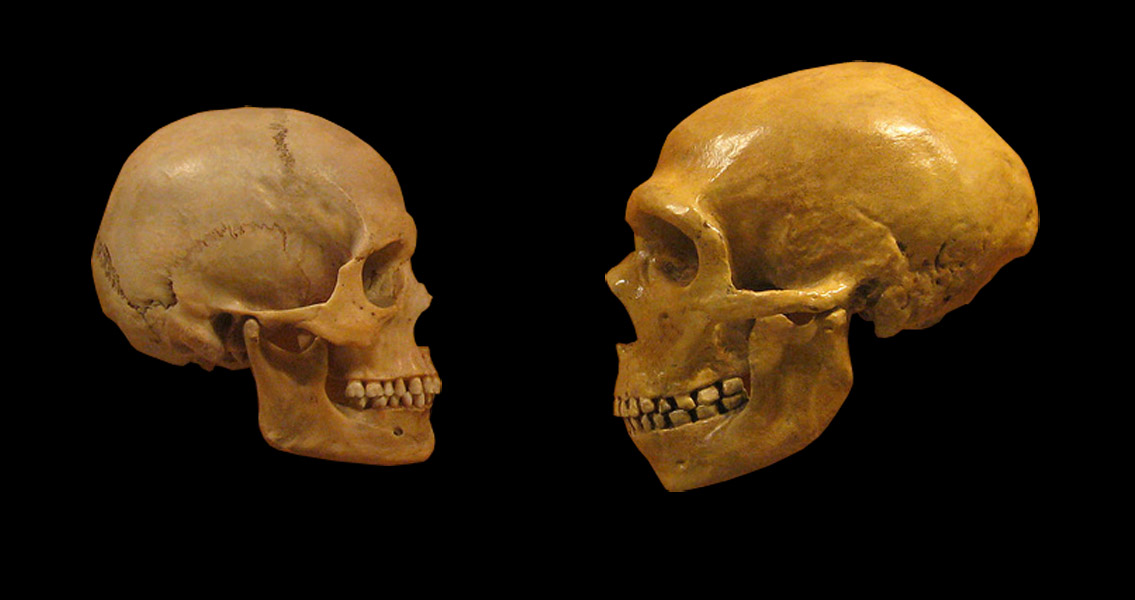
homo sapiens‘ closest extinct relatives. Although bearing many physical similarities to a modern human, there is no doubt that the two species are markedly different in appearance. Neanderthals were shorter and stockier than humans, with significantly wider rib cages and larger pelvises. Published in the July edition of the American Journal of Physical Anthropology, the new study argues that these differences were the result of Neanderthals having to adapt to a high-protein diet. The conclusion was reached using a model the researchers developed to detect dietary stress. Neanderthals lived in Ice-Age Europe, demonstrating remarkable resilience by surviving the brutally cold conditions. The authors of the study, from the Tel-Aviv University (TAU) in Israel, suggest that Neanderthals changed their diets during the coldest periods of the Ice Age, taking between 74% and 85% of their caloric intake from animal fat when carbohydrates weren’t available. However, during winter, large animals shed some of their fat content, a fact which according to the model developed by the researchers would have led to a “significant stressful dietary fat deficit” for the Neanderthals. The authors suggest that this deficit could have been ameliorated by an increased capability to convert protein into energy. “Given that high protein consumption is associated with larger liver and kidneys in animal models, it appears likely that the enlarged inferior section of the Neandertals’ thorax and possibly, in part, also his wide pelvis, represented an adaptation to provide encasement for those enlarged organs.” the authors write, in the abstract to their study. “During harsh Ice-Age winters, carbohydrates were scarce and fat was in limited supply. But large game, the typical prey of the Neanderthal, thrived,” explained study coauthor Miki Ben-Dor, of the Department of Archaeology and Ancient Near Eastern Cultures at TAU, in an interview with the Pakistan Observer. “This situation triggered an evolutionary adaptation to a high-protein diet – an enlarged liver, expanded renal system and their corresponding morphological manifestations. All of these contributed to the Neanderthal evolutionary process.” Ben-Dor continued. The liver is the organ responsible for converting protein into energy, and is therefore likely to enlarge with a high protein diet. Such a diet also increases metabolism, placing a greater demand on the kidneys and bladder to remove toxic urea, and in turn leading to their enlargement. Consequently, the study reasons, Neanderthal pelvises and rib cages had to evolve to house these larger organs. Protein only makes up 30% of the diet for homo sapiens on the other hand, meaning humans have a limited ability to convert protein to energy. Homo sapiens therefore increase their intake of fat and carbohydrates to meet their nutritional needs. ]]>

Categories
Breaking News

Smoke Tolerance Key to Humans Outlasting Neanderthals

Molecular Biology and Evolution. A difference in the aryl hydrocarbon receptor, which regulates the body’s response to polycyclic aromatic hydrocarbons, may have desensitised humans to the toxic spew of chemicals generated by smoke and fire, according to the authors. This desensitisation would have given humans an advantage compared to other hominids when it came to processing the toxins. “If you’re breathing in smoke, you want to metabolize these hydrophobic compounds and get rid of them, however, you don’t want to metabolize them so rapidly that it overloads your system and causes overt cellular toxicity,” explained Perdew. “For Neandertals, inhaling smoke and eating charcoal-broiled meat, they would be exposed to multiple sources of polycyclic aromatic hydrocarbons, which are known to be carcinogens and lead to cell death at high concentrations. The evolutionary hypothesis is, if Neandertals were exposed to large amounts of these smoke-derived toxins, it could lead to respiratory problems, decreased reproductive capacity for women and make especially preadolescents susceptible to respiratory viruses, while humans would exhibit decreased toxicity because they are more slowly metabolizing these compounds.” Genomic data from humans, Neanderthals and Denisovans was compared to explore the differences in the genetics of polycyclic aromatic hydrocarbon tolerance. The disparity was even greater than the researchers anticipated. “We thought the differences in aryl hydrocarbon receptor ligand sensitivity would be about ten-fold, but when we looked at it closely, the differences turned out to be huge,” said Perdew. “Having this mutation made a dramatic difference, it was a hundred-fold to as much of a thousand-fold difference.” Why the Neanderthals went extinct is a question that has plagued scientists for decades, with many suggesting it may have been a consequence of the spread of humans, or climate change. There is evidence that both humans and Neanderthals used fire, according to George Perry, assistant professor of anthropology and biology, Penn State, who worked on the study. The consequences of this fire use, which likely started with our hominin ancestors around a million years ago, might have been deadly for Neanderthals. Resistance to smoke toxins would have been an evolutionary advantage that afforded modern humans a host of benefits. “Cooking with fire could have allowed our ancestors to incorporate a broader range of foods in our diets, for example, by softening roots and tubers that might otherwise have been hard to chew,” said Perry. “Cooking could also help increase the digestibility of other foods, both in chewing time and reduced energetic investment in digestion.” Fire had a multitude of other vital uses for early humans, providing warmth at high latitudes and helping form settlements. “Besides heating and cooking, humans used — and still use — fire for landscape burning and as part of hunting and gathering, and now as part of agriculture,” Perry continued. The findings add further weight to other studies that have suggested developing the ability to cook was one of the key advantages that helped humans thrive, drastically improving the quality of their diet. However, the scientists suggest that the mutation had one negative outcome. The receptor might explain modern humans’ greater tolerance to cigarette smoke, allowing people to develop the smoking addiction that contributes to millions of deaths each year across the globe. “Our tolerance has allowed us to pick up bad habits,” Perdew said. ]]>

Categories
Breaking News

Neanderthals in Germany Went Extinct Right After Population Peak

Homo neanderthalensis was the dominant human species in Europe, populating the whole of the continent. Although archaeologists have discovered numerous settlements in Germany, they have also uncovered evidence which shows that Neanderthal populations there came to an unexplained, sudden end. Based on the analysis of several archaeological sites, Jürgen Richter (Collaborative Research Center 806 — Our Way to Europe), has concluded that shortly after Neanderthals reached their peak population in Germany, their numbers rapidly declined, leading to their extinction. Neanderthals lived during the Middle Paleolithic, the time between 200,000 and 40,000 years ago. Richter’s research suggests that over 50 percent of the identified Neanderthal settlements in Germany specifically date back to between 60,000 and 43,000 years ago. Therefore, the peak Neanderthal population lies within this period. Neanderthals were an ancient human species, part of the genus Homo, that became extinct approximately 40,000 years ago. With 99.5% of the same DNA, they’re closely related to modern humans. Bone and stone tools left by Neanderthals have been found throughout Eurasia, in western to central Europe, and northern and western Asia. Their species is generally classified as Homo neanderthalensis, believed to have separated from Homo sapiens around 600,000 years ago. Some experts however, believe Neanderthals were a subspecies of Homo sapiens and therefore should be classified as Homo sapiens neanderthalensis. The number of Neanderthal sites, as well as the analysis of artifacts discovered in them, indicate the Neanderthal population in Germany were subjected to extreme demographic changes. For example, during the Middle Paleolithic there seem to have been numerous migrations, increases and declines in population, even extinctions in certain locations followed by a return of settlers. During the time period between 110,000 and 70,000 years ago there were only four identified Neanderthal settlement sites in Germany, however, during the following period between 70,000 and 43,000 years ago there were ninety-four. Less than 1,000 years later, after this peak in population, there was a rapid decrease and the Neanderthals disappeared. Why the species went extinct is still unknown. It may have been the result of decreased genetic diversity; another possibility is competition for resources with the growing number of Homo sapiens. Around 55,000 years ago, the climate began to fluctuate back and forth from extremely cold to milder cold conditions in the span of a few decades. Neanderthals had bodies that were well suited for surviving in cold climates, with stocky limbs and barrel chests that stored body heat much better than Cro-Magnons (the first early modern humans). However, these rapid climate fluctuations also caused ecological changes that the Neanderthals could not easily adapt to; familiar animals and plants would have been replaced by completely new ones within the space of a lifetime, and the Neanderthals’ ambush hunting technique wouldn’t have worked as trees replaced the grasslands. Neanderthals eventually went extinct in Europe between 41,000 and 39,000 years ago, coinciding with a period of extreme cold. This article has been published in the Quaternary International Journal. Image courtesy of Wikimedia Commons user Claire H. ]]>

Categories
Breaking News

Neanderthal Mutations Could Still be Affecting Humans

GENETICS. Harmful mutations present in the genome of Neanderthals made them up to 40% less fit reproductively than modern humans, according to the study. Although most of the effects have since been lost to time, these mutations likely passed to non-African humans when they interbred with Neanderthals. It is suggested that the mutations could still be affecting the fitness of some populations today. The study was led by Kelley Harris of Stanford University, along with her colleague Rasmus Nielse, from the University of California Berkley and Copenhagen University. “Neanderthals are fascinating to geneticists because they provide an opportunity to study what happens when two groups of humans evolve independently for a long time–and then come back together,” Harris explained. “Our results suggest that inheriting Neanderthal DNA came at a cost.” It is now widely accepted that modern humans interbred with Neanderthals, our closest extinct genetic relatives, with between 2% and 4% of genetic material in modern, non-African human populations having a Neanderthal origin. A study published earlier this year suggested that anything from the risk of depression to nicotine addiction could be connected to the mixing of human and Neanderthal genomes. Due to their smaller, more concentrated population, inbreeding was much more common among Neanderthals than modern humans, leading to their decreased genetic diversity. Harris and Nielsen were particularly fascinated by the fact that the Neanderthal genetic contribution to the modern human genome is uneven, but not random. Neanderthal sequences tend to be concentrated in certain areas, but totally absent elsewhere. “Whenever geneticists find a non-random arrangement like that, we look for the evolutionary forces that caused it,” Harris remarked. They hypothesised that the explanation could be found in natural selection. In small populations, like the Neanderthals, natural selection is less effective, allowing mutations to persist and have a larger influence. If such a mutation is introduced back into a larger population (such as modern humans) however, it’s quickly lost in the march of natural selection. To understand this process, Harris and Nielsen used computer programs to simulate mutation accumulation during Neanderthal evolution and estimate how humans were affected by the influx of Neanderthal genetic variants. They concluded that Neanderthals would have carried many mild, harmful mutations, combining to make them 40% less fit than humans in evolutionary terms. Their results also suggest that humans and Neanderthals had actually interbred much more freely and frequently than previously believed. The findings suggest that thousands of years ago, when both humans and Neanderthals inhabited the earth, closer to 10% of non-African humans’ genomes would have been Neanderthal. Shockingly, Harris and Nielsen suggest that a fraction of the harmful Neanderthal genetic mutations could still be present in modern human populations. They estimate the result could be a 1% lower reproductive fitness in modern day non-Africans. For more information: www.genetics.org]]>