Categories
Breaking News

Australia’s Oldest Bone Jewelry was Crafted 50,000 Years Ago

New Scientist: “I’ve met Indigenous Australians who remember their granddads wearing nose bones for special occasions,” adding, “In some groups, nose bones were only worn by elders, but in others, there were no restrictions, so all men and women could wear them to look more appealing.” The first humans to reach Australia would likely have brought the skills to craft bones from Africa where they were originally developed, and then adapted them to work with the bones of animals found in Australia. Kangaroo bones, which are strong, hard and easy to acquire, were easy replacements for ivory and horns. In Africa, humans have used bones as tools for more than a million years, however, the oldest recorded bone ornament on the continent is only around 15,000 years-old. It’s possible some of the bone artifacts which were older were mistakenly identified as tools as opposed to ornaments. This mistake in identification seems more probable than Australia being where bone jewelry was first developed. “Ancient bone technology discovered in Australia is important because it reshapes our understanding of the first inhabitants.” Langley says in New Scientist, “Findings of early bone tools and ornaments have been rare, leading to a long-held theory that Indigenous Australians initially lost the skills they brought from Africa.” “This shows that the first people in Australia were just as capable as those everywhere else of complex actions,” Ian Lilley from the University of Queensland is quoted as saying in the New Scientist article, “So whether this artefact was used as a nose bone or for sewing skins doesn’t really matter – it’s evidence of complicated behaviour.” To date, the oldest jewelry ever made by early humans are the 100,000-year-old shell beads discovered at sites in Africa as well as the Middle East, which look as if they had been strung together to create necklaces. Our cousins the Neanderthals appear to have beaten us to it, as they might have been creating jewelry around 80,000 years before early humans even made it to Europe. Eagle talons discovered at the Krapina Neanderthal site in modern-day Croatia date back 130,000 years and have features that suggest they may have been used in a bracelet or necklace. ]]>

Categories
Breaking News

Domesticated Turkeys Much, Much Older than Thanksgiving

Phys.Org, a new research paper has revealed that domesticated turkey eggs have been found in Oaxaca, Mexico dating to the fifth-sixth century CE. The 1,500-year-old eggs are the oldest evidence of turkey domestication to be found in the Americas, according to Field Museum archaeologist Gary Feinman, one of the authors of the paper. Before this, educated guesses had been made concerning turkey domestication based solely on the presence of turkey bones – or their absence – at other archaeological sites, Feinman remarked. However, this new discovery is the first strong evidence of domestication, and the archaeologist states that it’s being used to confirm prior hypotheses. The eggs were found in a region of Oaxaca that is known to have been the territory of the Zapotec, a native population that has had ties to the land for millennia. The find was quite unexpected, Feinman said, adding that discovering an entire clutch of intact eggs is exceedingly rare. Thanks to the expertise of Feinman’s colleague, University of North Carolina-Chapel Hill archaeologist Heather Lapham, the eggs were identified immediately as turkey eggs. They were found next to the remains of seven newly-hatched turkey chicks, possibly as an offering, explained the researcher. Analysis of the shells via scanning electron microscope verified Lapham’s positive identification. Feinman says that it’s clear these turkeys were domesticated, based on the entire clutch of unhatched eggs as well as the other turkey bones found at the excavation. The discovery aids in confirming historical information regarding the Zapotec and how they made use of turkeys in the past. There are Zapotec people still living in Oaxaca today, and the domesticated turkey is still very much a part of their culture. Feinman pointed out that the birds are raised as poultry, used in rituals and given as gifts; food items prepared for religious festivals, weddings, baptisms and birthdays all feature turkey heavily. The story of Mesoamerican animal domestication has been filled in by a significant extent thanks to the new discovery. While the Eurasian continent features a high number of domesticated animals, few such examples are present in Oaxaca and beyond. The only domestic meat sources available in Oaxaca 1,500 years in the past would have been dogs and turkeys, Feinman said, unlike the variety of meat sources available to Eurasian inhabitants. Today, this has changed dramatically thanks to the Spanish bringing over animals such as pigs, cattle and chickens during their colonization of the region. However, the turkey, with its strong roots in Zapotec culture, is still highly significant in the area both ritually and economically. The modern domesticated turkeys of Oaxaca are not so different from those that would have been present in the original American colonies during the time of the first Thanksgiving, nor are they too dissimilar to the domesticated turkeys bred in North America today, Feinman remarked. The research study, which appears in The Journal of Archaeological Science: Reports, is available here]]>

Categories
Breaking News

The Curious Connection between Mayans and Dead Dinosaurs

PLOS ONE, can be found here]]>

Categories
Breaking News

Over 4,000 Years Ago, the Indus Grew Rice and Used Crop Rotation

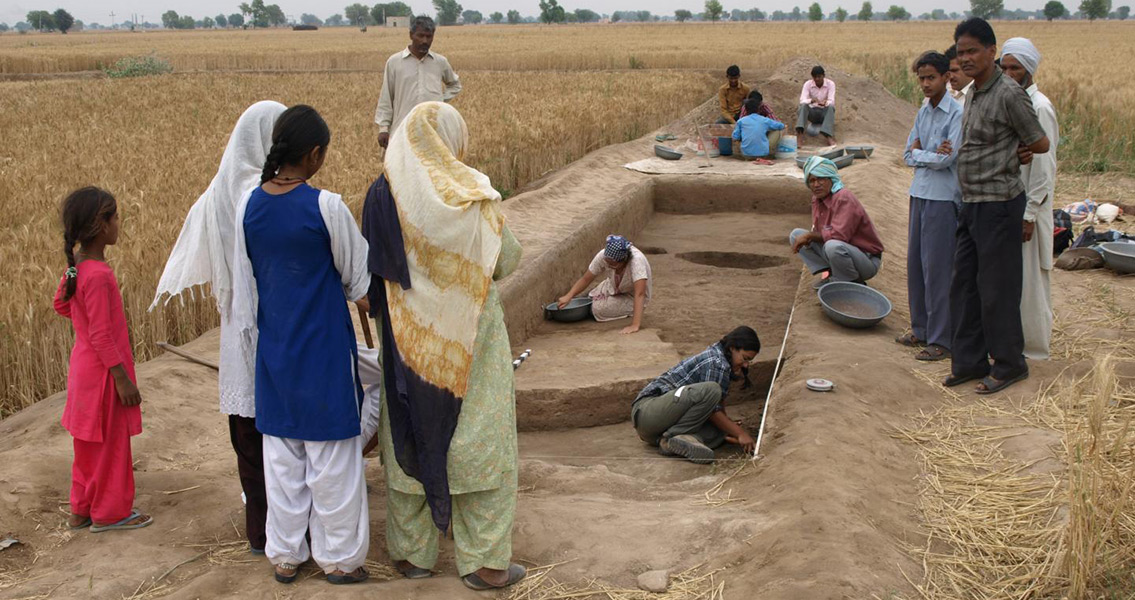
Antiquity and the Journal of Archaeological Sciences, have found evidence of domesticated rice in South Asia from up to 430 years earlier. “We found evidence for an entirely separate domestication process in ancient South Asia, likely based around the wild species Oryza nivara. This led to the local development of a mix of ‘wetland’ and ‘dryland’ agriculture of local Oryza sativa indica rice agriculture before the truly ‘wetland’ Chinese rice, Oryza sativa japonica, arrived around 2000 BC,” said study co-author Dr Jennifer Bates in a University of Cambridge press release. “While wetland rice is more productive, and took over to a large extent when introduced from China, our findings appear to show there was already a long-held and sustainable culture of rice production in India as a widespread summer addition to the winter cropping during the Indus civilisation.” The team’s results suggest that the Indus had established seasonal crop rotation before other civilisations, such as the Ancient Egyptians and Chinese. Dr Cameron Petrie, one of the authors of the study, suggests this could be because the location and climate of the region inhabited by the Indus. “Most contemporary civilisations initially utilised either winter crops, such as the Mesopotamian reliance on wheat and barley, or the summer crops of rice and millet in China – producing surplus with the aim of stockpiling,” explained Petrie. “However, the area inhabited by the Indus is at a meteorological crossroads, and we found evidence of year-long farming that predates its appearance in the other ancient river valley civilisations.” The team focused their study on Indus villages within a few kilometres of Rakhigari: a former Indus city that could have had a population of up to 40,000 people. They found evidence of a host of winter staples, such as wheat; barley; peas and vetches, and summer staples such as domesticated rice, millet and the tropical beans urad and horsegram. Radio carbon dating revealed dates for the earliest instances of Indus multi-cropping: 2890-2630 BCE for millets and winter pulses, 2580-2460 BCE for horsegram, and 2430-2140 BCE for rice. Exactly what crops were consumed in Rakhigari and the surrounding region, and which were traded with cities further afield, is yet to be determined, but the team’s research has raised some fascinating questions. “It is certainly possible that a sustainable food economy across the Indus zone was achieved through growing a diverse range of crops, with choice being influenced by local conditions.” said Dr Bates. “It is also possible that there was trade and exchange in staple crops between populations living in different regions, though this is an idea that remains to be tested.” Such a diverse system was probably well suited to mitigating risk from shifts in climate,” added Dr Petrie. “It may be that some of today’s farming monocultures could learn from the local crop diversity of the Indus people 4,000 years ago.” ]]>

Categories
News

Revealed: The Nazis' 'Who's Who' Contact List for LA

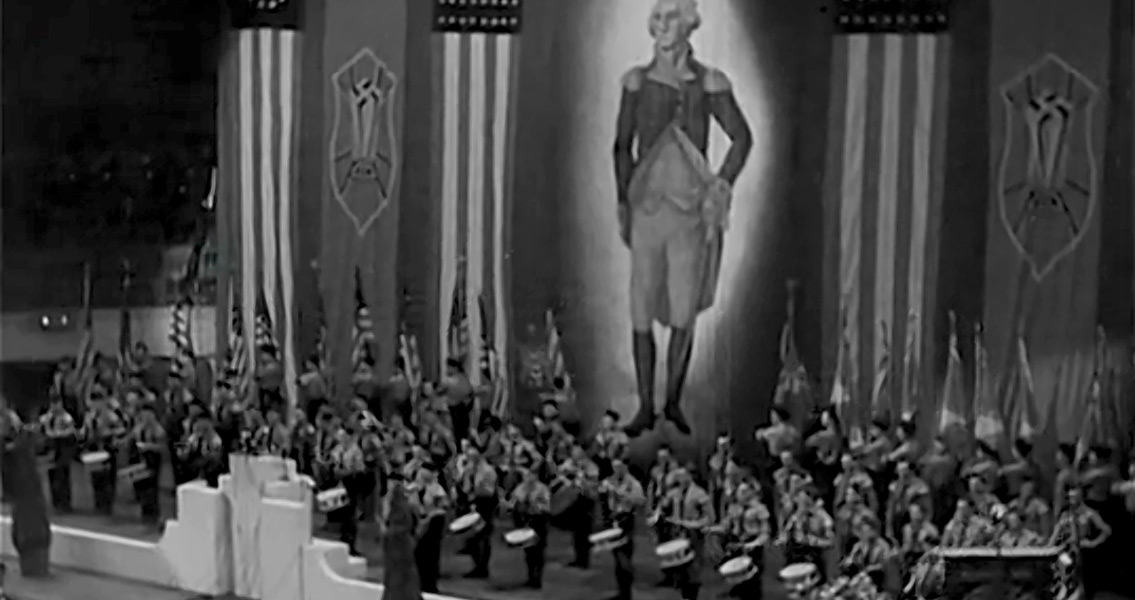
Novak, a writer for Gizmodo. “The card index file was found among the Consulate Office effects stored in the Bekins Warehouse, 116 South Western Avenue, Los Angeles. The cards were 3″x 5″ in size and for the most part contained no further information than the name, address and telephone number.” reads a 1945FBI memorandum about the list. “The file apparently contained the names, addresses and telephone numbers of individuals contacted by the Consul or other members of the Consulate staff. Many of the names on the list are those of prominent citizens in Southern California. No explanation accompanied the list.” Why the Nazi regime stored such a list is far from clear. It shouldn’t be assumed that everyone on it worked with the Nazis, or even came into regular contact with them. It does raise interesting questions however, about the links the Nazis were able to make with American society, particularly in the years before the USA entered the Second World War against the Axis powers. Some on the list definitely did work with the Nazis. Dr Erich Breitung, for example, was head of the Nazi party’s American Information Services in 1933. The organisation’s sole goal was to distribute Nazi propaganda throughout the USA, and it had offices throughout the country to that end. Norman Chandler, a future publisher of the LA Times, is unsurprisingly on the list. Chandler visited Nazi Germany in the 1930s as a guest of the regime. He had spent much of the decade defending Hitler and the Nazis against liberal journalists, until war made it impossible to continue doing so. Others listed make the cards seem like a who’s who of American society. Show business names recorded include Jason Joy; Twentieth Century Fox’s head of public relations, Hans Peter; an art director at Twentieth Century Fox, and Henry Noerdlinger; from MGM’s research department. From the world of Academia is Ernest C. Moore, the co-founder of UCLA, and Dr. M. Delbruck from Caltech. A host of other university professors and lecturers are included, as well as W.A. Bryan, the director of the Los Angeles Museum. From the world of business is Robert Gross, at the time the head of Lockheed, and from the media: Mrs. R. W. Trueblood and Edwin Schallert of the LA Times. The list provides a shocking reminder of just how involved the Nazis were in the culture of their future Allied enemies in the decade before the outbreak of the Second World War. For years, representatives of the regime went to great lengths to spread Nazi propaganda internationally, and it is often easy to forget just how successful they were, and how divided opinion was concerning the Nazis. In Britain, King Edward VIII agreed with some Nazi policies, and famously disagreed with his country’s involvement in the Second World War. In 1937, a year after abdicating the throne, he had personally met Hitler in Germany. For some in the US and Western Europe, the Nazis were a more attractive prospect than the Communists that had taken over the Soviet Union, and therefore garnered some sympathy. The Consulate list provides a reminder that public opinion towards the Nazis was far from unified in the 1930s. ]]>

Categories
Breaking News

Early Set of Dentures Constructed With Human Teeth

Categories
Editorial

The Ghost Army that Helped Bring Down Hitler

Categories
Breaking News

Researchers Discover Maya “Nesting” Pyramids

Guardian. The presence of the third structure suggests the Kukulkan pyramid was built in three separate stages. The first, innermost pyramid was constructed between the years 550 and 800. The middle pyramid, which was discovered in the 1930s, was built between the years 800 and 1000. The largest, final pyramid dates back to the years 1,050 to 1,300. Structures like El Castillo were constructed one on top of the other for a variety of reasons, including the arrival of new leaders or deterioration. The research team is hopeful the find will reveal information about the original Maya culture prior to influences from central Mexico populations. The Mesoamerican Maya civilization was notable for its hieroglyphic script, the only fully developed writing system within the pre-Columbian Americas, and also for its architecture, art, calendar, mathematics, and astronomy system. In 2015 archeologists discovered the pyramid was built on top of a cenote (sinkhole), common to the region and considered sacred by the Maya. The sinkhole under the temple is approximately 82 by 114 feet (25 by 35 meters) and could be up to 65 feet (20 meters) deep. Researchers also found that the pyramid sits on a 16 foot (4.9 meter) layer of limestone on top of the cenote. The discovery of the limestone layer, like the discovery of the third pyramid, was made using a new noninvasive technology involving the placement of electrodes in the area surrounding a structure and sending an electrical current into the ground. While the current is being emitted measurements to determine whether or not sub-surface elements are impeding or increasing the electrical potential are taken and then processed with software that creates three-dimensional maps of the subsurface area. A Mesoamerican step-pyramid, El Castillo dominates the center of the Chichen Itza complex. It was built by a pre-Columbian Maya civilization between the ninth and twelfth centuries CE. The pyramid functioned as a temple to the Yucatec Maya Feathered Serpent god Kukulkan, who was closely related to the Aztec god Quetzalcoatl. The National Institute of Anthropology and History has begun closing pyramids and monuments to the public in an effort to preserve the buildings, so while visitors can still walk around them, they can no longer climb or enter them. Climbing El Castillo was halted after a woman fell to her death in 2006. Today, it remains one of Mexico’s most recognized pre-Columbian structures. ]]>

Categories
Breaking News

Newly-Restored Remnant of Circus Maximus Opened to Public

the Telegraph, the seven-year-long excavation of the remaining corner of the Circus Maximus yielded massive archaeological finds. Items such as fragmented golden bracelets and necklaces, a gilded glass goblet with the image of a horse, and over 1,000 bronze coins dating to the third century CE were found within the ruins. Additional finds include the remains of a triumphal arch, constructed of Tuscan white marble, erected in honor of Emperor Titus’ quashing of the Jewish Rebellion in 70 CE. The arch itself would have been the largest of its kind at the time it was constructed, according to Marialetizia Buonfiglio, the archaeologist who spearheaded the excavation efforts. Its position drew the eyes of everyone within the arena, and was used as the spot where Roman emperors would enter the Circus Maximus, often to the roars of hundreds of thousands of patricians and plebeians alike. It is thought that the Circus Maximus was used for sporting events as far back as around 800 BCE, as Romulus, the mythical founder of Rome, is said to have hosted horse races on the central track. The Imperial Roman-era version of the complex was largely destroyed in 64 CE in a fire; subsequent emperors attempted to rebuild it, and the final touches were put on the reconstruction efforts – at great expense – by Emperor Trajan in 104 CE. Games continued to be held there until the sixth century CE. There is still plenty to discover by archaeologists when it comes to the Circus Maximus. The original chariot track, for example, is still buried beneath approximately 30 feet of accumulated soil and rubble, a result of the disused sports complex being repurposed as farming fields and even industrial factories by the nineteenth century. During the early to mid-twentieth century, the Circus Maximus was repurposed once again, most notably by Mussolini, as a parade ground for displays of fascist propaganda. ]]>

Categories
Breaking News

Mesolithic Man Burial Site Studied in Ireland