Categories
Breaking News

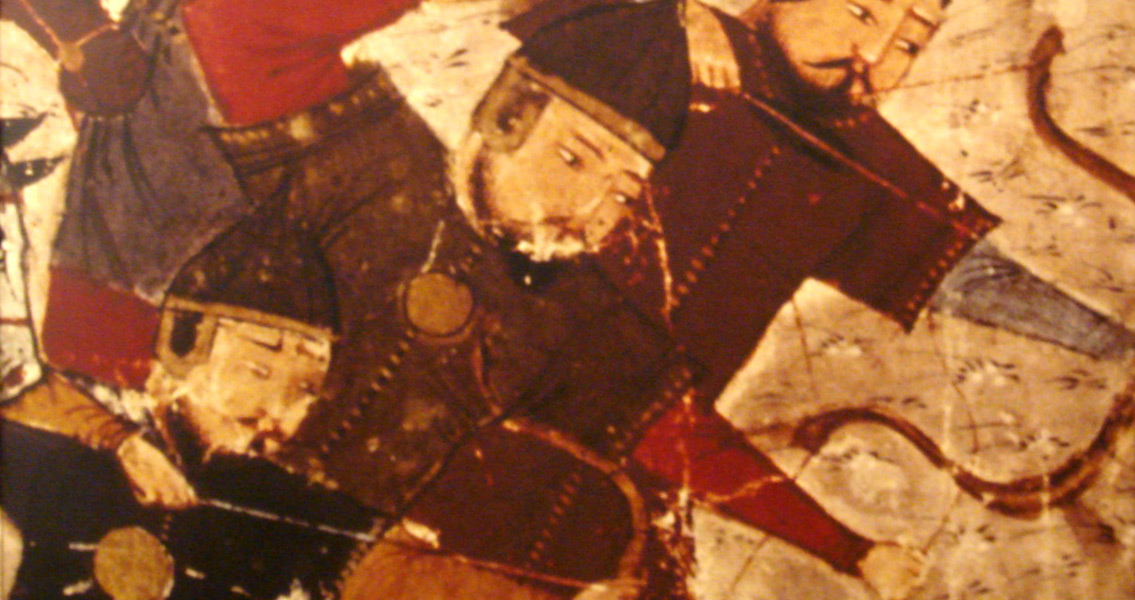
Remains of 13th Century 'Siberian Robin Hood' Discovered

the Siberian Times: “At the moment we have a birch bark quiver, two bone plates with elaborate ornaments, iron arrowheads, wooden arrow shafts, birch bark linings for a saddle, the remains of ribbons, likely silk, and what is left of a leather strap. Initially we thought that the bone plates were details of the bow, but they turned out to be the decorations of the quiver.” The warrior is believed to be Mongolian, although no other quivers like the one at the burial site have ever been found. The shape of the arrow heads suggest the man was a warrior, although they could also have been used for hunting. Archeologists are hopeful they’ll receive permission to examine the sarcophagus next year. In the meantime, steps have been taken to preserve the site, and work will continue to find the deceased archer’s bow. Vasily Oinoshev, the director of the Agency for Cultural and Historical Heritage of the Altai Republic, says in the Siberian Times: “The quiver is a very interesting one. It has separate ‘pockets’ for different types of arrows. This quiver is a great find, it is very well preserved. It will be important to examine it more thoroughly to understand its construction,” adding, “Sadly we cannot go and excavate the grave immediately. We need to have a special permission for work. Excavations are allowed in the period from 1 April to 1 November. So as soon as we get all the permits we will go to work on this grave. “ “We are doing all we can to ensure the safety of the grave in winter and to ensure the security of other archaeological objects. I have many questions to how these items were found. The story was that the locals found the grave in a hole in a cliff and took some items from there. But I am not completely sure they have not unearthed it. We need to check all this thoroughly.” Mongolians conquered the region of Altai in the twelfth century, and the area stayed under Mongolian control into the fourteenth and fifteenth centuries, yet finds from this time are rare in Altai. ]]>

Categories
Breaking News

4,000 Years Ago, Ancient Greenlanders Ate Bowhead Whales

Categories
Breaking News

Tiny Grains Push Life Back 300 Million Years

Categories
Breaking News

Findings Tip the Scale to Earhart Surviving Plane Crash

Categories
Breaking News

Infamous Healing Well Discovered Close to Liverpool

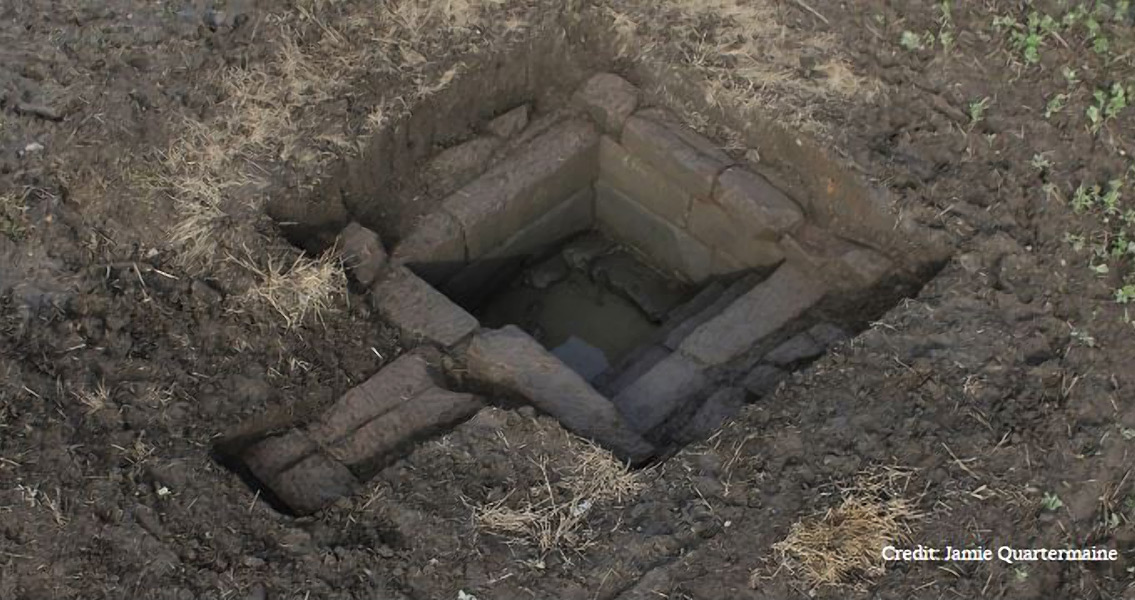
Discovery News. The well, measuring 6.5 feet square, was built with locally sourced sandstone blocks. It consists of the square basin with two steps. After going down the steps, pilgrims would submerge themselves in the pool, which was around 4 feet deep. Water seeped in from below the floor. “The fabric of the well is consistent with a Medieval date,” Quartermaine says in Seeker. “This well was probably a late Medieval foundation as the cult of St. Anne did not become widespread in England until after the end of the 14th century.” The dating is crucial according to Alexandra Walsham, with Cambridge’s Trinity College, who told Seeker that “a Medieval past for many healing wells was assumed or even invented by later antiquaries, especially in the 19th century.” According to local legend, recorded in documents held by Historic England Heritage, St. Anne’s Well was part of an estate held by a priory of around twelve monks which was lost when Henry VIII disbanded the monasteries. The story says that St. Anne had taken a bath in the well, which was said to heal skin and eye afflictions. Attracting a number of pilgrims, a small three-room structure was built around the well, and two monks were stationed there. Local folklore tells of a sixteenth century dispute between Father Delwaney, the prior, and Hugh Darcy, the manager of the neighboring estate, over property lines and access to the well. On one occasion, as the two stood near the well, Darcy predicted that Father Delwaney wouldn’t have his position for much longer. Two days later when the King’s officials arrived at the priory and proceeded to take possession of it and the well, the prior knew Darcy was to blame. A report on local legends published in 1877 in the St. Helens Leader, describes what happened next. The prior hissed out a curse, “With teeth tightly clenched, and his face white with suppressed passion.” Delwaney announced that Darcy would be dead within one year and a day, and then he collapsed and died. Inexplicably, a series of tragedies did befall Darcy. Three months after the prior’s curse, Darcy’s only son died after a mysterious illness, he suffered financially and “plunged recklessly into dissipation”, according to the St. Helens Leader. After a night of heavy drinking at a local tavern, he disappeared. “The search began. Nothing was seen until they came to the well, in which Darcy was found lying dead, his head crushed in”. Despite the legend, the well was revered and sought out, even after the dissolution of the priory, and people submerged themselves in the well waters up until the nineteenth century. Work is now underway to preserve and protect the site. Image courtesy of Jamie Quartermaine]]>

Categories
Breaking News

Discovery of Egyptian Tableau Offers More Questions than Answers

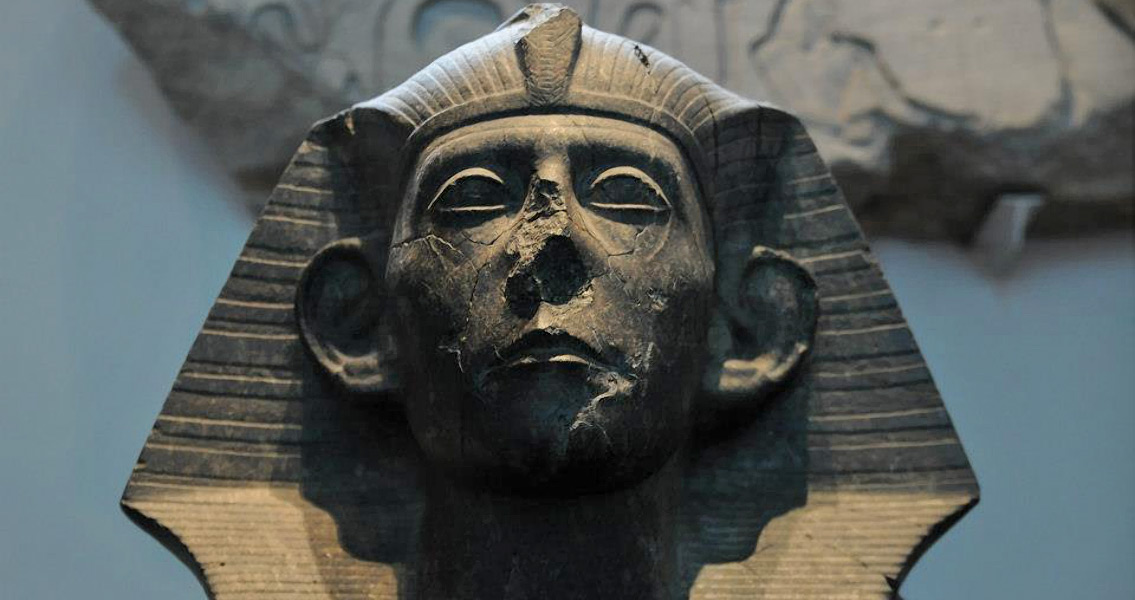
International Journal of Nautical Archaeology (IJNA). Wegner adds that: “some images are small and simple, the smallest reaching only about 4 inches (10 centimeters) in length.” 120 boat images have survived, but it’s believed that there would have been more etched onto the walls of the building in ancient times. Additionally, the tableau contains etchings of cattle, gazelle and flowers. Near the building’s entrance, which measures 68 feet by 13 feet (21 meters by 4 meters), archaeologists found over 145 pottery vessels, a majority of which were buried with their necks facing the building’s entrance way. “The vessels are necked, liquid-storage jars, usually termed ‘beer jars’ although probably used for storage and transport of a variety of liquids”, writes Wegner in IJNA. The building was first documented in a 1904 report by an archeological team working at Abydos from 1901 to 1903. The team, however, didn’t have time for excavations at the building site and had no idea what it contained. The discoveries have left archaeologists with a number of mysteries they’re hopeful future excavations will help solve. For example, the creators of the tableau remain unknown, as does the reason for its creation. It’s possible that whoever built the boat also drew the tableau, or that a group of people participating in a funerary ceremony following pharaoh Senwosret III’s death drew the images on the walls of the building. Another possibility is that people accessed the building after the pharaoh’s death and created the etchings. Archaeologists have determined a group of individuals did enter the building sometime after the pharaoh died and salvaged the boat in order to reuse the planks. Also puzzling to archeologists is the purpose of the pottery vessels discovered by the building’s entrance. It’s possible that liquid from the vessels was spilt on the ground purposefully to imitate the boat “floating” into place. It’s also possible the wooden boat had been moved across the desert on a wooden sledge. The liquid in the vessels would then have been used to solidify and lubricate the ground along the path of the boat. Wegner says in IJNA “the ceramic vessels used in this journey may themselves have taken on a ritual significance, and both boat and jars were then buried together as ceremonial interment of objects associated with royal mortuary rites.” Excavations by the team are planned in the future, in collaboration with Egypt’s Ministry of State for Antiquities. ]]>

Categories
Breaking News

Site with Reburied Skeletons Discovered by Accident

Western Digs: “This is one of the few archaeological contexts registered by archaeologists in this region, if we confirm the hypothesis [that this burial dates from] the Late Archaic, we could have a site with information about the transition to agricultural, sedentary communities in the region.” A number of the remains, both avian and human, had been naturally mummified by the arid climate. In addition to the skeletons and bird remains; textiles, baskets, stone points and other artifacts were also found. The two sets of remains were surrounded with an array of goods, including a large sea shell and a dress or bag made from deer hide. The gender and exact age of the child is unknown, although the size suggests at the time of death they were between one and three years old. The partial adult skeleton had large leg bones that had been tied together, similar to other, later finds in northern Mexico. The practice of reburying partial skeletons was not uncommon. Starting around 1100, the citizens of Paquime are known to have dug up and then re-buried their dead, sometimes collecting the bones in large jars or bundles, possibly to be buried with relatives. If this new cave site predates Paquime, the burial may be earlier evidence of the practice. Not found at the graves were artifacts, such as ceramics, associated with the Puebloans who built and then settled in trade centers like Paquime during the Medio Period. This absence indicates the graves predate the creation of Paquime, which happened around the year 700. The early date also makes the discovery of the bird, a scarlet macaw, especially significant because tropical birds are not indigenous to the high desert region of Chihuahua. The discovery of the macaw in this pre-Medio Period site indicates the presence of long-distance trade in exotic goods which pre-dates Paquime by centuries. “This finding verifies once again that the [mountains of Chihuahua] have been a cultural corridor between the coast and the desert north with the south,” Gallaga is quoted as saying in Western Digs. “At the end of the day, this discovery shows us that there is still a lot to do in the northern Mexico region, archaeologically speaking.” Gallaga’s team was called to the site when the property owner uncovered the strange remains while using heavy equipment to level the cave’s floor. “Many archaeological discoveries are the result of planned research and are conducted during years of intellectual efforts,” Gallaga says in Western Digs. “Others are the result of an accident.” ]]>

Categories
Breaking News

Alcoholic Brew Found in Iron Age Burial Plot Recreated

Categories
Breaking News

The Relationship Between Early Man and Eurasian Cave Lion Studied

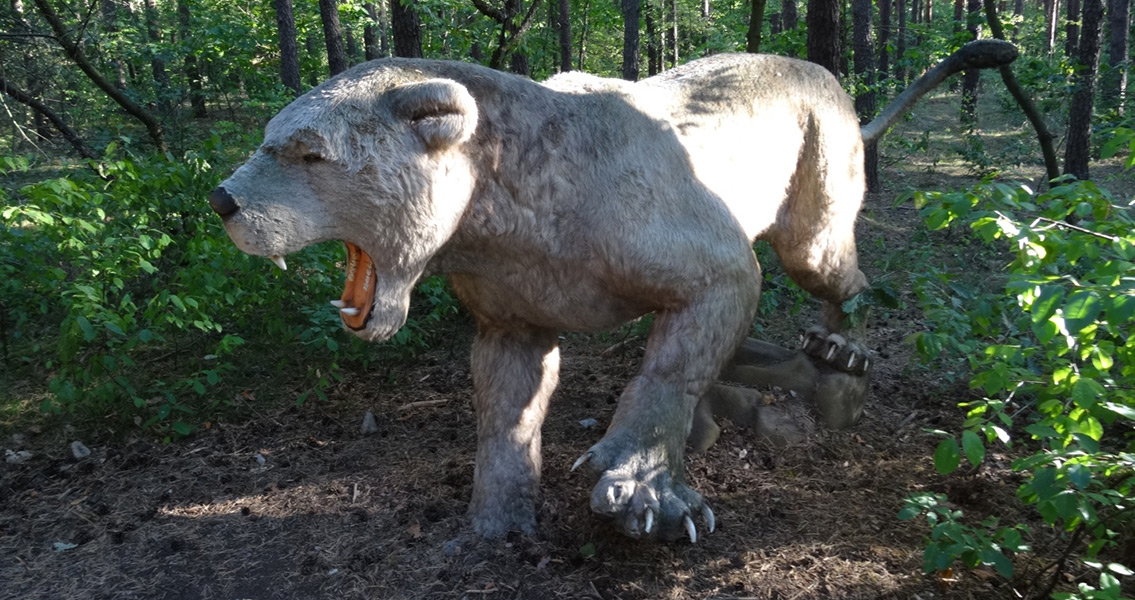
Panthera spelaea, the Eurasian cave lion, a species that was larger than an African lion without the mane, became extinct approximately 14,000 years ago, but the reasons behind its disappearance have never been completely understood. Archeological findings show that between 50,000 and 10,000 years ago, Upper Paleolithic humans did in fact hunt animals both large and small, however, evidence of lion hunting is rare. In an attempt to determine if early humans hunted the cave lion, thereby contributing to its extinction, Marián Cueto, with the Universidad de Cantabria, Spain, and her colleagues examined nine fossilized toe bones from the claw of a cave lion, looking for evidence the cats were exploited by humans. The feline bones were unearthed at La Garma, the Upper Paleolithic cave site located in northern Spain. What researchers found was that a majority of the bones did in fact show signs of having been modified by stone tools used by humans, along with signs of a specific technique, similar to the one used by modern hunters to keep the claws attached to the fore while skinning it. The research suggests that the toe bones may have been part of a single lion pelt, possibly covering the floor of the occupied cave. The La Garma site is known to have been associated with human rituals, and it’s possible the Eurasian cave lions had some symbolic meaning for Upper Paleolithic humans. While the analysis doesn’t offer definitive findings which would conclude the Upper Paleolithic humans hunted cave lions for their pelts, it also doesn’t offer any findings to the contrary, and other evidence has been found showing that cave lions and early humans did interact in some capacity. The cave, situated on La Gama Mountain, is divided into different levels. In the upper section there are human burial sites, the intermediate level holds a large number of palaeontological remains, primarily bones. The most important remains, however, are found on the lower level where there are three intact spaces with numerous examples of painted art, including an amazingly realistic black horse, and a number of symbols painted red. Also found are representations of goats and bison and still more panels are covered with hand prints. The drawings date to between 28,000 and 13,000 years ago. Prehistoric humans ventured into the La Garma cave to perform sacred rituals. They navigated hundreds of yards through the dark, until they reached one of the circular stone huts (each with a horse skull in the center) where their religious ceremonies took place. Untouched for thousands of years, La Garma acts as a time capsule, with everything remaining exactly as it was during the Upper Paleolithic era. The nature of the ceremonies is unknown, however, the discovery of just foot bones indicates that aside from the pelts, the claws of the lion were also brought into the cave. The research has been published journal in the online journal PLOS ONE. Image courtesy of Wikimedia Commons user: Pit1233 ]]>

Categories
Breaking News

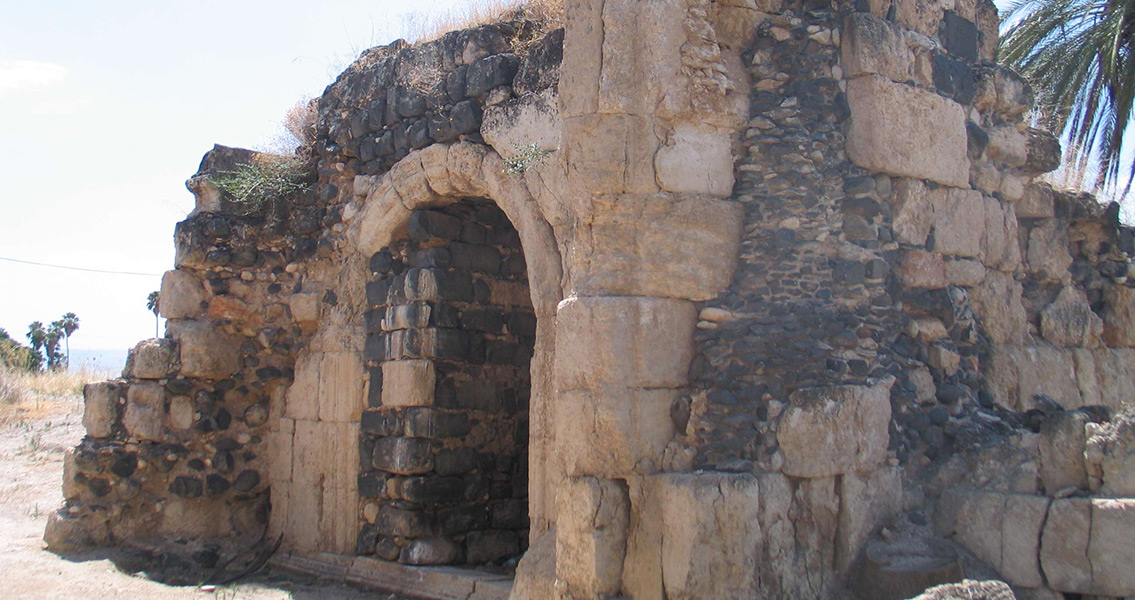
Excavations Interrupted by WW2 Continue at Khirbat al-Minya

Science Daily, “The new excavations and the accompanying architectural survey will provide us for the first time with detailed insights into what happened on the shores of the Sea of Galilee before the palace was built and after it was destroyed by the earthquake of 749 AD. Our results will then contribute to the future development of the site.” ]]>