Categories
Breaking News

New Evidence of a Battle Still Mourned during Jewish Fast

Jewish Press: “This is a fascinating testimony of the intensive bombardment by the Roman army, led by Titus, on their way to conquering the city and destroying the Second Temple. The bombardment was intended to attack the sentries guarding the wall and provide cover for the Roman forces so they could approach the wall with battering rams and thereby breach the city’s defenses.” As described by historian Flavius Josephus, who witnessed the event, the last battle against the Jewish rebels started with the Romans using catapults to hurl large stones, spears and gravel at the outer third wall and its defenders. The Romans were firing from siege towers which Jewish weapons were unable to reach. When the Jews were forced to retreat, they were no longer able to prevent the endless onslaught of Roman battering rams which gradually destroyed the wall. Josephus wrote: “The soldiers who reached the top of the wall opened the gates and brought the entire military force inside. Therefore on the 15th day of the siege, the 7th day of Artemisius [corresponding to the Hebrew month of Iyar], the Romans took control of the … wall, most of which was destroyed to the foundations along with the northern part of the city.” It took another two and a half months of battle before Titus was able to breech the remaining two walls. The findings attesting to the battle at the third wall were discovered in the Russian Compound, an area west of Jerusalem’s Old City, named for the Russian Orthodox church built there during the nineteenth century. Construction of Jerusalem’s third wall was started by Judean King Agrippa I, however, construction was halted and the wall was only completed years later, haphazardly and with inadequate resources making it a weak spot in the city’s defense. The destruction of the first and second temples is still mourned yearly as the Jewish fast Tisha B’Av, while the Arch of Titus, which celebrates the Roman’s victory in Jerusalem and the Temple’s destruction, is still standing in Rome. The excavation findings are scheduled to be presented at the “New Studies in the archaeology of Jerusalem and its Region” conference. ]]>

Categories
Breaking News

Nan Madol Earliest Pacific Settlement Ruled by a Chief

Science Daily: “The kind of society that we live in today, it wasn’t born last year, or even 100 years ago. It has its roots in a pre-modern era like Nan Madol where you have a king or chief. These islanders invented a new kind of society — that is a socially creative achievement. The idea of chiefs, someone in charge, is not a new thing, but it’s an extremely important precursor. We know tribes and bands predate chiefdoms and states. But it’s not a straight line. By looking at these intermediate stages we get insight into that social phenomenon.” The research team is the first to use uranium-thorium series dating, a significantly more precise method than radiocarbon dating, to determine the age of the stone structures that comprise the site of Nan Madol. Portable X-ray fluorescence (XRF) geochemically matched the basalt stones to natural sources found on the island. The uranium-thorium technique calculates a date based on characteristics of the radioactive isotope thorium-230 and its radioactive parent, uranium-234. “The thing that makes this case special is Nan Madol happened in isolation, it happened very recently, and we have multiple lines of evidence, including oral histories to support the analysis,” McCoy is quoted as saying in Science Daily, “And because it’s an island we can be much more specific about the natural resources, the population, all the things that are more difficult when people are on a continent and all connected. So we can understand it with a lot more precision.” Previous dating indicated that Nan Madol, a UNESCO World Heritage Site, had been established in 1300 CE. McCoy’s team has narrowed that to a 20-year window over 100 years earlier, between 1180 CE and 1200 CE, which means the dynasty of Saudeleur chiefs who ruled the island society for over 1,000 years was also established earlier than previously believed. Uranium dating shows that by 1180 CE, the huge stones used to construct the tomb were being transported from a volcanic plug located on the opposite side of the island, and that by 1200, the island’s chief was interned there. Pohnpei Island is an inactive volcano (for a million years at least), much larger than neighboring islands at 128 square miles (334 square kilometers). It was originally settled around 1 CE by islanders from the Vanuatu or Solomon island groups. To construct the tomb and other structures, basalt boulders, weighing tons apiece, were moved somehow from quarries on the other side of the island to the lagoon where they remain today. The research has been published in the journal Quaternary Research. Image courtesy of Mark McCoy ]]>

Categories
Breaking News

17th Century Royal Murder Meets 21st Century DNA Analysis

Hannoversche Allgemeine Zeitung. “If it really is the bones of Königsmarck, [it] would be a sensation.” Philip and Sophia’s love story has inspired a number of films and books, largely due to the surviving cache of love letters. Sophia is typically seen as a sympathetic figure despite her infidelities because her husband was such an awful person, not just to his wife but to everyone. George was also unfaithful, physically abusive, and he enjoyed openly snubbing her in favor of his mistress: Melusine von der Schulenburg. According to Eleanor Herman’s book “Sex with the Queen”, George’s own mother referred to him as “the most pigheaded, stubborn boy who ever lived, who has round his brains such a thick crust that I defy any man or woman ever to discover what is in them.” Sophia spent the remainder of her life, 32 years, locked up at Castle Ahlden in Saxony. She was buried there, but later transferred and interred next to her parents in Celle, where she remains today. ]]>

Categories
Breaking News

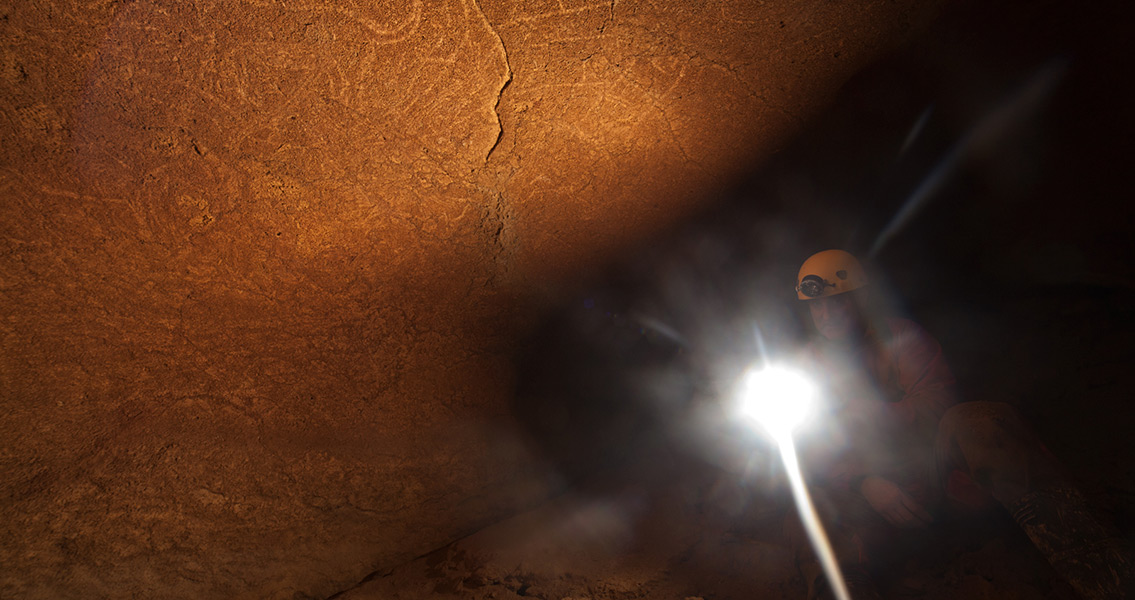
Spectacular New Cave Art a Treasure of Humanity

Categories
Breaking News

Was the Terracotta Army the Result of Greek Influence?

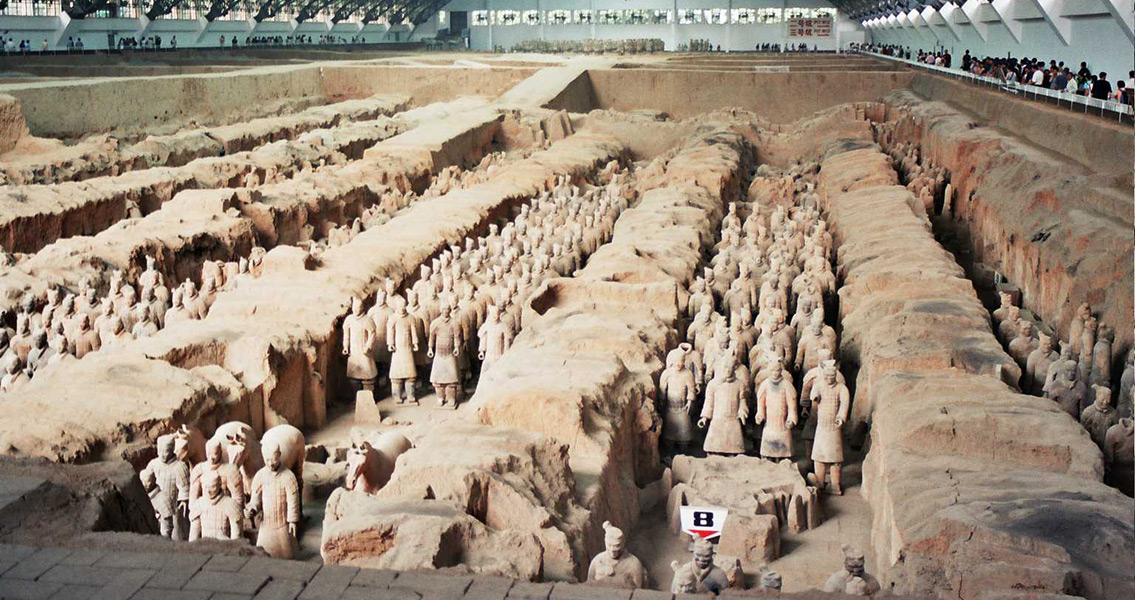
Guardian. “We now think the Terracotta Army, the acrobats and the bronze sculptures found on site, have been inspired by ancient Greek sculptures and art.” Lukas Nickel, from Vienna University, told the Guardian: “I imagine that a Greek sculptor may have been at the site to train the locals.” Ying Zheng, who took the name of Qin Shi Huang Di—the First Emperor of Qinook, ascended to the throne in 246 BCE when he was only 13-years-old. By 221 BCE, he had successfully unified a number of warring kingdoms. During his reign, Qin standardized coins, measures and weights; interlinked the kingdom’s states with roads and canals; and built the first Great Wall. According to the writings of the court’s historian Siam Qian, Qin ordered the construction of the mausoleum soon after becoming emperor. Over 700,000 laborers labored on the project, which was completed in 209 BCE, a year after Qin’s death. Archaeological finds from the site have already revealed the extent of early trade. The Silk Road, with numerous caravan stops and trading posts, was established in the third century during the Han dynasty. However, a number of the trade routes had already been in existence for years. Chinese historians documented the arrival of Roman traders when Augustus was emperor of Rome (27 BCE to 14 CE), during which time Chinese silk was flooding into Rome. Writers like Seneca even denounced those who wore it as immoral and effete. The research is discussed in the documentary, The Greatest Tomb on Earth, sponsored jointly by the BBC and National Geographic. ]]>

Categories
Breaking News

Ancient Footprints Persevered in the Shadow of African Volcano

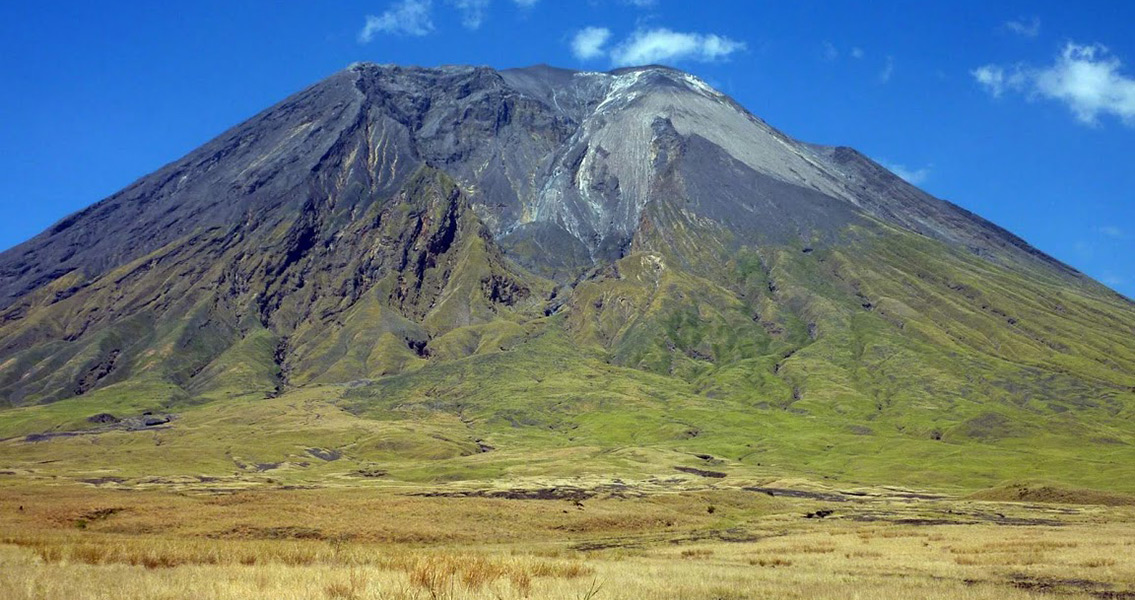
Australopithecus afarensis. Engare Sero is unique in that the sheer number and diversity of the prints offers an amazingly detailed snapshot of our ancestors’ lives in Africa. William Harcourt-Smith, a paleoanthropologist at the City University of New York, told National Geographic: “It’s a very complicated site, one area where there are so many prints, we’ve nicknamed it the ‘dance hall,’ because I’ve never seen so many prints in one place. It’s completely nuts.” The Engare Sero site exists in large part because of the Ol Doinyo Lengai, a volcano which looms above Lake Natron. Known for its thin, silvery lava, the 7,650-foot-tall volcano is a pilgrimage destination for the Maasai people, who go there to plead with their god Engai for cattle, rain and children. The ash-rich mud that retains the footprints was originally wash off from the volcano, traveling downhill to eventually form the mudflats. In a matter of just hours to days, the surface of the mud dried out, capturing the prints in a cracked crust. A later flow of debris buried the footprints between 10,000 and 12,000 years ago, covering them for millennia. Local villagers discovered a small number of the footprints sometime before 2006, but the site didn’t receive scientists’ attention until 2008, when a conservationist from Pennsylvania, vacationing near Lake Natron (just several hundred yards away from the footprints), happened upon the prints. Discovering when the footprints were actually left at Engare Sero proved to be an enormous challenge for researchers, but once they realized that water had carried the ash to Engare Sero determining the footprints’ age became possible by determining the mud’s youngest crystals. The study was recently published in the journal Palaeogeography, Palaeoclimatology, Palaeoecology. ]]>

Categories
Breaking News

Brazilian Dinosaur Discovered Six Decades Ago Comes Out of the Closet

Austroposeidon magnificus. Diogenes de Almeida Campos, the Museum director, is quoted as saying in Phys.org that six decades does sound on the slow side for studying such a big find. He went on to explain that in the 1950s Price and his colleagues were pioneers in the field of paleontology for Brazil and that a vertebra of this size needed to be studied. Campos continued, saying that a lack of money had held back research, as well as a shortage of staff qualified to take up the task. Today there are still only ten dinosaur experts in the entire country of Brazil. Campos told Phys.org: “We were waiting for the staff…, for a laboratory that started from nothing to mature. We made a first effort with students about eight years ago and it didn’t succeed.” It was one of Campos’ students, Kamila Bandeira, who made the mysterious creature the subject of her doctoral thesis, and put the pieces of the puzzle together. A majority of dinosaur discoveries occur in the desert or largely barren areas, like the southwest region of the USA, the south of Mongolia or Argentina, because they’re easier to find. The fossilized bones belonging to the biggest dinosaur ever discovered, around 40 meters (130 feet) long, were discovered in 2014 in Argentina. Like so many other discoveries, Austroposeidon magnificus was found by chance, by construction workers building a road near Sao Paulo. Researchers believe the small number of bones recovered at the site points to the creature’s unceremonious end. Campos told GMA News Online, “When these animals die, it’s… a huge new source of meat. So all the hunters, the carnivores ate this creature. The first thing they ate is the head, because the brain must be tasty. They also broke the long bones to get at the marrow… After, came smaller animals and nothing was left over. Anything that did remain the beetles and the spiders and the ants finished, and when there was just bones, the bacteria came. Finally, the remains sank into the lagoon.” There may yet be many more such discoveries waiting in Brazil’s thick flora. “Pay attention when roads are built, when wells are dug,” Campos tells GMA, “You could have a dinosaur in your backyard and not realize!” ]]>

Categories
Breaking News

Evidence Shows Early Humans Travelled to Stonehenge Before it was Built

Guardian the discovery was: “a world first, it’s a big deal,” adding that the information substantially increases what’s known about the site, saying, “It is very hazy and this evidence just makes the glass slightly less dark, it is a significant movement forwards.” “It is an amazing sequence. There is nothing like it in Europe and now we’ve got this evidence from the dog you start to piece it together. You can see that this place seems to have been special to not just local people, it seems to have been drawing in people from long distances away and the sort of distances you would not expect for mobile hunter-gatherers.” Researchers theorize that the dog would have been similar in color, size and shape to an alsatian, although with more wolf-like features. Other artifacts include the bones of oxen (known as aurochs), trout and salmon, as well as frog’s legs – which were staples of people’s diets long before they were synonymous with French cuisine. “Discoveries like this give us a completely new understanding of the establishment of the ritual landscape and make Stonehenge even more special than we thought we knew it was,” Jacques is quoted as saying in the Guardian. The tooth also raises questions as to why humans would travel such a distance and may indicate that Stonehenge was a hub of some sort. Previous excavations have unearthed a slate tool from Wales as well as stone tools from central and west England. Additionally, at the end of the Ice Age, Blick Mead would have been an attractive gathering place with a natural spring and easy access from the nearby Avon river. Numerous deer and aurochs bones at the site also support the idea that massive extinct prehistoric cattle grazed there. “The fact that a dog and a group of people were coming to the area from such a long distance away further underlines just how important the place was four millennia before the circle was built,” Jacques told the Guardian, “A dog tooth from York, a slate tool from Wales and a stone tool from the Midlands show that this wasn’t just the place to live at the end of the Ice Age, but was known by our ancestors for a long time widely across Britain. They kept coming here.” ]]>

Categories
Breaking News

Researchers Place Extinct Horse with Humans in Oregon

Equus conversidens: a small, short-legged extinct species of horse, also known as the Mexican horse, which roamed parts of North America at one time, coexisted with the people living in the Paisley Caves area of Oregon over 14,000 years ago. By using discriminant analysis, an approach which relies on the data available to calculate an unknown species’ identity, the authors of the study studied horse toe fossils unearthed during previous archaeological investigations in 2009 and 2010 at Paisley Caves. This research represents the first time this analytic and replicable approach has been utilized to identify a species of horse based solely on toe bones. It is also the first time this specific horse species has been found in Oregon. An archaeologist with the University of Oregon (UO) and one of the study’s co-authors, Dennis Jenkin’s work at Paisley Caves is well-documented. Evidence, which included human feces dating back 14,000 years, identified the site as one of the earliest to be occupied by humans in North America. When the team uncovered horse remains there, paleontologists studying Pleistocene mammals also became interested in the find. “We knew that horses were around at the same time as the first Americans, but we wanted species-level information about those horses,” paleontologist Edward Davis said in an article on the UO website. Davis and Jenkins then turned to Eric Scott, curator at the John D. Cooper Archaeological and Paleontological Center in California and an expert on ice-age horses. Scott maintains large sets of data on the remains of extinct species from archeological sites across the western United States. “Sites like Paisley are important in understanding the paleoecology of North America,” Davis said in the article, “It’s pretty rare to find this kind of reliable fossil evidence of humans coexisting with large Pleistocene mammals.” “It’s often imagined that humans are to blame for the extinctions of ice age megafauna,” Jenkins is also quoted as saying in the UO article, “but at Paisley and elsewhere in North America, we see humans and horses coexisting for at least a thousand years, which suggests a different story.” These fossils, along with other items discovered at Paisley Caves, will be available for public viewing at the university’s Museum of Natural and Cultural History. The exhibit, Oregon—Where Past is Present, opens in November and features touch-screen technology, enhanced artifact displays and a brand new section called Paisley Caves and the First Americans. The study, a collaboration between researchers from the UO, Harvard University and California State University, has been published in the Journal of Vertebrate Paleontology. ]]>

Categories
Breaking News

DNA Sequencing Proves First Polynesians Didn’t Linger on Their Journey

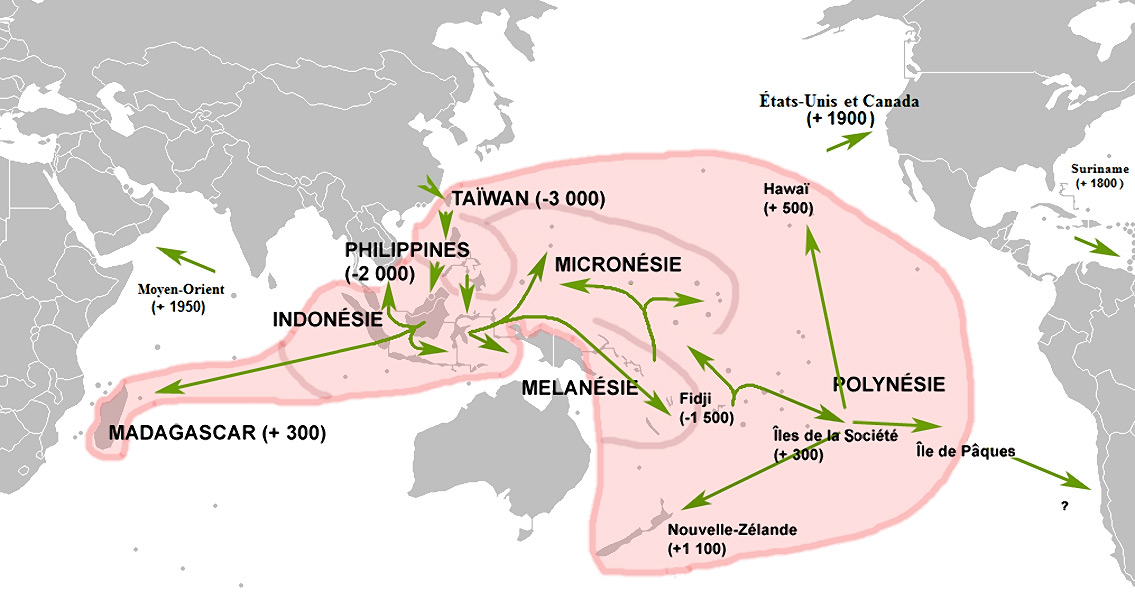
Science that the study decides a decades-long dispute, showing the East Asians skipped over islands populated by Melanesians at the time without picking up any of their genes, an example of how cultures can initially avoid mixing between groups. Known collectively as the Lapita culture, the first Polynesian Islanders left behind plenty of enticing artifacts, including unique red stamped pottery, shell ornaments and obsidian tools. These artifacts first showed up over 3,000-years-ago in New Oceania, in the Bismarck Archipelago. The Lapita culture grew yams, taro and breadfruit; brought chickens and pigs; and quickly spread to other islands such as New Caledonia and Vanuatu, and then to Tonga, Samoa, Fiji, and beyond. The two models previously considered by archaeologists included the “express train” model, which had the Lapita traveling quickly from mainland China to Taiwan, the Philippines, and then across open ocean to Vanuatu and then Samoa. Covering a total of 24,300 kilometers in around 300 years. This model is supported by linguistics models showing how Austronesian languages, which are very different from the Papuan languages of Melanesia, spread into Oceania from East Asia. The “slow boat” model was supported by the DNA of live Polynesians which showed evidence of their Lapita ancestors lingering in Melanesia, living with the locals and then spreading slowly eastward. This new study involved the extraction of DNA from the ancient skeletons of four women from the islands Tonga and Vanuatu, dating back to between 2,300 and 3,100 years ago, three of which were directly connected to the Lapita culture. The international team sequenced the DNA (up to 231,000 positions) of each skeleton and then compared their findings to the DNA of almost 800 people from 83 different populations currently living in East Asia and Oceania. The four ancient women shared all of their ancestry with the Atayal, an indigenous people from Taiwan and the Kankanaey people from the Philippines. The Lapita showed no evidence of a Papuan ancestry, meaning they took the express route all the way to Oceania without ever mixing with Melanesians. ]]>