



Nature Communications, the researchers note that the crypt was purposefully constructed for a high status member of the community. The initial burial was for a man in his forties killed by a blow to the head. His burial is the richest ever found in the southwest USA, his grave goods including 11,000 turquoise beads and 3,300 shell beads alongside other artifacts including abalone shells and a conch shell trumpet originating from the Gulf of California. The other thirteen burials in the building had taken place over the course of the following 300 years. This led the team to wander if the fourteen people had all been related. DNA analysis found that all of the individuals shared the same mitochondrial genome sequence. Inherited only from the mother, matching mitochondrial DNA not only suggests a group of individuals were from the same family, but that the inheritance was matrilineal. Once the matrilineal connection had been established, the team looked to determine specific relationships among the individuals. “Using DNA sequences from the nuclear genome combined with the radiocarbon dates, we identified a mother-daughter pair and a grandmother-grandson relationship,” said Kennett. “For the first time, we’re saying that one kinship group controlled Pueblo Bonito for more than 300 years,” said Steve Plog, Professor of Archaeology, University of Virginia, who worked with the team to radiocarbon date the remains. “This is the best evidence of a social hierarchy in the ancient Southwest.” The study is available at Nature Image: Selection of turquoise and shell artifacts found in Room 33 of Pueblo Bonito (Chaco Canyon, New Mexico, USA), courtesy of Roderick Mickens ©American Museum of Natural History]]>

The Guardian. “Actually, it would be more like an elephant with a number of mammoth traits. We’re not there yet, but it could happen in a couple of years.” Already dubbed a “mammophant”, the animal would have numerous mammoth traits such as small ears, shaggy hair and blood that allows the animal to tolerate freezing temperatures. The existence of an actual mammophant however, is still years beyond the creation of an embryo. Future plans, which could take more than a decade to realize, are to grow the embryo in an artificial womb in a lab. The scientists believe their modifications can help the endangered Asian elephant, and help battle global warming by reducing the rate at which Arctic permafrost is thawing. As the permafrost thaws, the process of microbes consuming the organic material beneath it releases huge amounts of the greenhouse gas methane into the atmosphere. When herds of mammoths wandered the Arctic, they suppressed forest growth which in turn prevented the melting of permafrost. “They keep the tundra from thawing by punching through snow and allowing cold air to come in,” Church explained in the article, “In the summer they knock down trees and help the grass grow.” There are critics of the team’s work who consider the revival of extinct creatures to be filled with unpredictable consequences, such as the impact such an introduction would have on elephants and other animals. Regardless of the ethical considerations the team of scientists continues their work. They successfully grew a mouse embryo inside an artificial womb for 10 days, half of its 20-day gestation period. An elephant calf‘s gestation period is 660 days, making growing one a much more difficult feat. Professor Church recently spoke about his team’s progress trying to recreate the long-extinct mammoth’s genetic blueprint over the past two years at the annual meeting of the American Association for the Advancement of Science (AAAS) in Boston. ]]>
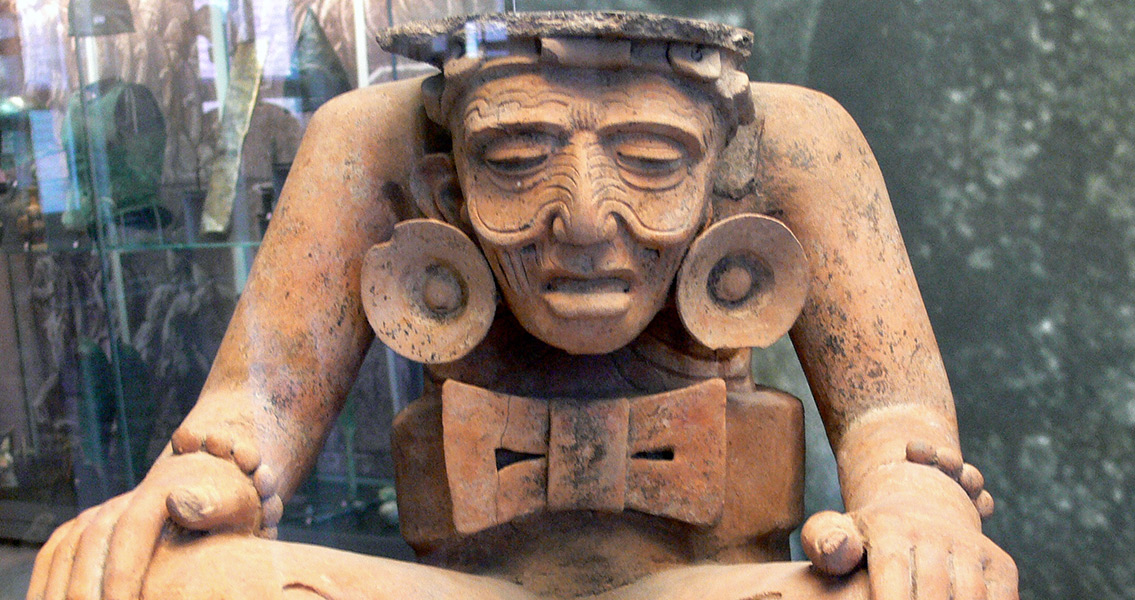
Nature, scientists say that DNA recovered from Mexican burials – specifically stomach bacterium – can be linked to the pestilence that wiped out four fifths of the native population in the 1540s. Before the first Spanish conquistadors arrived in Mexico in 1519, estimations put the native population at approximately 25 million; just 100 years later, that figure had plummeted to around 1 million, driven by Spanish conquest and multiple disease epidemics. These epidemics, called “cocoliztli” in the Aztec language of Nahuatl, raged between approximately 1546 and 1576. Two of the largest cocoliztli are thought to be responsible for the deaths of anywhere between 7 million and 18 million indigenous people in the highlands of Mexico alone. The causes of these cocoliztli have long been debated, as other diseases such as typhus, smallpox, and measles have all been ruled out by previous scholarship. A recent theory, from a 2002 research study from the National Autonomous University of Mexico, proposed a combination of catastrophic drought and viral hemorrhagic fever as the culprit. Two new studies have tried a different tack. Researchers from the Max Planck Institute in Germany, led by evolutionary geneticist Johannes Krause, examined the teeth of nearly 30 individuals who are thought to have died during the 1545 cocoliztli. Scientists extracted teeth from the remains and sequenced their DNA, recovering traces of ancient bacteria from several samples. This ancient DNA was found to be a match with the genome of salmonella. Additional work led the team to pinpoint the specific strain of the bacterium, revealing that Paratyphi C, a type of salmonella that causes an illness similar to typhus, was the likely culprit. The strain is an active one, mostly seen in developing countries today, with a 10% to 15% mortality rate if left untreated. Meanwhile, a second study from the University of Warwick in the UK and spearheaded by microbiologist Mark Achtman, dovetails with this first piece of research. The remains of a woman from Trondheim, Norway, interred around 1200 CE, were found to also hold traces of Paratyphi C. The discovery not only shows the salmonella strain was active in Europe, it’s also the earliest evidence of the bacterium to date. This doesn’t in and of itself link the Norwegian instance of Paratyphi C to its appearance in Mexico of course, nor could it be proof positive that the infection was spread to native Aztecs by European imperialists. However, it’s not out of the question, especially since there are some who can become carriers of Paratyphi C without becoming sick. In other words, a Spanish conquistador who looked otherwise healthy could have infected native populations. Without natural resistances to the bacterium, indigenous peoples would have been ravaged by the infection. The two research studies, both which have been published on the BioRxiv servers, are available here and here]]>
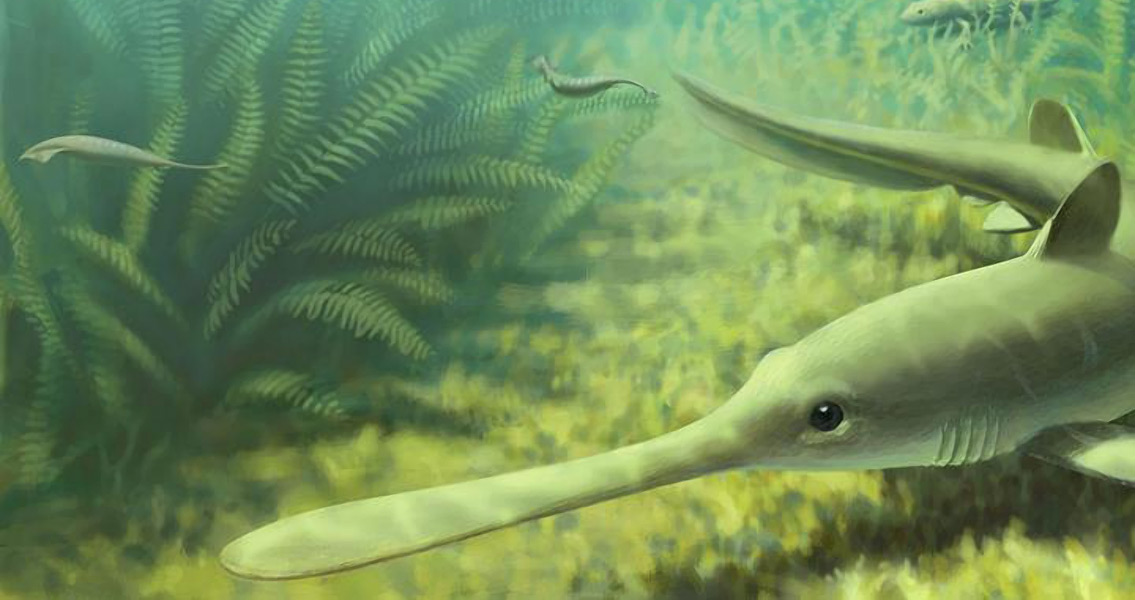
Tullimonstrum gregarium, aka the Tully Monster, a bizarre 300 million year old creature whose remains have been found exclusively in the state of Illinois, has long been a source of mystery to scientists. Made from a strange looking mixture of body parts – a long eel like body, tail fins resembling a squid’s back end and a long tentacle like neck culminating in a crab claw like mouth – Tully Monster has been almost impossible for scientists to categorise. Last year, two studies claimed to have finally brought the mystery of the Tully Monster to a close. The first claimed to have found evidence of a primitive backbone among Tully Monster fossils. It was a discovery which led the authors to conclude the creature had been a fish similar to a modern lamprey. Headed by PhD student Thomas Clements from the University of Leicester, UK, the second study also claimed to have convincing proof the creature was a vertebrate. The conclusion was based on evidence proving that two long stalks coming from the creature’s body were eyes. Clements’ team argued that such eye stalks are only known to exist in creatures with backbones. Now, a team of paleobiologists led by Lauren Sallan claim both studies are wrong. “This animal doesn’t fit easy classification because it’s so weird,” said Sallan, an assistant professor in the University of Pennsylvania’s Department of Earth and Environmental Science. “It has these eyes that are on stalks and it has this pincer at the end of a long proboscis and there’s even disagreement about which way is up. But the last thing that the Tully monster could be is a fish.” Published in the journal Paleontology, Sallan and colleagues’ report argues there is little convincing evidence Tully Monster was even a vertebrate. “It’s important to incorporate all lines of evidence when considering enigmatic fossils: anatomical, preservational and comparative,” said Sam Giles, a junior research fellow at the University of Oxford and a coauthor of the study. “Applying that standard to the Tully monster argues strongly against a vertebrate identity.” The team’s biggest criticism is the fact that none of the 1000 Tully Monster remains studied so far show signs of the structures believed to be universal in aquatic vertebrates. “You would expect at least a handful of the specimens to have preserved these structures,” Sallan said. “Not only does this creature have things that should not be preserved in vertebrates, it doesn’t have things that absolutely should be preserved.” As Sallan’s team point out, accurately classifying such an unusual creature is vital for the broader understanding of evolution. “Having this kind of misassignment really affects our understanding of vertebrate evolution and vertebrate diversity at this given time,” Sallan explained. “It makes it harder to get at how things are changing in response to an ecosystem if you have this outlier. And though of course there are outliers in the fossil record — there are plenty of weird things and that’s great–if you’re going to make extraordinary claims, you need extraordinary evidence.” Since its discovery in the 1950s Tully Monster has been through a host of different classifications. It seems the mystery surrounding its identity is far from solved. “Initially it was published as a worm,” Sallan said. “There is a well-constructed argument that it is some kind of mollusc, like a sea cucumber. And there’s another very strong argument that it’s some kind of arthropod, similar to a lobster.” Featured Image: An illustration depicts what Mazon Creek may have looked like 300 million years ago, complete with Tully monsters (the two small swimming creatures), a large shark and a salamander relative. Courtesy of John Megahan ]]>

Times of Israel. The town’s affluence could have served as a reason for the heightened security. Beit She’arim was the home to many prominent and wealthy Jews, so the community might have been named from the fortifications built to keep them safe. Another possibility is that it was the site of an important Roman fortress. Erlich and her team have plans to return and continue excavations at both Beit Zaid and Beit She’arim next season. ]]>
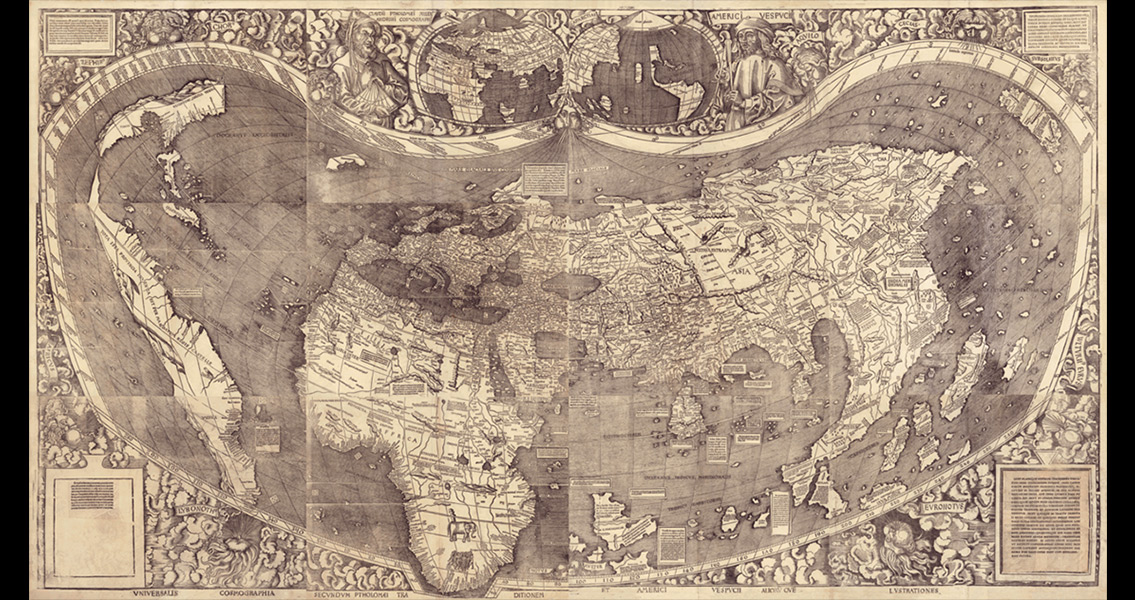

Geology. ]]>