Categories
Breaking News

Man Made Amazon Theory Finds New Support In Trees

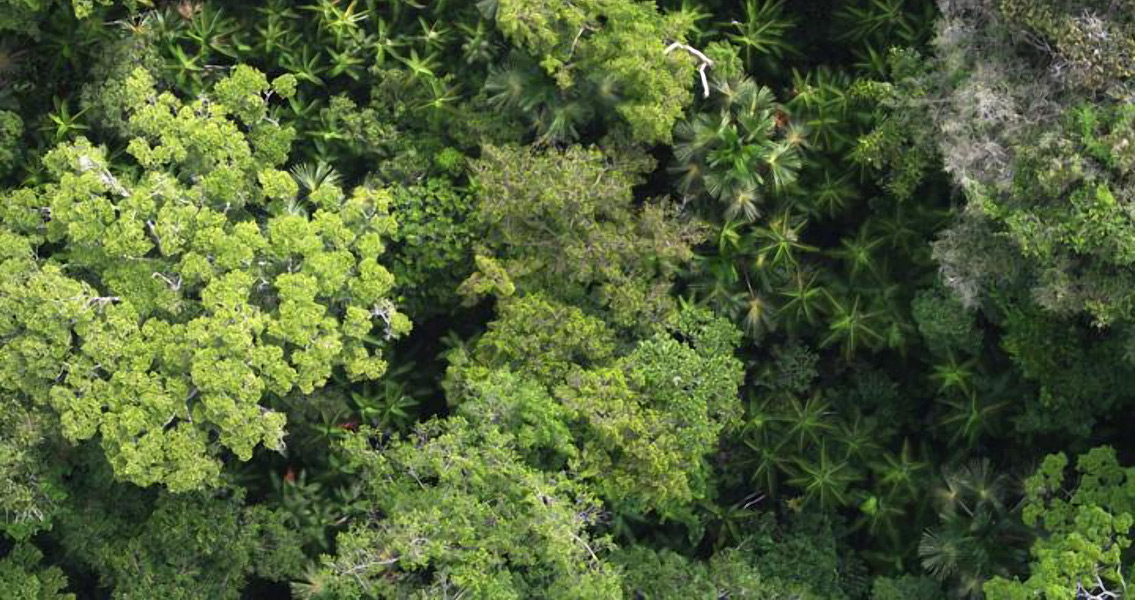
Was The Amazon Rainforest Man Made? Traditionally, historians have argued that the Amazon rainforest was sparsely populated prior to the arrival of Europeans, a cultural blackhole when compared to the richly populated rest of pre-Columbian South America. Extremely fertile land found radiating out from the remains of ancient settlements over the last few years has led some archaeologists to argue that for millennia people were enriching the relatively poor soil of the Amazon to use for farming. A study published by the Proceedings of the Royal Society of London B: Biological Sciences in 2015 went as far as to argue that a massive civilisation had once domesticated much of the land in the Amazon. They claimed that food production projections supported estimates of 8 million people living in the rainforest as late as 1492. Trees Support the Man Made Amazon Theory Levis and colleagues’ study used the Amazon’s trees as a means to look at the rainforest’s history of cultivation. “For many years, ecological studies ignored the influence of pre-Columbian peoples on the forests we see today. We found that a quarter of Amazonia’s domesticated species are widely distributed in the basin and dominate large expanses of forest. These results clearly indicate that the Amazonian flora is in part a surviving heritage of its past inhabitants,” Levis explained. The team overlayed data from over 1000 forest surveys of the Amazon Tree Diversity network on a map of over 3000 archaeological sites in the Amazon. Comparing forest composition at various distances from archaeological sites generated a picture of how pre-Colombian peoples influenced Amazon biodiversity. 85 tree species known to have been domesticated by ancient Amazonians for shelter, food or other uses formed the basis of the study. Remarkably, the team found that these 85 species were far more likely to be common in the tree surveys than non-domesticated species. These domesticated species were also found to be much more common close to archaeological sites. “This lays to rest the long-standing myth of the ’empty Amazon’,” says Charles Clement, senior researcher at INPA, Manaus, and a coauthor of the study. “Early European naturalists reported scattered indigenous populations living in huge and apparently virgin forests, and that idea has continued to fascinate the media, policy makers, development planners and even some scientists. This study confirms that even areas of the Amazon that look empty today are crowded with ancient footprints.” ]]>
Categories
Breaking News

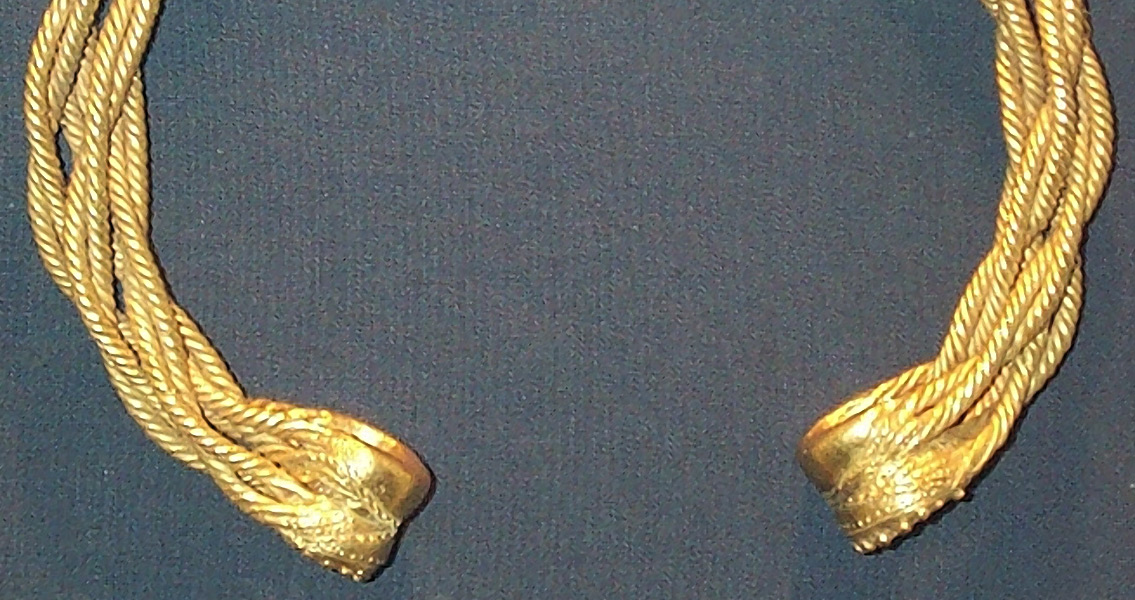
Treasure Hunters Unearth Ancient Iron Age Jewelry in Britain

Categories
Breaking News

Neanderthal DNA Still Affecting Modern Humans

New Scientist. “The results add to increasing evidence that these effects are often the outcome of changes to the genetic switches,” said Tony Capra of Vanderbilt University in Nashville, Tennessee. His own results published last year revealed Neanderthal influences on a variety of human disorders, including depression and addiction. The control of Neanderthal DNA decreased the most in regions of the brain critical for perception and fine motor skills, the basal ganglia and the cerebellum, which further evolved in humans to enable advanced thinking, behavior and the ability to process language. NTRK2 is another Neanderthal gene with fading influence. This gene is key to neuron survival in addition to the development of brain connections and its reduced influence illustrates the sort of fine-tuning which may have permitted our ancestors to take off intellectually. Another gene in which Neanderthal DNA lost control is a testes gene that affects a sperm’s ability to penetrate and subsequently fertilize an egg. Researchers theorize that once control of this gene was relinquished, neither the Neanderthals nor the human- Neanderthal hybrids were able to mate with humans. This theory is consistent with research results showing a reduction in the health of male offspring from hybrid unions. ]]>

Categories
Breaking News

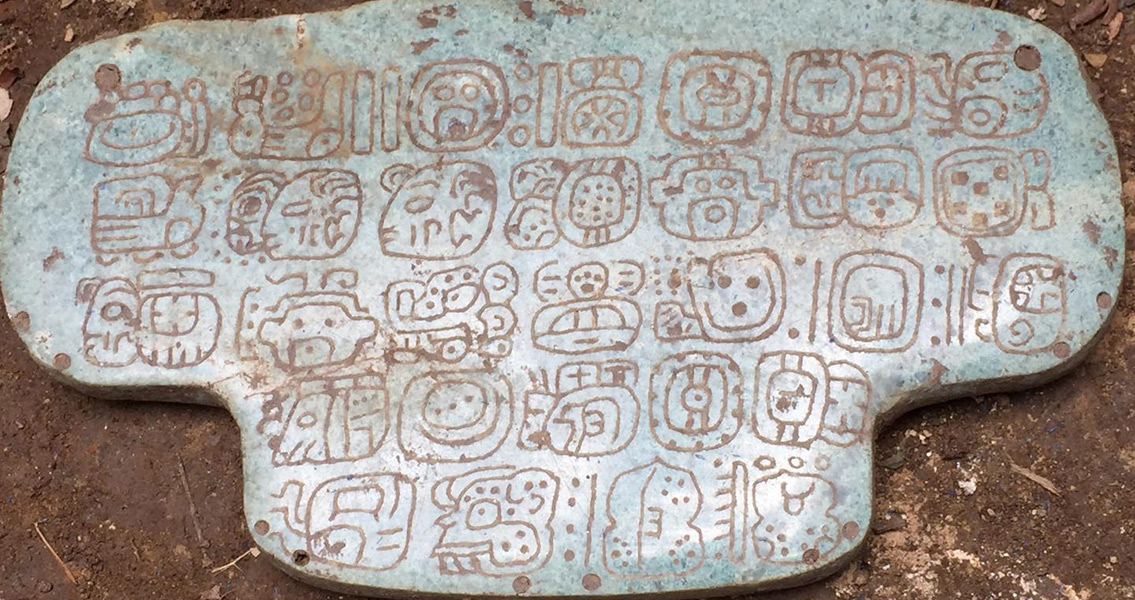
Mystery of Maya Pendant’s Discovery Puzzles Researchers

Ancient Mesoamerica, can be found here]]>

Categories
Breaking News

Giant Penguin Might Have Been Around With the Dinosaurs

history of the flightless seabirds. Situated in New Zealand’s Canterbury region, the fossil sites along the Waipara River have long been a vital resource to scientists for the abundance of avian fossils which became embedded in the sand just four million years after the dinosaurs went extinct. “Among the finds from these sites, the skeletons of Waimanu, the oldest known penguin to date, are of particular importance,” explained Dr. Gerald Mayr of the Senckenberg Research Institute in Frankfurt. Hugely significant is the fact the bones of the recently discovered giant penguin differ markedly from those of others from the same time period, suggesting there was much greater diversity among Paleocene penguins than previously assumed. In their study published in the Springer Journal Science of Nature, the team postulate that the newly discovered giant penguin fossil could point to the evolution of the birds having started much earlier than previously thought, perhaps even during the age of the dinosaurs. “What sets this fossil apart are the obvious differences compared to the previously known penguin remains from this period of geological history,” explained Mayr, an ornithologist from Frankfurt. “The leg bones we examined show that during its lifetime, the newly described penguin was significantly larger than its already described relatives. Moreover, it belongs to a species that is more closely related to penguins from later time periods.” Although impressive with its 1.5 metre length, the newly described giant penguin was still not as big as Anthropornis nordenskjoeld, the largest penguin fossil ever discovered, which lived on the Antarctic coast between 45 and 33 million years ago. Evidence has been found suggesting A.nordenskjoeld could reach heights of up to two metres from beak to toe. According to Mayr, it’s highly significant that the newly discovered penguin is much older than A.nordenskjoeld. “This shows that penguins reached an enormous size quite early in their evolutionary history, around 60 million years ago”. The team believe that the newly discovered species would have already adopted the unique, waddling gait which characterises modern penguins. This is something which would have distinguished it from other, more primitive species in the genus Waimanu – a genus of early penguin which lived during the Early Paleocene. “The discoveries show that penguin diversity in the early Paleocene was clearly higher than we previously assumed,” concluded Mayr, adding, “In turn, this diversity indicates that the first representatives of penguins already arose during the age of dinosaurs, more than 65 million years ago.” Image courtesy of Senckenberg Gesellschaft für Naturforschung (Senckenberg Nature Research Society) The newly published study is available from Sprnger Nature ]]>

Categories
Breaking News

Ancient Statue of Pre-Christian Deity Found on Corsica

International Business Times, local road work had been planned for nearby the ancient ruins, which prompted local authorities to contact the French National Institute for Preventative Archaeological Research (INRAP) to clear the construction. INRAP conducted excavations to ensure the new road wouldn’t inadvertently demolish any significant archaeological remains, only to discover the statue during their investigations. Led by archaeologist Philippe Chapon, the INRAP team began work in Mariana in November of 2016. The small Roman town, thought to have reached its primacy in the third and fourth centuries CE, would have been most well-known for its moderately successful commercial harbor thanks to its location next to the Mediterranean. After several months of work on site, the INRAP team has revealed that they have excavated the remains of a religious sanctuary dedicated to Mithra. The entire find consists of a worship room and an antechamber devoted to the Indo-Iranian deity. Chapon characterized the find as “very rare and exciting”, adding that it’s the first time evidence of worshiping Mithra has been found on Corsica. Throughout the rest of France, there are only around a dozen similar sites, the archaeologist said, with the most recent one being found in 2010 near the city of Angers. Several relics were found in the ruined sanctuary, including a trio of oil lamps and a fragmented marble structure that would have depicted Mithra. Pieced back together, the marble depicts Mithra sacrificing a bull, a scene from the pre-Christian god’s mythology. One of the pieces showcases the spilled blood of the bull as both a snake and a dog lap at it. The same fragment adds insult to injury to the bull, as a scorpion is depicted pinching its testes as well. Other finds, such as pottery, bronze bells and a partial marble statue depicting a female head, were also found. While Mithra is likely to have pre-dated Christianity in its place of origin, when worship of the deity spread west it probably found itself battling for followers. There are indications that Roman soldiers and merchants returning to Rome from the east brought the religion with them, and that there was a fierce competition for new followers between Mithraism and Christianity. There’s no written record of the religion, but archaeologists have pieced together information from finding and analyzing things worshipers left behind. This includes relics and ritual representations depicted on walls of sanctuaries. The resultant knowledge paints a picture of a primitive monotheistic religion likely open exclusively to men, one that spread through the elite echelons of society before expanding outward and downward. Mithras worshipers came under fire directly in 392 CE as emperor Theodosius I forbade the religion, instead proclaiming Christianity the Empire’s official religion. This may be the source of some of the damage the artifacts at the Corsican site sustained, with the altar being broken sometime in the past. A large Christian structure being built in Mariana at around 400 CE, one of the earliest occurrences of Christianity on the island, may have been built in the wake of Mithra’s expulsion. ]]>

Categories
Breaking News

New Discovery Shows Children Have Always Played in the Mud

Categories
Breaking News

Pioneering Skull Study Shows Waves of Migration to South America

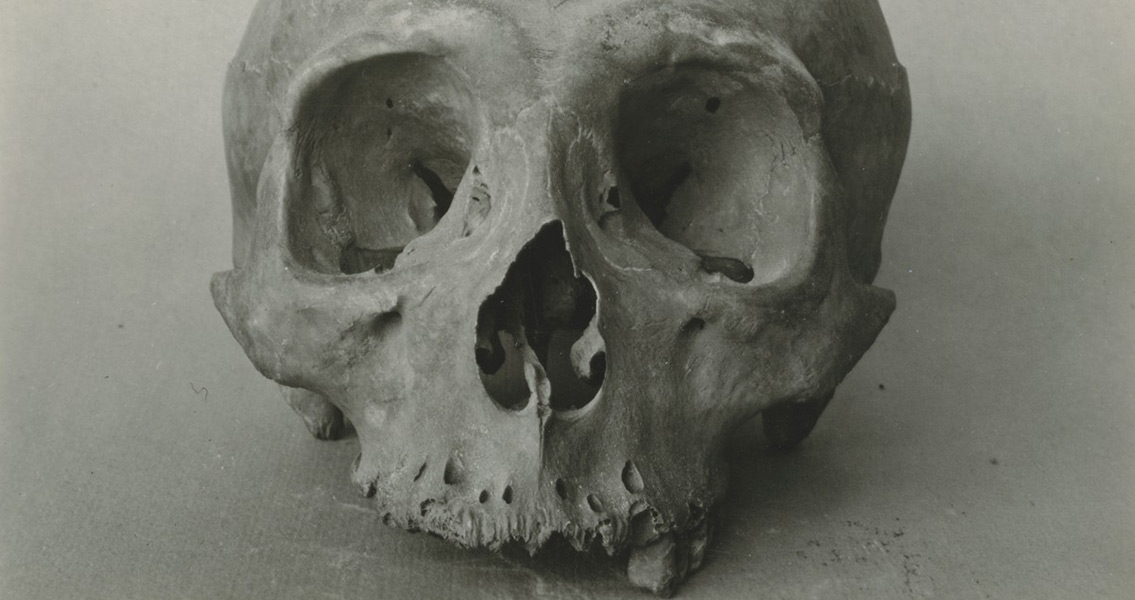
Science Advances, throws into question genetic explanations of the process of migration into South America. “When you look at contemporary genomic data, the suggestion, particularly for South America, was for one wave of migration and that indigenous South American people are all descendants of that wave,” said Noreen von Cramon-Taubadel, an associate professor of anthropology at the University at Buffalo and the paper’s lead author, in a press release. “But our data is suggesting that there were at least two, if not more, waves of people entering South America.” The study authors claim that the differences in cranial morphology (skull shape) among Paleoamericans from the Lagoa Santa region of Brazil suggest multiple waves of population dispersal across the Bering Strait from Asia and down through North America into South America. It is widely accepted that the first humans entered the Americas 15,000 years ago and quickly dispersed down into South America via a Pacific coast route. The point of contention is whether there was a single dispersal or if the process happened in waves. Despite using an innovative new technique, the results reached by von Cramon-Taubadel and colleagues’ study are similar to those shown in other morphological based analyses. Key to the pioneering method used in the new study is the understanding that although all humans have a common ancestor, not all fossils necessarily contribute to the ancestry of living people. Certain ancient populations of anatomically modern humans didn’t make a significant contribution to current human populations, typically because they didn’t survive long enough. Von Cramon-Taubadel, along with colleagues Professor Mark Hubbe from Ohio State University’s Department of Anthropology and André Strauss from the University of Tübingen, looked at existing populations as descendants of many different possible branches of “a theoretical tree of relatedness”. Statistics based on skull morphology were used to determine where in the theoretical tree the team’s sample best fit. The key advantage of this method is that rather than relying on predetermined patterns of dispersal, it takes into account all possible patterns of relatedness. Previous studies have attempted to observe overall similarities between prehistoric skeletons and the morphologies of living people, failing to account for those populations who left very little mark on modern South Americans despite being represented in the fossil record. “There are other fossils, particularly in the Americas and Eurasia where at the moment we are not 100 percent sure how they fit into the human picture,” von Cramon-Taubadel explains. “We could use this method to elucidate where they sit and to what extent those populations actually play a role in the modern ancestry of people in those areas.” ]]>

Categories
Breaking News

38,000 Year Old Pointillist Mammoth Engraving Discovered

Last month, White and colleagues announced the discovery of a 38,000 year old engraving of an aurochs – representing some of the earliest known graphic imagery found in Europe. Since then a further sixteen blocks have been found, including a pointillist image of a mammoth, in a nearby rock shelter known as Abri Cellier. Crucially, one of the limestone blocks was found still in place, allowing it to be carbon dated to 38,000 years old according to the article in Quaternary International detailing White and colleagues’ findings. Abri Cellier has long been a vital window into Aurignacian art. Excavations carried out there in 1927 led to fifteen engraved or otherwise altered stones being discovered. The 16 blocks discovered by White and his team had actually been left behind by the 1927 excavators, highlighting the problems with identifying art from the European Aurignacian. The engravings on the stones are incredibly rudimentary, and in 1927 would have been difficult to interpret. The new article by White and colleagues provides evidence that the 38,000 year old origin for the sixteen newly discovered engravings can also be applied to the fifteenth found in 1927 which now reside in the French National Prehistory Museum. White and colleagues’ discoveries in the Vézère Valley are adding weight to isolated discoveries made elsewhere pointing to a form of pointillism being employed by Europeans in the Aurignacian. A rhinoceros image found on a cave wall in Grotte Chauvet, France, for instance, was likely created by dozens of dots being painted on a hand before then being applied to the cave wall. For ten years the work of White and his team has been drastically improving the understanding of Upper Paleolithic graphic imagery in southwestern France. Indeed, the team’s work has increased the sample of Aurignacian graphic arts in the region by 40%. ]]>

Categories
Breaking News

Stone Age Fences Discovered in Denmark Surround Mystery

Science Nordic. “The openings don’t seem to sit next to each of the post rows, and we’re slightly amazed by that. But maybe it functioned as a sort of labyrinth–at least that’s how we imagine it. That way you weren’t able to look inside the common space, which may have been an advantage.” Generally, a palisade type of construction is built for defense, however, the rows of poles at Stevns would have stood approximately two meters tall and were placed in a way that would have allowed a person to squeeze through, suggesting a gathering area. Numerous palisade enclosures have been discovered in Denmark and Sweden in recent years, with some of the most intriguing sites found on Bornholm, a Danish island in the Baltic Sea. In 1988 a large timber palisade (one of two on the island) enclosing a sun temple was excavated by archeologists at Vasagårds Field on the south side of the island. The Stevns site may have also had a ritualistic purpose. One difference between the Stevns site and the Bornholm palisades is that the poles at Bornholm are located much more tightly together. It’s also probable the Bornholm fences were built prior to the ones at Stevns. Dating analysis of the Stevns site is not yet complete, however, several of the pottery fragments found there indicate it may date to the latter half of the Middle Neolithic Funnel Beaker Culture between 2900 BCE and 2800 BCE. The Funnel Beaker culture draws its name from its characteristic beakers, ceramics and amphorae which were formed with funnel-shaped tops and found in dolmen burials. A dolmen is a type of megalithic tomb with a single chamber, which typically consisted of a flat horizontal capstone supported by at least two vertical megaliths. “We’ve unfortunately not found any circular shaped constructions like they have on Bornholm, but the similarities between the enclosures makes me think about rituals in our finds too,” Sloth says in the article. Image courtesy of Danish Geodata Agency / Pernille Rohde Sloth ]]>