

Proceedings of the National Academy of Sciences is available here]]>
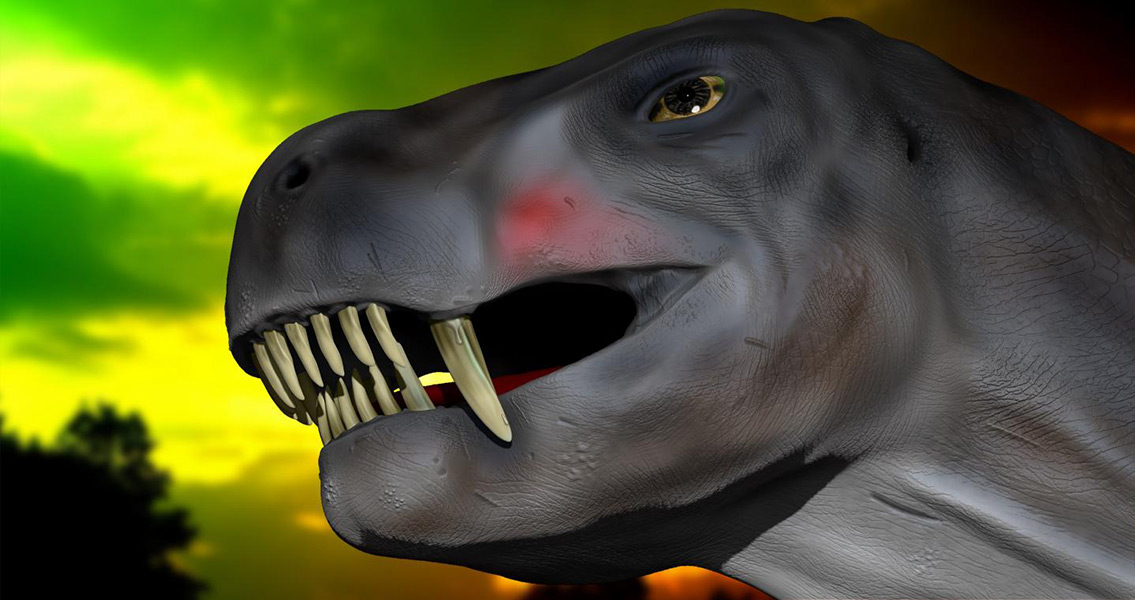
Euchambersia, a therapsid which was one of the evolutionary precursors to mammals. Euchambersia pre-dates the rise of even the first dinosaur by millions of years. While technically a reptile, it is inextricably tied to the rise of countless mammalian species, including our own. Euchambersia lived around 260 million years in the past. The small, dog-sized proto-mammal developed a unique biology in order to better protect itself from larger, more aggressive predators of the era, and also to aid it in hunting prey of its own. Living in South Africa near Colesberg in a region known as the Karoo, the therapsid evolved to develop a circular and deep fossa in its upper jaw behind its canine teeth. Venom would be produced in this hollow to be delivered in a bite through a complex series of canals and grooves in the Euchambersia’s bones and teeth. Today, the most well-known venomous animals are of course snakes, but Dr. Benoit pointed out that their fossil record only stretches back around 167 million years. Proving that Euchambersia even had venom glands was problematic, as the glands don’t fossilize. Benoit and his fellow Wits University researchers, along with the aid of London’s Natural History Museum, employed 3D imagery and CT scanning techniques to analyze the only pair of fossilized Euchambersia skulls found to date. The results of this analysis were described as “stunning”, as the therapsid was found to have had anatomical adaptions that indicated venom production. These adaptations included the fossa and a network of canals and grooves, as well as additional, previously undiscovered teeth that had sharp ridges which would have aided in injecting venom through the Euchambersia’s bite. The therapsid’s venom would have been passively introduced through its bite, unlike modern snakes with their needle-like grooved fangs that act to inject venom directly into their prey. In fact, the venom of the Euchambersia flowed freely into its mouth and through the ridges on the outside of its canines into whatever it had bitten. Dr. Benoit said that Euchambersia could have used its venomous bite for hunting or protection. With the majority of modern venomous species using their bite for hunting, the researcher feels that the therapsid would have likely followed the same route. Additionally, Dr. Benoit pointed out that animals from that time period, specifically therapsids, were not all insectivores but instead had a diverse diet. The new research paper, published in the journal PLOS ONE, can be found online here Image courtesy of Wits University]]>


Current Biology, is available here Image courtesy of Botting, J. P]]>
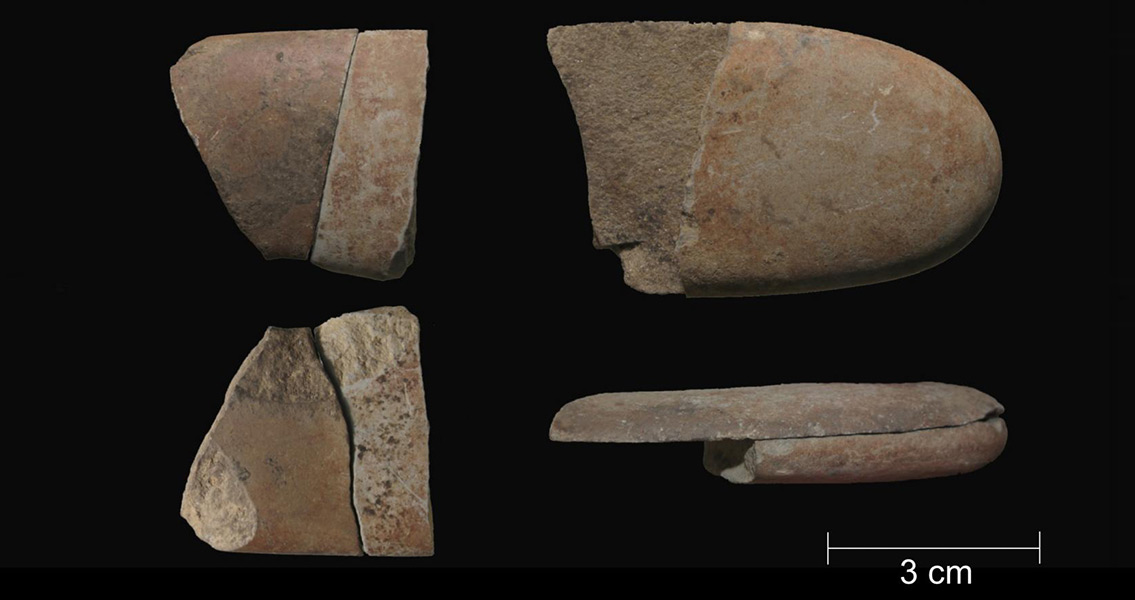
Cambridge Archeological Journal, claims to have found evidence that this symbolic killing was actually practiced up to 5,000 years earlier. Researchers from Université de Montréal, Arizona State University and University of Genoa examined 29 pebbles taken from an Upper Paleolithic burial site in Italy to make their conclusion. They believe that roughly 12,000 years ago the flat, oblong pebbles recovered from Caverna delle Arene Candide on the Mediterranean Sea in Liguria had been brought up from the beach and used as spatulas to apply ochre paste to decorate the dead. Once the decoration had been completed, the pebbles were broken and discarded. Study co-author Julien Riel-Salvatore, an associate professor of anthropology from the UdeM, said the reason for breaking the stones could have been to “kill” them, “discharging them of their symbolic power”. Roughly the size of a hockey rink, the Arene Candide cave is home to a necropolis containing the remains of some twenty adults and children. Situated in a steep cliff some 90 metres above sea level, it’s considered a vital reference site for the Neolithic and Paleolithic periods in the Mediterranean. Although the cave has been known about and subject to excavation since the 1940s, the broken pebbles were always overlooked. “If our interpretation is correct, we’ve pushed back the earliest evidence of intentional fragmentation of objects in a ritual context by up to 5,000 years,” said study lead author Claudine Gravel-Miguel, a PhD candidate at Arizona State’s School of Human Evolution and Social Change, in Tempe. “The next oldest evidence dates to the Neolithic period in Central Europe, about 8,000 years ago. Ours date to somewhere between 11,000 and 13,000 years ago, when people in Liguria were still hunter-gatherers.” Crucially, no matching pieces were found for the pebble fragments analysed by the team. They speculate that this could be because the missing halves were kept as talismans or souvenirs. “They might have signified a link to the deceased, in the same way that people today might share pieces of a friendship trinket, or place an object in the grave of a loved one,” explained Riel-Salvatore. “It’s the same kind of emotional connection.” For five years the team painstakingly excavated the Arene Candide area using trowels and dental tools before carrying out rigorous microscopic analysis on the pebbles they found. For comparison, they also carried out a similar process on pebbles from nearby beaches, to prove that those from Arene Candide had indeed been deliberately broken. “This demonstrates the underappreciated interpretive potential of broken pieces,” the authors write in the conclusion to their study. “Research programs on Paleolithic interments should not limit themselves to the burials themselves, but also explicitly target material recovered from nearby deposits, since, as we have shown here, artifacts as simple as broken rocks can sometimes help us uncover new practices in prehistoric funerary canons.” Broken pebbles are often overlooked during excavations. Riel-Salvatore suggests that this could have led to many vital insights being missed. “Historically, archeologists haven’t really looked at these objects – if they see them at a site, they usually go ‘Oh, there’s an ordinary pebble,’ and then discard it with the rest of the sediment. We need to start paying attention to these things that are often just labeled as rocks. Something that looks like it might be natural might actually have important artifactual meaning.” Image courtesy of Université de Montréal]]>

Wenwu in 2015. This same article has now been translated into English and published in the journal Chinese Cultural Relics. In the journal article, the archaeologists also discuss the other tombs they found in the cemetery, noting that they excavated 69 tombs in total. The research team included members from the Shanxi Provincial Institute of Archaeology, the Shanxi University’s School of History and Culture, the Agency of Cultural Relics and Tourism of Jinyuan District, Taiyuan city, and the Taiyuan Municipal Institute of Cultural Relics and Archaeology. ]]>

here]]>
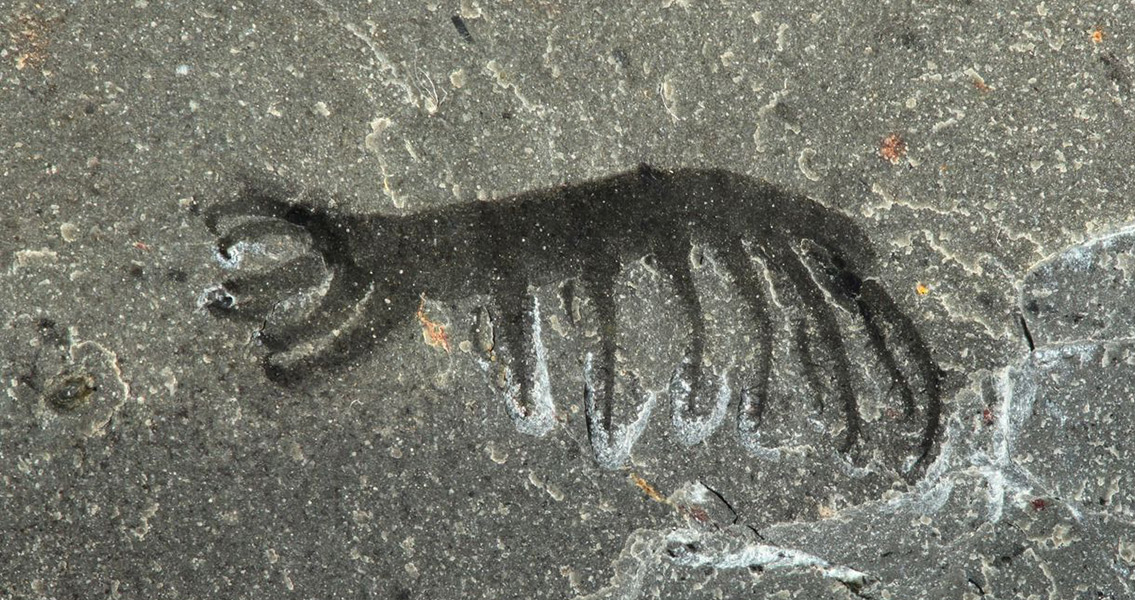
Ovatiovermis cribratus, a 500-million-year-old worm no bigger than a thumb and with leg-like appendages, has recently been identified as a new species. The fossil specimen resembles a flattened shrimp, but the tiny creature, a distant relative of arthropods and tardigrades, hung around in North America’s shallow seas eons before shrimp existed. Evolutionary biologists based their approximation of the worm-like creature on two fossils, the first discovered decades ago and a second which was found by a tourist in 2011 visiting the Burgess Shale. The Burgess Shale Formation, where both specimens were found, is a UNESCO World Heritage site known for its extraordinary deposit of marine fossils. The Formation, a former seafloor, is found in the Canadian Rockies of British Columbia and boasts more than just exoskeletons and bones. It’s also known for the exceptional preservation of the soft tissues of the fossils there. At 508 million years old, Burgess is one of the earliest fossil beds known to contain soft-part imprints. The rock formation is black shale and is visible at several locations near the city of Field, B.C., in Yoho National Park and Kicking Horse Pass – a high mountain pass on the border of Alberta and British Columbia. Another outcrop is located 42 km south, in Kootenay National Park. The Burgess Shale was discovered in 1909 by Charles Walcott, a paleontologist. He returned with his family in 1910 and established a quarry at Fossil Ridge. The importance of soft-bodied preservation, and the wide range of organisms Walcott recognized as being new to science, caused him to return to the site numerous times until 1924. By 1924, at age 74, Walcott had collected more than 65,000 specimens. The name, Ovatiovermis cribratus, stems from how researchers believe the creature fed. Ovatiovermis because it’s thought the creature stood up on the seafloor, in an ongoing standing ovation of sorts, and cribratus in reference to the way it may have sieved passing water in order to collect food. Lobopodians (meaning “blunt feet” in Greek) are worm-like organisms with stubby legs. “Lobopodians have mostly been seen so far as an eclectic group. We think that suspension feeding was common among them and turned out to be important in the initial ‘burst’ of that colossal group that gave rise to water bears, velvet worms and arthropods,” Cédric Aria, a co-author of the recently published study, said in a statement. Other animals, the skeleton shrimp for example, have comparable eating patterns. The Burgess Shale Formation and its fossil-carrying deposits correlate to the Stephen formation, a collection of dark mudstones approximately 508 million years old. The beds holding the fossils were deposited at the bottom of a cliff that was around 160 meters tall, deep enough to be below the agitation caused by waves during a storm. Originally it was believed the Burgess Shale was set down in anoxic conditions, ongoing research, however, suggests oxygen was present on a continual basis. Ovatiovermis cribratus was identified in an article recently published in BMC Evolutionary Biology. Photo courtesy of Jean-Bernard Caron—Royal Ontario Museum ]]>