Categories
Breaking News

Roman Infanticide Was Less Common than Thought

Daily Mail. “The ability to more accurately differentiate between stillborn and short-lived infants, without having to alter precious archaeological skeletons, will profoundly impact on the study of past human life.” Historians have long believed that infanticide was a fact of life for the ancient Romans. A number of explanations have been given, including attempts to manipulate the gender ratio, to control the size of families, or even as mercy killings to alleviate suffering. Some historians suggest that poor families may have killed newborns if they felt they were unable to provide for the child. Infanticide is an issue apparent even in ancient Rome’s foundation story: Romulus and Remus, the two sons of the god of war, Mars, narrowly survive after being thrown into the Tiber river. Seeming horrifically inhumane to modern eyes, in ancient Roman society babies were not considered fully human at birth. Rather, their humanity was thought to develop over time. Although not ruling out infanticide in ancient Roman society, the study results suggest it was not as prevelant as widely believed. Of course, the study was limited to a sample of just ten individuals from a single region, and is therefore far from conclusive. Other Roman burial sites at other locations would need to be studied in order to make a concrete conclusion. Meanwhile, the researchers behind the study intend to apply the x-ray microtomography technique to other remains in the Museum of London, to learn more about the history of the people of London in the Roman period and beyond. “The size of the Museum of London’s 20,000-strong collection of skeletons means we are uniquely placed to investigate research questions such as this one, as well as to provide meaningful interpretation of the results with our detailed archive information.” said Dr Rebecca Redfern, a co-author of the study in the Daily Mail interview. “We can now apply this research to infant skeletons in our collection from periods other than Roman London to investigate mortality risks and how these relate to London’s ever-changing environment and population.”]]>
Categories
Breaking News

New Findings Have Archaeologists Rethinking Valley of Oaxaca History

Categories
Breaking News

"Solomon's Palace" Discovered in Gezer, Israel

Haaretz that the edifice of the structure was significantly larger than the size of normal houses of the time, suggesting it was home to someone of great importance. The building also featured ashlar masonry: large monolithic hewn stones, in the corners of its rooms. An assortment of Philistine bichrome pottery had been unearthed at the site in the years leading up to the discovery of the palace. Part of a long-necked, bird-faced female goddess known as an Ashdod figurine, the ivory lid to a game box, amulets, a Canaanite female fertility goddess and a baby’s rattle were among the objects discovered, said Prof. Ortiz. Archaeologists still believe that the city was predominantly Canaanite, however, the Philistine artefacts suggest that they either lived in the city alongside the Canaanites, or at the very least had significant trading relations with them. Gezer is situated on an important crossroads in a pass leading from the coast to Jerusalem. The city dates from well beyond the time of Kings Solomon and David, with evidence suggesting it was occupied as far back as the Chalcolithic period, in the fourth millennium BCE. 3,400 years ago its Canaanite population was closely linked with Ancient Egypt, despite the geographic distance between them. In a previous digging season, a large cartouche (a carved tablet or drawing) of Pharaoh Amenhotep III was found at the site. Fascinatingly, Ortiz and colleagues’ discovery adds credence to other elements of the Biblical story of Gezer. The Old Testament claims the city was given by the Pharaoh as a dowry to Solomon’s wife, and that Solomon then rebuilt the city during the late tenth century BCE. The archaeologists suggest that the palace complex they’ve unearthed could only have been built by a king with substantial resources, one like Solomon… Additionally, the team suggest that the evidence of destruction found within the rooms in the complex could be associated with the Shishak invasion in 925 BCE, when the Pharaoh launched an invasion of Israel and Judah. This is another event depicted in the Old Testament. Ultimately, the objects have yet to be Carbon Dated, meaning the possible Biblical links are highly speculative. As Dr Sam Wolff, an archaeologist with the Israeli Antiquities Authority, told Haaretz: “Our 10th century date is tentative, pending further study of the ceramic assemblage and the results of carbon 14 analyses. Others may claim that the pottery we are calling 10th century is in fact 9th century.” “In this regard, I would point out that we have found a significant stratum between what we are calling the 10th century and the 8th century strata, and we date this stratum to the 9th century”, Wolff continued. “For the earliest stratum to be 9th century as well is certainly possible, but it would then squeeze two significant strata into one century. For the time being we prefer to date this earlier stratum, along with the six-chamber gate and the fortification wall connecting the two, to the 10th century; that is, to the time of Solomon.” Images of the palatial remains and other artefacts can be seen here]]>

Categories
Breaking News

Blood Supply to Brain Linked with Human Intelligence

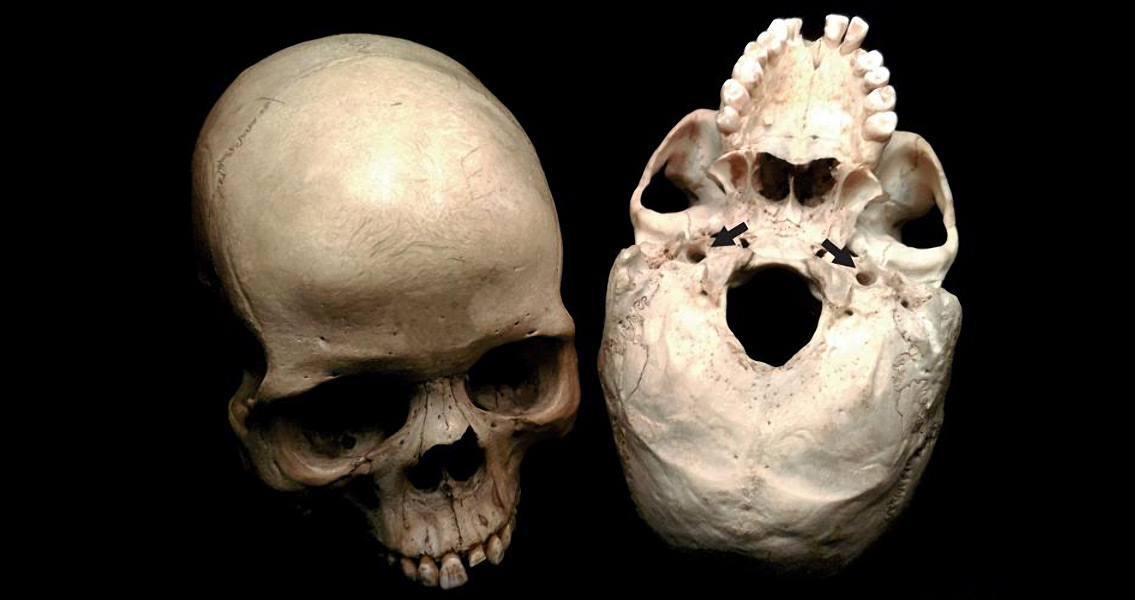
here Image courtesy of Edward Snelling. Sourced from the Raymond Dart Collection of Human Skeletons, School of Anatomical Sciences, Faculty of Health Sciences, University of the Witwatersrand.]]>

Categories
Breaking News

Decoded Civil War Telegrams Offer a Glimpse of Humanity

L.A. Times regarding the cache of documents and 35 leather-bound ledgers related to telegrams that were sent between 1862 and 1867. “We don’t really know what is in here. Every single telegram has a story behind it, from the president to the greatest generals and to the privates and telegraph operators. It’s like putting together a huge jigsaw puzzle.” The telegrams were kept by Thomas T. Eckert: head of the U.S. military telegraph office at the War Department and a Lincoln confidant. The Huntington has begun a Decoding the Civil War crowdsourcing campaign relying on volunteers to unravel secret texts using cipher charts. So far, over 2,100 “citizen archivists” and war buffs around the world have been able to transcribe less than a third of the collection. The project still has an open invitation for volunteers. The telegrams cover the gamut; from heartbreak, sarcasm, warning and conniving to draft riots, downed cables and cotton markets. They also include the latest news from the battlefield, like Lincoln’s venturing that Grant’s forces had “Petersburg completely enveloped” and had captured “about twelve thousand prisoners & fifty guns.” In a telegram about troop movements, Gen. William T. Sherman reflects sorrow: “my eldest boy Willie, my California boy, nine years old died here yesterday of fever and dysentery contracted at Vicksburg. His loss to me is more than words can express.” Some are less serious, like the telegraph sent by J.W. Carver that informs Eckert: “Family matters require my immediate attention at home for a few days. If not attended to at once I am utterly destroyed.” The messages, tapped out by around 1,500 telegraph operators, traveled over approximately 15,000 miles of telegraph lines and revolutionized wartime communications. Eckert, who would go on to become president of Western Union, took the telegram ledgers when he retired in 1867. Until he died in 1910, the documents were left in storage. In 2008 they surfaced and were subsequently sold at auction for $36,600 to a company that specializes in rare books, the William Reese Co. The collection was sold to the Huntington in 2012. “The telegrams were actually considered lost,” Mario Einaudi, who is overseeing the project to digitize the documents on behalf of the Huntington Library, told the L.A. Times, “They’re significant in that what we’re making available to people is raw history. The language comes through so loud and clear that it puts you back on your heels.” ]]>

Categories
Breaking News

Scientists Say Irrigation Used in Prehistoric Olive Cultivation

The Jerusalem Post, the international team of archaeologists – spearheaded by the Zinman Institute of Archaeology from the University of Haifa – announced the find this week, remarking that with such a large quantity of olive pits, it is highly likely that these early farmers would have needed to employ irrigation techniques. Professor Daniel Rosenberd, the co-leader of the research project, stated that the revelation that ancient agrarian societies were relying on artificial irrigation could result in a fundamental change in how scientists and historians understand how sophisticated these ancient farmers were. Rosenberg and his colleague: Dr. Florian Klimsh from the German Archaeological institute, believe that the prehistoric settlements found here in northern Israel in close proximity to Jordan were instrumental in the developmental process of the Near Eastern cultures and cities of antiquity. Despite this, little is known about these ancient settlements today. In order to broaden that knowledge, the recent research into the region focused on gathering botanical evidence to make determinations regarding what the conditions would have been in the Jordan Valley seven thousand years ago. Doing so could help shed light on not just agricultural practices and diet but also the economy of the region and how these settlements were organized socially, researchers say. It is well known that olives were being used in the region at this time, based on other documented evidence. However, with the sheer number of olive seeds found on site, Rosenberg said that several questions were raised which necessitate a new look at how ancient farmers irrigated their crops – and how the olive and olive oil trade operated during the time as well. Data collection over the past four years has already revealed much regarding the lives of these ancient farmers, with evidence pointing to the inhabitants growing different plant species concurrently. These plants, which all had differing maturation cycles, were meant to be used as a back-up in the event of a poor harvest. ]]>

Categories
Breaking News

New Insight into the Deadly Reach of Sixth Century Plague

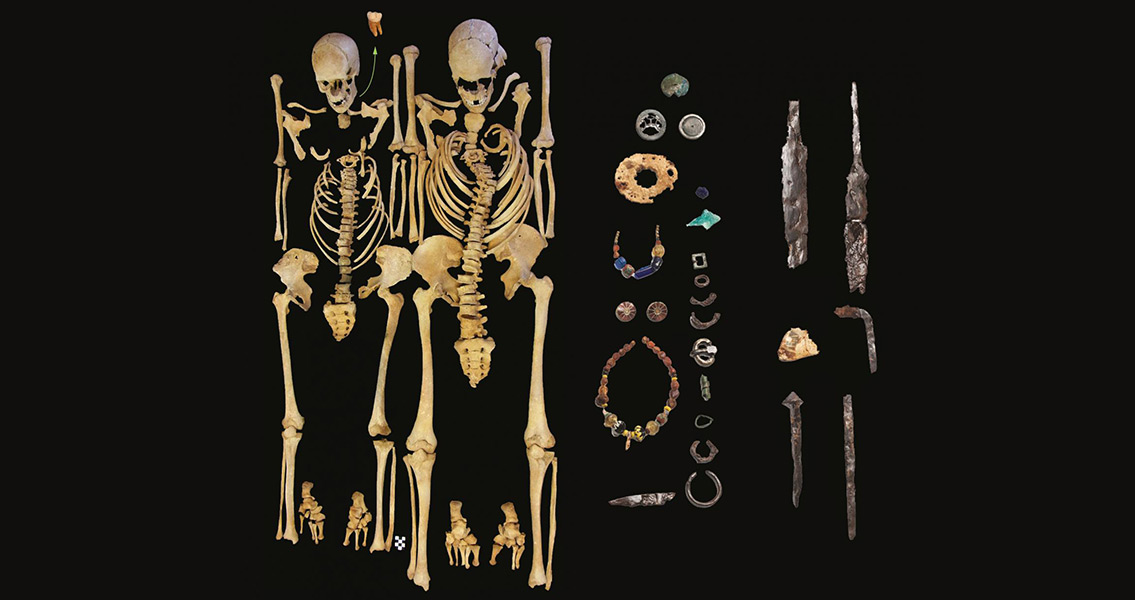
Yersinia pestis, the bacterium behind the Black Death, could also have been behind the sixth century plague epidemic. Michal Feldman, Johannes Krause and Michaela Harbeck, scientists based in Germany who are among the authors of the study, have recovered the bacterial culprit from sixth century skeletons found in Altenerding, an ancient southern German burial site near Munich. The genome found at Altenerding dates back to the beginnings of the outbreak of the plague, and confirms Yersinia pestis was the bacteria behind the outbreak. The new sequence reveals new insights into the molecular evolution of Yersinia pestis since the Byzantine period. It has also revealed new features that couldn’t be detected in a previous ‘draft genome’ of the bacterium, including 30 newly identified mutations and structural rearrangements unique to the Justinianic strain. “The fact that the archeological skeletons which gave these exciting insights were excavated over 50 years ago underscores the importance of maintaining well curated anthropological collections,” said Harbeck. “We were very fortunate to find another plague victim with very good DNA preservation in a graveyard just a few kilometers from where the individual analyzed in Wagner et al. [a recent study describing a draft genome] was found. It provided us with the great opportunity to reconstruct the first high quality genome in addition to the previously published draft genome.” Harbeck and colleagues’ results suggest that the strain of Yersinia pestis behind the Justinian Plague was more genetically diverse than previously thought. They are still unable to determine how and why the lethal pathogen reached Germany, however. Beyond simply analysing the development of a sixth century disease, the study could have far reaching applications. The authors have used the results to develop new guidelines that may improve the quality and authenticity of genetic data recovered from ancient pathogens. In addition, with plague re-emerging in certain regions of the world, the study provides a historical resource for the evolutionary changes, adaptation and human impact of the disease. “Our research confirms that the Justinianic plague reached far beyond the historically documented affected region and provides new insights into the evolutionary history of Yersinia pestis, illustrating the potential of ancient genomic reconstructions to broaden our understanding of pathogen evolution and of historical events,” said Feldman. “Our reanalysis of previous datasets stresses the importance of following strict criteria to avoid errors in the reconstruction of ancient pathogen genomes.” Image courtesy of State Collection of Anthropology and Palaeoanatomy Munich]]>

Categories
Breaking News

Scientists Identify 6 Million Year Old Galactic Shockwave

The Astrophysical Journal Letters, is available online here ]]>

Categories
Breaking News

Scientists Working Above the Arctic Circle Find 1,000-year-old Persian Cup

Siberian Times: “From the 6th and 7th centuries AD Central Asian merchants began to appear in the Upper Kama region. They exported walrus tusks, hunting birds and fur from the north. Through the Kama region they had penetrated to the Ob region in 7th and 8th centuries.” The Persian items that traders brought north with them often took on ritual meanings for the indigenous Khanty and Mansi peoples who lived in the area. They were seen as gifts to gods and spirits, stored in holy places and often used as serving dishes to carry ceremonial food given to the gods at festivals. Since the second millennium BCE, the regions between the Kama and the Irtysh rivers have been home to the indigenous Khanty and Mansi peoples. A number of researchers believe the Khanty’s ancestors were the prehistoric Andronovo culture, which are known for their ancient metalworking skills. Other researchers claim that the Khanty originated in the Ural steppe and then moved north to their present location around 500 CE. Traditionally, Khanty religion was closely connected to nature. The Crow Spring celebration is celebrated in April, while the Bear Celebration follows each successful bear hunt. The Bear Celebration can last 5 or 6 days (depending on the sex of the bear), and includes over 300 songs and presentations. With the arrival of Soviet power and the establishment of collective farming came the persecution of Khanty shamans along with the destruction of their burial grounds. Khanty children were even forcibly removed and sent to boarding schools. After an outburst of resistance, known today as the Kazym rebellion, the Khanty were brutally suppressed by the Soviet army; Khanty villages were burned along with anything else connected with their culture. Following that event, anyone who participated in the traditional bear funeral rites faced ten years in prison. In a census taken in 2010, only 30,943 people identified themselves as Khanty. The intention of the research expedition that brought the scientists to the Arctic to begin with was a project to monitor and compare the depth of the permafrost over a 30 kilometer area near Lake Parisento, on Gydan Peninsula. The scientists installed the monitoring equipment and then compared the recorded data with information that was obtained from the same location 25 years previously. Image of the artifacts can be seen here ]]>

Categories
Breaking News

New Species of Flying Dinosaur Discovered in Patagonia

Allkauren koi by the researchers behind the discovery. Preserved in remarkably good condition, the skull remains have revealed new information about the evolution of the braincase of pterodactyloids, a major suborder of Pterosaurs. The name Pterosaur comes from the Greek for ‘wing lizards’. These spectacular creatures dominated the skies during the Jurassic and Cretaceous periods, and included the largest vertebrate ever known to fly: Quetzalcoatlus from the late Cretaceous period. Members of the long extinct group were incredibly diverse, ranging from the size of a sparrow to the size of an airplane. Intriguingly however, Pterosaurs evolved flight separately from bats and birds; they are not closely related to either creature. The group had extraordinary adaptations enabling them to take to the skies: pneumatic bones drastically reducing their weight and an elongated digit supporting a wing membrane. The neuroanatomy of Pterosaurs has remained shrouded in mystery however, the consequence of a paucity of three dimensionally preserved remains. It is this that has afforded the latest discovery such importance, giving new insight into the intermediate forms of Pterosaurs. The study describing Allkauren koi, published in the journal PeerJ, provides new information about the origin, tempo and mode of evolution in the Pterosaur group. Allkauren koi has been named from the language of the Tehuelche, the group of indigenous peoples of Patagonia. ‘All’ comes from the Tehuelche word for ‘brain’, while ‘kauren’ is their word for ‘ancient’. It joins the over 150 other species of Pterosaur discovered so far. The remains, including the amazingly preserved, uncrushed braincase, were discovered in northern central Chubut Province, Patagonia Argentina. Through computer tomography, the researchers have been able to study the creature’s cranial anatomy, observing in three dimensions the cranial endocast and the inner ear. From this starting point a comprehensive phylogenetic analysis of the Pterosaur group was performed, one which “fills an important gap”, according to the study. “Allkaruen, from the middle lower Jurassic limit, shows an intermediate state in the brain evolution of pterosaurs and their adaptations to the aerial environment”, said Dr. Diego Poll, a member of the research team, in a PeerJ press release. “As a result, this research makes an important contribution to the understanding of the evolution of all of pterosaurs.” ]]>