Categories
Breaking News

New Horned Dinosaur Usurps Triceratops Throne

regaliceratops peterhewsi, the new species is is indeed related to the triceratops but represents an evolutionary convergence between the more well-known dinosaur species and older, less-developed species that preceded it; the most noteworthy physical manifestation of this legacy is the crown-like frill regaliceratops sports on the back of its skull. The fossil was originally discovered in 2005 by Peter Hews, a geologist from Calgary, when he was surveying a cliff in southwestern Alberta that ran alongside the Oldman River. Hews contacted the Royal Tyrell Museum – the same museum New Historian reported being shipped another paleontological find of five fossilized fish discovered in a Calgary basement last week – and researchers excavated the fossil. After years of study and analysis, the new species, which was named in honor of Hews to commemorate his discovery, is now on display at the museum. The process for extricating the fossilized skull was a painstaking one, thanks to the presence of bull trout in the river below. As a protected species in Canada, the fish had to be provided specific protections by the excavation team, including preventing any dirt or debris from the excavation from falling in the river. Taken together with the extremely hard rock within which the fossilized bones were encased, the museum teams found the entire experience “hellish,” according to paleontologist Caleb Brown in an interview with CTV News. The extreme difficulty of the dig, combined with the unique nature of the small, almost stunted-looking horns located over the eye sockets that carry a close resemblance to a certain otherworldly science-fiction and comic book character, led to the dinosaur being nicknamed “Hellboy” by the excavation team. Brown says that the region where ‘Hellboy’ was found doesn’t have a reputation for being particularly rich when it comes to fossilized remains. Regions located farther east from the mountainous terrain are much more likely to yield fossils, but the museum paleontologist remarked that with the new regaliceratops find, research efforts will be expanded within the area, even with the possible difficulties that may be faced by research teams attempting to remove subsequent fossils. After careful examination of Hellboy’s skull, museum researchers say that the regaliceratops was likely to have weighed around 1.5 tons in life. Its massive frill was topped with jagged, tooth-like protrusions that resembled a spiked crown. The skull, once exhumed painstakingly from the cliff above the river, turned out to be nearly intact – only the beak and lower jaw were missing. Brown said that with less than one percent of dinosaur remains actually surviving the fossilization process, there could have been millions of regaliceratops roaming the world 70 million years in the past. Image courtesy of Wikimedia Commons user: Royal Tyrell Museum Drumheller, Alberta]]>

Categories
News

The Death of the Prophet Muhammad

This article was edited on 9th June, 2015. The original wrongly suggested that the Qur’an was a depiction of Muhammad’s life.]]>

Categories
Breaking News

African American Women and Sex Education in the 1940s

Journal of Women’s History – African American girls faced a particularly stony silence about sex. “One large study in Maryland in the late 1930s (with 15 percent African Americans) found that whites “were twice as likely to discuss sex at home” as African Americans,” Simmons writes. The reticence of African American parents to discuss sex with their children, Simmons argues, stemmed from a history of racist sexual violation and stigma. “African American women endured frequent rape and pervasive sexual stigmatization during and after slavery. Whites blamed “lascivious” black women for white men’s sexual predations and made black women a foil to white women, whose purity Victorian culture idealized,” Simmons writes In opposition to this social stigma, many African American women adopted a culture of dissemblance where women kept silent about sexuality in order to protect themselves. The fallout of this dissemblance was a new generation of African American women who were uninformed about their bodies and sexual relationships. “African American women confronted a particularly insidious and racially charged form of the virgin-whore dilemma that all women faced,” as Simmons puts it. One of the few voices to emerge from this period who championed full sex education was Gladys Hoagland Groves. Groves was a white instructor at the segregated North Carolina College in Durham. Groves’ moderate sexual modernism, Simmons argues, was a wonderful fit for middle-class African American sensibilities. She taught that sex belonged ostensibly within marriage, but also tolerated a less repressive style for youth; premarital sex was, for Groves, ill-advised rather than absolutely wrong. Moreover, she criticised Victorian repressive ideas surrounding sex. Modern marriage, for Groves, should have incorporated women’s equality. “[Groves] hoped to reduce outmoded sexual repressiveness, help couples to keep love and sexual desire together, and promote solid, enduring heterosexual relationships and marriages,” Simmons explains. Simmons has focused on papers written by Groves’ students. In particular, these sources represent a new perspective for researchers as they are not sociological interviews or prison records. “These student essays do enable us to hear in some form the voices of black women wrestling with sexual regulation and attempting to construct a “modern” sexual subjectivity as teachers, single women, and wives,” Simmons notes. Simmons’ exploration of these previously unknown sources allows us a glimpse of a specific period in the sex education of young African American women. By revealing thoughts and attitudes of real women, Simmons has shown the repressive social environment these women were brought up in and how, through proper education, they could become better informed about their bodies. For more information: www.muse.jhu.edu Image courtesy of Wikimedia Commons user: SLQbot ]]>

Categories
Breaking News

North and South Korea Resume Work at Koryo Palace Dig

Categories
Breaking News

Cornwall Yielded 200 kg Gold in Bronze Age

Categories
Breaking News

ISIS Endangers 2,700 Year Old Hebrew Prophet’s Tomb

Categories
Breaking News

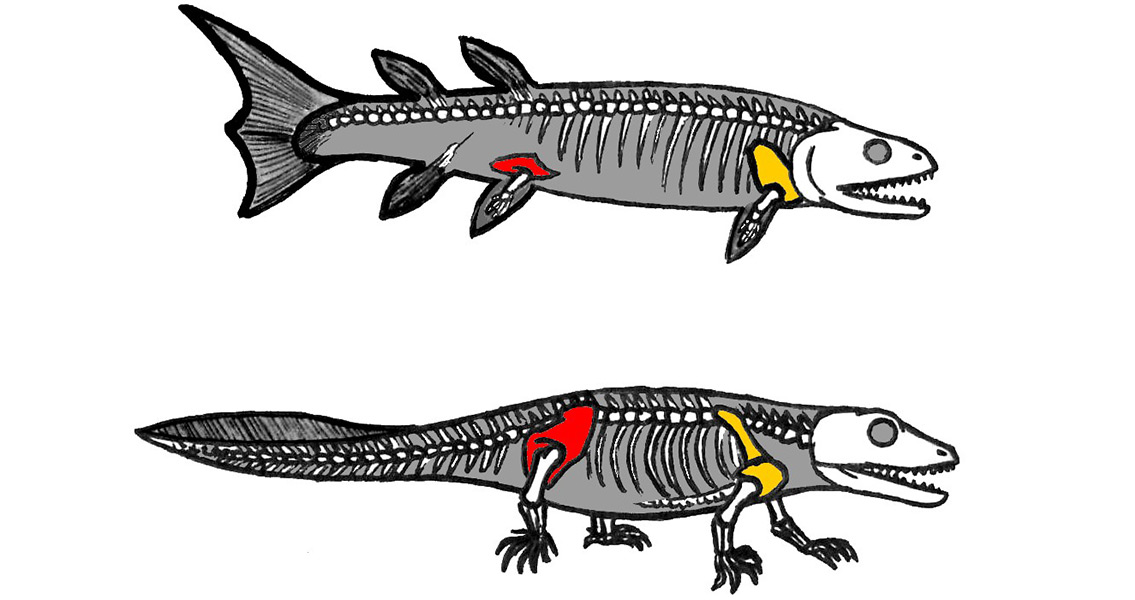
New Fossil Pushes Back When Animals Emerged Onto Land

www.journals.plosone.org Image courtesy of Wikimedia Commons user:Conty]]>

Categories
Breaking News

First Artefacts from Franklin’s Arctic Shipwreck Go on Display

HMS Erebus, which sank in 1846, have been recovered to the surface. This is the second major discovery after the location of the ship itself, which only happened last year. The Erebus was one of two ships that carried Sir John Franklin’s expedition to the Arctic to find a Northwest Passage. The Erebus and its sister ship, the HMS Terror, became stranded in ice near the shores of King William island in the Queen Maud Gulf off the coast of Canada a year after they had left Britain. Both ships eventually sank, with 128 people dying. Franklin himself died on the island a year later, in 1847. The wreck site is at a very remote and climatically hostile location. After the Erebus’ remains were discovered in 2014, the divers sent to examine them had a difficult time, to put it mildly: just to reach the wreck they had to overcome sea ice with a thickness of two metres. The work on the ship was led by underwater archaeologist Ryan Harris, from the Parks Canada Agency, who told LiveScience that just getting all the equipment and professionals needed for the job to the Queen Maud Gulf had been a challenging task. Thankfully, the team could count on logistics support from several government agencies, including the Department of National Defense, the Canadian Royal Navy, and the New York Air National Guard. The first divers went underwater last September and cleared the kelp and other marine flora colonies on the ship, which rests five meters from the seafloor. This April, the divers returned to scan the site with lasers to catalogue what was there. It was during this diving session that they retrieved the artefacts that have now been put on display at the Canadian Museum of History. The objects include three plates, some buttons, a bottle of medicine still holding some of its contents, pieces from the ship’s rigging, and a huge, 300-kg canon. According to Harris, the two ships must have sailed under “a flag of scientific neutrality” but nevertheless thought it wise to be prepared for any eventuality. All of these, however, are nothing but scratching the surface, LiveScience writer Stephanie Pappas notes. There is a huge amount of work yet to be done on the ship’s remains if there is any hope of identifying at least some of the victims of the wreck, establishing what they were doing in those last days, and determining whether they died on the ship or elsewhere. The buttons could be some help, as they may tell the researchers the rank of their owner. The team also hope to find out what caused the wreck or what factors contributed to it, given that both ships were equipped for sailing in the ice-packed Arctic waters. The Erebus wreck features ice channels on the port side, as well as metal plating and a system allowing the propeller to be hoisted onto the deck. The whereabouts of the second ship in the expedition, the Terror, remains unknown. Image courtesy of Wikimedia Commons user: Piotrus]]>

Categories
Breaking News

3,000 Year Old Stone Axes Found in Vietnam

Categories
News

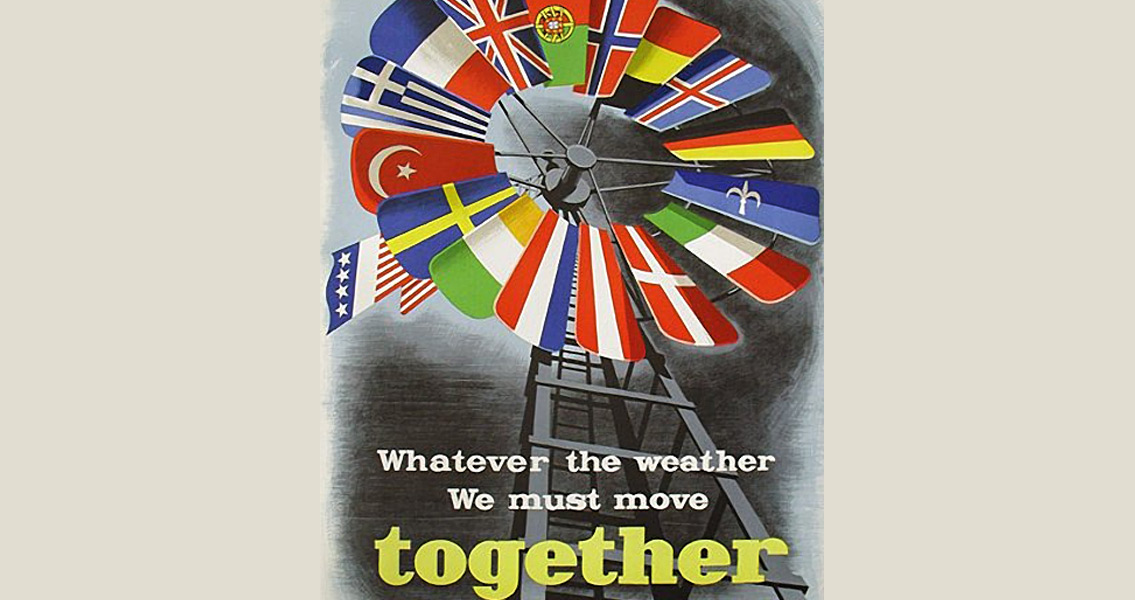
The Speech That Led to the Marshall Plan