www.rspb.royalsocietypublishing.org Image courtesy of Wikimedia Commons user: Massimo Peruffo]]>

www.rspb.royalsocietypublishing.org Image courtesy of Wikimedia Commons user: Massimo Peruffo]]>
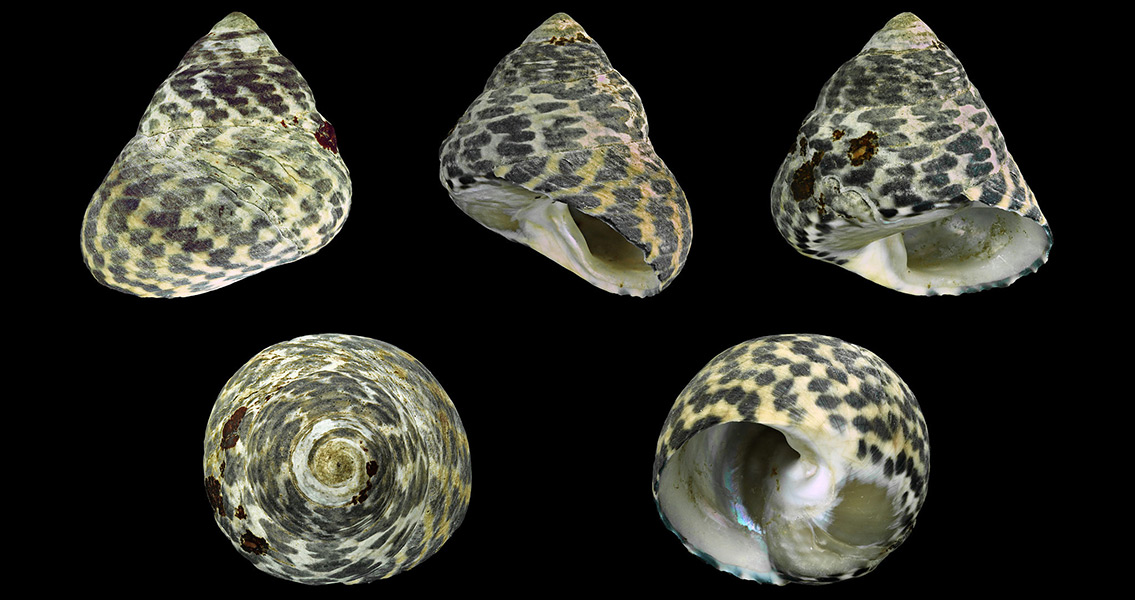
Phorcus turbinatus, an edible mollusc that early humans ate, as evidenced by the broken upper shells of the animals. The fossils were uncovered at the Ksar ‘Akil site, where two sets of human remains from the Upper Paleolithic had been discovered previously. Combining the age of the mollusc fossils with that of the human remains, the researchers concluded that modern people lived in the Levant as early as 45,900 years ago, according to a press release by the Max Planck Institute. This is before the time modern humans settled in Europe, so the suggestion that they spread across the continent from the Near East was, according to the researchers, the only logical one. Another important suggestion from the study is the timing of this spread. This has also been subject of debate for a long time, mainly because there is scarce human fossil evidence from the early Upper Paleolithic period, Jean-Jacques Hublin, co-author of the study, said in the press release. Two human fossils, however, were found at the Ksar ‘Akil and have now been dated more accurately. One of the fossils, a man nicknamed Egbert by the team who discovered him, lived in the region around 43,000 years ago, during the early Upper Paleolithic. The other fossil, of a woman dubbed Ethelruda, was older, dated back to 45,900 years ago, a period that researchers call the initial Upper Paleolithic. Both fossils were associated by researchers with tools typical for the Upper Paleolithic and both were older than any Paleolithic human fossils from European archaeological sites. This, says co-author Johannes van der Plicht from the University of Groningen, suggests that modern human’s entry into Europe took place some time between 55,000 and 40,000 years ago. The conclusions of the scientists about the route of dispersal into Europe were supported by radiocarbon dating of the molluscs, an endeavour usually extremely difficult on shell remains. The team, however, used a new approach, as explained by Van der Plicht and another co-author, Marcello Mannino. They combined radiocarbon dating with biochemical datasets for more accurate results, including a technique examining the state of amino acids contained in the shells. What these revealed was a confirmation of the dating of the human fossils: modern humans lived in what is today Lebanon before they ventured northwest into Europe and spread across it, displacing the continent’s former masters, the Neanderthals. Image courtesy of Wikimedia Commons user: H. Zell]]>


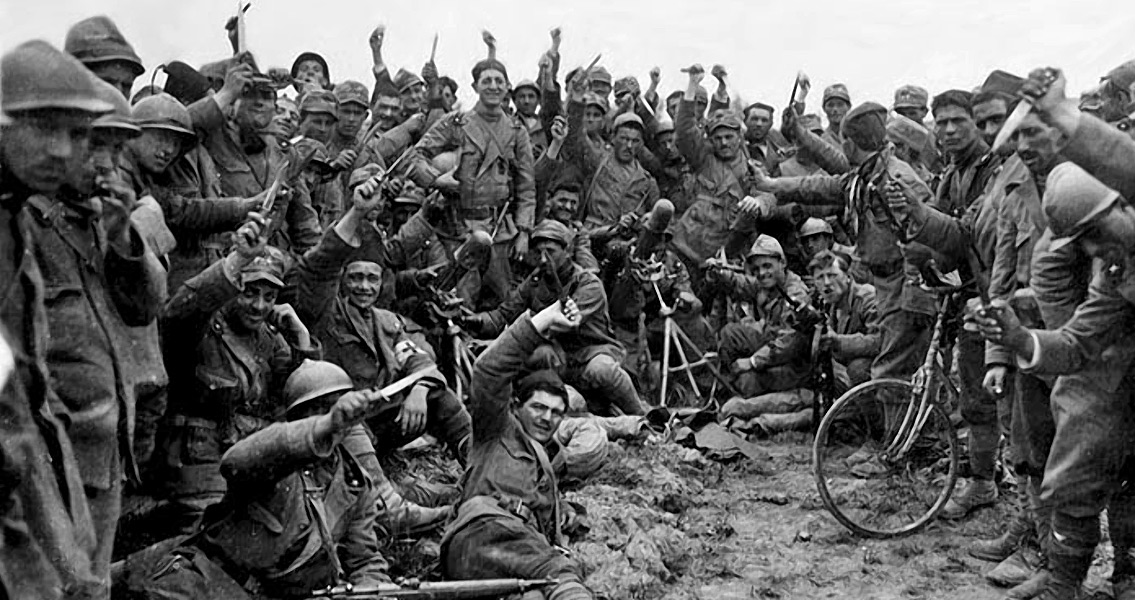
Jewish History. Pavin argues that the religious leaders of the Italian Jewish community ultimately came to identify with the Italian nationalistic cause unconditionally. Messages communicated through wartime propaganda were incorporated into the rabbis’ sermons without much critical questioning. With the outbreak of war, Italian rabbis pledged their full-fledged support for the cause. Patriotic enthusiasm is clearly visible in rabbis’ sermons, Pavin argues. The sacrifice made by Italian Jews who laid down their lives for their country was portrayed as something to aspire to. Based on these sermons, it appears that Jewish communities in Italy had fully assimilated with the Italian patriotic identity. Interestingly, a clear Jewish identity, separate and distinct from Italian Christians, remained intact. “The perception and self-representation of Jews as a distinct minority at both a religious and an ethnic level did not conflict with their sense of identification with and loyalty to their country,” Pavin argued, “and thus did not prevent the rabbis— as can be seen in their sermons—from fully supporting the Italian war effort.” Pavin makes some interesting arguments and draws some fascinating conclusions. Precisely how the rabbis’ messages were received, however, still needs further investigation. Pavin notes that the rabbis’ war was very different from the average Jewish soldier as it was free of blood and death, he suggests this disconnect as a possible explanation for why many Jewish soldiers did not seek serious support from their religious leaders. For more information: www.link.springer.com Image courtesy of Wikimedia Commons user: File Upload Bot (Magnus Manske)]]>

Science. In this new paper D’Emic says the idea that dinosaurs were “mesotherms,” a term the older study authors coined to describe a dinosaur’s metabolism as somewhere between cold blooded and warm blooded, couldn’t be further from the truth. While D’Emic praised the original paper for gathering an “unprecedented” amount of information on metabolism and growth through the lens of living modern animals, he remarked that “upon re-analysis, it was apparent that dinosaurs weren’t just somewhat like living mammals in their physiology.” Instead, D’Emic says that the massive, extinct reptilian creatures “fit right within our understanding of what it means to be a ‘warm-blooded’ mammal.” D’Emic’s research methods included a close study of growth rings present in the bones of several fossilized skeletons. Similar to the rings present in trees that provide a way to determine their approximate age, these rings indicate changes in growth that could represent seasonal changes or periods of stress in a given specimen, D’Emic contends. The paleontologist criticized the original study authors for not taking these growth rings into account, especially in light of how modern species can undergo slowdowns or pauses in their growth as a result of stressful seasons that might be colder, more arid, or with less plentiful food sources than usual. The paleontologist also re-analyzed the initial study through the lens of comparison with living avian creatures. Living birds are considered to be the closest descendants of dinosaurs living today – one key similarity, D’Emic claims, is that they are both warm blooded creatures. “Separating what we commonly think of as ‘dinosaurs’ from birds in a statistical analysis is generally inappropriate,” according to the scientist, because birds are “just the dinosaurs that haven’t gone extinct.” A re-analysis of the data with dinosaurs as avian stand-ins provides additional support that dinosaurs weren’t mesotherms but truly warm blooded creatures, added D’Emic. The scientific community is understandably split on D’Emic’s new claims. Biologist John Grady, one of the authors of the original study D’Emic takes issue with, responded on behalf of his fellow researchers by stating that “We disagree with his central criticisms, and we emphasize that all of our original conclusions stand.” Grady disputed D’Emic’s hypothesis, remarking that “Comparing dinosaur growth with the observed growth rate of living vertebrates clearly shows that non-avian dinosaurs were mesotherms.” Image courtesy of Wikimedia Commons user: Peng ]]>

www.hortulus-journal.com Image courtesy of Wikimedia Commons user: DrFO.Jr.Tn ]]>


New Historian last week, archaeologists have speculated that some of the artefacts in the site may be of Greek origin. Now, another use has been found for some of the golden objects excavated from this dig. The two bucket-shaped cups were found upside-down and covered with intricate carvings on the outside that depicted creatures from mythology; on one, winged griffons are seen attacking both a stag and a horse while another carving showcases an older man engaged in combat with a larger group of younger warriors. The interior of both cups were coated with a black residue that proved to be a mix of opium and cannabis after it was analyzed by forensics experts. The chamber where the golden bongs were discovered had been cleverly concealed beneath a layer of clay and stored within a chamber lined with broad, flat stones. In the end, nearly seven pounds of golden artifacts were excavated including two neck rings, a finger ring, a bracelet, and a collection of three cups in addition to the two cannabis cups. While the site was initially uncovered in 2013, the decision was made to keep the discovery a secret in order to discourage looters. Archaeologists say that there was already evidence that the burial mound had been scoured by looters sometime in the indeterminate past, prompting the secrecy and initially leading them to believe that any valuable artifacts had long since vanished. The site itself is known as a kurgan, one of the few pieces of permanent construction left behind by the Scythians; the largely itinerant civilisation constructed these burial mounds across their territory, which stretched from the Black Sea in the west to as far as Mongolia to the east over the close to a thousand years that the nomadic people ruled the region. Andrei Belinski, the archaeologist that led the excavation team that took over following the discovery of the site, says that the historical value of the find is noteworthy, especially since the bongs are in such excellent condition and the carvings on the cannabis cups harbor such minute details. “I’ve never seen such a detailed representation of the clothing and weaponry of the Scythians,” the archaeologist remarked, adding that “it’s so detailed you can see how the clothing was sewn.” Hopes are high that the cups, and the remainder of the gold uncovered from the kurgan, will help shed additional light on Scythian culture. It has long been thought that the Scythians used cannabis and opium in ceremonial or religious rites. Herodotus, the Greek historian living in the fifth century BCE, described Scythians as smoking a type of plant that affected the cognition of Scythian warriors prior to entering battle. Archaeologists believe the two golden cups uncovered in the Caucasus were likely the possessions of a tribal chief. ]]>