Categories
Editorial

History of Democracy in the UK (Part one)

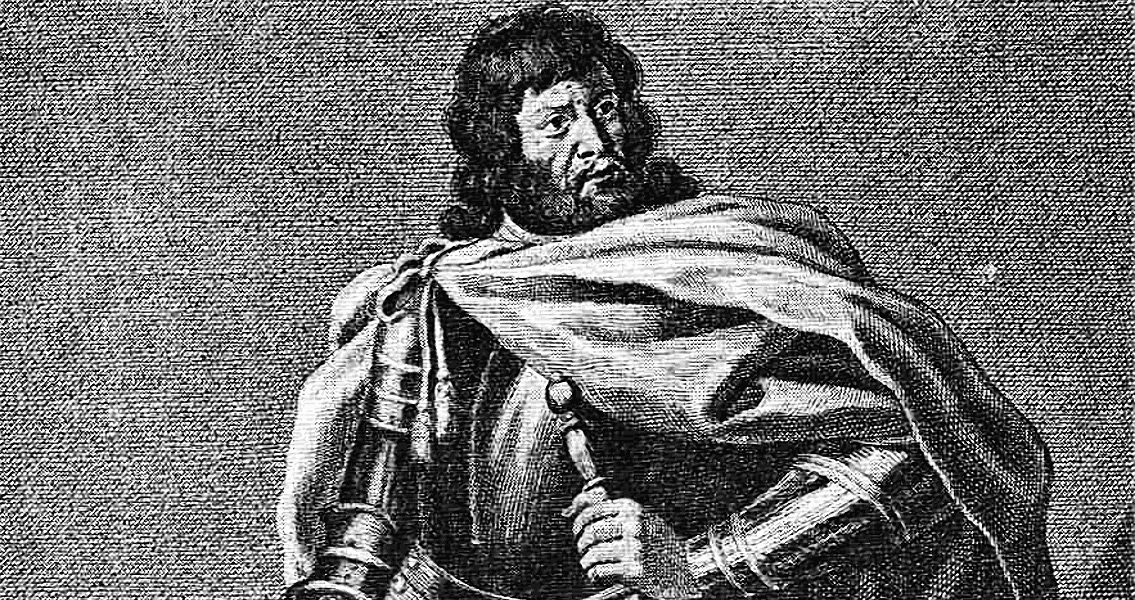
The Magna Carta Although ultimately proving something of false start for the establishment of democracy in England, the Magna Carta, signed in 1215, laid down some initial principles which would later be crucial. The Charter, signed by King John and the barons, is most widely remembered for consolidating judicial rights, including habeas corpus: the right not to be unlawfully imprisoned. Other clauses however, were vital in decentralising power, taking it away from the body of the king and spreading it across a wider group of people. Magna Carta’s 61st Clause, referred to as the Security Clause, stated that a council of twenty five barons should be created with the power to overule the will of the King. Shortly after the signing of Magna Carta, John repealed this clause and it was largely ignored by subsequent medieval kings. Nevertheless, it had raised crucial ideas which would reappear in the construction of the English Constitution. Simon de Montfort The brother-in-law of King Henry III, Simon de Montfort led a rebellion in 1254 which laid the foundations for the modern parliament. Henry had grown increasingly unpopular with his barons, as a result of repeatedly committing English resources to wars fought on the behalf of the Papacy. More importantly, the parliament of barons felt increasingly ignored by the King. A famine proved the final straw, and the barons demanded reforms to the way the King ruled the country. Significantly, the powerful and influential de Montfort sided with the barons. The Pope ruled that the barons’ demands for reform were unconstituional, but the tensions did not go away. In 1263, de Montfort led another campaign for reform, ultimately leading to war with Henry. At the Battle of Lewes in 1264, Henry was captured. In the King’s name, de Montfort called a parliament to discuss the next step. This parliament was unlike any that had been called before. Alongside barons, English towns were also asked to send representatives to advise on the next step for English politics. For the first time, democracy had been opened up to a much wider demographic. Historians often question whether de Montfort was motivated by a genuine desire to further democracy, or total self interest. Either way, his actions were hugely important in the development of Parliamentary Democracy. The 40-Shilling Franchise As alluded to above, a parliament had existed in Britain since the late thirteenth century. Exactly who could partake in it however, was far from set. Since 1341, Parliament had been divided into two houses, the knights and burgesses sitting in what became the House of Commons, and the clergy and nobility sitting in the House of Lords. A drastic change occurred in 1429, with a new statute specifying who was entitled to vote in elections. A concern had grown that the House of Commons had become overcrowded by people of “low estate”, that is, the poor and uneducated. Essentially a reactionary step by the aristocracy to strengthen their own political influence, the 40 Shilling Franchise greatly reduced the number of people who were eligible to vote. Following the passing of the statute, only freemen owning freehold land (land that was not rented from a landlord) with a value of more than 40 shillings were allowed to vote. The 40 Shilling Franchise put restrictions on who could vote that lasted for over four centuries… ]]>

Categories
Breaking News

Bronze Age Kazakhstanis Were Skilled Farmers

Panicum miliaceum and Setaria italica),” the team wrote in their report, published in the upcoming edition of the Journal of Archaeological Science. Intriguingly, there was very little evidence of C4 plants in the diets of individuals from Bronze Age northern Kazakhstan. In later periods, C4 plants were a major component in human diets across the region, but at this early stage – around 1,800 BCE – it appears that southern Kazakhstan was populated by agricultural societies. “The wide variety of stable isotope results, both within and between contemporary sites from the southern regions of Kazakhstan, indicates a diversity of food choice,” the team explained. The team’s research presents the earliest directly dated isotopic analysis of millet consumption outside of China. Their research suggests that millet was a significant dietary component for a substantial number of individuals in Bronze Age southern Kazakhstan, indeed, millet made up such a large proportion of their diet that it was detectable in analysis of human bone collagen. The evidence for substantial millet consumption in southern Kazakhstan – particularly when taken with the absence of the crop in the north during the same period – suggests that this region may have been the route for the spread of millet crops from China. This hypothesis, the team notes, warrants further archaeobotanical research. What the team have revealed conclusively is the great variation in human diet. Southern Kazakhstan during the Bronze Age had a great many different sources of food which has left an indelible mark in the bones of people who inhabited the area. The evidence of millet also implies that Bronze Age southern Kazakhstan could have been a very important area between China and further West, meaning that the region could have been the first area to properly cultivate the crop outside of China. For more information: www.sciencedirect.com Image courtesy of Wikimedia Commons user: Kurt Stüber]]>

Categories
Breaking News

Volcanoes May Have “Helped” Drive Last Mass Extinction

Categories
News

Sacco and Vanzetti Arrested

Categories
Breaking News

Ancient Cities Provide A Warning for the Modern World

GSA Today, the authors argue that pre-Republican Rome was a smart city. During this period, Rome’s expansion did not substantially alter the geological features of the area. Natural resources around Rome were managed in order to minimise the environmental damage from over-exploitation. During the pre-Republican era, Rome was an agricultural economy. The small hilltops around the river Tiber’s alluvial plain created remarkably fertile soils, suitable for farming. Access to the river meant that trading of agricultural products was remarkably easy for Romans. Farms were numerous and the city of Rome was self-sufficient. In the same period, Naples had fewer natural resources and was also exposed to more geological vulnerabilities than Rome. As it was based within a naturally-defensible bay, Naples had an economy dependent on sea trade. Naples is also surrounded by very rugged geomorphologic terrain, meaning that the potential for agricultural expansion and economic diversification was limited. Naples, unable to expand outwardly, grew in a vertical manner. The natural marine terraces which bordered the coast became the foundations for Naples’ expansion. Geomorphology, de Rita and Häuber argue, played a key role in constraining Naples’ importance for the Roman Empire. “Geology was a major contributor to the fortune of Rome, which had more resources and reduced risks relative to Naples”, the pair wrote. “Rome could also safely expand toward the Alban Hills area because of the plateau geomorphology, which further provided an easy path for the construction of the aqueducts. The city could also develop agricultural practices that, until Republican times, ensured its self-sustenance.” As time passed, however, rapid urban expansion and population growth led to the over-exploitation of resources. Both cities became unstable and disasters occurred as a result of natural processes, such as flooding and earthquakes. “…many past examples have shown how the indiscriminate use of technology in response to a natural hazard–induced risk, instead of generating security, can lead to higher risk and danger,” the article explains. Häuber and de Rita’s work offers a stark warning for modern cities. Expansion must be managed carefully, allowing for urban growth without out-stripping resources. If we do not heed these warnings, we risk our cities being increasingly vulnerable to natural disasters. For more information: www.geosociety.org Image courtesy of Wikimedia Commons user: Markus Bernet]]>

Categories
Breaking News

Neolithic People May Have Had Hierarchies

Categories
News

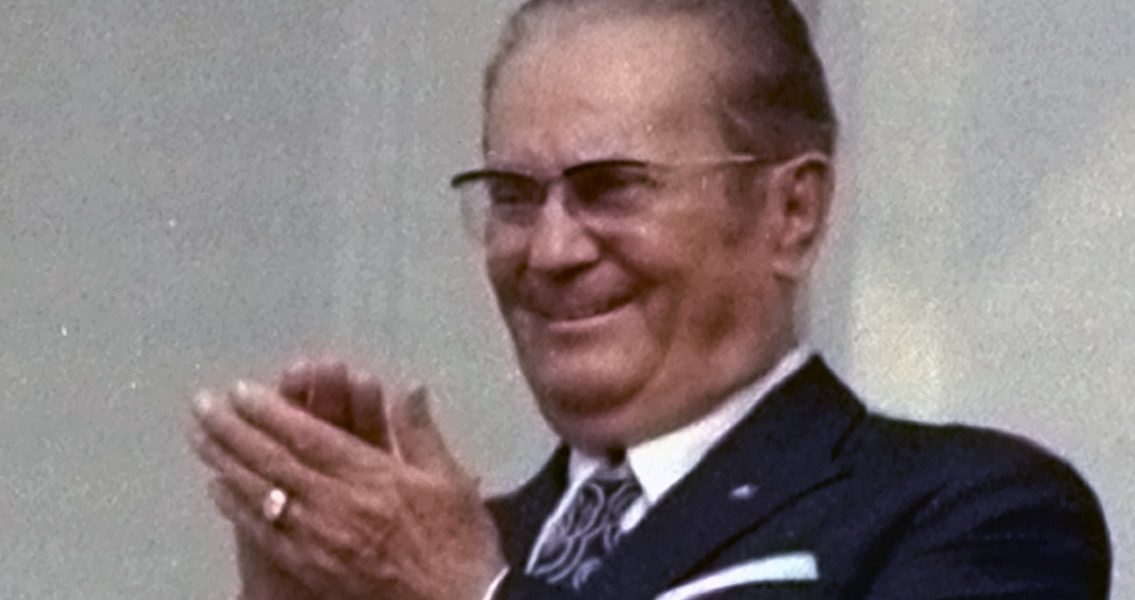
The Death of Tito

Categories
Breaking News

Ancient Americans Cultivated Clams

www.saa.publisher.ingentaconnect.com Image courtesy of Wikimedia Commons user: Rotatebot]]>

Categories
Breaking News

First Maya City With Grid Design Revealed

Live Science that the ancient city was marked by a so-called ceremonial route, running from west to east, with only a 3-degree deviation from true east, a remarkable accuracy. This ceremonial route, a perfectly straight line, was lined by as many as 15 flat-topped pyramids which would have stood as tall as 100 feet. Each had a temple on top, which people reached by steps in the pyramids. At the easternmost end of the route there was a structure including three main pyramids along with some other buildings, arranged to face each other. Such triadic structures have been found in other Maya cities as well. In the northern and southern parts of the city were residential areas, again conforming to the overall grid design, Pugh said, and the whole area was encircled by a stone wall for protection. Apparently, Nixtun-Ch’ich was a beautiful, “shiny” city at its height, based on evidence of white plaster that may have been used for the buildings. However, for the people living in it, this design may not have been the most pleasant one due to its strictness, imposing a sense of constant control. This conclusion is based on the atmosphere of early European grid-design cities that started being built during the early Renaissance. Compared to Nixtun-Ch’ich, other ancient Maya cities were more “relaxed” in terms of design, with more open spaces. There is one other city on the land of the former Maya empire, Teotihuacan, which was also built according to a grid design but that city was inhabited by another civilisation about which little is known. Pugh’s research was actually focused on a community building and artefacts dating to a much later period, about the fourteenth century CE. The building was probably the place where the local Maya heirs, the Chakan Itza, held meetings, performed religious ceremonies, and generally conducted matters of state. There were two altars with turtle sculptures in the building, as well as figures of parrots and snakes along the walls. The building, Pugh says, was probably used for about two centuries. The Maya civilisation has been the subject of extensive study since the nineteenth century but the reasons for its decline, which occurred sometime around 900 CE, are still unclear. This was the first geographically focused empire in the region, which at its height spanned the Yucatan Peninsula, Tabasco and Chiapas in what is today Mexico, as well as Guatemala, Belize, western Honduras and El Salvador. The first evidence of Maya culture dates back to 1800 BCE but the golden age, the Classic Period of the civilisation, is considered to have lasted from 250 to 900 CE. Among its hallmarks are the stone pyramids where the Maya worshiped their gods, and the Maya calendar, whose accuracy is still a mystery for modern science. Image courtesy of Wikimedia Commons user: joiseyshowaa]]>

Categories
News

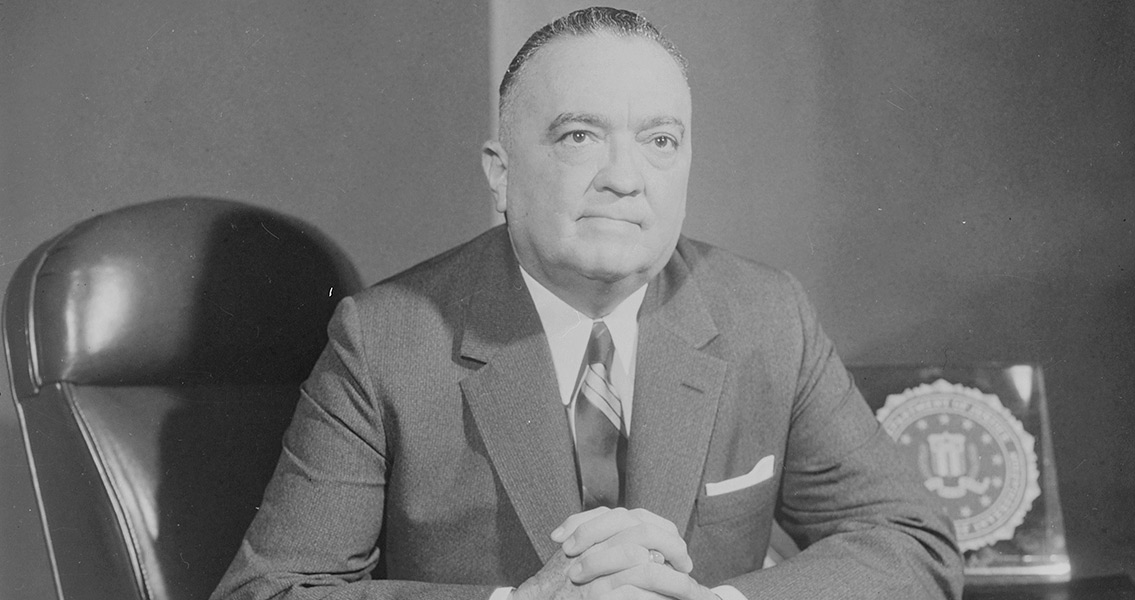
The Death of J. Edgar Hoover

Buchalter and John Dillinger being killed or imprisoned by the FBI. Tellingly, a 1936 poll of American school boys saw Hoover voted the second most popular man in the country, behind only Robert Ripley, the creator of Ripley’s Believe It Or Not. It was during the Cold War period that the FBI and its methods came into question. Fear of radicalism, and particularly communism, returned to the United States. The FBI compiled millions of files on Americans suspected of dissident activities, and Hoover worked with Senator Joseph McCarthy, the man who drove the communist witch hunt in American politics. In 1956, Hoover instigated the creation of a new counter intelligence program called Cointellpro. The top secret initiative was originally intended to target communist organisations but it soon expanded its remit to include any dangerous groups, including the Civil Rights Movement. Civil Rights leaders, including Martin Luther King, became the subject of harassment and surveillance by the FBI, and questions started to be asked about the amount of power the FBI could wield. By 1969 Hoover had started to receive public criticism for his leadership of the FBI. Congress passed laws limiting the tenure of FBI directors to ten years, and requiring Senate approval for the appointment of any new director. Hoover’s death came shortly before the Watergate Affair started to unravel in the media, with the resulting hearings concluding that the FBI had illegally used its authority to protect President Richard Nixon. Since his death, and the Watergate revelations, Hoover’s reputation has diminished as new information has been revealed about FBI breaches of civil liberties. Hoover, once considered the embodiment of honesty and integrity, has been repainted as corrupt, dangerous and discriminatory. Largely this reevaluation is down to hindsight, and the reassessing of key events in the post-war period that Hoover was involved with. Undoubtedly a controversial figure, it is also important to remember that Hoover played a crucial role in the development of modern crime fighting techniques, laying the blueprint for the modern FBI. ]]>