Categories
Breaking News

Ancient Chinese Burial Yields Massive Cannabis Cache

National Geographic, the remains of a 35-year-old man with Caucasoid features were found in the Turpan Basin of northwest China. The man had been laid to rest on a wooden bed, his head resting on a reed pillow, and covered in thirteen cannabis plants, each of which were nearly three feet in length. The plants themselves were found to be in remarkably well-preserved condition; the burial is likely to have occurred anywhere from 2,400 to 2,800 years in the past, based on radiocarbon dating. At that period of time Turpan would have been a well-known stop on the Silk Road thanks to its status as a desert oasis. The people inhabiting the region, known as the Subeixi – or the Gushi Kingdom – were active from 2,000 to 3,000 years in the past; the burial was found among nearly 250 others in Turpan’s Jiayi cemetery, which is closely associated with the Subeixi. This new discovery is the first of its kind to feature the recovery of complete cannabis plants. Additionally, it is the first recorded instance of these plants being used, in essence, as a sort of human “burial shroud”, as the plants were laid across the chest of the deceased man at a diagonal. However, this is not the only evidence of cannabis being associated with Turpan burials, as a grave from nearby Yanghai cemetery, thought to have been dug contemporaneously with the Jiayi cemetery grave, featured nearly two pounds of seeds and powdered leaves from the plant. Meanwhile, archaeological research into regions of Asia to the west of the Gushi Kingdom has also yielded burials where cannabis seeds played a role. Several Scythian burials dating to the first millennium BCE in southern Siberia included the plant, among them the grave of a woman who might have been suffering from breast cancer. Some researchers have suggested that she may have been using cannabis partly to provide some relief from the pain of her condition. Determining the origin of the plants included in the Turpan burial has proven to be problematic, as it is the first instance of intact plants being included in a grave. With cannabis finds in the region prior to this in the form of parts of the plant, it’s unknown whether the cannabis found in the Jiayi burial had been obtained through trade or if it had been grown locally. Because the plants were discovered laid flat on the body of the deceased, researchers believe they were fresh at the time of the burial, making it more likely the cannabis had been grown locally and harvested specifically as part of a funerary rite. Additional evidence supporting this claim includes the state of the plants themselves. The plants – all of them female – had nearly all been pruned of their flowering heads. Those that were intact were nearly ripe and some even contained still-developing fruit. This has raised the suggestion that, according to the cannabis growing season, the burial must have occurred in the later days of summer if the plants had been collected locally. The research study associated with the find, recently published in the journal Economic Botany, is available online at http://link.springer.com/article/10.1007/s12231-016-9351-1?view=classic ]]>

Categories
Breaking News

DNA Sequencing Proves First Polynesians Didn’t Linger on Their Journey

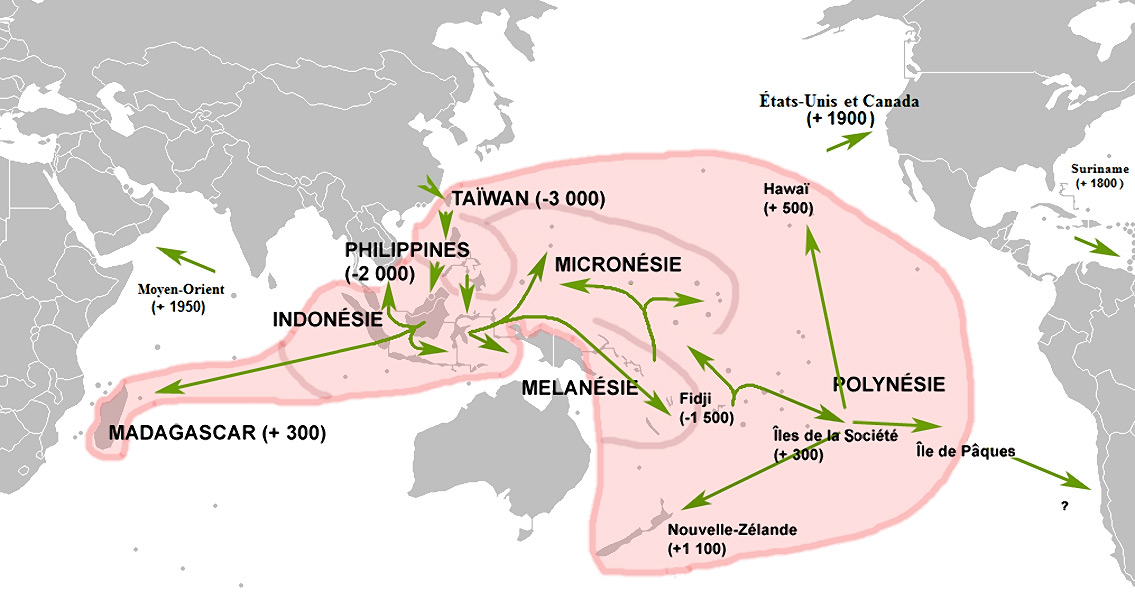
Science that the study decides a decades-long dispute, showing the East Asians skipped over islands populated by Melanesians at the time without picking up any of their genes, an example of how cultures can initially avoid mixing between groups. Known collectively as the Lapita culture, the first Polynesian Islanders left behind plenty of enticing artifacts, including unique red stamped pottery, shell ornaments and obsidian tools. These artifacts first showed up over 3,000-years-ago in New Oceania, in the Bismarck Archipelago. The Lapita culture grew yams, taro and breadfruit; brought chickens and pigs; and quickly spread to other islands such as New Caledonia and Vanuatu, and then to Tonga, Samoa, Fiji, and beyond. The two models previously considered by archaeologists included the “express train” model, which had the Lapita traveling quickly from mainland China to Taiwan, the Philippines, and then across open ocean to Vanuatu and then Samoa. Covering a total of 24,300 kilometers in around 300 years. This model is supported by linguistics models showing how Austronesian languages, which are very different from the Papuan languages of Melanesia, spread into Oceania from East Asia. The “slow boat” model was supported by the DNA of live Polynesians which showed evidence of their Lapita ancestors lingering in Melanesia, living with the locals and then spreading slowly eastward. This new study involved the extraction of DNA from the ancient skeletons of four women from the islands Tonga and Vanuatu, dating back to between 2,300 and 3,100 years ago, three of which were directly connected to the Lapita culture. The international team sequenced the DNA (up to 231,000 positions) of each skeleton and then compared their findings to the DNA of almost 800 people from 83 different populations currently living in East Asia and Oceania. The four ancient women shared all of their ancestry with the Atayal, an indigenous people from Taiwan and the Kankanaey people from the Philippines. The Lapita showed no evidence of a Papuan ancestry, meaning they took the express route all the way to Oceania without ever mixing with Melanesians. ]]>

Categories
Breaking News

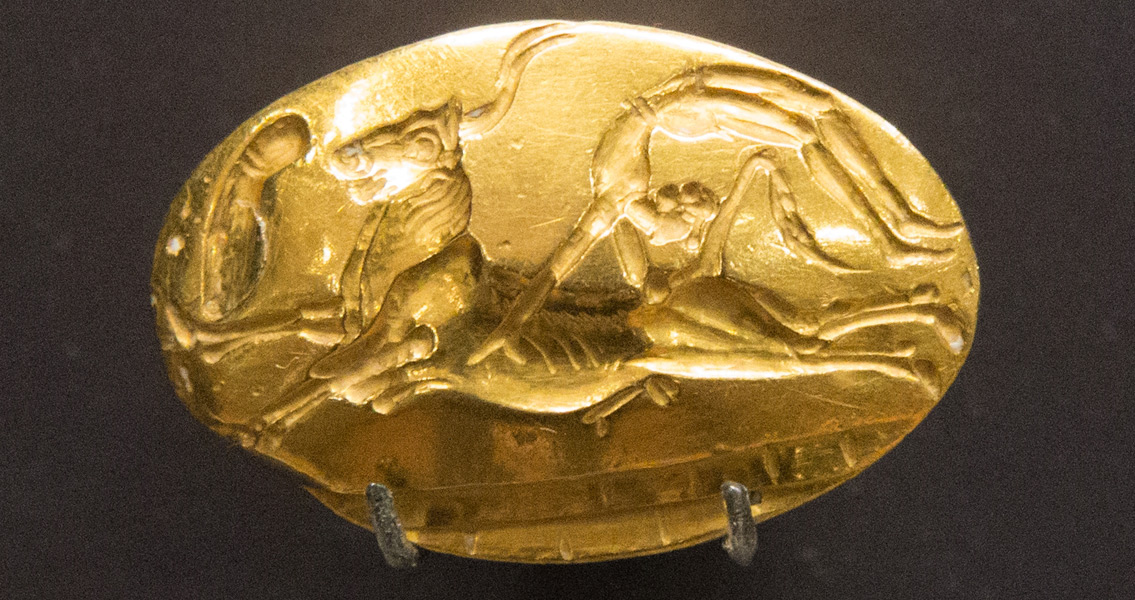
Bronze Age Mycenaean Tomb Yields Historic Jewelry

Categories
News

Reno Gang's Reign of Terror Starts On the Railroads

Categories
Breaking News

Biblical Gate Once Considered a False Idol Excavated in Israel

Live Science. The gate-shrine was found in the ancient city of Tel Lachish. The gate’s northern section was uncovered decades ago by archaeologists from Tel Aviv University and the United Kingdom. This recent dig was focused on unearthing the entire structure, no small task considering the gate-shrine is the biggest one constructed in Israel, going back to the First Temple era when the kingdom worshiped at the temple King Solomon built. Sa’ar Ganor, a director with the IAA, said in a statement released by the Authority: “The size of the gate is consistent with the historical and archaeological knowledge we possess.” According to the Hebrew Bible, “everything took place” where the gate/shrine of Tel Lachish was originally built. High-ranking officials, including city elders, governors, and judges, would sit on benches by the city gate. Those benches have been found as part of the excavation project. Thirteen feet (4 meters) of the Tel Lachish gate-shrine have been exposed and preserved. The excavation has revealed benches which included armrests, oil lamps, arrowheads, and jars and scoops used for loading grain. Some of the jar handles had the name “lmlk” on them, which was the king’s seal. These jars may have been related to the administrative and military preparations made by the Kingdom of Judah for the war against the king of Assyria, Sennacherib, late in the eighth century BCE. “Steps to the gate-shrine in the form of a staircase ascended to a large room, where there was a bench upon which offerings were placed,” Ganor said in the statement from the IAA, “An opening was exposed in the corner of the room that led to the holy of holies [the gate-shrine]; to our great excitement, we found two four-horned altars and scores of ceramic finds consisting of lamps, bowls, and stands in this room.” The horns on the altar, however, had been intentionally cut off. “That is probably evidence of the religious reform attributed to King Hezekiah, whereby religious worship was centralized in Jerusalem and the cultic high places that were built outside the capital were destroyed,” Ganor added. Ze’ev Elkin, the minister of Jerusalem affairs, heritage and environmental protection, as well as a member of the Israeli parliament, told Live Science the discovery shows “how biblical tales that are known to us become historical and archaeological stories” The site, which is in the Tel Lachish National Park, has not been opened to the public. ]]>

Categories
Breaking News

Frightening Megalodon and Great White Shark Relative Described

Megalolamna paradoxodon, lived during the early Miocene epoch, some 20 million years ago. The long extinct creature belongs to a shark group called Lamniformes, which includes the modern day great white and mako sharks. Terrifying fossilised teeth, measuring up to 4.5 centimetres (1.8 inches) long, were the basis of the discovery. Megalolamna paradoxodon’s teeth have been found in California and North Carolina in the United States, as well as in Peru and Japan. Substantially smaller than members of the ‘megatoothed’ lineage, Megalolamna paradoxodon was still a formidable creature. At a minimum it was comparable in size to a modern great white shark, around four metres (thirteen feet) long. Living in the same oceans as the megatoothed sharks, Megalolamna paradoxodon likely feasted on small and medium sized fish, grasping its prey with its front teeth and slicing the unfortunate victim with its rear teeth. Megalolamna paradoxodon is a member of the Otodontidae family of sharks. Kenshu Shimada, a paleobiologist at DePaul University and research associate at the Sternberg Museum in Kansas, who led the study, said in a press release that the newly discovered fossilised shark is a “close cousin” of the megatoothed lineage that includes megalodon. The prehistoric shark’s name reflects ambiguities over its identification. Although certain dental features point to the otodontid affinity, superficially the teeth look close to those of a modern day salmon shark from the lamna genus – only much bigger. It is for this reason it has the name Megalolamna. Paradoxodon means paradoxical teeth. This is in reference to the fact the shark appears unexpectedly in the geologic record, with an as yet inexplicable 45 million year gap from when Megalolamna split with its apparent closest relative: Otodus. “It’s quite remarkable that such a large lamniform shark with such a global distribution had evaded recognition until now, especially because there are numerous Miocene localities where fossil shark teeth are well sampled,” said Shimada. Through their work on Megalolamna paradoxodon the team have also concluded that members of the megatoothed lineage, such as megalodon, should be reclassified from their traditional place in the Carcharocles genus to the Otodus genus. “The idea that megalodon and its close allies should be placed in Otodus is not new, but our study is the first of its kind that logically demonstrates the taxonomic proposition,” The Odotus lineage without megatoothed sharks would not constitute a full lineage, something scientists call ‘non-monophyletic’. By including megatoothed sharks however, Odotus becomes a monophyletic group, a complete lineage. This lineage is considered the next of kin to Megalolamna paradoxodon. The study has been published in the latest issue of the journal Historical Biology. Shimada, the lead author, worked alongside Richard Chandler, North Carolina State University; Otto Lok Tao Lam, The University of Hong Kong; Takeshi Tanaka, Japan; and David Ward, The Natural History Museum, London; to describe the prehistoric shark. For more information: tandfonline.com Image courtesy of Kenshu Shimada]]>

Categories
Breaking News

Roman-era Coins Found in 12th-Century Japanese Ruins

Categories
Editorial

The Great Binge: Heroin, Cocaine and Opium Over the Counter

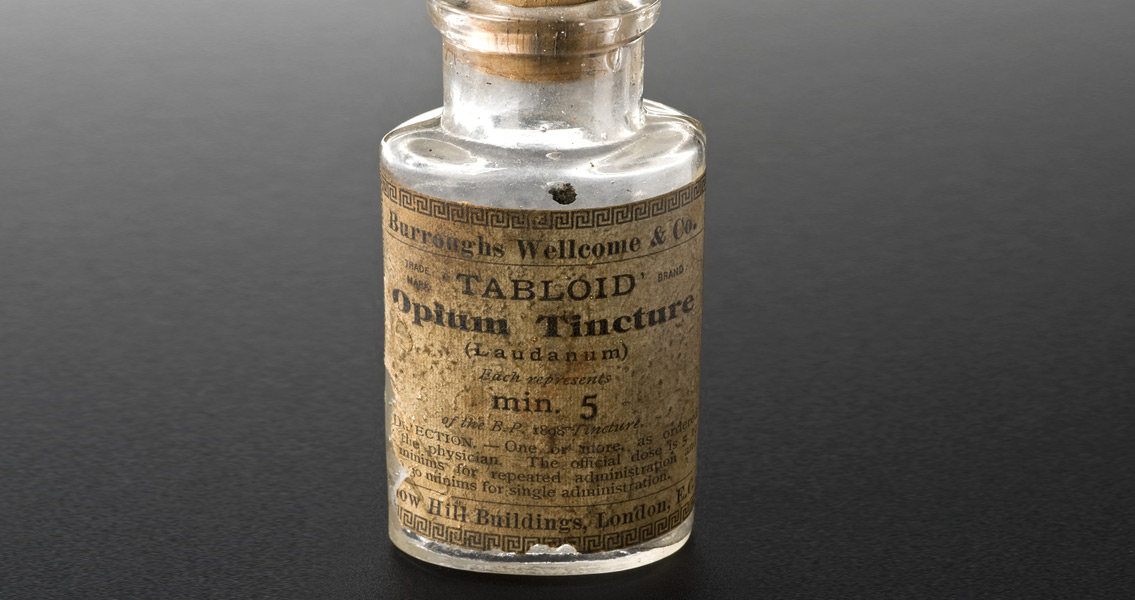
Pure Food and Drug Act in the USA, placing an obligation on manufacturers to accurately label products containing alcohol, cocaine, heroin and morphine. However, accurate information alone wasn’t enough to break society’s dependency. On a global scale, the rehabilitation from the Great Binge only truly started with the Hague International Opium Convention of`1912. Signed by 13 nations from across the globe, the treaty which went into effect in 1915, saw the signatories agree to work together on controlling the manufacture and distribution of drugs including opium, cocaine and heroin. In 1919, the terms of the convention were incorporated into the Treaty of Versailles, seeing them applied globally. Although not ending the sale of cocaine, heroin and opium, the Hague Convention of 1912 marked a turning point, the moment governments started to take action against the detrimental effects of large scale drug abuse. In the following decades, it proved the basis for national drug control legislation in many of the signatory nations, laying the foundations for the familiar drug laws we have now. ]]>

Categories
Breaking News

Can A Brexit Precedent Be Found In Henry VIII's Reformation?

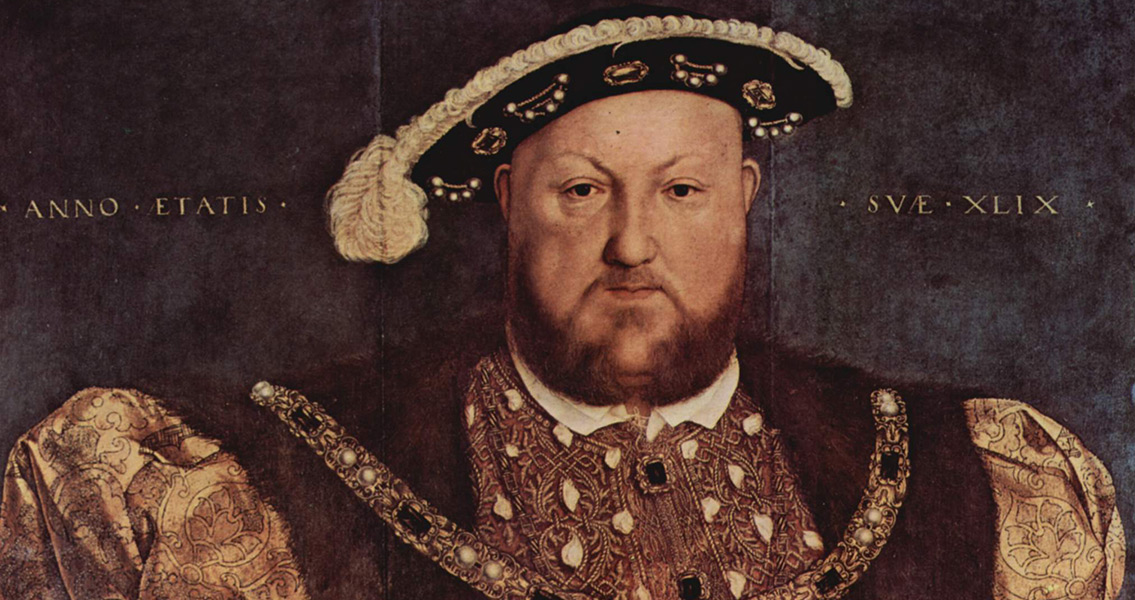
Act of Supremacy was passed by Parliament on 30th October, 1534. The Act had a clear aim: to assert the English monarch as the undisputed head of the Church of England, thus taking away the power of the Pope over English society. A number of factors motivated the decision to break with the Catholic Church. Martin Luther had published his Ninety Five Theses in 1517, accusing the Church of nepotism, usury, pluralism, bribery and other corruptions. Luther’s criticism caused ripples throughout Europe, capturing a growing discontent aimed at the hierarchy of the Vatican. The church had grown into something approaching a business, due to its ability to gain massive wealth, but it was riddled by complacency, corruption and poor administration. For the King, this was particularly disturbing. England’s pious population continued to pay vast sums to their local churches, but this wealth was going to the Vatican, not the crown. Of course, as most British school children likely know, Henry’s desire to break with the Vatican was also motivated by personal reasons. Desperate for a male heir, Henry wanted to annul his marriage to Catherine of Aragon. When the Pope stalled on agreeing to the divorce, out of fear of offending Catherine of Aragon’s relative: the Holy Roman Emperor Charles V, Henry opted to take matters into his own hands. The Act of Supremacy made Henry VIII “supreme head in earth of the Church of England.” It also repealed “usage, custom, foreign laws, foreign authority”. This is where the most obvious comparison with the Brexit referendum exists. Beyond the King’s desire for a divorce, the Reformation confronted issues of shared sovereignty between the English government and a continental power that was echoed in the dialogue of the Brexit referendum. As Henry VIII put it: “we thought that the clergy of our realm had been our subjects wholly, but now we have well perceived that they be but half our subjects; yea, and scarce our subjects; for all the prelates at their consecration make an oath to the Pope clean contrary to the oath that they make to us,” Hafeez challenges the popular notion that the Reformation led to a Golden Age in England. Instead, he paints an image of social upheaval, uprisings and rebellions in the wake of the adjustment the country needed to endure. Interestingly, the article by the financial analyst paints a largely equivocal image of the economic consequences of the Act of Supremacy by looking at economic markers from the period. Put simply, GDP barely changed in the century following the break with the Vatican, before plummeting during the English Civil War. Separating from the Vatican didn’t cause economic disaster for England, but neither did it trigger economic growth, despite the crown confiscating the enormous wealth of the church and becoming the new recipient of donations. How applicable Tudor England is to modern Britain is of course highly debatable. Nevertheless, Hafeez’s analysis sets out a precedent which could offer a point of insight to those trying to predict the aftermath of Britain leaving the European Union, showing that the consequences are likely to be complicated, and impossible to comprehend for quite some time.]]>

Categories
Breaking News

The Last Continent Colonized by Homo Sapiens