Categories
Breaking News

Quicksand – Bane of the Dinosaurs?

Washington Post, Jim Kirkland, a paleontologist for the state of Utah, remarked that the initial thought was that he and his team had stumbled across a small body of water where animals might have frequently drowned or fought, but this didn’t fit the bill because of how the fossilized remains were found – encased in a type of sandstone that differed from the surrounding geology. In an attempt to understand the strange find, Kirkland allied with Edward Simpson, a paleontologist from Kutztown University in Pennsylvania, to determine what might have happened to these Utahraptors. The answer, it seems, is deceptively simple: quicksand. Quicksand, Kirkland explained, does not operate under the same rules that Hollywood productions throughout history have assumed. A mix of sand and water, quicksand appears solid until something (like a heavy dinosaur) steps on it. At this point the quicksand becomes more liquid temporarily as the extra weight disturbs the equilibrium of the mix of water and sand, turning the area into a soupy mix. However, once the water and sand are given time to separate again the mixture solidifies, trapping whatever may have stepped within. Kirkland, Simpson, and several colleagues were able to reconstruct the events that led to the entrapment and death of at least nine Utahraptors in eastern Utah more than 100 million years ago, by studying how quicksand traps behaved near Lake Powell, a man-made reservoir that straddles the Utah-Arizona border. However, the key was in the discovery of a second dinosaur species within the sandstone block alongside the Utahraptors. The remains of iguanadonts, beaked plant-eating dinosaurs, were also found within the fossilized quicksand, researchers revealed. The iguanadonts that became trapped within the quicksand likely died there, attracting predators and scavengers such as the Utahraptors to the location as well. Each of these carnivorous dinosaurs would have become trapped, but it’s unclear if the group arrived one at a time or all at once. Researchers hope to continue studying the giant rock slab in the future in order to reveal that piece of the puzzle; for now though, work has been halted temporarily in anticipation of a crowdfunding campaign to raise sufficient funds to ensure fossil preservation and to enlist the aid of noted paleontologist Scott Madsen. Regardless, the revelation that this series of Utahraptors died in rapid succession due to quicksand is groundbreaking, according to Kirkland. The paleontologist remarked that the accompanying research paper is the first of its kind to publish findings revealing a quicksand-related predator death trap. The paper revealing the findings are available from the journal PALAIOS here ]]>

Categories
Breaking News

Never Seen Before Headless Burials Discovered in Siberia

Siberian Times: “Burials without heads are quite common. Usually it is because of war. There was a widespread practice in which bowls were made of the heads of defeated enemies.” As he describes it, eating from the enemy’s skull was the ultimate victory celebration. “But this is obviously a different case,” he added. In other burials, the heads were not placed in the same grave as the body. Also unusual, if these were the remains of enemies, was the care taken to ensure the deceased received the rituals associated with an honored death, such as being well dressed. When burying their own, as opposed to war enemies, the Pazyryks typically took great care to not distort the bodies of the diseased. Additionally, tombs containing headless children have never been seen before now. The archeologists have considered whether grave-robbers, in the act of stealing the ornaments buried with the bodies, might have severed the heads on purpose and then placed them by the knees for some unknown reason. However, the skeletons had not been disturbed, as one would expect after such an act. The discovery has resulted in more questions than answers, Dr. Konstantinov admitted in the Siberian Times, adding, “We have no similar cases, so we need to investigate this one very thoroughly. We will continue the research of these skeletons. We need to determine their gender and (approximate) age. It is also important to study the traces on their cervical vertebrae to understand how and when the heads were cut off or separated in some other way. We hope to get the first results in December or January.” Photos of the burial can be found here: siberiantimes.com ]]>

Categories
News

Campaign To Tear Down Statue of Christopher Columbus

set sail from Spain in August 1492, embarking on a journey that would change the world forever. The mysterious explorer – little is known about his life prior to the expedition with some even questioning whether he was truly a Genoan as official accounts claim – set out hoping to find a new passage to the Far East. He ended up becoming the first European to set foot in the Americas since the Age of the Vikings. Following his discovery of the Bahamas, Columbus continued his explorations with subsequent voyages, opening up much of the Caribbean, South America and eventually North America to European exploitation. The consequences for the indigenous populations proved devastating. European colonialism was catastrophic for the original inhabitants of the Americas, entire groups and tribes wiped out either by European aggression or the spread of new diseases to the continent. Columbus signaled the start of the Age of Exploration; opening up two new continents to Europeans his discovery was pivotal to shaping the world we live in today. At the same time, he also cleared the path for the devastating consequences of imperialism. Columbus himself oversaw the enslavement of the indigenous population of Hispaniola (the island that is now the Dominican Republic and Haiti), in response to an attack on the European settlers there. The indigenous tribes were forced to search for gold and help build a colony for the European settlers, despite Queen Isabella herself being against slavery. It’s a fact that shows beyond merely opening the way to the Americas for others to exploit, Columbus was actually at the forefront of the evils of European imperialism. It is this questionable legacy that has led to CUP Capgirem’s call for the statue’s destruction. But their mission doesn’t stop there. 12th October is a national holiday in Spain, celebrating the anniversary of Columbus making landfall in the Americas, but they think it should just be a normal working day. According to a CUP Capgirem press release, the 12th October marks: “the genocide of the indigenous American population by colonist-conquistadors, and an act of aggressive Spanish nationalism against all the peoples that it oppresses and has oppressed.” CUP Capgirem’s campaign marks a growing sentiment, particularly among the Spanish left, to challenge the monuments to Spain’s imperial past. Just last year, Barcelona’s mayor, Ada Colau, said the country should not be marking a “genocide” (12th October) with a military parade. This aggressive confrontation of Europe’s imperial past is not limited to Spain. Earlier this year, a protest movement began in Oxford, UK, calling for the destruction of a statue of Cecil Rhodes at Oxford University’s Oriel college. Rhodes, a businessman and politician at the heart of the annexation of huge swathes of land in South Africa in the late nineteenth century, was called “the Hitler of South Africa” by a protester earlier this year. ]]>

Categories
Breaking News

Chemical Analysis Turns Moon Origin Theories on Head

Nature, can be found online here]]>

Categories
Breaking News

Excavation Halted After Discovery of Ancient Remains

Categories
Breaking News

Research Shows Aboriginal Boomerang as Deadly as Metal Weapons

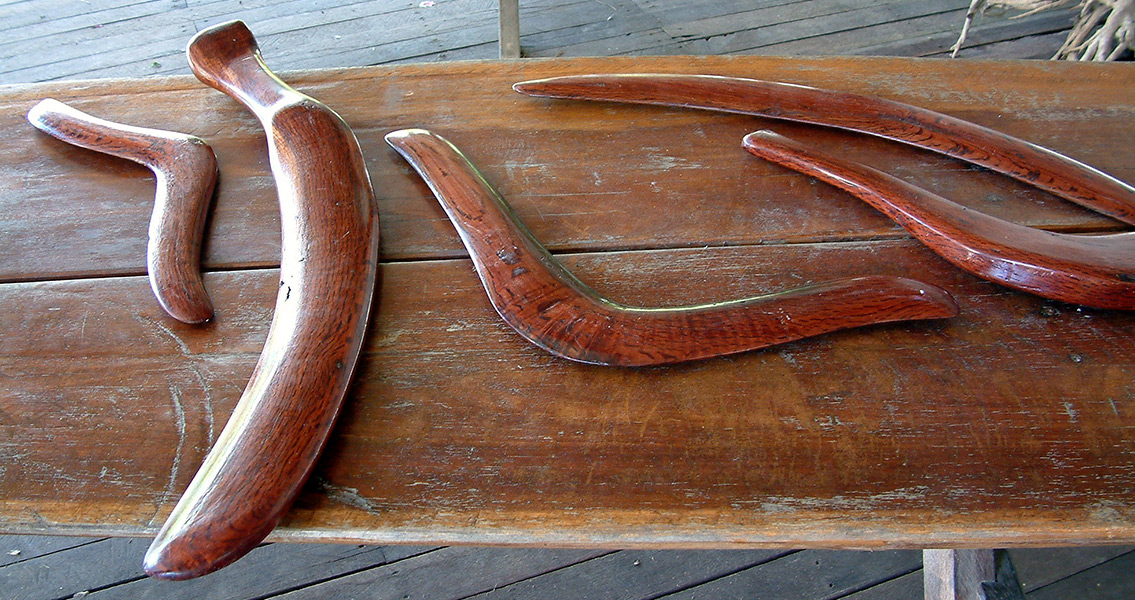
The Australian that his team’s two-year investigation unearthed evidence the indigenous communities had been using deadly clubs and boomerangs which could inflict damage equal to that caused by sharp metal weapons. “The investigation of Aboriginal skeletal remains is a very ­sensitive topic,” Dr. Westaway said in The Australian. “Griffith University was invited by the Kurnu Barkindji to undertake this research to try and help understand when, how and why this man was killed. The results ended up being a surprise to us all,” adding, “The nature and expression of trauma suggests that some edged weapons from traditional Aboriginal culture had the capacity to ­inflict injuries similar to those produced by edged metal weapons.” The position of Kaakutja’s remains when he was found indicated a proper burial and not the disposal of a murder victim. To get a better understanding of what could have produced the head wound, the researchers studied the rock art at the Gundabooka Ranges, in the same vicinity and dated to approximately the same time period as the skeleton. The rock art depicts warring tribes wielding parrying shields, wonnas, fighting clubs and lil-lis. The length of the wound and the lack of injuries on the forearms (typical in hand-to-hand combat) suggests a boomerang (lil-lil) was likely the weapon. A thrown boomerang would have traveled in an arced path toward the victim, allowing it to slip behind a shield if the victim had one. The study is published in the journal Antiquity. ]]>

Categories
Breaking News

Could Neanderthals Speak Like Modern Humans?

producing jewelry. Following the discovery of the first Neanderthal fossils at the the start of the twentieth century, archaeologists dismissed our closest extinct cousins as primitive; the latest discoveries are increasingly challenging this assumption. Published in the Proceedings of the National Academy of Sciences, the study led by Alexander Stoessel and Jean Jacques Hublin from the Department of Human Evolution, Max Planck Institute for Evolutionary Anthropology, analysed ossicles in both Neanderthals and Homo Sapiens. The three tiniest bones in the body, ossicles are the coupling between the ear drum and the oval window of the inner ear. Until now, it was considered impossible to perform detailed comparisons of Neanderthal ossicles due to an extremely limited sample size, and the unavailability of methods to analyse the relationship between the bones and other parts of the ear structure. For their study, the authors present the largest sample of Neanderthal ossicles unearthed to date, from a variety of different geographic regions, and times. Using detailed ‘Micro CT scans’, the team were able to quantify the shape and functional properties of Neanderthal ossicles. From this, they were able to make comparisons with AMHs, as well as African Apes. “Based on microcomputed tomography images, our comparative 3D shape analysis of Neandertal ossicles shows striking shape differences between Neandertals and anatomically modern humans. However, these morphological differences do not affect the functional properties of the ossicles, potentially indicating consistent aspects of vocal communication in Neandertals and AMHs.” the team write in the study. Scientists have previously suggested that Neanderthals were so primitive they were only able to speak in grunts and groans. The new research adds to other recent studies arguing Neanderthals may in fact have had the ability to speak. The team’s findings suggest that despite some clear anatomical differences between the ears of Neanderthals and modern humans, they essentially functioned in the same way, giving Neanderthals similar auditory sensitivity to humans. When compared to the African apes however, the human and Neanderthal ear anatomies have little in common. “These functionally equivalent solutions could indicate selective pressures acting on the middle ear for conserving a similar auditory sensitivity inherited from the last common ancestor of anatomically modern humans and Neanderthals.” It’s a conclusion that suggests the differences between humans and Neanderthals could be more down to the species taking separate evolutionary paths than one being more advanced than the other. The study also raises fascinating questions about the origins of the complex languages humans use today For more information, the study itself can be found here]]>

Categories
Breaking News

Spectacular Irrigation Systems Revealed in Petra

Haaretz that the massive pool was the end point for a sophisticated aqueduct that fed water into Petra from a spring in the hills outside of the city. The ostentatious nature of the pool – and the exquisite gardens fed by the flowing water – would have sent a clear message to outsiders regarding how successful the Nabataeans were at providing water to the city, she added. Excavations within the city have found a shaft that seems to have funneled water at least 10 meters down, linking the aqueduct to the pool below. Scientists have likewise uncovered subterranean channels that would have provided support for runoff during the region’s rainy season, showcasing how the Nabataeans left nothing to chance. This seemingly unending array of underground water tanks, cisterns, ceramic pipes and channels would have done more than simply supply drinking water to those living in the desert city. In addition to naturally filtering the water, this system would have also made it possible to cultivate growth such as olives, grapes, fruit trees and other crops, and was so efficient that there was enough left over for a massive open-air pool surrounded by lavish gardens. With only 10 to 15 centimeters a year in rainfall, the flourishing of Petra is nothing short of miraculous. It was necessary to develop these advanced irrigation techniques, scientists say, or the city would have never been able to exist. These water preservation and filtration systems conserved every drop of rain that fell in or around Petra, which combined with the Nabataeans’ efforts in piping in fresh water from nearby springs, allowed the desert city to bloom in a remarkable way as early as the first century BCE, when the monstrously-large pool is thought to have been built. Images of the recent excavations can be found here]]>

Categories
News

Sylvia: The Pankhurst Who Was Too Radical?

Categories
Breaking News

New Carbon Dating May Tie Early Humans to Hobbits' Extinction

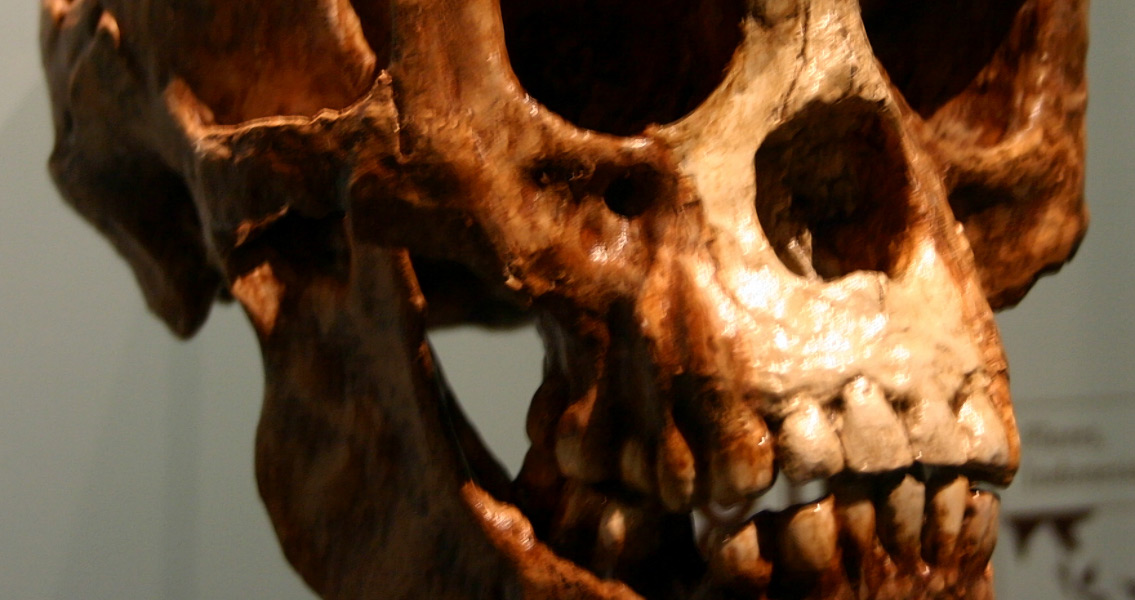
Homo floresiensis – the “hobbit” species – was discovered, have been carbon dated to approximately 46,000 years ago. Because the upper premolar and lower molar are somewhat younger than any of the known hobbit remains, this new information seems to support the theory that humans were involved in the demise of H. floresiensis. Discovered at Liang Bua in 2003, the remains of H. floresiensis, widely believed to be in the genus Homo, suggest they would have been around 3.5 feet (1.1 m) tall. Nine partial skeletons from nine individuals, including a single complete skull, have been discovered. Recent re-dating efforts in the cave moved the hobbits’ extinction back to approximately 50,000 years ago, when early humans were known to already be living in South-East Asia, according to the study co-authored by geochronologist Richard Roberts and archeologist Thomas Sutikna, both with the University of Wollongong, Australia. “It’s a smoking gun for modern human interaction, but we haven’t yet found the bullet,” Roberts told Nature, which published the research. Although the team is confident the teeth are from H. sapiens, partly because they’re larger than those of H. floresiensis; a paleoanthropologist from University College London, María Martinón-Torres, believes that the premolar appears slightly more primitive. To conclusively prove the teeth are human, she believes they should be compared to a wide range of H. sapiens and H. erectus remains. There is other evidence which puts humans on Flores Island immediately after H. floresiensis disappeared, supporting the possibility that humans contributed to the hobbits’ extinction by out-competing them for limited resources on the island. Animals which may have been a food source for early human hunter–gatherers, including giant storks (Leptoptilos robustus), miniature elephants; known as stegodons (Stegodon florensis insularis), and vultures (Trigonoceps), all vanish from the sediment layers in the cave after approximately 46,000 years ago. During this same time period, freshwater mollusk shells start to show up. These shellfish are commonly found at other early human sites across Africa and Eurasia. Stone tools constructed using chert, a material which is also regularly seen at other early human sites, and evidence of fire hearths are further examples of findings more recent than the Liang Bua hobbit remains. “What we don’t yet know is whether there was at least a short overlap in the populations, thus raising the question once again of the possible role of modern humans in the extinction of floresiensis”, paleoanthropologist Chris Stringer with the Natural History Museum in London told Nature, adding that if humans and hobbits had overlapped, interbreeding is also a possibility. Meanwhile, the research team intends to return to Liang Bua in order to explore cave deposits from 46,000 to 50,000 years old. The discovery of the teeth was revealed at the European Society for the study of Human Evolution in Madrid’s annual meeting. ]]>