Categories
Breaking News

Brazilian Dinosaur Discovered Six Decades Ago Comes Out of the Closet

Austroposeidon magnificus. Diogenes de Almeida Campos, the Museum director, is quoted as saying in Phys.org that six decades does sound on the slow side for studying such a big find. He went on to explain that in the 1950s Price and his colleagues were pioneers in the field of paleontology for Brazil and that a vertebra of this size needed to be studied. Campos continued, saying that a lack of money had held back research, as well as a shortage of staff qualified to take up the task. Today there are still only ten dinosaur experts in the entire country of Brazil. Campos told Phys.org: “We were waiting for the staff…, for a laboratory that started from nothing to mature. We made a first effort with students about eight years ago and it didn’t succeed.” It was one of Campos’ students, Kamila Bandeira, who made the mysterious creature the subject of her doctoral thesis, and put the pieces of the puzzle together. A majority of dinosaur discoveries occur in the desert or largely barren areas, like the southwest region of the USA, the south of Mongolia or Argentina, because they’re easier to find. The fossilized bones belonging to the biggest dinosaur ever discovered, around 40 meters (130 feet) long, were discovered in 2014 in Argentina. Like so many other discoveries, Austroposeidon magnificus was found by chance, by construction workers building a road near Sao Paulo. Researchers believe the small number of bones recovered at the site points to the creature’s unceremonious end. Campos told GMA News Online, “When these animals die, it’s… a huge new source of meat. So all the hunters, the carnivores ate this creature. The first thing they ate is the head, because the brain must be tasty. They also broke the long bones to get at the marrow… After, came smaller animals and nothing was left over. Anything that did remain the beetles and the spiders and the ants finished, and when there was just bones, the bacteria came. Finally, the remains sank into the lagoon.” There may yet be many more such discoveries waiting in Brazil’s thick flora. “Pay attention when roads are built, when wells are dug,” Campos tells GMA, “You could have a dinosaur in your backyard and not realize!” ]]>

Categories
Breaking News

Fonni's Dogs Followed Their Owners to Sardinia, Genome Shows

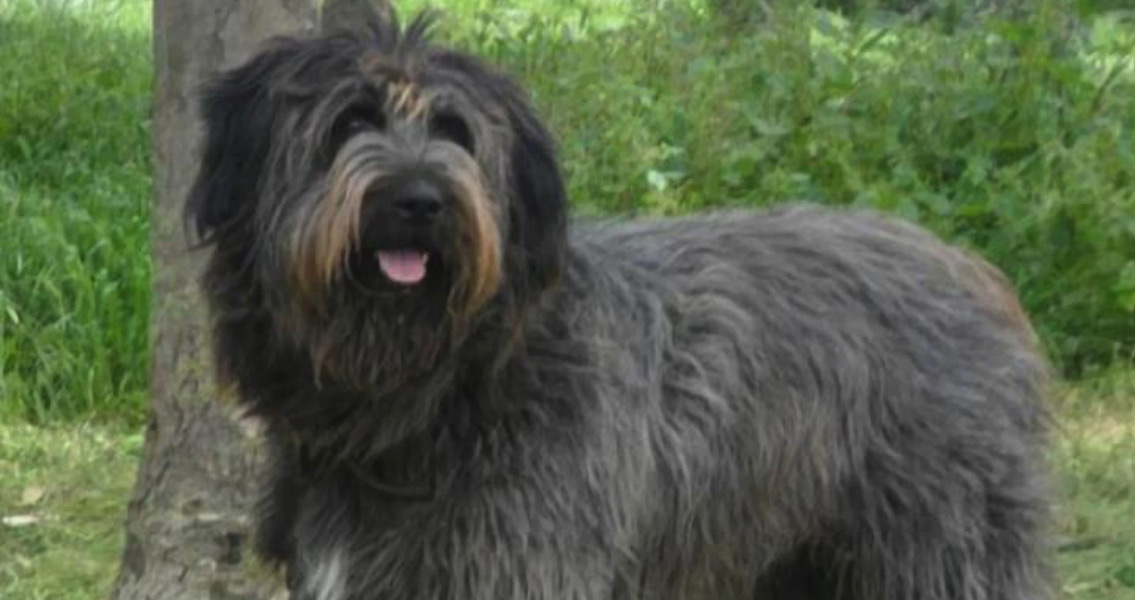
GENETICS, the new study reveals that the regional variety has in fact developed into a true breed. Interestingly, the authors suggests this took place because of unregulated selection for the animal’s distinctive behaviour. The results also suggest that the Fonni’s Dog came from the same geographic areas as the island’s human migrants. Known as Cane Fonnese in Italian, Fonni’s Dogs are characterised by their intense facial expressions. A rugged herd guardian, they all make fine protectors of flocks and display a wariness towards strangers. Despite these common traits, significant variation in their fur has led many to question if they’re a true breed. “If you were to look at ten Fonni’s Dogs, you would see there’s a lot of variation in coat color and fur length. But they are all good protectors of their flocks. That’s because nobody cares what they look like; they’ve been bred to do a job and to do it right,” said study leader Elaine Ostrander of the National Human Genome Research Institute (NHGRI), in a press release. Another common trait among Fonni’s Dogs is their fierce loyalty to their owners. This manifests itself in their willingness to guard the property of their owner, and somewhat more unusually in their skill as thieves. “They can be trained to sneak over to the neighbors’ and bring items home.” Ostrander explained. Much like the people that brought them to the island, the Fonni’s Dogs are an example of an isolated population which is providing scientists a wealth of genetic insights, particularly in regards to genes that influence health and behaviour. Sardinia’s geographic isolation means its population has a unique ancestry, and very low genetic diversity. These characteristics make it easier to study the genetic influences of disease and aging in Sardinians when compared to other genetic groups. Ostrander and colleagues argue that the same is also true of the hundreds of different dog breeds. “Dogs get all the same diseases as humans, and there are lots of dog breeds with genetic predispositions, for example to particular types of cancer,” Ostrander said. “Once we understand the genetic history of a breed we can search for disease genes in a much more powerful way than is possible in humans, enabling us to hone in on medically-relevant genes.” The study also revealed that the ancestors of the Fonni’s Dog were related to the Saluki, a swift, graceful ‘sight’ hound from the Near and Middle East; and the Komondor, a powerfully built sheep guardian from Hungary. These insights into the history of the Fonni’s Dog show just how closely it mirrored human migration to Sardinia. “The map we can draw of the dog’s origins is the same as the map of human migration to Sardinia,” said Ostrander. “Clearly ancient people traveled with their dogs, just as they do now.” These parallels between the migration of dogs and humans could have a surprising application, according to the study authors. “Our study shows how closely dog migration parallels human migration. It could be that if you have missing pieces in a study of a human population’s history, samples collected from dogs in the right place could fill in those gaps.” The team now plan to study the regions of the genome that make the Fonni’s Dog unique, perhaps even explaining its loyalty and protective behaviour. Ostrander and her team also hope to work with colleagues in other countries to explore other so called ‘niche’ dog populations; to demonstrate the ways man’s best friend can be used to help track down disease genes. ]]>

Categories
Breaking News

Excavation of Haihunhou Tomb in China Completed

ChinaDaily, Department of Culture head for Jiangji Province Chi Hong remarked that the finds will be put on display after conservation efforts have been completed, and that archaeological researchers are hard at work removing the accumulated detritus left behind by two millennia of entombment. Liu He, the individual interred within the tomb, was found buried with several jade artifacts. Sharing the coffin with the remains were an oversized jade pillow, which Liu He was laid to rest on, as well as a sword and pendant made from the same material. Other artifacts made from jade include a seal inscribed with the man’s name laid across his waist. A gilded glass mat lies beneath Liu He, itself lying upon a pile of 100 pieces of gold cakes. The amount of gold pulled from Haihunhou tomb has already broken all Chinese archeological records. 478 individual artifacts have been discovered so far throughout the tomb. Other treasures, such as jade-inlaid bronze plaques, gilded bronze boxes and beads of agate were also found within several lacquered wooden boxes within the coffin identified through X-ray imaging techniques. Ancient Chinese literary works, such as ‘The Medical Book’, ‘The Book of Rites’, ‘The Book of Changes’, and ‘The Analects of Confucious’ were also found within the tomb, all of which were written on more than 5,000 individual slips of bamboo. These slips have been subjected to infrared scanning in order to clarify the writing, long since faded to near-illegibility, and work continues to further scan, clean and solidify these texts, to be completed by the end of the year. Additional research on these bamboo texts will begin in 2017, according to Chi Hong. Liu He, who lived from 92 BCE to 59 BCE, was given the title of Marquis Haihun after his dethronement. The Western Han monarch’s reign only lasted for 27 days, the shortest of its kind. Records dating from the time period say he was deposed because his lifestyle was considered exceedingly inappropriate for the time, as he neglected to comply with many of the Han Dynasty’s cultural taboos prohibiting certain actions during the mourning period for the recently deceased Emperor Zhao, Liu’s uncle. A total of 1127 misconducts were recorded by the Dynasty and used as justification for his dethronement. ]]>

Categories
Breaking News

Black Sea Mapping Project Uncovers Shipwrecks, Prehistoric Lands

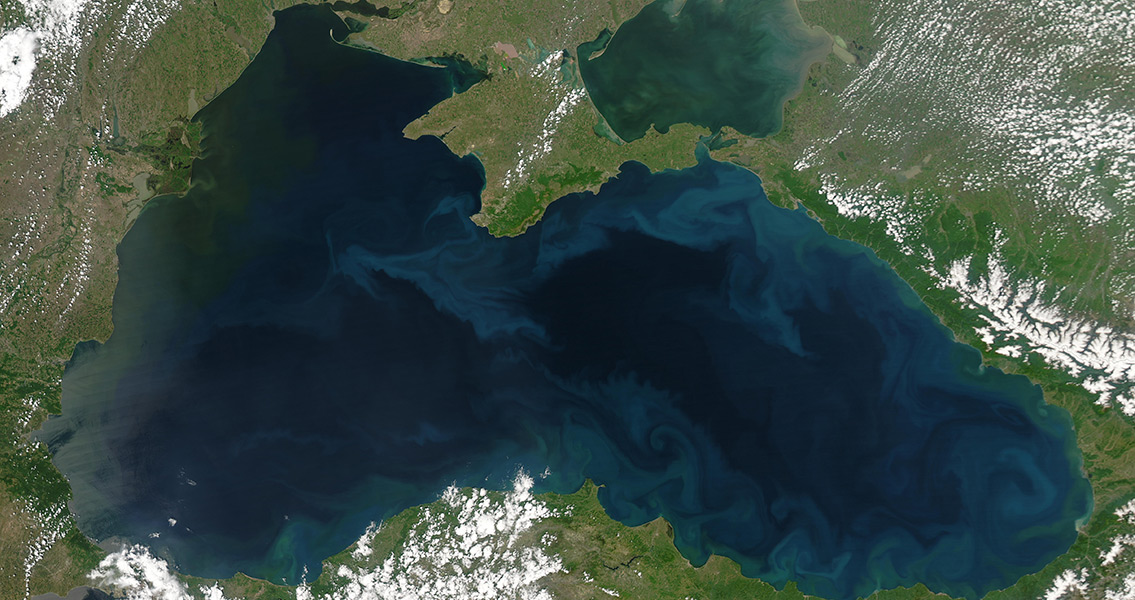
ScienceDaily that the team is attempting to answer some of the biggest unknowns when it comes to when the water level of the Black Sea rose, how rapidly it did so and what type of impact it might have had on human populations that were inhabiting the coast of Bulgaria at the time. The majority of the work has consisted of geophysical surveys, thanks to the aid of two specially designed Remotely Operated Vehicles (ROVs), but the investigation also calls for several core samples to be taken from the seabed in order to reconstruct the prehistory of the Black Sea, Professor Adams added. These two ROVs have already discovered a wealth of new information, especially when it comes to ancient shipwrecks. Thanks to the highly advanced technologies fitted to these two submersibles, which includes the ability to take high-resolution 3D images, laser scans and gather other types of geophysical data, the remains of more than forty ships have so far been found resting on the bottom of the Black Sea within the search area. Many of these ships date back to the Ottoman and Byzantine empires and offer some of the first real-world examples of shipbuilding dating to these time periods. Additionally, thanks to the lack of oxygen in the waters of the Black Sea at depths over 150 meters, these ships are also remarkably well-preserved. Professor Adams remarked that the images the team has been able to capture have been “astonishing”, especially in light of the fact that the technology being used by these ROVs has been able to operate without necessitating the disturbance of the Black Sea’s seabed. The scientist had high words of praise for the public/private partnership that made this expedition a reality, singling out the EEF as being one of the “enlightened bodies” that funded the academic research. The Centre for Marine Archaeology allied with the Bulgarian Centre for Underwater Archaeology and the Bulgarian National Institute of Archaeology in order to launch the Black Sea MAP project. It’s joined by the Marine Archaeological Research Institute from Sweden’s Södertörn University, Greece’s Hellenic Centre for Marine Research, and the University of Connecticut in the United States. ROV technology innovations were provided by private company MMT. ]]>

Categories
Breaking News

Evidence Shows Early Humans Travelled to Stonehenge Before it was Built

Guardian the discovery was: “a world first, it’s a big deal,” adding that the information substantially increases what’s known about the site, saying, “It is very hazy and this evidence just makes the glass slightly less dark, it is a significant movement forwards.” “It is an amazing sequence. There is nothing like it in Europe and now we’ve got this evidence from the dog you start to piece it together. You can see that this place seems to have been special to not just local people, it seems to have been drawing in people from long distances away and the sort of distances you would not expect for mobile hunter-gatherers.” Researchers theorize that the dog would have been similar in color, size and shape to an alsatian, although with more wolf-like features. Other artifacts include the bones of oxen (known as aurochs), trout and salmon, as well as frog’s legs – which were staples of people’s diets long before they were synonymous with French cuisine. “Discoveries like this give us a completely new understanding of the establishment of the ritual landscape and make Stonehenge even more special than we thought we knew it was,” Jacques is quoted as saying in the Guardian. The tooth also raises questions as to why humans would travel such a distance and may indicate that Stonehenge was a hub of some sort. Previous excavations have unearthed a slate tool from Wales as well as stone tools from central and west England. Additionally, at the end of the Ice Age, Blick Mead would have been an attractive gathering place with a natural spring and easy access from the nearby Avon river. Numerous deer and aurochs bones at the site also support the idea that massive extinct prehistoric cattle grazed there. “The fact that a dog and a group of people were coming to the area from such a long distance away further underlines just how important the place was four millennia before the circle was built,” Jacques told the Guardian, “A dog tooth from York, a slate tool from Wales and a stone tool from the Midlands show that this wasn’t just the place to live at the end of the Ice Age, but was known by our ancestors for a long time widely across Britain. They kept coming here.” ]]>

Categories
News

From Weddings to Beer Halls, The History of Oktoberfest

Categories
Editorial

What are the Dead Sea Scrolls?

Categories
Breaking News

New Digital Archaeology Techniques Reconstruct Pompeii

VOA News, scientists from Lund University in Sweden have been working hard on the long-standing research project since 2010. A year’s worth of field work scanning a city district in danger of deterioration led to four years of digital reconstruction work; the results include a digital video showcasing the neighborhood, including the residence of one of the richest citizens of Pompeii, a Roman banker by the name of Caecilius Iucundus. In addition to the luxurious Roman villa, the team from Lund University also discovered several gardens, a bakery, a laundry and a tavern in their study of the city district. Researchers were also able to extrapolate some of the city’s social hierarchy through studying the water and sewer systems of Pompeii. Restaurants and retailers in particular were found to be highly dependent on large, wealthy families, who controlled the flow of water to their buildings, the scientists found. The project in its current form has its roots in an initiative that was born from necessity several decades ago. In 1980, a massive earthquake struck southern Italy, causing not only high levels of damage to local architecture but also resulting in the deaths of more than 2,000 individuals. In the wake of the event, curators for the city put the call out to the international research community to preserve Pompeii’s history before nature and the passage of time resulted in the loss of priceless archaeological data. The Swedish Institute in Rome was one of the organizations to answer the call. This resulted in the Swedish Pompeii Project being launched in 2000; ten years later, Lund University joined the project, bringing their digital archaeology techniques into play. The digital reconstructions, as well as additional information on the project, can be found at Lund University’s website Additionally, an accompanying research paper describing the methods used in digitizing the Pompeii neighborhood can be found here]]>

Categories
News

In 1780 The Deadliest Hurricane Ever Ravaged the Caribbean

Categories
Breaking News

Researchers Place Extinct Horse with Humans in Oregon

Equus conversidens: a small, short-legged extinct species of horse, also known as the Mexican horse, which roamed parts of North America at one time, coexisted with the people living in the Paisley Caves area of Oregon over 14,000 years ago. By using discriminant analysis, an approach which relies on the data available to calculate an unknown species’ identity, the authors of the study studied horse toe fossils unearthed during previous archaeological investigations in 2009 and 2010 at Paisley Caves. This research represents the first time this analytic and replicable approach has been utilized to identify a species of horse based solely on toe bones. It is also the first time this specific horse species has been found in Oregon. An archaeologist with the University of Oregon (UO) and one of the study’s co-authors, Dennis Jenkin’s work at Paisley Caves is well-documented. Evidence, which included human feces dating back 14,000 years, identified the site as one of the earliest to be occupied by humans in North America. When the team uncovered horse remains there, paleontologists studying Pleistocene mammals also became interested in the find. “We knew that horses were around at the same time as the first Americans, but we wanted species-level information about those horses,” paleontologist Edward Davis said in an article on the UO website. Davis and Jenkins then turned to Eric Scott, curator at the John D. Cooper Archaeological and Paleontological Center in California and an expert on ice-age horses. Scott maintains large sets of data on the remains of extinct species from archeological sites across the western United States. “Sites like Paisley are important in understanding the paleoecology of North America,” Davis said in the article, “It’s pretty rare to find this kind of reliable fossil evidence of humans coexisting with large Pleistocene mammals.” “It’s often imagined that humans are to blame for the extinctions of ice age megafauna,” Jenkins is also quoted as saying in the UO article, “but at Paisley and elsewhere in North America, we see humans and horses coexisting for at least a thousand years, which suggests a different story.” These fossils, along with other items discovered at Paisley Caves, will be available for public viewing at the university’s Museum of Natural and Cultural History. The exhibit, Oregon—Where Past is Present, opens in November and features touch-screen technology, enhanced artifact displays and a brand new section called Paisley Caves and the First Americans. The study, a collaboration between researchers from the UO, Harvard University and California State University, has been published in the Journal of Vertebrate Paleontology. ]]>