Categories
Editorial

Annie Besant – From Atheist to Socialist to Theosophist

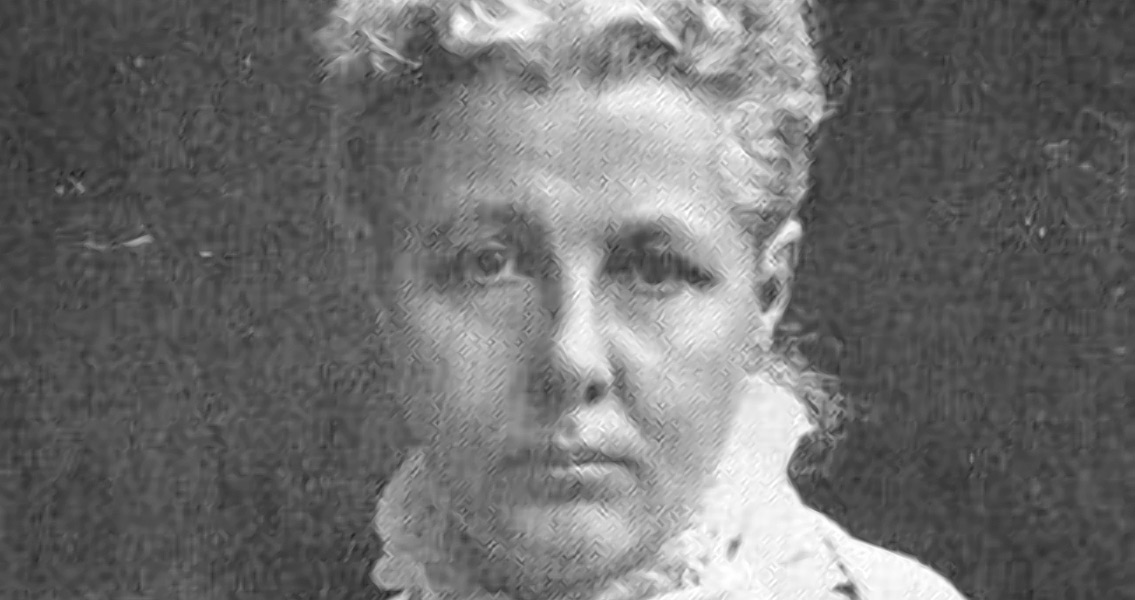
Seven Principles of Man and Thought Power – Its Control and Culture, give an insight into the ways she strove to reconcile abstract philosophical ideas with contemporary social and political issues. Besant was born Annie Wood in London in October 1847. Her father died when she was just five years old, while her mother persuaded a family friend to take responsibility for Annie, raising her and ensuring she received a good education. In 1867 she married a clergyman named Frank Besant, but the relationship seemed doomed from the start. Although raised in a pious family, Besant started to have serious doubts about her beliefs during her twenties. Becoming an atheist and increasingly anti-Church, she legally separated from her husband and the father of her two children in 1873. Her anti-religious views soon evolved into a broader questioning of all of society’s accepted norms. From producing pamphlets criticising the church, and in particular the state’s hold over it, she became an activist for a whole host of causes of the time. She gained notoriety in 1877 for working with Charles Bradlaugh to publish Charles Knowlton’s ‘Fruits of Philosophy’, a pamphlet which advocated birth control. Bradlaugh and Besant were both charged with publishing an obscene libel “likely to deprave or corrupt those whose minds are open to immoral influences.” Increasingly radical in her thinking, Besant became a supporter of Fabian socialism. She gained a reputation as a formidable public speaker and essayist, helping organise the strike of the workers at the Bryant and May match factory in East London among other activities geared towards campaigning for greater workers’ rights and equality for women. In 1889, Besant converted to Theosophy, a religious philosophy which both ‘The Seven Principles of Man’ and ‘Thought Power: Its Control and Nature’ focus on. With roots in ancient Gnosticism and Neoplatonism, Theosophy also had ties to Hindu ideas of karma and reincarnation. Although broken down into several different forms, a common feature of Theosophy is the idea of a deeper spiritual reality that can be reached through intuition and meditation. For Besant, Theosophy’s mixture of Eastern and Western philosophy seems to have been a way to achieve spirituality without recourse to a specific religion. In particular, she considered Theosophy a means to liberate thought from the boundaries placed upon it in traditional society. An excerpt from ‘Thought Power: Its Control and Culture’, gives an insight into the ways in which she felt it could prove intellectually liberating. “This little book is intended to help the student to study his own nature, so far as its intellectual part is concerned. If he masters the principles herein laid down, he will be in a fair way to co-operate with Nature in his own evolution, and to increase his mental stature far more rapidly than is possible while he remains ignorant of the conditions of his growth.” From 1907 until her death, Besant was president of the International Theosophical Society. Standing against discrimination of any kind and attempting to reconcile different religious beliefs under a common spirituality, Theosophy was a philosophy which connected all the causes Besant had fought for, providing her with a universal truth that didn’t rely on typical religious constraints. Besant eventually settled in India, involving herself in the Indian nationalist movement. In 1916 she helped found the Home Rule League, which campaigned for Indian self government. In 1917 she was jailed for sedition for her role in publishing ‘New India’, a newspaper which criticised British rule in India. She died in September 1933. ]]>
Categories
Breaking News

Archaeologists Discover Early Neolithic Village on Cyprus

Categories
Breaking News

Remains of Pre-Roman Farms Found in English National Park

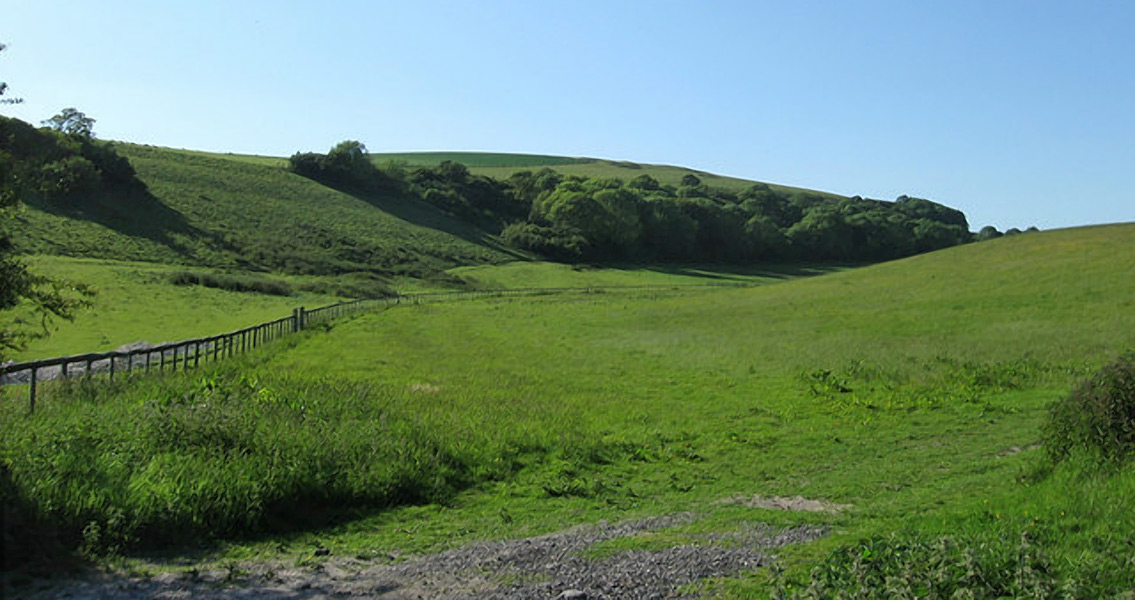
Historic England aerial investigation manager Helen Winton said the discovery of the long-forgotten Roman road was one of the true highlights of the project, despite the true bounty of “exciting” results the LIDAR study yielded. The South Downs National Park may have prehistoric roots, but it’s a relatively new addition to England’s national park system. Becoming fully operational on April 1st, 2011, the park covers a massive 628 square miles across the counties of East Sussex, West Sussex and Hampshire. The park itself stretches for 87 miles, terminating at the chalk headland known as Beachy Head, the highest chalk sea cliff in Britain. ]]>

Categories
News

The Key to Democracy? Secret Ballot Made Law in 1872 Ballot Act

Categories
Breaking News

Useful or Not, T. Rex-Like Limbs May Have Evolved Numerous Times

T. rex and G. shinyae had such disproportionate forearms remains a mystery. The function of such seemingly useless forelimbs has perplexed experts and amateurs alike. An initial theory was that T. rex used its arms to hold a mate, others have suggested the arms were used to hold prey in place, (an earlier study hypothesized the arms were capable of maneuvering more than 400 pounds) or to help itself stand up – assuming the dinosaur ever sat. The current theory is that these short forelimbs were, in actuality, totally useless. Researchers are hopeful that learning how these shortened forelimbs evolved may help solve the puzzle. The study has been published in the journal PLOS ONE. ]]>

Categories
Breaking News

Transition to Agrarian Lifestyle Not Tied to Genetics

Science, is available here Image courtesy of Fereidoun Biglari, National Museum of Iran]]>

Categories
News

The Babington Plot: Spies, Secret Code and the Letter That Killed a Queen

Categories
Breaking News

Archaeologists Find Evidence of Scotland’s Earliest Farmers

The Courier, “Evidence for ploughing and fields in Neolithic Britain is incredibly rare and so the excavation of the ard marks at Wellhill is a very significant discovery that suggests a farming economy had taken hold in this location only a few generations after farming began in Britain around 4000BC. This is an amazing insight into the lives of Scotland’s first farmers.” Additional radiocarbon dating of the pit sites shows that they may actually date back even further, into the eighth millennium BCE, meaning they’re providing evidence of the very first Mesolithic events in the lowlands of Kinross and Perth. Dr. Rebecca Jones, with Historic Environment Scotland, is quoted in The Courier as saying, “These are very significant discoveries for archaeology in Scotland and even further afield, which is thanks mainly to the endeavors of the principle excavator, Dr. Dene Wright, who recognized the potential of these astonishingly early settlements, which were then confirmed via radiocarbon dating.” Historic Environment Scotland is a public body that was established to investigate, preserve and promote Scotland’s historic monuments and structures. They are responsible for approximately 300 historically significant properties, including Edinburgh Castle. In total, these sites receive over 3 million visitors annually. The organization is also responsible for a variety of collections, including over 5 million drawings, manuscripts, and photographs, in addition to 20 million aerial images of sites around the world. The SERF project has received an archaeology grant from Historic Environment Scotland to complete excavation, geophysical surveys, reporting and archival research. ]]>

Categories
Breaking News

Place of King Harold’s Death Moved 20 Feet

Categories
Breaking News

New Research Shows Homo Erectus Shared Modern Human Qualities

Homo erectus in northern Kenya have provided experts from the Max Planck Institute for Evolutionary Anthropology in Leipzig a unique opportunity to study and understand the modern human ancestor’s movement patterns and social structure, using data that relates directly to their dynamic behaviors. Utilizing innovative analytical techniques, the team have been able to demonstrate that the H. erectus footprints have preserved evidence showing a walking style similar to that of modern humans, as well as a group structure that is also consistent with the social behaviors of humans. Habitual bipedal movement is a defining feature separating modern humans and other primates, and the evolution of this behavior within our clade would’ve had profound effects on our early ancestors’ biology. How and when a bipedal, human-like gait first emerged in hominins has long been debated, largely due to disagreements over how to infer biomechanics from skeletal remains. Additionally, certain characteristics of group structure and social behaviors which distinguish other primates and humans were believed to have emerged as a result of important evolutionary events, yet there’s no agreement on how to detect indications of group behavior through archeological or fossil records. Following the 2009 discovery of hominin footprints, found to be 1.5 million years old, near Ileret, Kenya; continued work in the region by the team from Max Planck led to the discovery of hominin trace fossils of unprecedented size for this time period, including five separate sites with a total of 97 preserved tracks that were created by a minimum of 20 Homo erectus individuals. Using an experimental method, the researchers have learned that the shapes of the footprints are indistinguishable from the shape of those of modern people who are habitually barefoot, and most likely reflect similar foot mechanics and anatomies. “Our analyses of these footprints provide some of the only direct evidence to support the common assumption that at least one of our fossil relatives at 1.5 million years ago walked in much the same way as we do today,” Kevin Hatala, with the Max Planck Institute for Evolutionary Anthropology and The George Washington University, said in materials from the Institute. Based on experimental approximations of body mass using the hominin tracks from Ileret, the team has also inferred the genders of numerous individuals who walked across these surfaces and, for the two largest excavated surfaces they have developed hypotheses in regard to the social structure of the H. erectus groups. At each of these two sites evidence exists of several adult males, which implies a certain degree of tolerance and even cooperation among them. Male cooperation underlies a variety of social behaviors which separate modern humans from other primates. “It isn’t shocking that we find evidence of mutual tolerance and perhaps cooperation between males in a hominin that lived 1.5 million years ago, especially Homo erectus, but this is our first chance to see what appears to be a direct glimpse of this behavioral dynamic in deep time,” Hatala said in the press release from the Institute. ]]>