Categories
Breaking News

Scientists Able to Recreate the Brain of 17,000 year old Child

The Local, as the brain grows it applies pressure to the inside of the skull, which at this point in a child’s development is still very soft, allowing for an imprint of the particular pattern of crevices and ridges on the brain’s convoluted surface to be left on the inside. Computer technology, including 3D scanners, has been used to create an accurate 3D model of the ancient brain, giving paleontologists, anthropologists, and neuroscientists the unprecedented opportunity to make comparisons between the brains of a modern child and a young hunter-gatherer. For example, by looking at the stage of growth within different areas, like the language center, researchers will be able to determine how they developed. Around this age, modern 10-year olds begin exhibiting an increased attention span and the ability to complete detailed tasks, think logically and problem solve. This is the age when they begin to understand riddles, begin to collect things, show curiosity about how things work and care about fairness. By studying the specific areas of the brain that are responsible for social interaction, language and spatial coordination for example, researchers are hoping to learn more about the lives our ancient ancestors led. Grotta del Romito, (which translates as the Cave of Romito) dates back to the Palaeolithic and contains some of the oldest and most important evidence of prehistoric humans in Italy. To date, researchers have revealed a number of dwellings, ancient tombs and petroglyphs (which are 10,500 years old), all of which have contributed to what’s known of human history in Italy prior to the agricultural revolution. The Paleolithic era of human history is distinguishable by the development of the first and most primitive stone tools. It covers the time period from 2.6 million years ago until approximately 10,000 years ago. In another cave located near the site, which has been dated back to the Neolithic period, large quantities of obsidian have been found, leading researchers to theorize that the cave was an integral part of the obsidian trade between the Ionians and the Tyrrhenians. Excavations first began at Grotta del Romito in 1962, and are still in progress today across a variety of disciplines, including sedimentology, malacology, palynology, paleontology and archaeozoology and Paleontology. ]]>


Categories
Editorial

The 1981 Summer of Riots – From London to Manchester

The Huffington Post in 2013. “When we pleaded and screamed and cried that police were abusing us in police cells no one listened. As far as we were concerned [Thatcher] was head of a racist government.” The summer of 1981 was a shockingly violent one, but its crucial to understand that from Brixton to Moss Side the riots and protests were far more complicated than just explosions of criminality and violence. Economic recession, the consequences of Thatcher’s extremely conservative policies and a growing feeling among non-white communities that the police were just another outlet of a fundamentally racist system, were enough to see the country’s streets littered with petrol bombs and riot gear. ]]>

Categories
Breaking News

New Research Uncovers Prehistoric Use of Cannabis

journal Vegetation History and Archaeobotany, can be found here]]>

Categories
Breaking News

Evidence that Evolution Follows Path of Least Resistance

Paranthropus boisei (from eastern Africa) and Paranthropus robustus (southern Africa), who lived between 4.2 and 1.3 million year ago, researchers discovered that the dental anatomy traditionally associated with the early hominins who ate a hard food diet was also being used by others to eat a primarily plant-based diet. Even with different diets, they had similar teeth and anatomies, characterized by big, flat teeth covered in thick enamel, and faces and jaws which indicate the presence of strong muscles for chewing. These characteristics are commonly thought to have been adapted for smashing hard foods. However, by analyzing the microwear and isotope values of the teeth, Ungar’s team was able to conclude the two creatures actually had markedly different diets. P. robustus subsisted on a diet of plant foods and only occasionally consumed foods like roots or nuts, while P. boisei consumed softer, tougher and even more abrasive foods such as grasses. Tellingly, neither diet consisted of the hard, crunchy food indicated by the facial structure and large muscles both of the early humans possessed. More crested molars (like gorillas have) would prove more efficient in ripping fibrous plant material, but flattened molars (like we have) with a thicker layer of enamel, are what advanced genetically. This simpler tooth architecture proved more adaptable for a number of challenging diets throughout time, so although it isn’t the optimal solution, it’s the one that continued on as our species developed. These findings have been published in Science. Image courtesy of Wikimedia Commons user: Mike Peel]]>

Categories
Breaking News

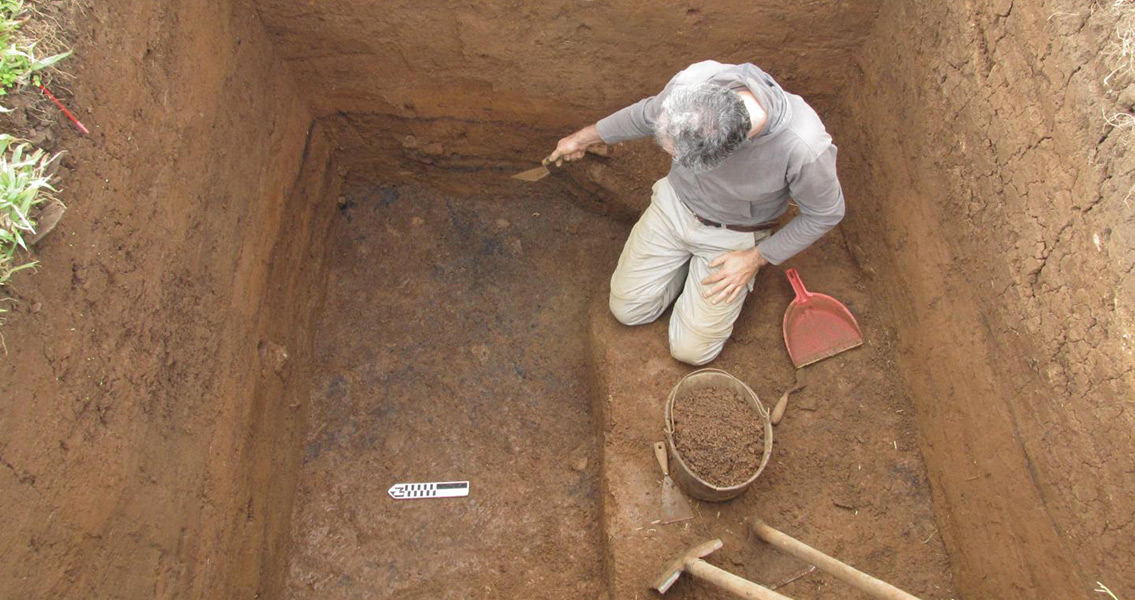
New Research Shows Brazilian Pit Houses Were Homes to Generations

PLOS ONE. Image courtesy of University of Exeter ]]>

Categories
Breaking News

Mass Spectrometry Used to Analyze Contents of Ancient Jug

Journal of Mass Spectrometry, can be found here Image courtesy of MIPT]]>

Categories
Breaking News

New Evidence of Neanderthal Cannibalism Found in Belgium

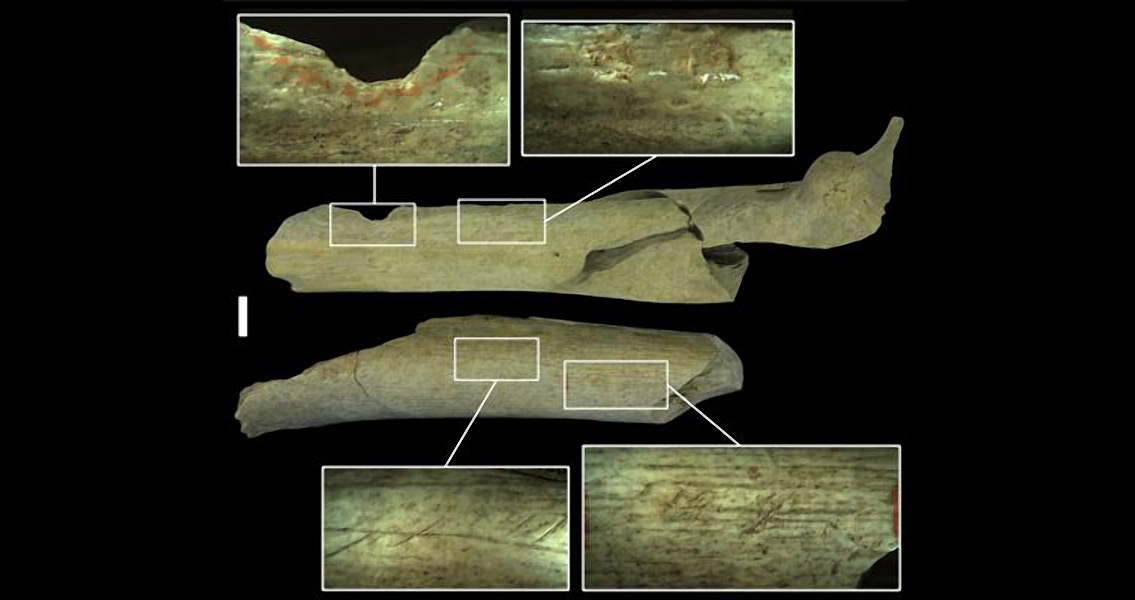
Scientific Reports, has helped expand the knowledge of known Neanderthal behavior in relation to the dead in northern Europe. As more and more insights are gradually revealed about the behavior of the Neanderthals, humanity’s closest extinct relatives, it becomes apparent that they displayed significant variability in their actions and customs. This perhaps shouldn’t be surprising, that different groups of Neanderthals had different practices, just as is the case among different groups of humans. This diversity of practices is clearest in the ways the Neanderthals dealt with their dead. At some sites, there is evidence that they buried the deceased. At others, there is evidence of cannibalism, that they broke the bones and ate the meat of other Neanderthals for food. These cannibalistic practices have been discovered at sites in both France and on the Iberian Peninsula. Neanderthals lived between roughly 200,000 and 30,000 years ago in Eurasia. Their appearance was similar to modern humans, though they were shorter, stockier, and had angled cheek bones, prominent brows and wide noses. Evidence has been found that they used tools, controlled fire, and in some cases (Chapelle-aux-Saints in France, and Sima de las Palomas on the Iberian Peninsula for example) buried their dead. Until the latest study however, the paucity of remains discovered north of latitude 50º meant it had been difficult to gain insight into how Neanderthals in the northern latitudes treated their dead. A third of the Neanderthal remains discovered at the Troisième caverne had cut marks, and a plethora had been crushed to extract marrow. The Neanderthal remains had been treated in a similar manner to horse and reindeer bones at the site, suggesting that all three species had been prepared and consumed in similar ways. Other Neanderthal remains at the site showed signs of having been used as soft percussors to shape stone. It is the fourth time a site has been found with evidence Neanderthals used the bones of their deceased to shape stone tools, joining Krapina in Croatia, and Les Pradelles and La Quina in France. Whereas the previous sites only contained a few examples of bones being used on tools, five sets of remains at Goyet had been used as retouchers. Due to their remarkable state of preservation it has been possible to date the remains at Goyet to between 40,500 and 45,500 years old. It has also been possible to extract the mitochondrial DNA of the remains, revealing that the Neanderthals at the cave were most similar genetically to those found in Feldhofer (Germany), Vindija (Croatia) and El Sidrón (Asturias, Spain). Such genetic similarity over such large distances suggests that the Neanderthal population of Europe was quite small. Earlier studies of partial Neanderthal skeletons discovered at Feldhofer, Germany and Spy, Belgium, showed evidence that Neanderthals had interred their dead. This latest study only adds to the increasingly complicated image of the contrasts between the different groups of humanity’s extinct cousins. Image courtesy of Asier Gómez-Olivencia et al.]]>

Categories
Breaking News

Climate Change and Middle Stone Age Innovation Not Connected

PLOS ONE. Two major, seemingly contradictory hypotheses exist for the ways climate and environment could have influenced the wave of human progress that included the development of axes and other tools with handles, and the formation of sophisticated hunting techniques. One school of thought suggests that the technological advances were spurred on in response to climate instability. The other school advocates a more indirect approach, suggesting that environmental stability in fact provided a secure setting to foster the innovations. Until now, a disconnect between paleaoenvironmental records and archaeological sites has made it difficult to test these explanations; to determine whether climatic and environmental changes were in phase with waves of early human innovation. Patrick Roberts, the lead author of the study, along with his colleagues, acquired data concerning paleaoenvironmental conditions in the Middle Stone Age by carrying out analysis of animal remains, shellfish taxa and the stable carbon and oxygen isotope measurements in ostrich eggshell. The objects were taken from two archaeological sites, Blombos Cave and Klipdrift Shelter, spanning 98,000 to 73,000 years ago and 72,000 to 59,000 years ago, respectively. The team found that the climatic and environmental variations displayed in ostrich eggshell stable isotope measurements, faunal records, and shellfish indicators may not have occurred at the same time as technological and cultural innovations at the two sites under study. Although climate change may have had an impact on subsistence strategies, the results seem to show it wasn’t the driving force. “Our results suggest that although climate and environmental changes occurred, they were not coincident with cultural innovations, including personal ornamentation, or the appearance of complex tool-types. This suggests that we have to consider that other factors drove human innovation at this stage in our species’ evolution.” said Professor Roberts, in a PLOS ONE press release. The team’s results suggest that context specific analysis is necessary, analysing sites and innovations individually, to truly understand the driving forces behind the drastic changes of the Middle Stone Age. For more information PLOS ]]>

Categories
Breaking News

Homo Naledi May Not Be Such a Distant Relative

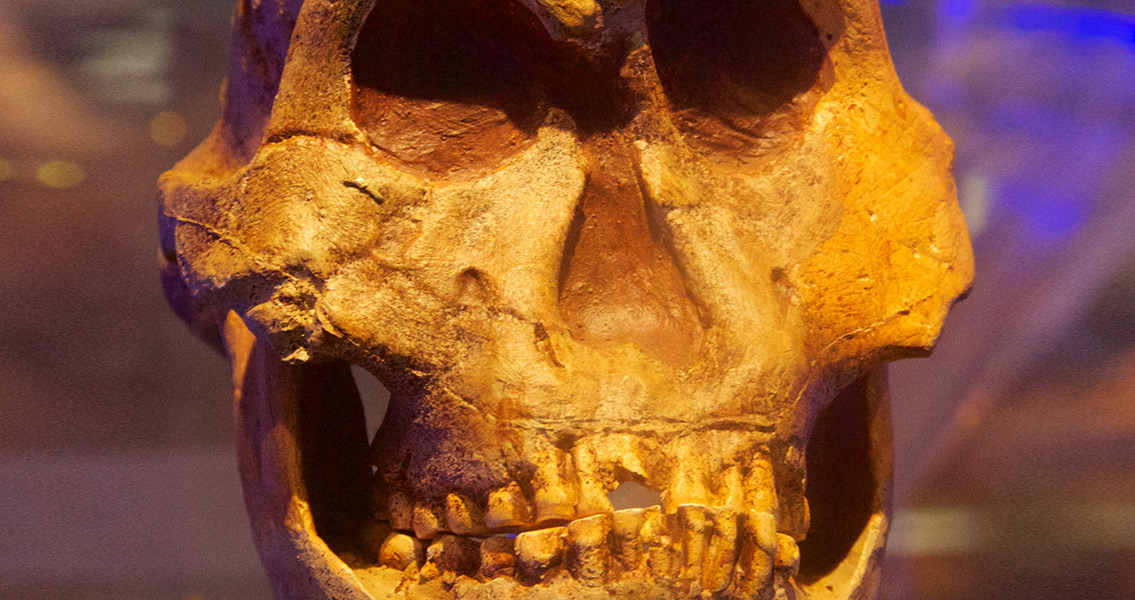
H. floresiensis may have done in Southeast Asia with the larger-brained H. erectus and H. sapiens. H.naledi was first discovered in 2013, when fossil skeletons of 15, at minimum, individuals (over 1,550 specimens in total) were unearthed in South Africa’s Rising Star Cave system, which is part of the Cradle of Humankind World Heritage Site. There are some signs which indicate the individuals might have been placed in the cave deliberately at the time of their death. The word “naledi” means “star” in the Sotho language, chosen in reference to the cave system where the specimens were found. It’s estimated that adult males stood approximately 150 cm (5 ft.) tall and weighed about 45 kg (100 lbs.), while females were likely somewhat shorter and lighter. These sizes are within the range of sexual dimorphism associated with small-bodied humans. A skeletal analysis suggests H. naledi stood upright and walked on two legs, and his hands appear much better suited for manipulation of objects than earlier humans, with thumb, wrist and palm bones that were more modern, yet his fingers were curved, like those of earlier humans. Homo naledi first impressed researchers with the Rising Star Expedition for being remarkably similar to Australopithecus, given the number of shared features between it and the ape-like species. Ultimately, it was determined the species shared even more features with the Homo group, and thus landed in our genus. These same archaic features also led researchers to believe H. naledi existed around 2 million years ago. Now, paleoanthropologist Mana Dembo with the Simon Fraser University in Burnaby, Canada, and her research team, have provisionally dated H. naledi as having lived less than a million years ago. After analyzing 60,000 potential evolutionary trees to determine which one provided the best fit for the tooth and skull measurements of 21 hominid species, chimpanzees, gorillas and H. naledi, they’ve dated H. naledi based on the rate of development of these features. While the new research affirms H. naledi’s place in our genus, which hominid species he’s most closely related to, whether Homo sapiens, Australopithecus sediba or Homo floresiensis (hobbits), remains uncertain. The team found no indications the bones of H. naledi presented as a variant of Homo erectus, as argued previously. H. erectus originated in Africa around 1.8 million years ago and spread quickly into West Asia. Additional statistical comparisons which would include measurements of trunk and limb bones may help in clarifying these evolutionary relationships. This research can be found in the Journal of Human Evolution. Image courtesy of Lee Roger Berger research team ]]>

Categories
Breaking News

Ancient Ocean Temp Data Supports Dinosaur Extinction Theory

ScienceDaily, U-M postdoctoral researcher Sierra Petersen, one of the scientists involved in the study, said that the new temperature data helps to forge a direct link between volcanic activity and impact events regarding extinction pulses, with climate change being that link. The mass extinction that occurred at the end of the Cretaceous was therefore the result of not just the volcanic activity or the asteroid impact but both, something Petersen referred to as a “theoretical ‘one-two’ punch.” This extinction level event spelled the end of non-avian dinosaurs as well as around 75 percent of the plant and animal species on Earth around 66 million years ago. Its cause has been up for debate for years, with many researchers pointing to the Yucatan impact or the volcanic activity in India’s Deccan Traps region as the culprit. Others have sought a synergistic approach, combining the gradual climatic change, or press, of the volcanic activity with the instant catastrophe, or pulse, of the asteroid impact, creating the so-called “press-pulse” theory. The discovery of spikes in ocean temperature records coinciding with both these events has those who support the press-pulse theory hopeful. Petersen remarked that the ecosystem might have already been under stress from the volcanic activity when the meteorite hit, making it more vulnerable to collapse in the first place. The research study is available online through the journal Nature Communications]]>