Categories
Breaking News

Homo Habilis Were First Out of Africa

Homo erectus as long believed, but a smaller species, Homo habilis, also called Handy Man, Discovery News writes. The senior author of the study told the website that the Homo habilis species was characterised by more ape-like features than previously thought, such as climbing besides walking on two legs, but also had some features characteristic of modern humans; such as a large brain, and tool-making skills. It was, however, shorter than Homo erectus: a more muscular species more closely resembling modern man. Using the huge dataset, Mark Collard, who is professor at the Human Evolutionary Studies Program of Simon Fraser University, and his team compared a number of alternative evolutionary trees and looked into how well each tree fit in with the dataset. There were three possible outcomes: either the tree was inconsistent with the dataset and was hence rejected, it was partially consistent, or it was fully consistent with the dataset. Based on what they found from the comparisons, the researchers suggest that Handy Man went into Asia and Europe from Africa and somewhere in Asia it gave rise to Homo erectus. Collard explains that the ‘Upright Man’ then went into Africa, a bold suggestion in the face of current consensus but backed by evolutionary data, apparently. The little Handy Man was also the ancestor of another species, this time even smaller: the Homo floresiensis, the ‘Hobbit Humans’ who were thought to have been nothing more than physically deformed humans. In fact, according to the theory of Collard and his team, H.floresienis were a separate species that inhabited the island of Flores in Indonesia. As to where the first modern human originated, Collard says this most likely happened in South Africa. He told Discovery News that “The fact that Australopithecus sediba [a two-million-year-old fossil] groups with Homo is consistent with the idea that the earliest known representative of the genus Homo originated in South Africa.” Another interesting conclusion of the team was that the Neanderthals were almost certainly a species exclusive to Eurasia; there was no evidence that its representatives had ever been in Africa. At the same time the researchers were unable to establish the immediate ancestor of this species, as scientist before them had been unable to trace back the origins of other hominin species from the Middle Pleistocene. Collard said he hoped his team’s findings would encourage further research by other scientists in South Africa, China, and Southeast Asia, where some of the oldest known human fossils have been unearthed. Asked by Discovery News to comment on the study, the director of New York University’s Center for the Study of Human Origins, Terry Harrison, said it would definitely fuel a debate among palaeoanthropologists, hardly a surprise given the way it challenges long-held beliefs in the area. Another commenter, human origins professor Bernard Wood from George Washington University, said the team who did the study had made an important step in furthering our understanding about evolution, which he called “superficial” at present. Image courtesy of Wikimedia Commons user: Royroydeb ]]>

Categories
Breaking News

Did Tectonic Plate Movement Drive Evolution?

“Cycles of nutrient trace elements in the Phanerozoic ocean” Image courtesy of Wikimedia Commons user: US Geological Survey]]>

Categories
Breaking News

Evolution of Early Mammal Ancestor’s Ear Bone Revealed

www.journals.plos.org ]]>

Categories
Breaking News

Sponge Discovery Questions Cambrian Explosion

Eocyathispongia qiania. The information provided through these methods was sufficient for the team to determine that the fossil had a number of characteristics in common with sponges from the Cambrian, characteristics that were until now thought to have only emerged during the explosion period. Bottjer told Phys.org that the sponge had already developed “fundamental sponge traits” 60 million years before the beginning of the Cambrian explosion, which meant that the majority of “developmental genes” for sponges were already present at the time. The obvious implication is that evolution was more gradual than believed, causing a rethink of the dating of early animal evolution. What’s perhaps even more fascinating is that the genes in the sponge fossil are present to this day in a variety of animals up to and including us humans. Bottjer added that in the future, the relatively new discipline of palaeogenomics will come to play an increasingly prominent role in research thanks to modern technology. Palaeogenomics focuses on the evolution of genes, determining when this or that gene first appeared in an organism. Until now, the fossil record came from bigger animals, but with SEM and synchrotron microscopy, it is likely that a host of previously unknown stages in evolution will be revealed. For more information: “Sponge grade body fossil with cellular resolution dating 60 Myr before the Cambrian” ]]>

Categories
Breaking News

Computer Imaging Reveals Secrets of Ancient Skull

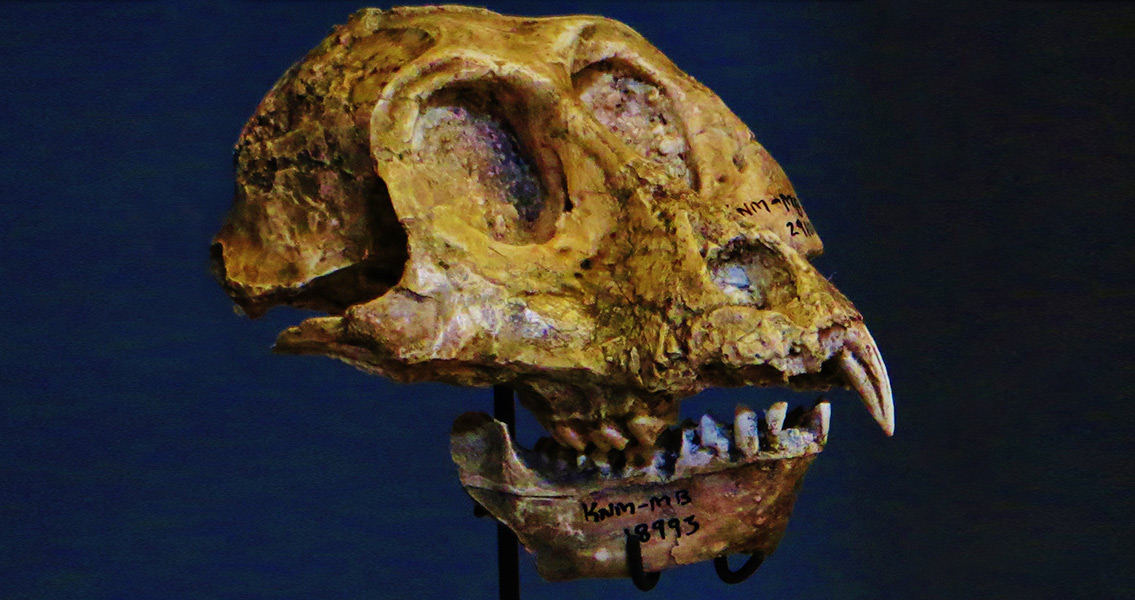
Victoriapithecus, an ancient monkey species that has evolutionary links to macaques, baboons, and other smaller primates in the family, once roamed Africa at a time when humanity was still spreading across the globe in tribes of hunter-gatherers. The skull of this particular monkey was discovered in Kenya on an island in the middle of Lake Victoria in 1997. So far, the skull is the only evidence that the monkey species ever existed, as there have been no other Victoriapithecus remains found since. An extremely rare find, the Victoriapithecus skull is one of the few remains of early primates that have survived to the modern day. The skull represents an unprecedented opportunity for scientists to delve into the secrets of early primate brain development – and by extension the brain development of early humans, which share an evolutionary link not just to Victoriapithecus but to all primates thanks to our shared ancestry. An international research team from the Max Planck Institute for Evolutionary Anthropology in Germany and Duke University in the United States used high-resolution X-rays to construct a 3D model of the brain of Victoriapithecus. The scientists discovered that the long-extinct monkey’s brain was around half the size of a modern monkey’s living today – only around 36 cubic centimeters – but despite the difference in size the level of complexity of the Victoriapithecus brain was quite high, as the folds and wrinkles in the monkey’s brain were tightly grouped. In a press release accompanying the publication of the team’s findings in the journal Nature Communications, study co-author Lauren Gonzales said that accepted academic thought had been that the size of primate brains grew before adding additional folds and complexities. However, the imaging of the Victoriapithecus brain has revealed the reverse, providing some of the clearest proof that in this case the complexity came before the size of the primate brain evolved to become bigger. The research may also be able to aid in backing up the claims that Homo floresiensis, a humanoid primate species dating from at least 18,000 years in the past, was able to use stone tools and make fire despite having relatively small brains for their body size. Additional discoveries made by the research team include that the monkey species had an olfactory bulb, the region of the brain that controls smell, that was around three times larger than it was expected to have been. This led the team to suggest that Victoriapithecus had a highly developed sense of smell – one that might have been better than its modern living cousins have today. For more information: www.nature.com Image courtesy of Wikimedia Commons user: Ghedoghedo]]>

Categories
Breaking News

Woolly Mammoth Genome Study Reveals Secrets

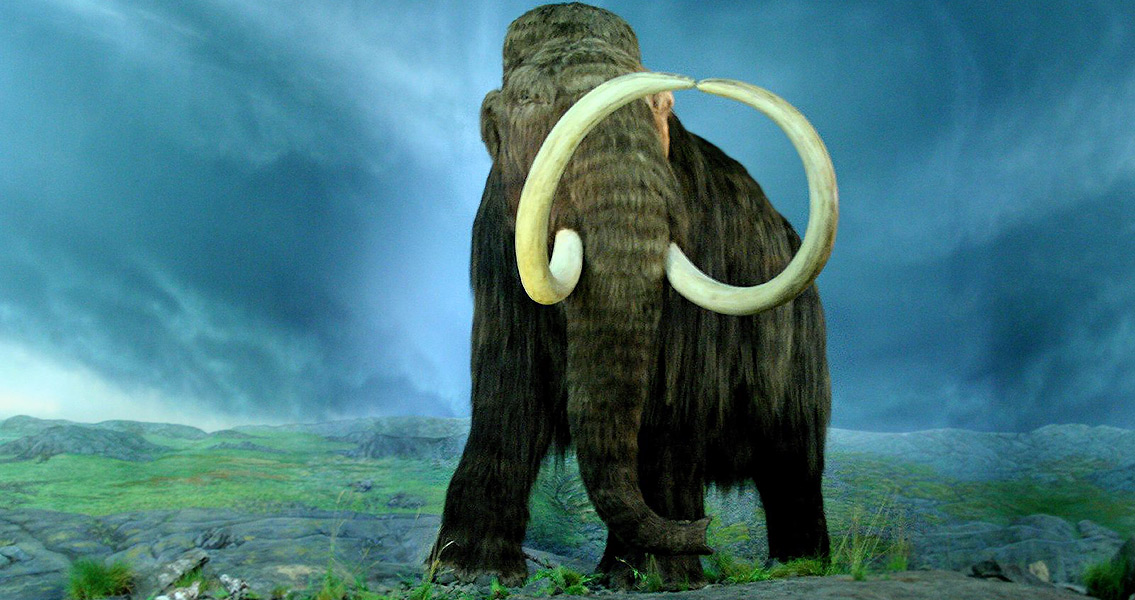
www.cell.com Image courtesy of Wikimedia Commons user: Tracy ]]>

Categories
Breaking News

Compassion Helped Fuel Human Evolution

Complexity, Compassion and Self-Organisation: Human Evolution and the Vulnerable Ape Hypothesis ]]>

Categories
Breaking News

Cannibalism: An Evolutionary Defense?

www.nature.com ]]>

Categories
Breaking News

Cooking May Not be Solely Human Trait

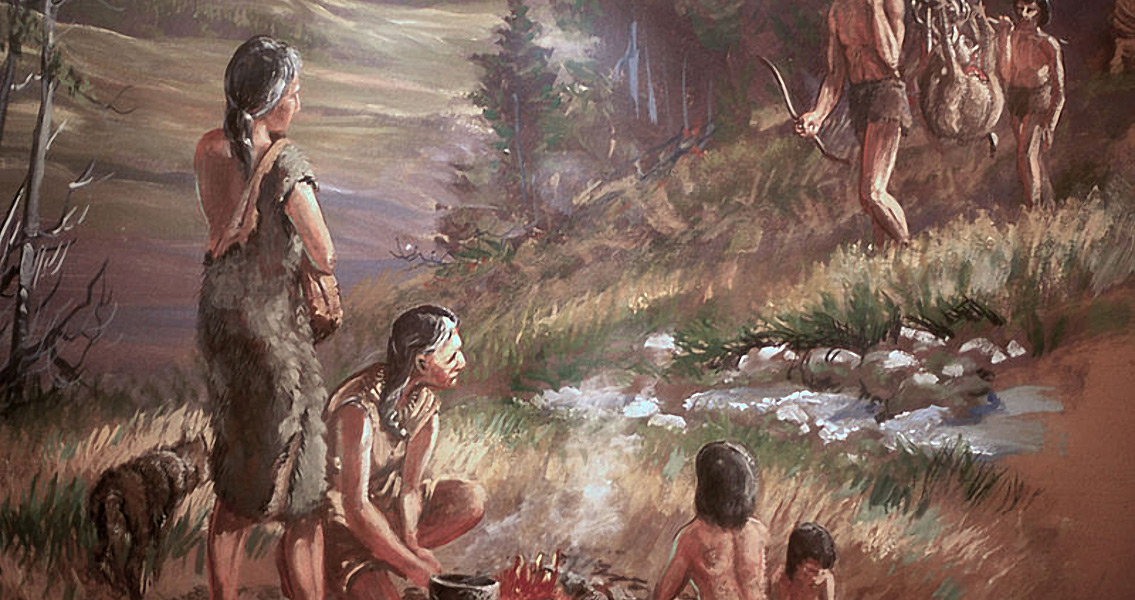
www.rspb.royalsocietypublishing.org Image courtesy of Wikimedia Commons user: Massimo Peruffo]]>

Categories
Breaking News

Snakes Evolved on Land, Hunted by Night