Categories
Breaking News

Homo naledi – A New Link in Human Lineage

Homo naledi, was among our earliest ancestors and probably lived around three million years ago. The earliest human ancestors to date are believed to have been Ardipithecus ramidus, which, the BBC writes, probably lived around 4.4 million years ago, and based on the fossil record could both walk up right and climb trees. This H. naledi, the researchers explain, was ape-like in many ways but also had some features in common with modern humans. The skeleton found in the Rising Star cave resembled in size that of a modern human child, especially the skull, teeth and feet. It belonged, however, to an elderly female. The shoulders and pelvis were ape-like, and its brain size was likely similar to that of a gorilla. The reason it was classed as a hominin was the more advanced shape of the skull, the longer legs, the smaller teeth and the modern-like feet. The chamber in which this first skeleton was found was difficult to access because it was in the deepest recesses of the cave and one had to be quite slim to be able to pass through a constriction on the way. Yet once a team was gathered, work started and the researchers discovered something even more exciting: the chamber contained not just one remarkably well preserved skeleton but as many as fifteen, of all ages and sizes. The total number of specimens collected after three weeks of excavation reached 1,550. The scientists that analysed the fossils and tried to place them along the line of human lineage had a tough job. Some of the bones, like the tiny skulls, suggested these were apes, but others were too human-like to ignore. The conclusion was that this species lived some time between Australopithecines and Homo, Berger told the National Geographic, although he added that for him personally, these creatures belonged closer to Homo than Australopithecus. Then there is the much more fascinating question of how all these people ended up in that remote chamber of the Rising Star cave (the name of the species, by the way comes from the Sotho word for “star”). There was no fauna, tools or any other artefacts around them to suggest it was a dwelling, and there were no tooth marks on the bones, which would have been the case had they been dragged here by carnivores. One possible explanation is that they wandered into the cave and got trapped in the remote chamber but the position of the skeletons didn’t corroborate that hypothesis. The other could cause a rethinking of the fundamental link between brain size and evolution: it is the suggestion that this chamber was a burial ground, where bodies were deposited over a period of centuries. In other words, that this early species, despite its small head, was capable of allocating a special place to bury its dead, a tradition so far only found in much later hominins and up until now considered too complex behaviour to be found in such earlier species. Commenting on the news, anthropologist Isabelle Winder from the University of York, who wasn’t involved in the study, said: “Look at the hind limb of H.naledi and you will see a collection of features associated with upright stance. The forelimb, however shows ape-like characters. This may suggest that the Savannah Hypothesis, which emphasises life in Savannah mosaics, may be an incomplete explanation of human locomotion. H.naledi was a scrambler, living in complex landscapes.” Nick Winder from Newcastle University told New Historian that “If you compare the naledi material with the Dmanisi skeletons (a site in Georgia where a number of different early hominin fossils were found a few years ago) you make two striking observations. The first is that the naledi assemblage is described as morphologically homogenous — all the specimens look similar. At Dmanisi, however, there is a lot of morphological variation. Second, the mosaics of attributes in the two collections are very different. This suggests much more variability than one might have expected. There were clearly lots more ways of being a successful hominin than we imagined.” For more information: Homo naledi, a new species of the genus Homofrom the Dinaledi Chamber, South Africa]]>

Categories
News

Study Looks at Continuous Nature of Evolution

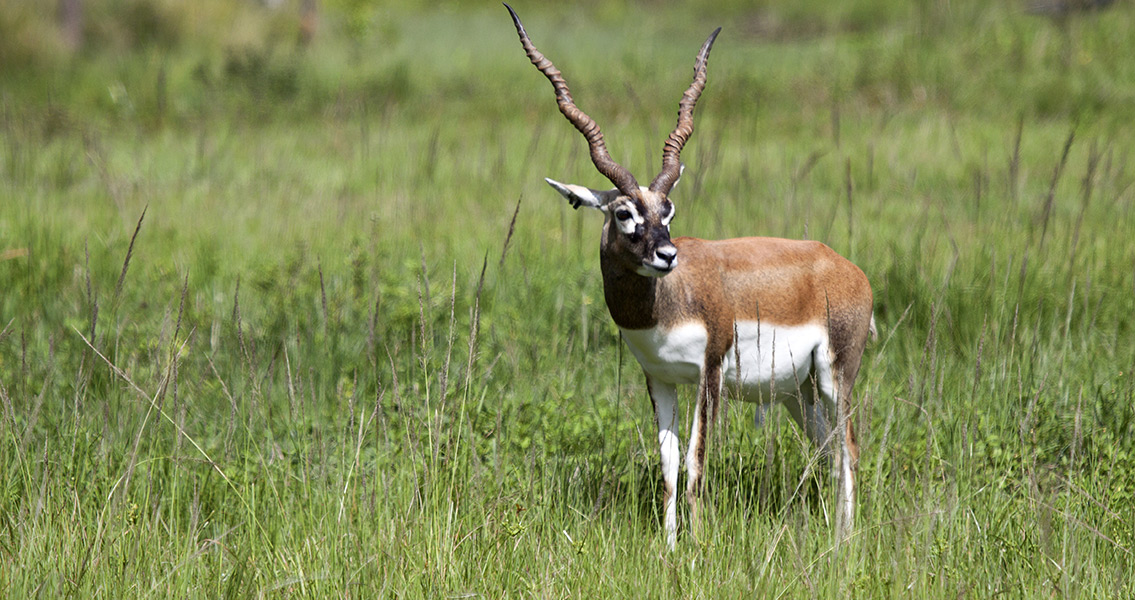
www.pnas.org Image courtesy of Wikimedia Commons user: TomFawls]]>

Categories
Breaking News

Bone Could Link Transition From Fish to Tetrapods

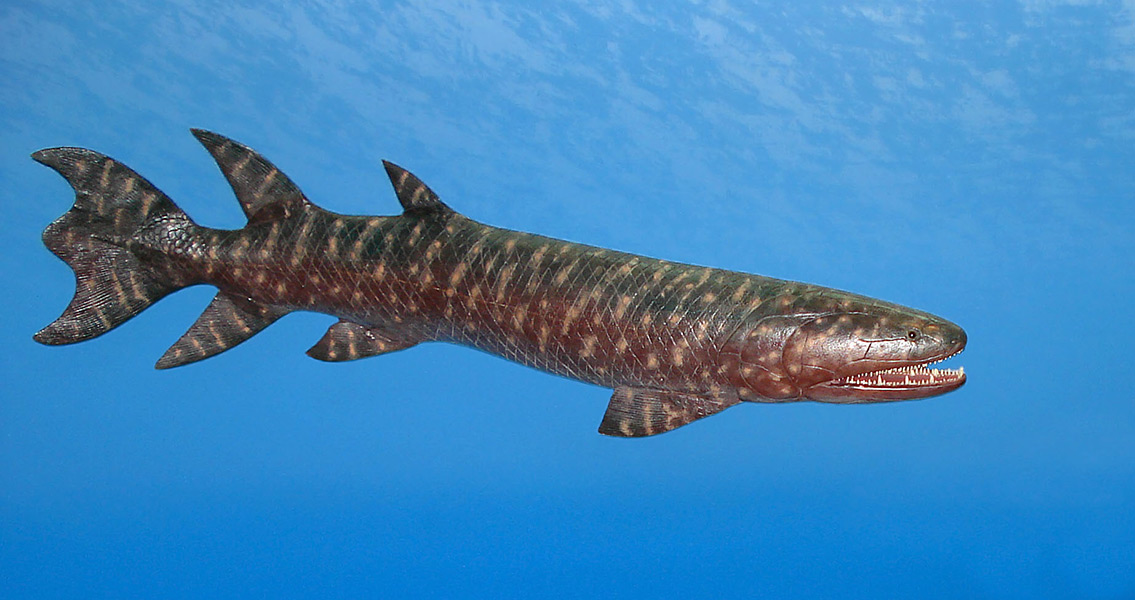
Prehistoric Wildlife notes. Later, however, it was established that it was a fish, though its anatomy and habitat in shallow waters were both factors linked to the later emergence of tetrapods. Land dwelling vertebrate animals originated around 390 to 360 million years ago, when some fish species that had lungs moved into shallow waters before eventually crawling onto land. In fact, all four-limbed vertebrates up to and including humans, along with lobe-finned fish, belong to the class of Sarcopterygii. Initially, this class only included lobe-finned fish but after scientists discovered that these fish were the ancestors of every four-legged animal, the class was expanded to include them as well. Image courtesy of Wikimedia Commons user: Dr. Gunter Bechly]]>

Categories
Breaking News

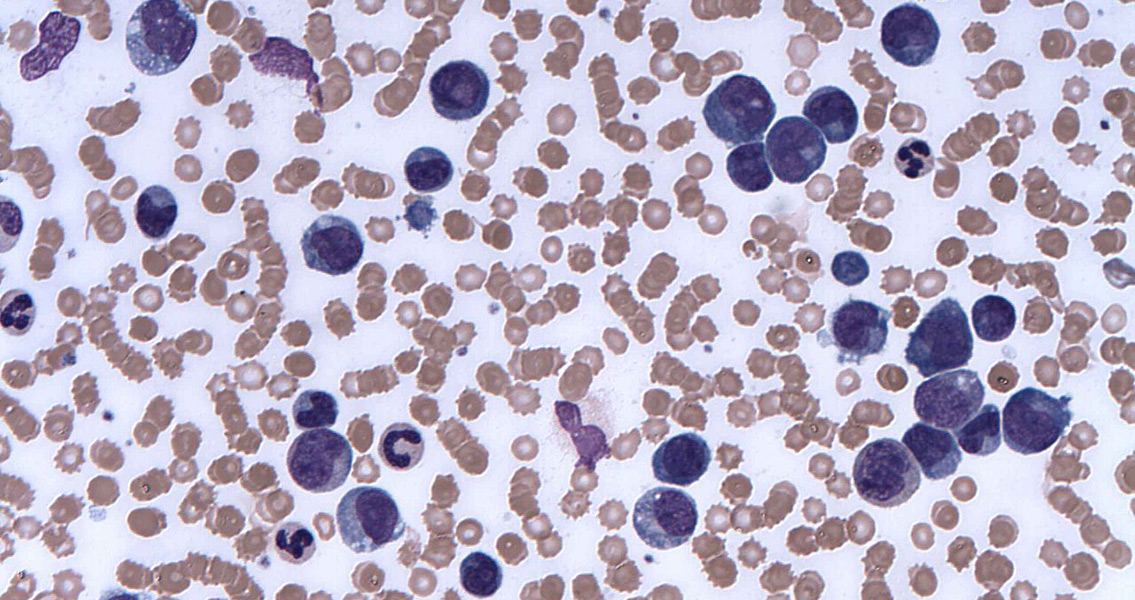
Evidence of Leukemia Found in 7,000-Year-Old Skeleton

Categories
Breaking News

Finger Bone Find Pushes Back Origins of Modern Human Hand

Homo habilis and Paranthropus boisei, the researchers say, but was more modern human-like than them. In fact, this species could be a “missing link” between Homo habilis and Homo sapiens. The bone was discovered in Olduvai Gorge, northern Tanzania, at a rich palaeontological site called Philip Tobias Korongo, or PTK, and, according to UPI, moves forward the point at which hominins climbed down the trees and evolved hands suitable for holding tools by as many as 400,000 years. In their paper, the researchers who discovered the bone note that there has been ongoing debate about the cause and effect relationship between the evolution of a hand capable of manipulating tools and the invention of these tools, a debate in which the discovery represents a valuable input. For one thing, it brings the evolution of the modern human-like hand closer to the oldest stone tools, discovered earlier this year in Kenya. Still, the tools predate the finger fossil by more than a million years, suggesting there could be even older fossils of modern human-like hands. The lead author of the study, Manuel Dominguez-Rodrigo from the Institute of Evolution in Africa, told New Scientist that the bone “belongs to somebody who’s not spending any time in the trees at all”. It is straighter than the phalangeal bones of tree-dwelling hominins who used their hands as modern-day primates do, to move in trees by hanging from branches and swinging between them. Speaking to the Christian Science Monitor, Dominguez-Rodrigo also said that this species was already capable of using tools and it was larger than its contemporaries. Based on the size of the fossil, the hominin it belonged to must have stood about five foot nine, which is quite a bit more than Homo habilis, (the first hominin who left Africa), who has been estimated to have stood at around three feet tall. The authors of the study note that the evolution of the hand has been a major driver for the evolution of humans, because the more capable of manipulating objects it became, the more capable hominins got at using increasingly sophisticated tools. However, recent discoveries, including this one, are revealing a much more complex hand evolution picture. For instance, the researchers write, the hand bones of some Pliocene australopiths have proven to be much more modern human-like than the bones of hominins from a more recent era, the Pleistocene. This suggests that hands capable of manipulating tools evolved before the tools were invented, feeding more evidence into the debate about the causal link between hand evolution and tool invention. For more information: “Earliest modern human-like hand bone from a new >1.84-million-year-old site at Olduvai in Tanzania” ]]>

Categories
Breaking News

50,000-Year-Old Bones Found in Altai

Categories
Breaking News

New Study Challenges Body Mass Increase Hypotheses

Homo erectus. In a press release by the university, as quoted by Science Daily, Grabowski explains that the research team found no evidence of any difference in body mass in the fossils of the earliest Homo samples and the fossils of australopiths, which are among the earliest known hominin species. This led the team to suggest that it wasn’t body size increase that drove the separation of Homo from the earlier hominins. Earlier hypotheses have tried to link this separation of the lineages with an increase in body mass resulting from the inclusion of meat in early hominins’ diets, comments Bernard Wood, Human Origins professor at George Washington University. According to him, these are simple assumptions that have not been tested and have now been refuted by Grabowski’s study. One other interesting finding made by Grabowski’s team is that sexual dimorphism, the size difference level between males and females within a species, was not that different between early hominins and H.erectus. It is true the dimorphism was more pronounced in pre-Homo species than in H.erectus, but the difference was not as great as in other primates, such as gorillas. What’s more, it narrowed down to the present-day level long after the Homo genus had separated from its ancestors. This finding has a direct bearing on evolutionary hypotheses that suggest the monogamous social structure of human communities evolved very early on. Instead, based on the fact that pronounced sexual dimorphism is characteristic of polygamous structures, it is possible to hypothesise that the monogamous, modern social structure was a relatively late occurrence. One reason for the persistent assumptions about body mass is that most anthropological studies in recent years have relied on research of early hominins’ done by Henry McHenry in 1992. Since 1992 however, an abundance of new fossils have been unearthed and scientists have learned more about the complexity of human evolution, the press release notes. What Grabowski’s study does is “build on and update McHenry’s result”, at the same time using new, innovative methods of examining samples of human fossils. The authors of the study hope that their results will become the new standard for body mass estimates for human fossils. Wood, for his part, says the study is one more step towards the debunking of a lot of misconceptions about human evolution. This belief is supported by several recent studies that have shed more light on evolution, including evidence that species hybridisation occurred between modern humans and Neanderthals, for instance, and that the first humans out of Africa were not H.erectus but Homo Habilis, a species which, incidentally, was smaller in size than H.erectus. For more information: “Body mass estimates of hominin fossils and the evolution of human body size” Image courtesy of Wikimedia Commons user: Commie cretan]]>

Categories
Breaking News

Largest Feathered Dinosaur Found in China

Zhenyuanlong by the researchers who examined it, the dinosaur was a close relative of the Velociraptor and lived around 125 million years ago. The fossil was discovered accidentally by a farmer in northeastern China, just like another recent discovery, this time of a bat-like dinosaur, in the same part of the country. In a paper published in Nature, researchers Steve Brusatte from the University of Edinburgh and Junchang Lu from the Chinese Academy of Geological Sciences detail the find, explaining it belonged to the dromaeosaurids, a clave of very close bird relatives including the Velociraptor – a species that gained notoriety with the Jurassic Park film series. All the specimens belonging to that clave have been found in northeastern China, in Liaoning province. So far they have been classified into five species groups, some of them containing just one species. Most of the dromaeosaurids were very small, the authors say in the paper, close in size to a modern cat or a medium-sized dog, and they all had long arms. The only exclusion from these characteristics was a fossil of a species named Tianyuraptor, which was close to two metres long and whose arms were around half the length of its legs. However, no evidence of feathers was found on that fossil. The newly discovered fossil, slightly smaller than a Tianyuraptor, was covered in feathers. This was a stroke of luck for the researchers as they had previously believed these larger bird ancestors were not very good at flying, if they could fly at all. The Zhenyuanlong, on the other hand, almost certainly could and did fly. The dinosaur had large wings and on them, as well as on its tail, the researchers found pennaceous feathers, also called quill feathers, which are essential for flying and are present in all modern flying birds. This led the team to suggest that the non-flying and flying dinosaurs were contemporaries during the early Cretaceous. As regards the individual characteristics of the fossil, examination revealed it was a young specimen based on the extent of fusion between different bones, including the vertebrae. The last year and a half has been very productive for palaeontologists who focus on the evolution of birds. In addition to the many discoveries of feathered dinosaurs, last year a team of scientists also linked dinosaur bones with bird bones, something that had not previously been possible because of the hard line distinguishing developmental biology from palaeontology. That team, however, was interdisciplinary and looked both at dinosaur fossil bones from the wrist and the wrist bones of modern bird embryos, identifying at least one bone that was present both in dinosaurs and in birds. For more information: “A large, short-armed, winged dromaeosaurid (Dinosauria: Theropoda) from the Early Cretaceous of China and its implications for feather evolution” Image courtesy of Wikimedia Commons user: David W. E. Hone, Helmut Tischlinger, Xing Xu, Fucheng Zhang]]>

Categories
Breaking News

Evolutionary Changes Led to Cooperative Parenting

“When mothers need others: The impact of hominin life history evolution on cooperative breeding“ Image courtesy of Wikimedia Commons user: Curtis Newton]]>

Categories
Breaking News

100,000-Year-Old Human Bones with Bite Marks Found