
Archaeornithura meemannae. The remains have been dated to 130.7 million years ago, around 30 million years after the first birdlike dinosaurs appeared on the scene and set off bird evolution. To compare, what was believed to be the oldest representative of the bird family lived 125 million years ago. Both belong to the Ornithuromorpha clade (a group encompassing all representatives of a life form, from the first one to all their descendants), which also includes all modern birds. The fossils were unearthed in 2013, but only now have analyses been completed that date them and classify them as being from a new species. An artist’s recreation of the ancient bird’s appearance shows that it was remarkably similar to many modern birds. In fact, the only feature out of place was the pair of small claws at the central joints of its wings. Otherwise it was covered in feathers, apart from the legs, which suggests it was a wading bird, and had a beautiful purple plumage on its head, while the rest of it was mostly gray. The bird was a small one, just 15 cm, and it is unclear whether it had teeth – a common feature of early Cretaceous birds – or not. Among the suggestions the researchers were able to make based on the fossil evidence, is that it was probably a herbivore and that it used gastroliths (stomach stones) to help digestion, study co-author Wang Min from the Chinese Academy of Sciences said. This discovery adds to a growing, though still scarce, body of evidence about the early stages of birds’ evolution. Just recently, again in China, scientists discovered an ancestor of the avian class with bat-like, skin-covered wings. This pigeon-sized dinosaur represents a stage in bird evolution before the Archaeopteryx, so far considered the earliest known example of a creature between a dinosaur and a bird. The Archaeopteryx was a feathered dinosaur that had bird-like characteristics, such as skeletal structure and possibly the ability to fly. The bat-winged dinosaur, on the other hand, most probably comes from an earlier time, before some reptiles started growing feathers and became warm-blooded, effectively ceasing to be reptiles. Early birds, however, were not the only masters of the air during the Mesozoic era, which spanned a huge period, from 252 to 66 million years ago. This other group of flying animals were called Enantiornithes. Although these apparently looked very similar to birds, they had teeth and claws, like dinosaurs. More than 50 separate species have been identified, with some only represented by a single bone, but they all died out during the latest mass extinction on the planet, around 66 million years ago, at the boundary between the Cretaceous and the Paleogenic eras. Enantiornithes are believed to have left no currently surviving descendants. Image courtesy of Wikimedia Commons user: Acabashi]]>

scansoriopterygids, characterised by their long hands, that lived 160 million years ago. All fossilised remains from this group come from China and none of them have such a bone connected to their wrists. This, coupled with the fact that bats and flying squirrels have similar bones on their hands, led the scientists to the suggestion that the dinosaur had wings made from skin, not feathers. The team, including Xu Xing and Corwin Sullivan from the Chinese Institute of Vertebrate Paleontology and Paleoanthropology, and Zheng Xiaoting from Linyi University, named the creature Yi qi, meaning “strange wing”. They explained that at this stage it is impossible to determine whether the wings were used for flapping or gliding but in any case no other dinosaurs that have been discovered in this group of species had anything like them. Zheng said that Yi qi must have been a flight pioneer, given that it lived in the Jurassic era, long before feathered dinosaurs took to the air. However, the evidence is scarce, so it is likely that the publication detailing the find and the scientists’ conclusions will cause controversy. Although it has been long suspected that modern birds evolved from dinosaurs, until recently there was no hard evidence proving the link. Just last year, paleontologists completed a comprehensive family tree of a group of carnivorous dinosaurs from which birds are thought to have evolved. The tree reveals that, unlike with humans, this evolutionary process was gradual, with no “missing links”. Simply put, 150 million years ago a group of small dinosaurs started changing, acquiring bird-like skeletons, beaks and feathers. This process took tens of millions of years, accelerating over time. This, paleontologists explain, is because once the bird skeleton was in place, it greatly increased the potential for further evolution and diversity. For the sceptics, bird DNA has also been linked to dinosaur DNA, including that of the Tyrannosaurus Rex. In 2007, US researchers managed to extract collagen, a protein from the soft tissue of a bone, from the remains of a Tyrannosaurus that had lived 68 million years ago. The closest collagen type found in a modern animal was that in chicken bones. This discovery helped add more weight to the hypothesis that birds evolved from dinosaurs. Image courtesy of Wikimedia Commons user: H. Raab]]>

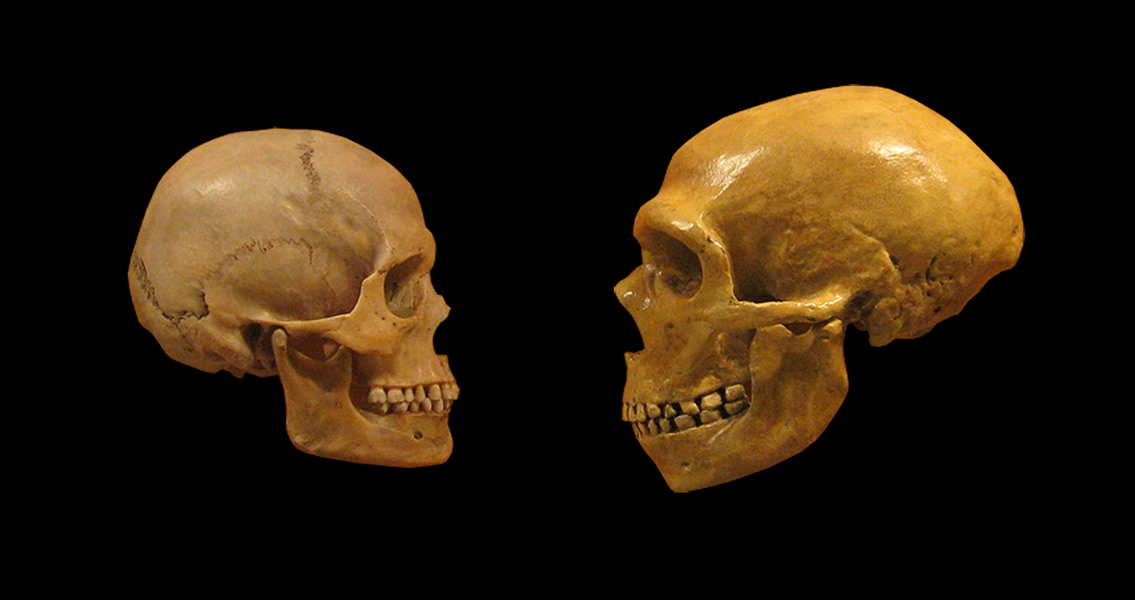
Homo, had evolved from smaller early humans becoming taller, heavier and longer-legged. This process eventually resulted in Homo erectus, which was able to migrate out of Africa and colonise Eurasia. Whilst we know that small-bodied H. erectus, averaging less than five feet tall and weighing under 50 kilograms, were living in southern Europe by 1.77 million years ago, the origin of the larger body size associated with modern humans has been elusive. The paucity of knowledge about the origins of larger members of the Homo genus is primarily a result of a lack of evidence. Previous estimates of body size had been based on well-preserved specimens which were easy to assign a species to. Since these samples are rare and disparate in terms of both space and time, little is known about geographical and chronological variation in the body sizes of the early Homo. A joint study between the Universities of Cambridge and Tübingen has shown that increases in body size occurred thousands of years after H. erectus left Africa; this growth in Homo body sizes primarily took place in the Koobi Fora region in modern Kenya. “The evolution of larger bodies and longer legs can thus no longer be assumed to be the main driving factor behind the earliest excursions of our genus to Eurasia,” said Manuel Will, co-author of the study which has been published in the Journal of Human Evolution. By using tiny fragments of fossil, the team were able to estimate our earliest ancestors’ height and body mass. Their findings, rather surprisingly, indicate a huge diversity in body size; this is particularly surprising as the wide variation we see in humans today was thought to be a relatively recent development. “If someone asked you ‘are modern humans 6 foot tall and 70kg?’ you’d say ‘well some are, but many people aren’t,’ and what we’re starting to show is that this diversification happened really early in human evolution,” said Dr Jay Stock, co-author of the study. Stock and Will are the first scientists in 20 years to compare the body size of humans from between 2.5 and 1.5 million years ago. They are also the first to use fragmentary fossils – many as small as toes, none longer than 5cm – to estimate body sizes. By comparing measurements of fossils from sites in Kenya, Tanzania, South Africa and Georgia, the researchers have revealed substantial regional variation in the size of early humans. Groups who lived in South African caves, for example, were 4.8 feet tall on average. Some of the skeletons found in Kenya’s Koobi Fora region would have stood nearly 6 feet tall, a height comparable to the average height of modern British males. “Basically every textbook on human evolution gives the perspective that one lineage of humans evolved larger bodies before spreading beyond Africa. But the evidence for this story about our origins and the dispersal out of Africa just no longer really fits,” said Stock. It appears that Stock and Will have rewritten the history of the development of early humans; diversity has deep roots amongst the Homo genus. www.sciencedirect.com Image courtesy of Wikimedia Commons user: DrMikeBaxter]]>
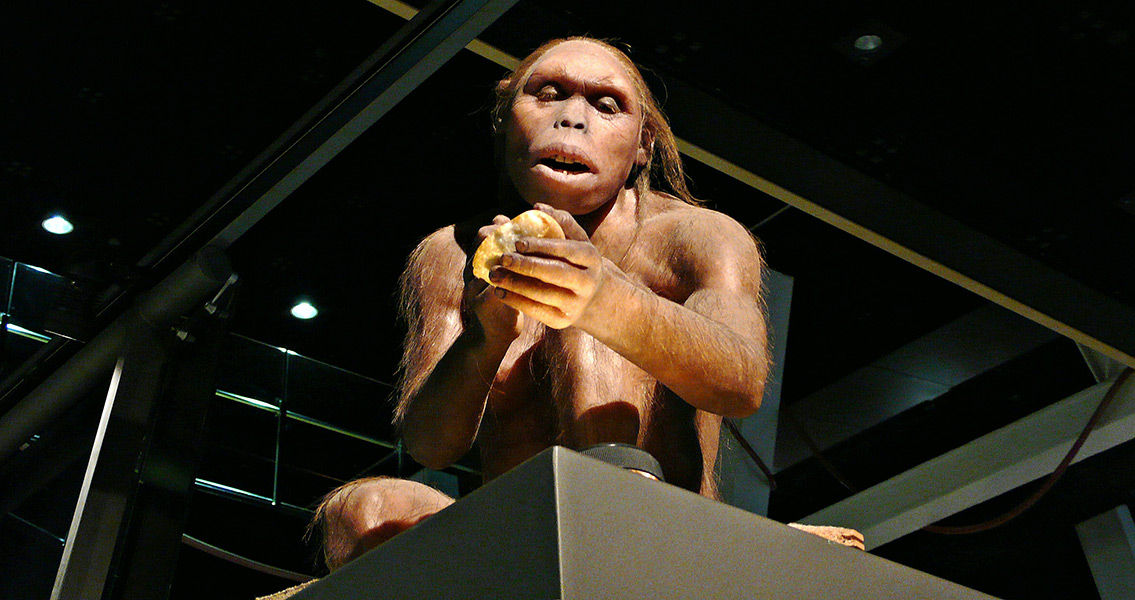

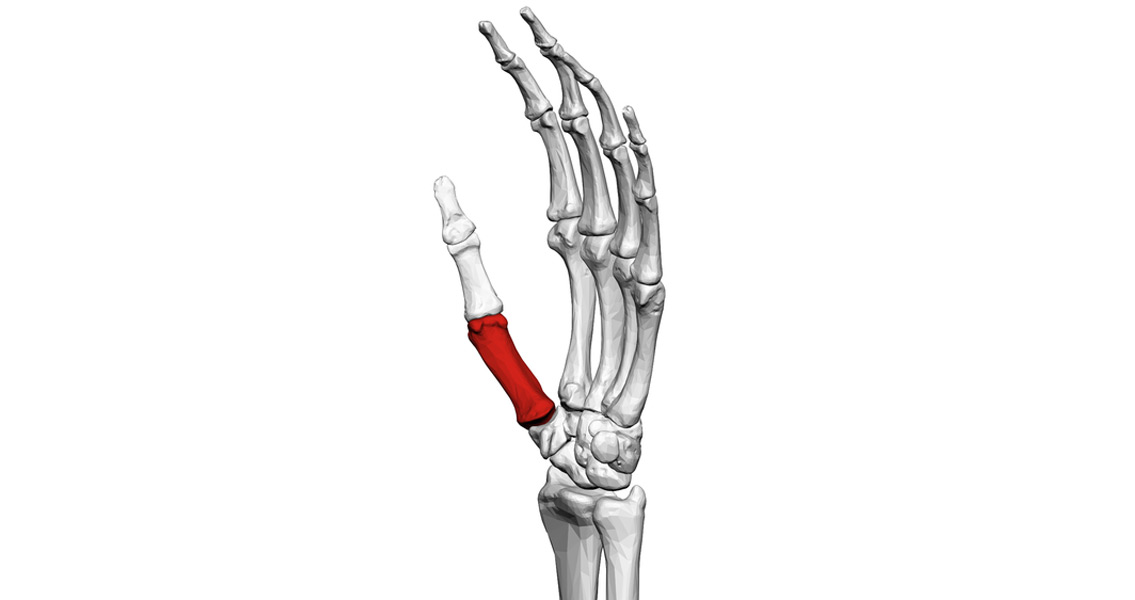
Homo sapiens, the name for modern man). By studying the bone structures of a number of hominins – the group of species that split from the chimpanzee lineage and includes modern humans and their relatives – the team were able to see how dexterity had developed in human hands. The study focused specifically on fossils of Australopithecus africanus, as well as hominin bones from the Pleistocene Period. The results could challenge the traditional ideas about human evolution. The study suggests that Australopithecus africanus were capable of having a more powerful grip than previously suspected, even though their hands lacked the styloid process. The team found that the fine mesh network of bones (trabeculae) within the metacarpals of A. africanus was comparable to that of modern humans. The density of trabeculae reveals a great deal about what a species’ hands are predominantly used for. In chimps and gorillas the mesh is denser than in humans, as chimps and gorillas use their hands to support their bodies. Less dense trabeculae however, allow greater dexterity – crucial for the creation and manipulation of tools. Kivell told Livescience: “We are suggesting that even without the full suite of humanlike morphology, early hominins were capable of forceful precision and power grips.” Chimpanzees are capable of creating and using spear-like tools for hunting. It is possible that when hominins and chimpanzees diverged between four and seven million years ago, our ancestors were already capable of creating and using tools. The earliest known tools have been found in Ethiopia, and date from 2.6 million years ago. Kivell’s research indicates that A. africanus could have been capable of using tools, 500,000 years before they were first invented. Image courtesy of Wikimedia commons user: was a bee ]]>