
Homo erectus, but had similarities with both Homo sapiens and Neanderthals, perhaps providing further evidence of interbreeding among hominin species. Image courtesy of Wikimedia Commons user: 66AVI]]>
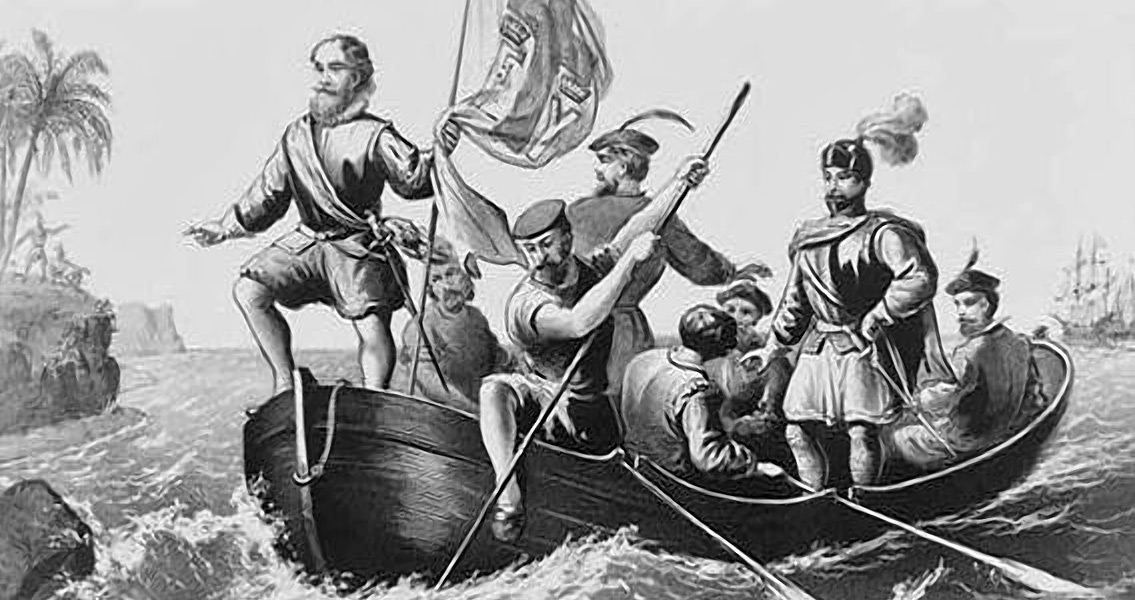
YaleNews that the team had “recovered more information than we dared to hope for.” The historian said that the revealed details strongly indicated that the map – or a copy of it – was used as a basis for the map cartographer Martin Waldseemüller drafted in 1507 which bears the first recorded instance of the New World being labeled as “America.” Van Duzer says that it’s nearly certain that Columbus had gained access to the Martellus map prior to his journey, based on several pieces of historical evidence. A journal kept by a crew member on the initial voyage describes how it was believed that the expedition was sailing by island chains thought to be present in southern Asia according to the Martellus map, with the crew member describing the region using language similar to that found on the map. Additionally, texts originating from Ferdinand Columbus, the son of Christopher, recount how his father had been laboring under the expectation that he would come across Japan where the Martellus map indicated it would be. Columbus had expected to find the island chain in the same orientation and location that Martellus describes; from all the other maps dating to the period that have survived history, only the Martellus map lists this specific orientation and location for Japan. Around 80 percent of the text on the map has been recovered at this point, according to the research team. A published paper will accompany the group’s final findings once the project has been completed. ]]>
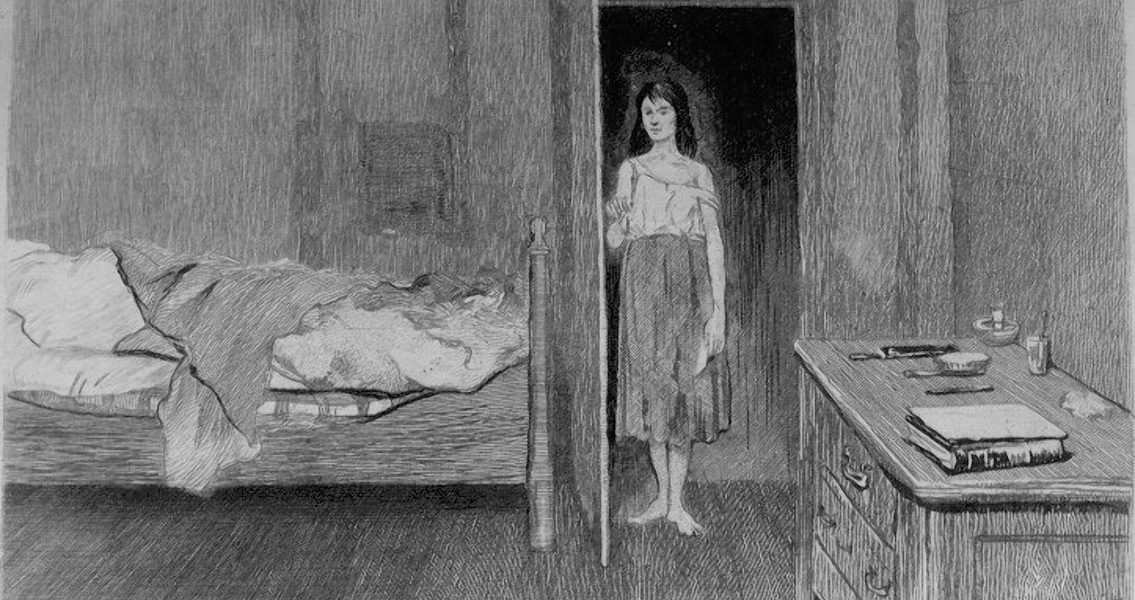
Les Miserables has evolved well beyond its nineteenth century origins into a modern cultural phenomenon. As the story has been retold and adjusted to fit new forms however, it is important to remember that the original novel was a vital piece of social commentary that strove to both reflect and affect the context in which it was created. Les Miserables is not a book about the French Revolution, its author was born over a decade after the events of 1789, and the story is set in the middle of the nineteenth century. However, its backdrop is a France still coming to terms with 1789, reflecting the experiences of an author who grew up and lived in the wake of that momentous event. As such, it captures the upheaval of nineteenth century France, a century which witnessed both the Napoleonic Wars and the Paris Commune, and conveys the sense of constant change and instability of the early nineteenth century through the troubled lives of its protagonists. Hugo was born 26th February, 1802, in Besançon, France. His father, Joseph-Léopold-Sigisbert Hugo, was a general in Napoleon’s armies. Joseph Hugo’s constant traveling for the French campaigns in Italy and Spain meant that the Napoleonic Wars had a very direct relevance to the younger Hugo’s early life. The tumultuous politics of the period became a feature of his upbringing. While his mother was a staunch royalist, Hugo’s father was loyal to each successive French government: the Convention, the Empire, the Restoration. Marital tensions meant Hugo’s childhood was spent switching from accompanying his father on his campaigns through Europe and returning home to Paris to see his mother. Although Les Miserables charts a broad chunk of French history in the aftermath of 1789, it reaches its climax in the June 1832 Rebellion in Paris, an event Hugo witnessed first hand. Already established as a writer, the events in June proved particularly inspirational. The 1830 Revolution had seen the ‘Citizen king’ Louis-Philippe take the throne. Initially popular, the widening gap between rich and poor during the first years of his reign saw resentment build among the poor in France. Amidst a major cholera epidemic, thousands of Parisians took to the streets to commemorate the death of General Jean Maximilien Lamarque, a man considered to have been a champion for the poor. The mob swelled as political agitators joined those attempting to witness the funeral procession. Some observers claim that around 100,000 protesters eventually joined and the mob eventually took over half of Paris. Barricades were erected throughout the city, as the insurgents looked for arms to defend the sections of Paris they had gained control of. Ultimately, a lack of broader support from the citizens of the city meant that the uprising was suppressed within twenty four hours of its start. In a century of revolutions throughout France and Europe, the rebellion of June 1832 had failed to achieve any lasting change, which explains why it is perhaps overlooked compared to other events in French history. As a first hand witness to the rebellion however, Hugo immortalised it in Les Miserables for what it was – an expression of the continued discontent of the poor in Parisian society. Les Miserables charts a period of constant revolution and change. It comments on the failings of successive administrations, and the effects these failings had on the French people. Its focus is the poor in society, and how time and again the French class system punished good, honest people with poverty. Each of the main characters represents a problem of their time that Hugo felt needed reform – education, women’s rights and the treatment of criminals. These personal tragedies are linked explicitly to problems with nineteenth century France as a whole, and towards the end of the book become manifested in the insurrection in Paris. Les Miserables is a fantastic story which has rightly been retold in different languages and different formats. On top of that, it is an analysis by one of France’s greatest writers about the condition of the society in which he lived. Image by Pierre Jeanniot

Les Miserables
A Novel
Vol. 1Vol. 1
by Victor Hugo


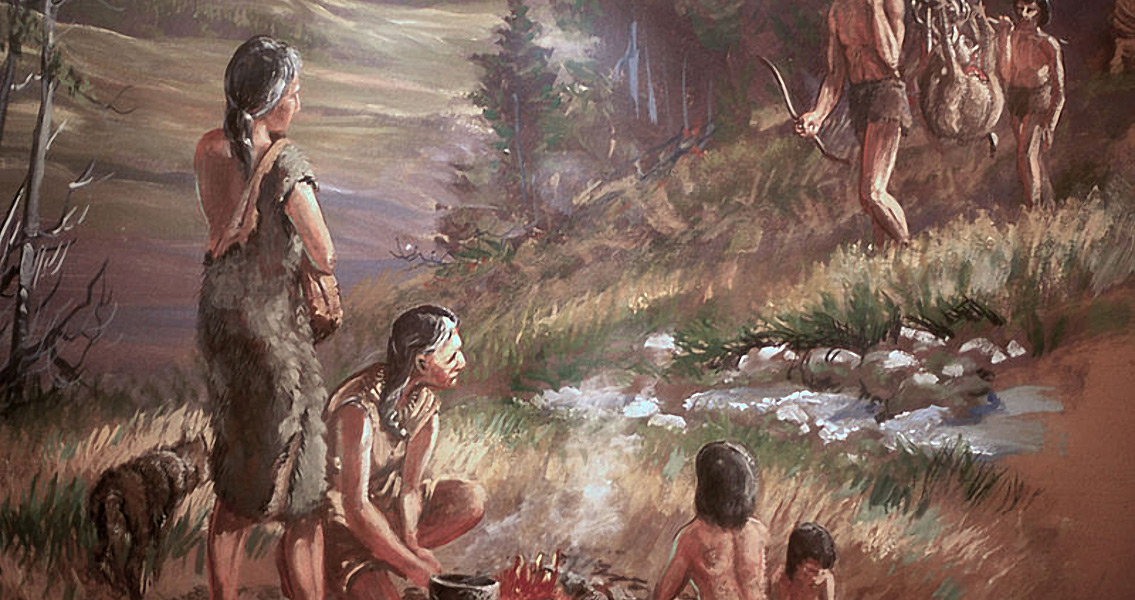
Current Biology, has posited that the development of major world religions in the so-called “Axial Age” of 500-350 BCE cannot be traced to the rise of complex political institutions or to growth in population. Instead, the rise of religions such as Judaism (and its eventual offshoots of Christianity and Islam), Buddhism, Daoism, Brahmanism, and Jainism resulted from increases in economic development and better standards of living, according to the authors of the study. A research team from the École Normale Supérieure, led by research scientist Nicolas Baumard, delved into the study of the formation of world religions during the Axial Age in order to make a determination as to what led to the proliferation of such religions concurrently yet in such disparate geographical locations around the globe. The Axial Age was characterized by new beliefs supplanting the older ones commonly held by hunter-gatherer societies. Nomadic cultures from before the advent of agricultural pursuits tended to have spiritual beliefs that focused more along tribal lines and were primarily concerned with warding off misfortune, enforcing taboos, and ritual offerings and sacrifices. In comparison, the researchers point out that once the economic status of civilizations improved – partly thanks to adopting agriculture and focusing less on itinerant lifestyles – abundance for these civilizations increased, leading individuals to begin to have the ability to focus on things besides subsistence. The rapid advancement in living standards which occurred in the Axial Age could have been the catalyst for spiritual development that delved beyond the nomadic campfire ring, the research suggests, although the most rapid and dramatic advances in living conditions were likely reserved for the richer and more powerful members of these societies. According to Baumard and his colleagues, it was at this point that these new religions began to develop and focus more on “personal transcendence” instead of taking ritualized steps to ensure the survival of the group. The study points out that these later religions focused on the “purpose” of human existence independent of survival, “a moral existence and the control of one’s own material desires, through moderation (in food, sex, ambition, etc.), asceticism (fasting, abstinence, detachment), and compassion (helping, suffering with others).” However, Baumard and his team remain unconvinced that morality alone is responsible for successful civilizations. In an interview with Scientific American, the researcher remarked that “some of the most successful ancient empires all had strikingly non-moral high gods. Think of Egypt, the Roman Empire, the Aztecs, the Incas, and the Mayans.” More likely is the idea that morality exists independently from religion or spirituality, and it was only the increased economic security and affluence of these Axial Age civilizations that gave enough breathing room for morality to exist without having to be subsumed by the vicissitudes of tribal survival, a sentiment echoed by other researchers not associated with the new study. For more information: www.cell.com Image courtesy of Wikimedia Commons user: Gunnar Bach Pedersen]]>

Complexity, Compassion and Self-Organisation: Human Evolution and the Vulnerable Ape Hypothesis ]]>