Categories
Breaking News

New Evidence of a Battle Still Mourned during Jewish Fast

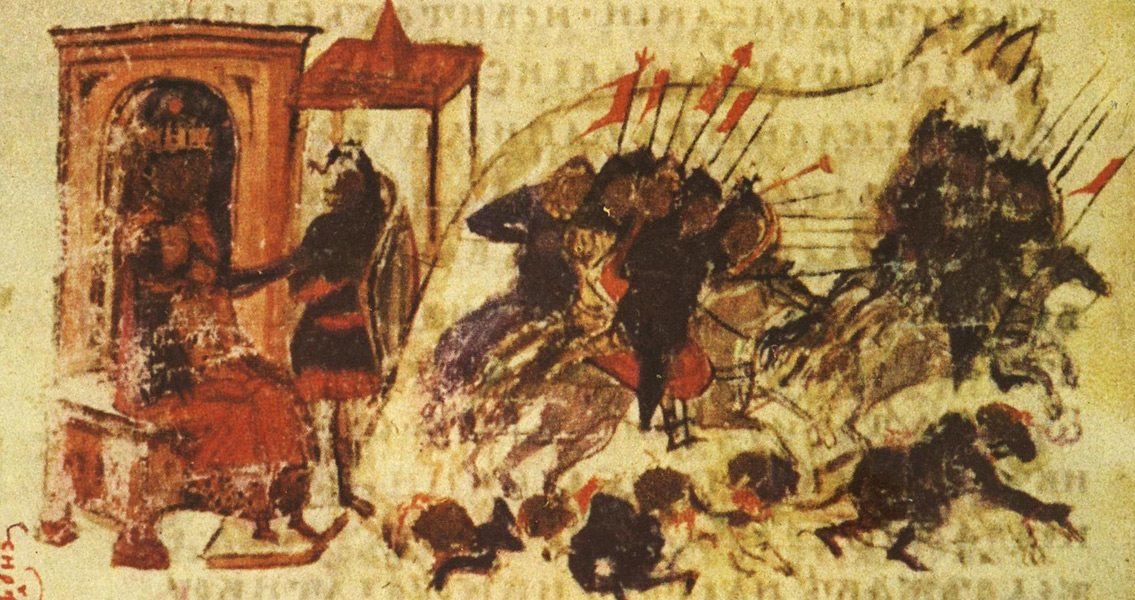
Jewish Press: “This is a fascinating testimony of the intensive bombardment by the Roman army, led by Titus, on their way to conquering the city and destroying the Second Temple. The bombardment was intended to attack the sentries guarding the wall and provide cover for the Roman forces so they could approach the wall with battering rams and thereby breach the city’s defenses.” As described by historian Flavius Josephus, who witnessed the event, the last battle against the Jewish rebels started with the Romans using catapults to hurl large stones, spears and gravel at the outer third wall and its defenders. The Romans were firing from siege towers which Jewish weapons were unable to reach. When the Jews were forced to retreat, they were no longer able to prevent the endless onslaught of Roman battering rams which gradually destroyed the wall. Josephus wrote: “The soldiers who reached the top of the wall opened the gates and brought the entire military force inside. Therefore on the 15th day of the siege, the 7th day of Artemisius [corresponding to the Hebrew month of Iyar], the Romans took control of the … wall, most of which was destroyed to the foundations along with the northern part of the city.” It took another two and a half months of battle before Titus was able to breech the remaining two walls. The findings attesting to the battle at the third wall were discovered in the Russian Compound, an area west of Jerusalem’s Old City, named for the Russian Orthodox church built there during the nineteenth century. Construction of Jerusalem’s third wall was started by Judean King Agrippa I, however, construction was halted and the wall was only completed years later, haphazardly and with inadequate resources making it a weak spot in the city’s defense. The destruction of the first and second temples is still mourned yearly as the Jewish fast Tisha B’Av, while the Arch of Titus, which celebrates the Roman’s victory in Jerusalem and the Temple’s destruction, is still standing in Rome. The excavation findings are scheduled to be presented at the “New Studies in the archaeology of Jerusalem and its Region” conference. ]]>

Categories
News

Treaty of Westphalia Forges a New Europe

Categories
Breaking News

Nan Madol Earliest Pacific Settlement Ruled by a Chief

Science Daily: “The kind of society that we live in today, it wasn’t born last year, or even 100 years ago. It has its roots in a pre-modern era like Nan Madol where you have a king or chief. These islanders invented a new kind of society — that is a socially creative achievement. The idea of chiefs, someone in charge, is not a new thing, but it’s an extremely important precursor. We know tribes and bands predate chiefdoms and states. But it’s not a straight line. By looking at these intermediate stages we get insight into that social phenomenon.” The research team is the first to use uranium-thorium series dating, a significantly more precise method than radiocarbon dating, to determine the age of the stone structures that comprise the site of Nan Madol. Portable X-ray fluorescence (XRF) geochemically matched the basalt stones to natural sources found on the island. The uranium-thorium technique calculates a date based on characteristics of the radioactive isotope thorium-230 and its radioactive parent, uranium-234. “The thing that makes this case special is Nan Madol happened in isolation, it happened very recently, and we have multiple lines of evidence, including oral histories to support the analysis,” McCoy is quoted as saying in Science Daily, “And because it’s an island we can be much more specific about the natural resources, the population, all the things that are more difficult when people are on a continent and all connected. So we can understand it with a lot more precision.” Previous dating indicated that Nan Madol, a UNESCO World Heritage Site, had been established in 1300 CE. McCoy’s team has narrowed that to a 20-year window over 100 years earlier, between 1180 CE and 1200 CE, which means the dynasty of Saudeleur chiefs who ruled the island society for over 1,000 years was also established earlier than previously believed. Uranium dating shows that by 1180 CE, the huge stones used to construct the tomb were being transported from a volcanic plug located on the opposite side of the island, and that by 1200, the island’s chief was interned there. Pohnpei Island is an inactive volcano (for a million years at least), much larger than neighboring islands at 128 square miles (334 square kilometers). It was originally settled around 1 CE by islanders from the Vanuatu or Solomon island groups. To construct the tomb and other structures, basalt boulders, weighing tons apiece, were moved somehow from quarries on the other side of the island to the lagoon where they remain today. The research has been published in the journal Quaternary Research. Image courtesy of Mark McCoy ]]>

Categories
Breaking News

Breeding With Neanderthals Altered Human Immune Systems

study suggested that this process could have contributed to the Neanderthals’ extinction, humans passing on unfamiliar viruses from Africa to the Neanderthals. According to the two new studies, recently published in the journal Cell, this breeding could have also helped humans from Africa adapt to the new pathogens they encountered in Europe. Breeding with Neanderthals might have seen humans obtain the Neanderthals’ different immune system responses. This would have helped them fight off the new infections they encountered on the continent. Neanderthals left Africa much earlier than modern humans, arriving in Europe up to 300,000 years ago. Humans made their way to the continent sometime between 100,000 and 60,000 years ago. In the first of the studies, geneticist Luis Barreiro of the University of Montreal and colleagues collected blood samples from 80 African Americans and 95 people of European descent. A type of immune cell called macrophages, which engulfs and destroys bacteria, was isolated in each of the samples. The isolated macrophages cells were grown in a dish, and then infected with two types of bacteria. It was found that the macrophages from African Americans killed the bacteria three times faster than those from Europeans. The researchers also discovered that gene expressions responded differently to the infections. Many of the genes whose activity changed the most during the immune reactions had sequences that were very similar to Neanderthals and Europeans, not Africans. In the second study, population geneticist Lluis Quintana-Murci and his colleagues at the Pasteur Institute in Paris collected samples from 200 people living in Belgium. 50% of their subjects were of African descent, 50% of European. Again, the researchers grew immune cells from the subjects in dishes and infected them with diseases and viruses, although this time the immune cells were monocytes. Once again, the two groups showed differences in the activity of various genes. Neanderthal-like gene variants in the European group playing a significant role in altering their response. For some diseases, such as tuberculosis, a lower immune response actually tends to improve chances of survival and recovery. Modern humans in Europe may have therefore adopted Neanderthal traits to survive the disease, the process perhaps happening as the result of an ancient outbreak. Similarly, modern African-American women are three times more susceptible to the autoimmune disease lupus than white Americans. This is a trend which can be seen beyond environmental, social and economic factors. Barreiro suggests that at least part of this difference could be explained by genetics. Beyond providing insight into the development of the immune system, the findings by these studies have the potential to deepen our understanding of modern disease, showing the importance of considering racial diversity and history for detecting the roots of disease. ]]>

Categories
Breaking News

Earliest Evidence of Right-Handedness Discovered

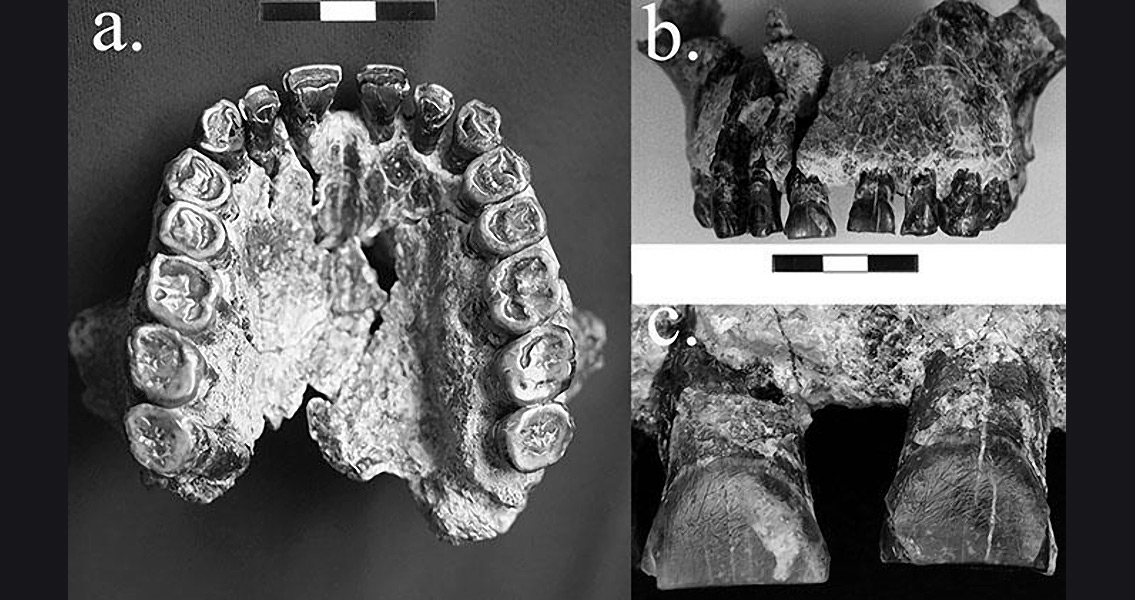
Homo habilis fossil. Although scientists have learnt a lot about “handedness”, they still haven’t been able to precisely explain why humans favour using one hand over the other, or why human populations are biased towards right handedness over left handedness. The lack of a standard, empirical definition for measuring handedness means scientists disagree on what percentage of the human population are left or right handed. However, it is agreed that the majority of humans are right handed (between 70 and 95 percent) and the minority left handed (30 to five percent). By comparison, the ratio among apes is 50:50. At 1.8 millions years old, the Homo habilis fossil studied by the University of Kansas researchers marks the oldest known evidence of right handedness in the fossil record. “We think that tells us something further about lateralization of the brain,” said David Frayer, a KU professor emeritus of anthropology and the lead author of the study, in a press release. “We already know that Homo habilis had brain lateralization and was more like us than like apes. This extends it to handedness, which is key.” Brain lateralisation refers to the fact that the left and right hemispheres of the brain are not exactly alike, leading to certain neural processes and cognitive functions being more dominant in one hemisphere than the other. Scientists have long theorised that this brain lateralisation has some correlation to a person’s handedness. Frayer and team made their discovery by analysing labial striations – small cut marks, which are lip side of the anterior teeth in the intact Homo habilis jaw fossil. Known as OH-65, the fossil was found in a stream channel of the Olduvai Gorge in Tanzania. Most of the deep cuts on the lip face of the upper front teeth veered downwards from left to right. After analysing the marks, Frayer and his team believe they most likely came from OH-65 using a tool with its right hand to cut food it was holding in its mouth while pulling at it with its left hand. The scratches can be seen with the naked eye, but the team used a microscope to accurately determine their alignment. “Experimental work has shown these scratches were most likely produced when a stone tool was used to process material gripped between the anterior teeth and the tool occasionally struck the labial face leaving a permanent mark on the tooth’s surface,” said Frayer. The direction of the marks strongly suggests that the Homo habilis specimen was right handed. Of course, OH-65 is only one sample but it could be the first evidence of a dominant handed pre-Neanderthal. As such, it could lead to the search for similar marks in other Homo fossils, allowing scientists to gain further insight into the development of handedness. “Handedness and language are controlled by different genetic systems, but there is a weak relationship between the two because both functions originate on the left side of the brain,” explained Frayer. “One specimen does not make an incontrovertible case, but as more research is done and more discoveries are made, we predict that right-handedness, cortical reorganization and language capacity will be shown to be important components in the origin of our genus.” A host of different studies have pointed towards brain reorganization, the use of tools and use of a dominant hand all occurring early in the human lineage. This latest study, published in the Journal of Human Evolution, is the first to look into the directionality of striations in the earliest specimens of our evolutionary lineage. It shows how something seemingly as basic as the dominance of one hand over the other is well embedded in our evolutionary history. “We think we have the evidence for brain lateralization, handedness and possibly language, so maybe it all fits together in one picture,” said Frayer. Image courtesy of David Frayer]]>

Categories
Breaking News

Stone Age Humans Heat-treated Stone Tools

PLOS ONE, is available here Image courtesy of Delagnes et al (2016)]]>

Categories
Breaking News

17th Century Royal Murder Meets 21st Century DNA Analysis

Hannoversche Allgemeine Zeitung. “If it really is the bones of Königsmarck, [it] would be a sensation.” Philip and Sophia’s love story has inspired a number of films and books, largely due to the surviving cache of love letters. Sophia is typically seen as a sympathetic figure despite her infidelities because her husband was such an awful person, not just to his wife but to everyone. George was also unfaithful, physically abusive, and he enjoyed openly snubbing her in favor of his mistress: Melusine von der Schulenburg. According to Eleanor Herman’s book “Sex with the Queen”, George’s own mother referred to him as “the most pigheaded, stubborn boy who ever lived, who has round his brains such a thick crust that I defy any man or woman ever to discover what is in them.” Sophia spent the remainder of her life, 32 years, locked up at Castle Ahlden in Saxony. She was buried there, but later transferred and interred next to her parents in Celle, where she remains today. ]]>

Categories
Breaking News

Ancient Modern Drug Analogues Found in Istanbul

Categories
Breaking News

Slaves Helped Build University of Mississippi

The DM Online, there were a minimum of nine slaves – possibly more – who lived on a property known today as Rowan Oak, the home of celebrated American novelist William Faulkner. Located in Oxford, the Greek Revival house and its surrounding 40 acres of land were sold to Ole Miss in 1972 by the Faulkner family, but before the Nobel laureate purchased the property in 1930, it had been owned by Colonel Robert Sheegog, a Tennessean slave owner. Riley Anderson, an archaeology student involved in the research, remarked that Sheegog’s main residence was approximately an hour from Oxford at a location where he was known to have kept approximately 70 slaves. Research has shown that the slaves he kept at Rowan Oak – a mixture of men, women, and children that lived in a pair of structures on the property – were specifically leased to the university to aid in its construction efforts. This approach to history is often overlooked, Anderson stated, indicating that most historical research is concerned with discussing those responsible for the establishment of an institution such as Ole Miss, and not those that aided in physically building it. Anthropology professor Tony Boudreaux, the director of the university’s center for archaeological research, is co-teaching the course with Maurine Meyers. Boudreaux says that the impetus behind the initiative is to not only accomplish the center’s research goals but also to provide archaeology students with field experience, of which there has been much. In examining Rowan Oak, the class has assisted in surveying the ground in order to aid in determining where to excavate. Some artifacts have already been uncovered during this process, Boudreaux remarked. Broken glass, broken dishes, a handful of pottery shards and several nails that would have been used in fence posts or buildings have been gleaned from the site, but the anthropologist stated that more excavation will be needed to place the artifacts in proper context of the time. Anthropology graduate student Dalton Capps says that it’s important to recognize the history of slavery not just in the development of Ole Miss but on college campuses everywhere. Many universities are excellent at representing their own history, Capp said, but may not pay as much homage to the issue of slavery. Research data from the excavation will be submitted to the Mississippi Department of Archives and History as well as presented to Ole Miss administration members. ]]>

Categories
Breaking News

Spectacular New Cave Art a Treasure of Humanity