Categories
News

Pompeii Obliterated in Vesuvius Eruption

Natural History and one of Rome’s most learned men when it came to nature, continued relaxing in his home close to Pompeii despite noticing a massive plume of smoke billowing out of the mountain. Pliny the Younger had noticed the earth tremors in the preceding weeks, but casually noted in his account that they “…were not particularly alarming because they are frequent in Campania.” Lasting for twenty four hours, the few who realised the danger of the eruption had the chance to escape the danger zone. For several hours a rain of ash and pumice fell on the area surrounding the mountain, causing many, including the elder Pliny, to take shelter in their residences. Just after midnight on the 25th a pyroclastic flow from the volcano engulfed Herculaneum, annihilating the town and causing any survivors to flee towards Pompeii. Several hours later, on the morning of the 25th, Pompeii itself was also destroyed as a cloud of volcanic gas and debris rolled down the slope of the mountain and smothered the city. Buildings were smashed by pyroclastic waves, while people fleeing the eruption or sheltering under roofs were killed instantly. Exact casualty figures for the eruption are impossible to tell, as the corpses that archaeologists study today represent only a small sample of the total. Towns, villages and countryside from the south of Vesuvius all the way to the Sorrentine Peninsular, some 20 km away, were devastated by the eruption. The Romans wouldn’t rebuild or repopulate the area destroyed by the eruption. The site of Pompeii was left to be sacked by looters, who tunneled holes into the city’s buildings to steal any valuables that had survived. The eruption affected the Bay of Naples as a whole, although Naples itself and other settlements on the northern bank of the bay were either hardly impacted upon, or recovered quickly, it led to a decline for Naples as a vacation location for the wealthiest of Roman society. Image courtesy of Wikimedia Commons user: Glmike523 ]]>

Categories
Breaking News

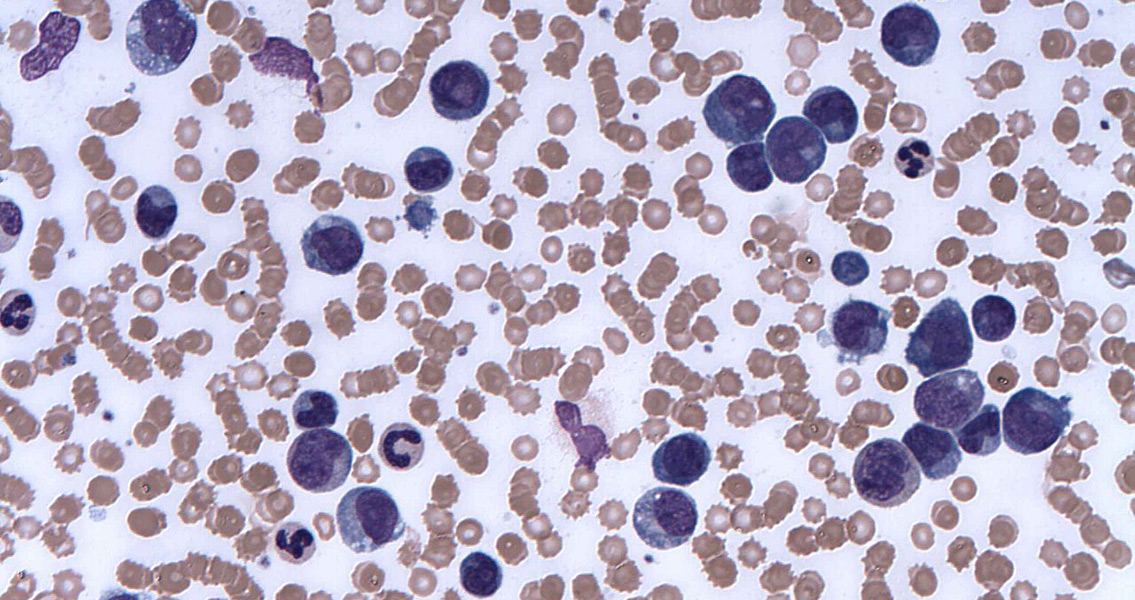
Evidence of Leukemia Found in 7,000-Year-Old Skeleton

Categories
Breaking News

Rare Late Medieval Tomb Discovered in Poland

Categories
Breaking News

Large Aztec Tzompantli Unearthed in Mexico City

top 10 list of structures made using human bones, in which the top spot is occupied by a tower made from human skulls. The tower, made from the skulls of Serbian rebels against the Ottoman empire, was the brainchild of one general Hurshid Pasha, who built the 15-foot tower from 952 skulls, near the city of Nis. Commenting on the Mexico City find, one of the researchers working on the dig, Raul Barrera, told the AP that there are a lot more skulls in deeper layers in the ground, so the initial number of 35 is expected to swell considerably as excavations continue. This will take time, however, because the house above the site is considered to be historically valuable, so the archaeologists often have to work in narrow wells some six feet under the floor of the house, suspended on a wooden platform, lying face down. It seems that these efforts have paid off, since there is not much doubt that this is indeed the main tzompantli of the Templo Mayor Aztec. A year ago, scientists from the National Institute of Anthropology and History uncovered another partial tzompantli in Mexico City, under a stretch of a new underground extension currently under construction. Four skulls were discovered there, Gizmodo reports, one of them, interestingly, a dog skull. Animal skulls were put on skulls racks extremely rarely, with the Aztecs obviously believing that human heads were more awe inspiring. ]]>

Categories
Breaking News

Ancient Monkey Fossil Could Be First Modern Baboon

A. sediba remains, has confirmed previous research that the species it belongs to, known as Papio angusticeps, has a close relationship to modern baboon species living today. In fact, P. angusticeps might actually be one of the very first members of Papio hamadryas, the modern monkey species known as the hamadryas baboon. Modern baboon populations are routinely divided into several different groups, most commonly referred to as separate species or subspecies, throughout large swathes of sub-Saharan Africa. These modern baboons have also spread into the Arabian Peninsula, easily making them one of the biggest evolutionary success stories of the primate world. However, there are plenty of questions about the origins of modern baboon species when it comes to examples in the fossil record. Dr. Gilbert says that modern baboons had been thought to have diverged from their closest evolutionary relatives between 1.8 million and 2.2 million years in the past, but evidence in the form of fossil specimens had been rare to nonexistent until this latest find. The scientist added that the Malapa specimen, in conjunction with the analysis conducted by the research team, lends credence to the possibility that early P. hamadrayas fossils might have been incorrectly categorized by earlier researchers as P. angusticeps – especially in light of how modern baboon anatomy seems to be consistent with that of P. angusticeps – to the point where experts would be hard-pressed to differentiate ancient specimens from the bones of modern baboons hailing from South and East Africa. For more information: www.journals.plos.org Image courtesy of Wikimedia Commons user: RADION Imaginery / Kamil Wence]]>

Categories
Breaking News

Study Says Climate Change Influenced Canine Evolution

www.nature.com Image courtesy of Wikimedia Commons user: Flicka]]>

Categories
News

Anniversary of the Battle of Bosworth

reinterment earlier this year. Accounts from the time claim that Richard was slain in the battle before his naked body was taken to Leicester to be buried. Since the discovery, detailed examination of Richard’s body has allowed forensic archaeologists to gain a better understanding of the events leading to his death. It has also helped form a better image of the man himself, dispelling some myths which originated in the aftermath of the battle and were probably a consequence of the victors trying to discredit their former enemy, and challenging the portrayal given in Shakespeare’s play, Richard III. The Wars of the Roses had started thirty years before, at a battle in St. Albans. Richard of York led a force of some 3,000 men against King Henry VI on 22nd May, 1455. A number of factors had contributed to the outbreak of the war: Henry’s descent into insanity, the perceived dangerous influence of his wife Margaret of Anjou, and a growing class of powerful magnates in the countryside who increasingly ignored the authority of the king. A sporadic war waged between the Houses of York and Lancaster which ultimately ended with a Yorkist victory, and Richard of York winning the right to inherit the throne on Henry’s death at the expense of his son Edward. Continued conflict over the rights to the throne meant that the York victory over Henry in 1460 was not decisive, and the Wars of the Roses would continue until the Battle of Bosworth Field. Richard III took the throne amid much controversy in July 1483. He had been named Lord Protector of the realm for his twelve year old nephew Edward V earlier in the year, following the death of this brother Edward IV. Before Edward V could be crowned, the marriage of his parents was declared invalid, making their child ineligible for the throne. As a result, Richard assumed the English crown with backing from the House of Lords, and rumours began to circulate that Edward V and his brother Richard of Shrewsbury had been killed on Richard III’s orders. Henry Tudor spent the weeks before August 22nd creating an army to attack Richard III. The first months of Richard’s reign had seen him alienate both Lancastrians and his fellow Yorkists, leading to a growing clamour for the Lancastrians to depose Richard. Knowing his forces would be heavily outnumbered by the king’s armies, Henry turned to the King of France, Charles VIII, and the powerful South Wales landowner, Rhys ap Thomas, to provide soldiers to bolster his forces. In addition, Henry contacted his stepfather Lord Stanley, who secretly donated finances to fund Henry’s cause. Henry’s forces landed at Milford Haven on August 1st, and began their march towards England, collecting the soldiers offered by Rhys ap Thomas along the way. Richard III underestimated the amount of support he had in Wales, and realising that the Welsh would not attack Henry’s army, set forth with his troops to intercept them. Meeting near Leicester on 22nd August, Henry had an army of only around 5,000, compared to Richard’s force of some 12000 men. Few first hand accounts of the battle remain, but it seems that the course of the fighting was swayed when Lord Stanley sent his troops into the battle in aid of Henry. Richard had not called on the powerful Stanley family to join in the battle and their substantial armies, although close to the fighting, had initially remained uninvolved. What caused Lord Stanley to send his troops in, aiding his stepson and betraying the king, is unclear. It proved decisive however, Richard’s armies were caught be surprise, and the king killed in the ambush. Henry was crowned Henry VII in the aftermath, and his marriage to Elizabeth of York the following year united the Lancastrian and Yorkist claims to the throne – ending the Wars of the Roses and signaling the start of one of England’s most famous dynasties. ]]>

Categories
Breaking News

Black Rock Canyon Pterosaur Myth Debunked

Antiquity. The composition, they write, is typical of Fremont art, which often depicts human shapes with elongated bodies and round heads that are surrounded by “attendants”, smaller images of animals such as cats, dogs, badgers, bears, and birds. Commenting on the news, one biologist who had seen the painting himself, Phil Senter from Fayetteville State University, told Live Science that what Bahn and Le Quellec had found was in line with his own view of the image, that it was clearly a collection of several images rather than one “pterodactyl”. Another scientist, world rock art professor Benjamin Smith, noted that dinosaurs only rose to fame in the nineteenth century, when palaeontology gained traction. It is difficult to imagine that a culture as ancient as the Fremont would have known about pterodactyls, regardless of the fact that the region around Black Rock Canyon is rich in pterosaur fossils. For more information: “The death of a pterodactyl” Image courtesy of Wikimedia Commons user: Franko Fonseca]]>

Categories
Breaking News

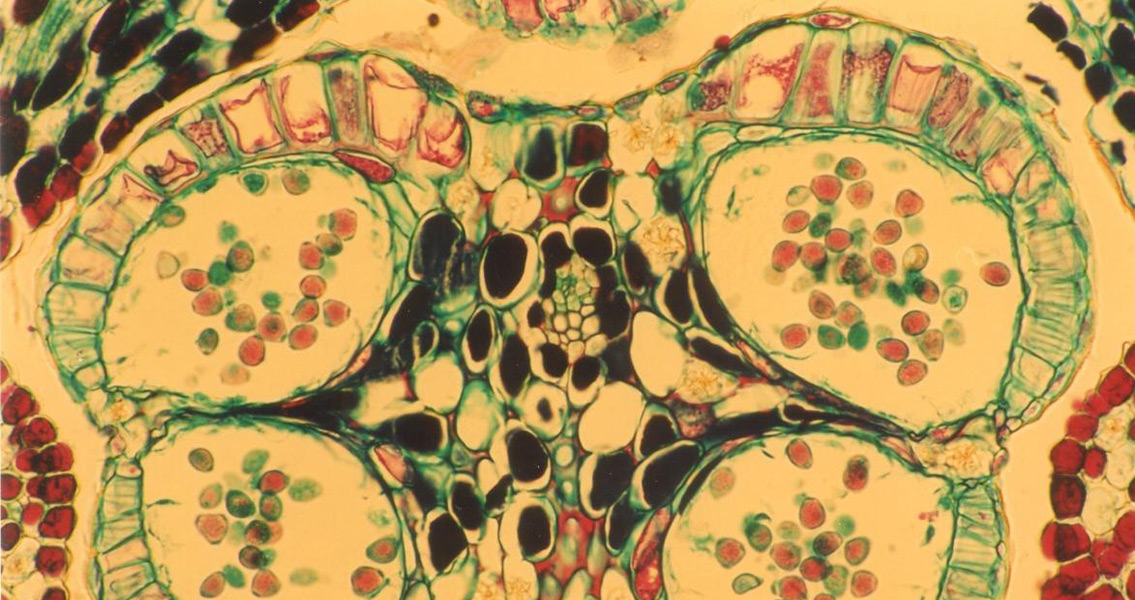
Scientists May Have Identified First Flowering Plant

www.pnas.org ]]>

Categories
News

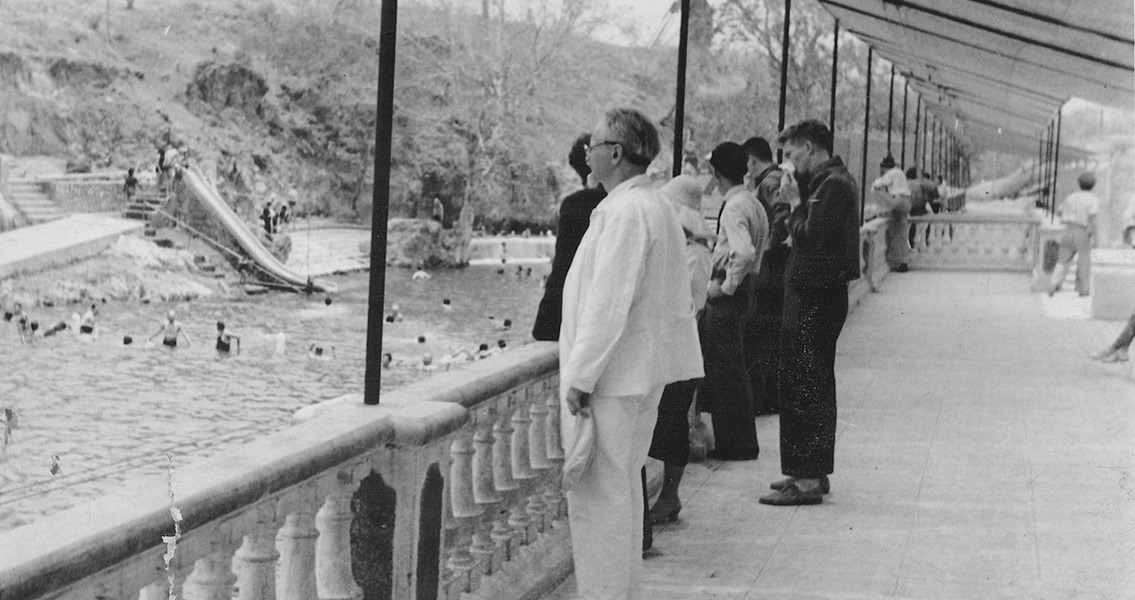
Trotsky Killed in Mexico